LIBER XXVI · CAPUT 13
HIPPURIS, OTHERWISE CALLED EPHEDRON, ANABASIS, OB EQUISÆTUM; THREE KINDS OF IT: EIGHTEEN REMEDIES
Latine · Mayhoff 1906
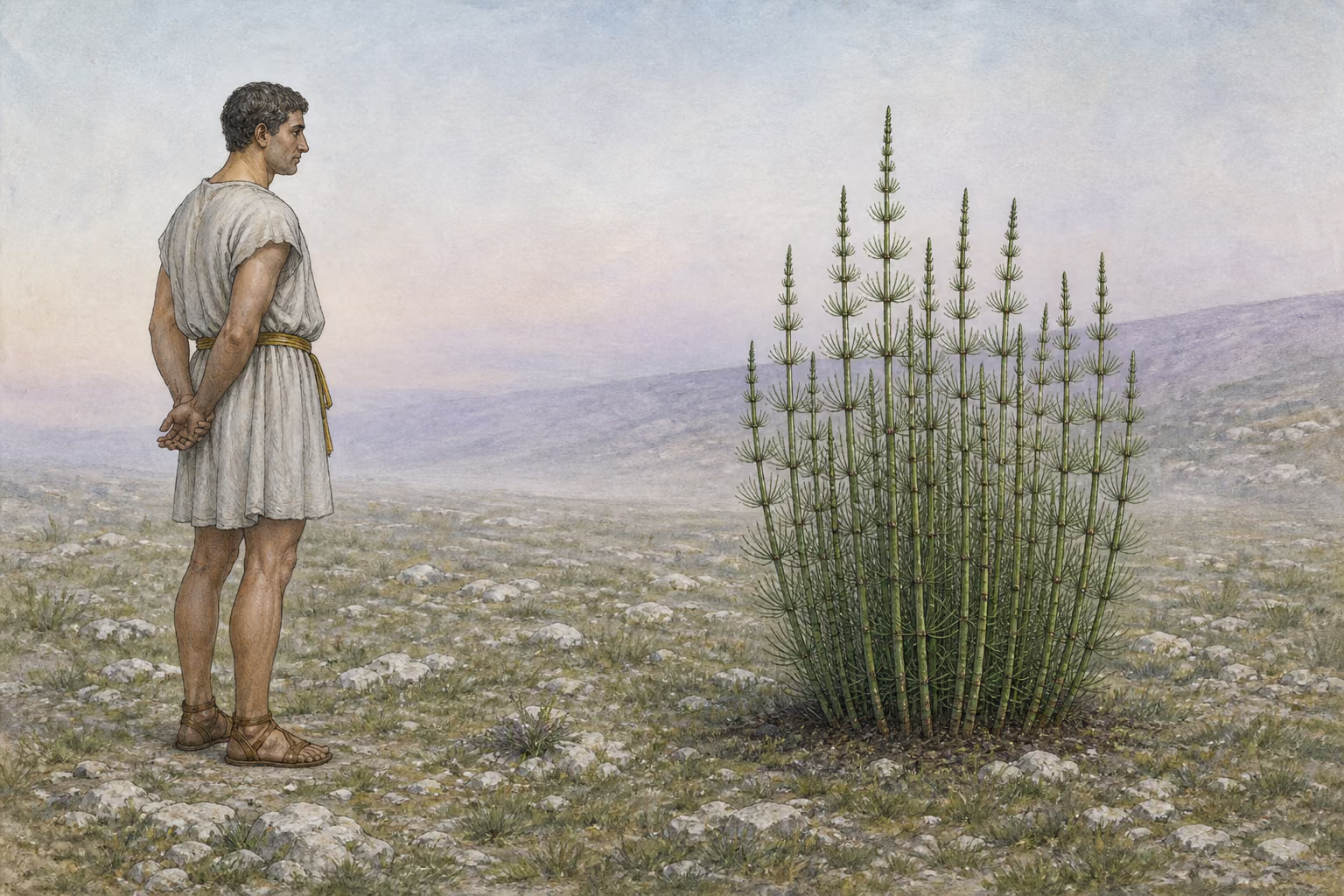
Equisaetum, hippuris Graecis dicta et in pratis vituperata nobis—est autem pilus terrae equinae saetae similis—, lienes cursorum extinguit decocta fictili novo ad tertias quantum vas capiat et per triduum heminis pota; unctis esculentis ex ante diem unum interdicitur. Graecorum varia circa hanc opinio: alii pinus foliis similem, nigricantem eodem nomine appellant, vim eius admirabilem tradentes, sanguinis profluvia vel tacto tantum ea homine sisti; alii hippurin, alii ephedron, alii anabasim vocant, traduitque iuxta arbores nasci et scandentem eas dependere comis iunceis multis, nigris, ut ex equorum cauda, geniculatis ramulis, folia habere pauca, tenuia, exigua, semen rotundum, simile coriandro, radice lignosa, nasci in arbustis maxume. vis eius spissare corpora. sucus sanguinem e naribus fluentem inclusus sistit, item alvum. medetur dysintericis in vino dulci potus cyathis III, urinam ciet, tussim, orthopnoeam sanat, item rupta et quae serpunt. intestinis et vesicae folia bibuntur, enterocelen cohibet. faciunt et aliam hippurim brevioribus et mollioribus comis candidioribusque, perquam utilem ischiadicis et vulneribus ex aceto inpositam propter sistendum sanguinem. —Et nymphaea trita plagis inponitur. peucedanum cum semine cupressi bibitur, si sanguis per os redditus est fluxitve ab infernis. sideritis tantam vim habet, ut quamvis recenti gladiatoris vulneri inligata sanguinem claudat, quod facit et ferulae cinis vel carbo, fungus vero etiam efficacius, qui secundum radicem eius nascitur. per nares autem fluenti et cicutae semen tritum ex aqua additumque efficax habetur, item stephanomelis ex aqua. Vettonicae farina e lacte caprino pota sistit ex ubere fluentem plantagoque contusa. eiusdem sucus vomentibus sanguinem datur. ad erraticum autem radix persollatae cum axungia vetere inlita probatur; ruptis convulsisque, ex alto deiectis centaurium maius, Gentianae radix trita vel decocta vel sucus, Vettonica et hoc amplius a vocis aut lateris contentionibus panaces, scordium, aristolochia pota, agaricum, idem contusis et eversis potum II obolis in mulsi cyathis III aut, si febris sit, in aqua mulsa, verbascum, cuius flos similis auro est, acori radix, aizoum omne, sed maioris sucus efficacissime, item symphyti ius vel radicis decoctum, daucos cruda, erysithales—flore luteo, foliis acanthi —e vino, item chamaerops et in sorbitione irio vel plantago omnibus modis, item.....
Phthiriasi Sulla dictator consumptus est, nascunturque in sanguine ipso hominis animalia exesura corpus. resistitur uvae taminiae suco aut veratri cum oleo perunctis corporibus; taminia quidem in aceto decocta etiam vestes eo taedio liberat.
English · Bostock & Riley 1855–57
Equisætum, a plant called “hippuris” by the Greeks, and which we have mentioned in terms of condemnation, when treating of meadow lands —it being, in fact, a sort of hair of the earth, similar in appearance to horse-hair —is used by runners for the purpose of diminishing the spleen. For this purpose it is boiled down in a new earthen vessel to one third, the vessel being filled to the brim, and the decoction taken in doses of one hemina for three successive days. It is strictly forbidden, however, to eat any food of a greasy nature the day before taking it.
Among the Greeks there are various opinions in relation to this plant. According to some, who give it the same name of “hippuris,” it has leaves like those of the pine tree, and of a swarthy hue; and, if we are to believe them, it is possessed of virtues of such a marvellous nature, that if touched by the patient only, it will arrest hæmorrhage. Some authorities call it “hippuris,” others, again, “ephedron,” and others “anabasis;” and they tell us that it grows near trees, the trunks of which it ascends, and hangs down therefrom in numerous tufts of black, rush-like hair, much like a horse’s tail in appearance. The branches, we are told, are thin and articulated, and the leaves, few in number, small, and thin, the seed round, and similar to coriander in appearance, and the root ligneous: it grows, they say, in plantations more particularly.
This plant is possessed of astringent properties. The juice of it, kept in the nostrils, arrests bleeding therefrom, and it acts astringently upon the bowels. Taken in doses of three cyathi, in sweet wine, it is a cure for dysentery, is an efficient diuretic, and is curative of cough, hardness of breathing, ruptures, and serpiginous affections. For diseases of the intestines and bladder, the leaves are taken in drink; it has the property, also, of reducing ruptures of the groin.
The Greek writers describe another hippuris, also, with shorter tufts, softer and whiter. This last, they say, is remarkably good for sciatica, and, applied with vinegar, for wounds, it having the property of stanching the blood. Bruised nymphæa is also applied to wounds. Peucedanum is taken in drink with cypress seed, for discharges of blood at the mouth or by the lower passages. Sideritis is possessed of such remarkable virtues, that applied to the wound of a gladiator just inflicted, it will stop the flow of blood; an effect which is equally produced by an application of charred fennel-giant, or of the ashes of that plant. For a similar purpose, also, the fungus that is found growing near the root of fennel-giant is still more efficacious.
For bleeding at the nostrils, seed of hemlock, pounded in water is considered efficacious, as also stephanomelis, applied with water. Powdered betony, taken with goat’s milk, or bruised plantago, arrests discharges of blood from the mamillæ. Juice of plantago is administered to patients when vomiting blood. For local discharges of blood, an application of root of persolata with stale axle-grease is highly spoken of.
For ruptures, convulsions, and falls with violence, the greater centaury is used; root of gentian pounded or boiled; juice of betony—this last being employed also for ruptures produced by straining the vocal organs or sides—panaces; scordium; or aristolochia taken in drink. For contusions and falls, agaric is taken, in doses of two oboli, in three cyathi of honied wine, or if there are symptoms of fever, hydromel; the verbascum, also, with a golden flower; root of acoron; the several varieties of aizoüm, the juice of the larger kind being particularly efficacious; juice of symphytum, or a decoction of the root of that plant; daucus, unboiled; erysithales, a plant with a yellow flower and a leaf like that of acanthus, taken in wine; chamærops; irio, taken in pottage; plantago taken any way, as also * * * *
Phthiriasis is a disease which proved fatal to the Dictator Sylla, and which developes itself by the production of insects in the blood, which ultimately consume the body. It is combated by using the juice of Taminian grapes or of hellebore, the body being rubbed all over with it, in combination with oil. A decoction of Taminian grapes in vinegar, has the effect, also, of ridding the clothes of these vermin.