LIBER XXVI · CAPUT 6
BECHION, OTHERWISE KNOWN AS ARCION, CHAMÆLEUCE OR TUSSILAGO: THREE REMEDIES
Latine · Mayhoff 1906
huic tanta vis, ut iumentis etiam non tussientibus modo, sed ilia quoque traheatibus auxilietur potu, quod et de Gentiana reperio. radix eacaliae conmanducata et in vino madefacta non tussi tantum, sed et faucibus prodest. hysopi v rami cum II rutae et ficis III decocti thoracem purgant, tussim sedant.
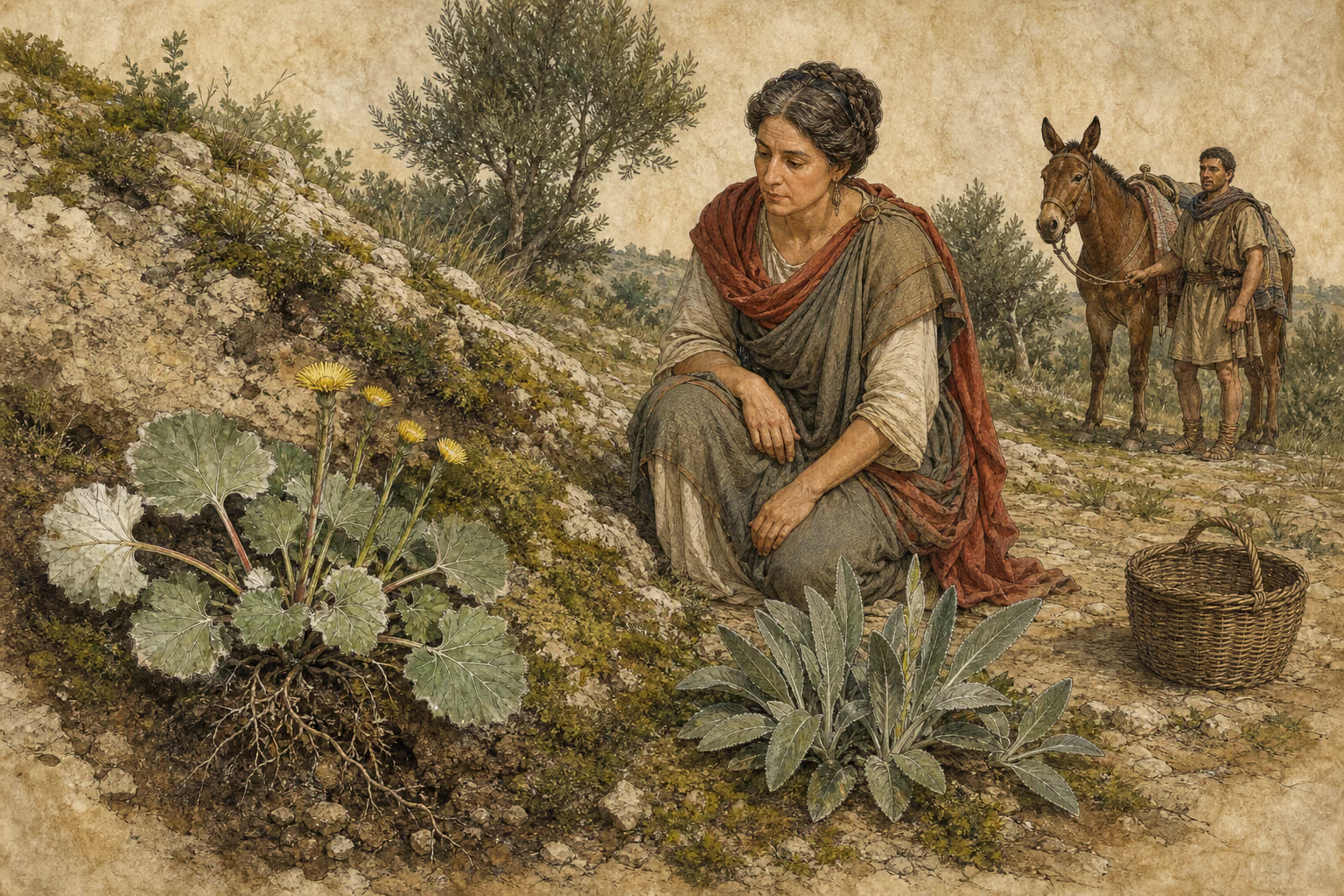
Bechion tussilago dicitur. duo eius genera. silvestris ubi nascitur, subesse aquas credunt, et hoc habent signum aquileges. folia sunt maiuscula quam hederae v aut VII, subalbida a terra, superne pallida, sine caule, sine flore, sine semine, radice tenui. quidam eandem esse arcion et alio nomine chamaeleucen putant. huius aridae cum radice fumus per harundinem haustus et devoratus veterem sanare dicitur tussim, sed in singulos haustus passum gustandum est. altera a quibusdam salvia appellatur, similis verbasco. conteritur et colata calfit atque ita ad tussim laterisque dolores bibitur, contra scorpiones eadem et dracones marinos efficax. contra serpentes quo-que ex oleo perungui ea prodest.—Hysopi fasciculus cum quadrante mellis decoquitur ad tussim, lateris, pectoris dolores, verbascum cum ruta ex aqua, Vettonicae farina bibitur ex aqua calida.
English · Bostock & Riley 1855–57
This last-named plant is so remarkably energetic, that an infusion of it, administered in their drink, will relieve beasts of burden, not only when troubled with cough, but when broken-winded even—a property which I find attributed to gentian also. Root of cacalia chewed, or steeped in wine, is good for cough as well as all affections of the throat. Five sprigs of hyssop, with two of rue and three figs, act detergently upon the thoracic organs and allay cough.
Bechion is known also as tussilago: there are two kinds of it. Wherever it is found growing wild, it is generally thought that there is a spring of water below, and it is looked upon as a sure sign that such is the case, by persons in search of water. The leaves are somewhat larger than those of ivy, and are some five or seven in number, of a whitish hue beneath, and a pale green on the upper surface. The plant is destitute of stem, blossom, and seed, and the root is very diminutive. Some persons are of opinion that this bechion is identical with the arcion, known also as the “chamæleuce.” The smoke of this plant in a dry state, inhaled by the aid of a reed and swallowed, is curative, they say, of chronic cough; it is necessary, however, at each inhalation to take a draught of raisin wine.
There is another bechion also, known to some persons as “salvia,” and bearing a strong resemblance to verbascum. This plant is triturated, and the juice strained off and taken warm for cough and for pains in the side: it is considered very beneficial also for the stings of scorpions and sea-dragons. It is a good plan, too, to rub the body with this juice, mixed with oil, as a preservative against the stings of serpents. A bunch of hyssop is sometimes boiled down with a quarter of a pound of honey, for the cure of cough.