LIBER XXVII · CAPUT 13
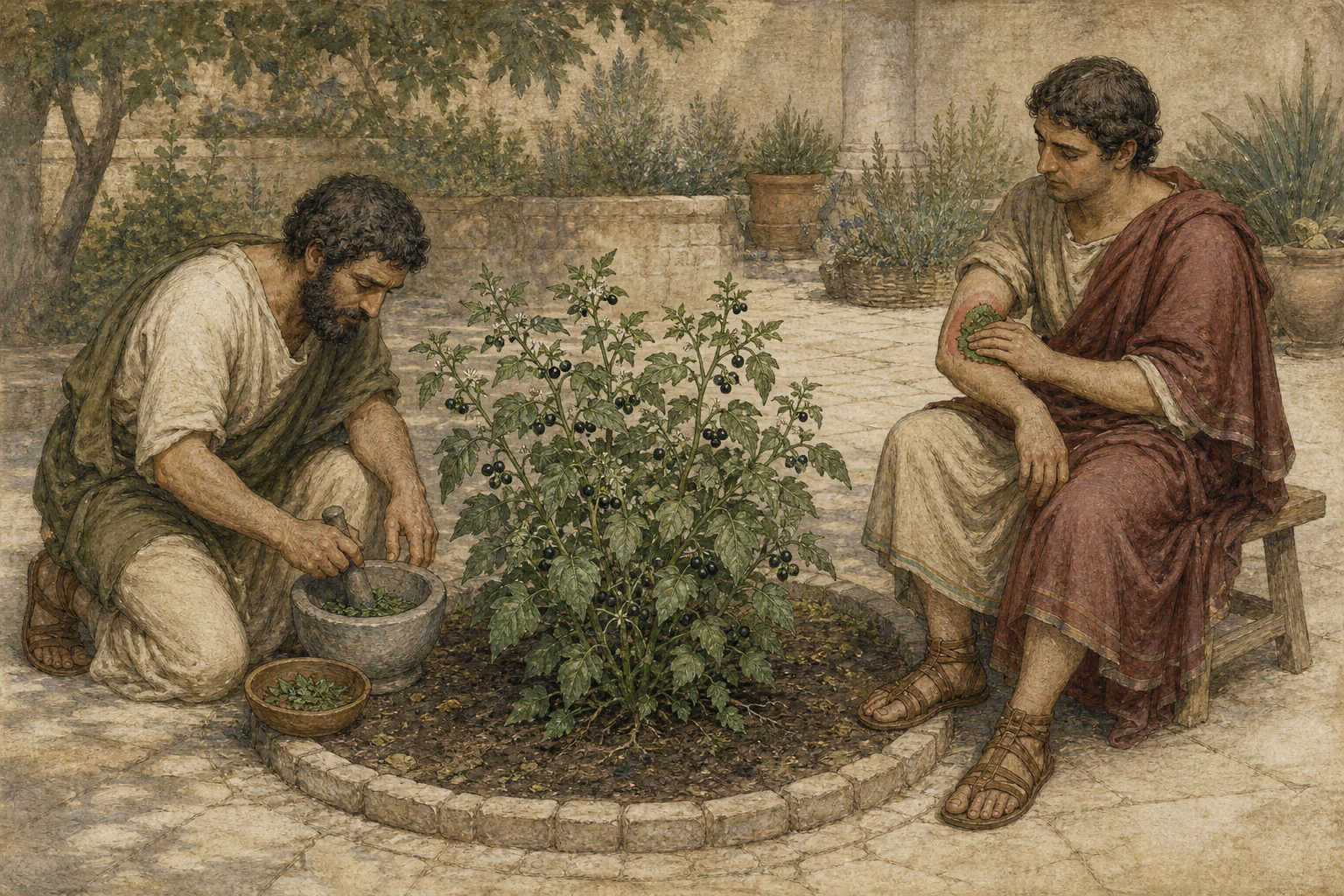
THE SOLANUM, BY THE GREEKS CALLED STRYCHNON: TWO REMEDIAL PROPERTIES
Latine · Mayhoff 1906
Solanum Graeci στρύχνον vocant, ut tradit Cornelius Celsus. huic vis reprimendi refrigerandique.— Smyrnion caulem habet apii, folia latiora et maxime circa stolones multos, quorum a sinu exiliunt, pinguia et ad terram infracta, odore medicato cum quadam acrimonia iucundo, colore in luteum languescente, capitibus caulium orbiculatis ut apii, semine rotundo nigroque; arescit incipiente aestate. radix quoque odorata, gustu acri mordet, sucosa, mollis. cortex eius foris niger, intus pallidus. odor murrae habet qualitatem, unde et nomen. nascitur et in saxosis collibus et in terrenis. usus eius calfacere, extenuare. urinam et menses cient folia et radix et semen. alvum sistit. radix collectiones et suppurationes non veteres, item duritias discutit inlita, prodest et contra phalangia ac serpentes admixto cachry aut polio aut melissophyllo in vino pota, sed particulatim, quoniam universitate vomitiones movet; qua de causa aliquando cum ruta datur. medetur tussi et orthopnoeae semen vel radix, item thoracis aut lienis aut renium aut vesicae vitiis, radix autem ruptis, convolsis. partus quoque adiuvat et secundas pellit. datur et ischiadicis cum crethmo in vino. sudores ciet et ructus, ideo inflationem stomachi discutit. vulnera ad cicatricem perducit. exprimitur et sucus radici utilis feminis et thoracis praecordiorumque desideriis, calfacit enim et concoquit et purgat. semen peculiariter hydropicis datur potui, quibus et sucus inlinitur. et in malagmate cortice arido et ad obsonia utuntur cum mulso et oleo et garo, maxime in elixis carnibus.—Sinon concoctiones facit, sapore simillima piperi. eadem in dolore stomachi efficax.
Telephion porcilacae similis est et caule et foliis. rami a radice septeni octonique fruticant foliis crassis, carnosis. nascitur in cultis et maxime inter vites. inlinitur lentigini et, cum inaruit, deteritur. inlinitur et vitiligini ternis fere mensibus senis horis noctis aut diei et ut postea farina hordeacia inlinatur. medetur et vulneribus et fistulis.— Trichomanes adianto simile est, exilius modo nigriusque, foliis lenticulae, densis, parvis, adversis inter se. decoctum eius strangurias sanat in vino albo potum addito cumino rustico, liennem. cohibet capillos fluentes aut, si effluxerint, reparat alopeciasque densat tritum in oleo et inlitum. sternumenta quoque gustatu movet. — Thalictrum folia coriandri habet, pinguiora paulo, caulem papaveris. nascitur ubique, praecipue campestribus. medentur ulceribus folia cum melle.— Thlaspi duorum generum est: angustis foliis, digitali latitudine et longitudine, in terram versis, in cacumine divisis, cauliculo semipedali non sine ramis,.... peltarum specie semine incluso, lenticulae effigie, nisi quod infringitur, unde nomen. flos albicat. nascitur in semitis et saepibus. semen asperi gustus bilem et pituitam utrimque extrahit; modus sumendi acetabuli mensura. prodest et ischiadicis infusum. potione sanguinem trahit, menses quoque ciet, sed partus necat. alterum thlaspi aliqui Persicon napy vocant, latis foliis, radicibus magnis, et ipsum utile ischiadicorum infusioni. prodest et inguinibus utrumque. praecipitur, ut qui colligat dicat, sumere se contra inguina et contra omnes collectiones et contra vulnera, una manu tollat.— Trachinia herba qualis sit, non traditur. credo falsum et promissum Democriti portentosum esse, adalligatam triduo absumere lienes.— Tragonis sive tragion nascitur in Cretae tantum insulae maritimis, iunipiro similis et semine et folio et ramis. sucus eius lacteus in cummim spissatus vel semen in potione..... spicula e corpore eicit; tunditur recens et cum vino inlinitur aut siccae farina cum melle. eadem lactis abundantiam facit mammisque unice medetur. — Est et alia herba tragos, quam aliqui scorpion vocant, semipedem alta, fruticosa, sine foliis, pusillis racemis rubentibus grani tritici, acuto cacumine, et ipsa in maritimis nascens. huius racemorum X et XII cacumina trita ex vino pota coeliacis, dysintericis, sanguinem excreantibus mensumque abundantiae auxiliantur.— Est et tragopogon, quem alii comen vocant, caule parvo, foliis croci, radice longa, dulci, super caulem calice lato, nigro. nascitur in asperis manditurque, sine usu.
Et de herbis quidem memoria digna hactenus accepimus aut comperimus. in fine earum admonere non ab re iudicamus, alias aliis virium aetates esse. longissimo tempore durat elaterium, ut diximus, chamaeleon niger XL annis, centaurium non ultra XII, peucedanum et aristolochia adVI, vitis silvestris anno, in umbra si serventur. et animalium quidem exterorum nullum aliud radices a nobis dictas adtingit excepta sphondyle, quae omnes persequitur. genus id serpentis est.
Ne illud quidem dubitatur, omnium radicum vim effectusque minui, si fructus prius ematurescant, item seminum ante radice propter sucum incisa. resolvitur autem omnium vis consuetudine, et desinunt prodesse, cum opus est, quae cottidie in usu fuere, aeque quam nocere. omnes vero herbae vehementiores effectu viribusque sunt in frigidis et in aquiloniis, item siccis.
Sunt et gentium differentiae non mediocres, sicut accipimus de taeniis lumbricisque, inesse Aegypti, Arabiae, Syriae, Ciliciae populis, e diverso Threciae, Phrygiae omnino non innasci. minus id mirum quam quod in confinio Atticae et Boeotiae Thebanis innascuntur, cum absint Atheniensibus. quae contemplatio aufert nos ad ipsorum animalium naturas ingenitasque iis vel certiores morborum omnium medicinas. rursus enimcum rerum parens nullum animal ad hoc tantum, ut pasceretur aut alia satiaret, nasci voluit artesque salutares inseruit et visceribus, quippe cum surdis etiam rebus insereret, tum vero illa animae auxilia praestantissima ex alia anima esse voluit, contemplatione ante cuncta mirabili.
English · Bostock & Riley 1855–57
The solanum, according to Cornelius Celsus, is called “strychnon” by the Greeks; it is possessed of repercussive and refrigerative properties.
Smyrnion has a stem like that of parsley, but larger leaves, and growing principally about the young shoots, which are numerous. From the midst of these shoots the leaves make their appearance, unctuous, and bending towards the ground. This plant has a medicinal smell, penetrating to a certain degree, and agreeable: the colour of it is a pale yellow, and the stems bear rounded umbels like those of dill, with a round, black seed, which dries at the beginning of summer. The root, also, is odoriferous, of an acrid, pungent flavour, soft and juicy, black on the outer coat and pale within. The smell of it partakes very much of the nature of that of myrrh, to which, in fact, it owes its name: it grows in localities of a stony nature, or covered with humus. Its medicinal properties are warming and resolvent.
The leaves and root are used as a diuretic and as an emmenagogue; the seed arrests diarrhœa; and the root, applied topically, disperses abscesses and suppurations, provided they are not inveterate, and reduces indurated tumours. It is useful, also, for injuries inflicted by the phalangium and by serpents, taken in wine, with the addition of cachrys, polium, or melissophyllum; the dose, however, must be taken a little at a time only, for otherwise it acts as an emetic, a reason for which it is sometimes administered with rue. The seed or root is curative of cough, hardness of breathing, and diseases of the thoracic organs, spleen, kidneys, and bladder; the root, too, is used for ruptures and convulsions. This plant facilitates delivery, and brings away the afterbirth; it is also given, in combination with crethmos, in wine, for sciatica. It acts as a sudorific and carminative, for which reason it is used to disperse flatulency of the stomach; it promotes, also, the cicatrization of wounds.
A juice is extracted from the root, which is very useful for female complaints, and for affections of the thoracic organs and viscera, possessing, as it does, certain calorific, digestive, and detergent properties. The seed, in particular, is given in drink for dropsy, external applications being made of the juice, and emollient poultices applied of the dried rind of the root. It is used, also, as a seasoning for food, boiled meat in particular, with the addition of honied wine, oil, and garum.
Sinon, a plant with a flavour very like that of pepper, promotes the digestion, and is highly efficacious for pains in the stomach.
Telephion resembles purslain in the stem and leaves. From the root of it there spring seven or eight small branches, covered with thick, fleshy leaves; it grows in cultivated spots, and among vines in particular. It is used as an application for freckles, being removed as soon as dry; it is employed, also, for white morphew, being applied some six hours each night or day, and the treatment continued for about three months: after removing it, barley-meal should be applied. Telephion is healing, also, for wounds and fistulas.
The trichomanes is a plant that resembles the adiantum, except that it is more slender and of a darker colour; the leaves of it, which are similar to those of the lentil, lie close together, on opposite sides, and have a bitter taste. A decoction of this plant, taken in white wine, with the addition of wild cummin, is curative of strangury. Bruised and applied to the head, it prevents the hair from falling off, and, where it has come off, restores it: pounded and applied with oil, it effects the cure of alopecy. The mere taste of it is provocative of sneezing.
The thalictrum has leaves like those of coriander, only somewhat more unctuous, and a stem resembling that of the poppy. It is found growing everywhere, in champaign localities more particularly. The leaves, applied with honey, heal ulcers.
Of thlaspi there are two kinds; the first of which has narrow leaves, about a finger in length and breadth, turned towards the ground, and divided at the point. It has a slender stem, half a foot in length, and not wholly destitute of branches; the seed, enclosed in a crescent-shaped capsule, is similar to a lentil in shape, except that it has a jagged appearance, to which, in fact, it owes its name; the flower is white, and the plant is found near footpaths and in hedges. The seed, which has an acrid flavour, carries off bile and pituitous secretions, by vomit and by alvine evacuation, the proper dose being one acetabulum. It is used, also, for sciatica, in the form of an injection, this treatment being persevered in until it has induced a discharge of blood: it acts also as an emmenagogue, but is fatal to the fœtus.
The other thlaspi, known by some as “Persicon napy,” has broad leaves and large roots, and is also very useful as an injection for sciatica. Both plants are very serviceable for inguinal complaints; it being recommended that the person who gathers them should mention that he is taking them for diseases of the groin, for abscesses of all kinds, and for wounds, and that he should pluck them with one hand only.
What sort of plant the trachinia is, the authorities do not state. I think that the assurance given by Democritus must be false: for it would be nothing less than a prodigy, for a plant, attached as an amulet, to consume the spleen in so short a time as three days.
The tragonis, or tragion, grows nowhere but in the maritime districts of the Isle of Crete; it resembles the juniper in the seed, leaf, and branches. Its milky juice, which thickens in the form of a gum, or its seed, taken in drink, expels pointed weapons from the flesh. The plant, too, is pounded fresh and applied as a liniment with wine, or, dried and powdered, with honey. It increases the milk in nursing women, and is a sovereign remedy for diseases of the mamillæ.
There is another plant also, called “tragos,” or “scorpion” by some, half a foot in height, branchy, destitute of leaves, and bearing diminutive red clusters, with a seed like that of wheat, but pointed at the extremity: this too grows in maritime localities. Ten or twelve tops of the branches, bruised and taken in wine, are remedial in cases of cœliac affections, dysentery, spitting of blood, and excessive menstruation.
There is the tragopogon, also, by some called “come;” a plant with a small stem, leaves like those of saffron, an elongated, sweet, root, and a large, swarthy calyx at the extremity of the stem. It grows in rugged soils, and is never used.
Such, then, is all that I have hitherto been enabled to learn or discover, worthy of mention, relative to plants. At the close, of this subject, it seems to me that it will not be out of place to remind the reader, that the properties of plants vary according to their age. It is elaterium, as already stated, that preserves its properties the longest of all. The black chamæleon retains its virtues forty years, centaury not more than twelve, peucedanum and aristolochia six, and the wild vine one year—that is to say, if they are kept in the shade. I would remark, also, that beyond those animals which breed within the plants, there are none that attack the roots of any of those which have been mentioned by me; with the exception, indeed, of the sphondyle, a kind of creeping insect, which infests them all.
It is also an undoubted truth, that the virtues and properties of all roots are more feebly developed, when the fruit has been allowed to ripen; and that it is the same with the seed, when incisions have been previously made in the root, for the extraction of the juice. The efficacy, too, of all plants is impaired by making habitual use of them; and these substances, if employed daily, lose equally their good or bad properties, when required to be effectual. All plants, too, have more powerful properties, when grown in soils that are cold and exposed to the north-eastern blasts, or in dry localities.
There are certain differences, also, by no means inconsiderable, in the predispositions of the various nations of the earth. I have been informed, for instance, that the people of Egypt, Arabia, Syria, and Cilicia, are subject to tapeworm and maw-worm, while those of Thracia and Phrygia, on the other hand, are totally exempt from them. This, however, is less surprising than the fact that, although Attica and Bœotia are adjoining territories, the Thebans are troubled with these inflictions, while among the people of Athens they are unknown.
Considerations of this description lead me now to turn my attention to the nature of the animated beings themselves, and the medicinal properties which are inborn in them, the most assured remedies, perhaps, for all diseases.
For Nature, in fact, that parent of all things, has produced no animated being for the purpose solely of eating; she has willed that it should be born to satisfy the wants of others, and in its very vitals has implanted medicaments conducive to health. While she has implanted them in mute and inanimate objects even, she has equally willed that these, the most invaluable aids of life, should be also derived from the life of another—a subject for contemplation, marvellous in the highest degree!