LIBER XXVII · CAPUT 12
THE MEDION: THREE REMEDIES
Latine · Mayhoff 1906
Medion folia habet iridis sativae, caulem tripedalem et in eo florem grandem, purpureum, rotundum, semine minuto, radicem semipedalem. in saxis opacis nascitur. radix drachmis II cum melle menses feminarum sistit ecligmate per aliquot dies sumpto. semen quoque in vino contra abundantiam feminarum datur. — Myos- ota sive myosotis levis herba, caulibus pluribus ab una radice, aliquatenus rubentibus, concavis ab imo, foliis angustis, oblongis, dorso acuto, nigris, per intervalla adsidue geminatis, tenuibus cauliculis ex alis prodeuntibus, flore caeruleo. radix digitali crassitudine multis capillamentis fimbriata. vis ei septica et exulceratrix, ideoque aegilopas sanat. tradunt Aegypti, mensis, quem Thoti vocant, die XXVIII fere in Augustum mensem incurrente si quis huius herbae suco inungatur mane, priusquam loquatur, non lippiturum eo anno. — Myagros herba ferulacea est, foliis similis rubiae, tripedanea. semen oleosum, quod et fit ex eo. medetur oris ulceribus perunctis hoc suco.
Herba, quae vocatur nyma, III foliis longis, intubaceis, inlita cicatrices ad colorem reducit.— Natrix vocatur herba, cuius radix evulsa virus hirci redolet. hac in Piceno feminis abigunt quos mira persuasione Fatuos vocant; ego species lymphantium hoc modo animorum esse crediderim, quae tali medicamento iuventur.
Odontitis inter feni genera est, cauliculis densis ab eadem radice, geniculatis, triangulis, nigris. in geniculis folia parva habet, longiora tamen quam polygonum, semen in alis hordeo simile, florem purpureum, pusillum. nascitur in pratis. decoctum cauliculorum eius in vino austero quantum manus capiat dentium dolori medetur ita, ut contineatur ore. — Othonna in Syria nascitur, similis erucae perforatis crebro foliis, flore croci; quare quidam anemonen vocaverunt. sucus eius oculorum medicamentis convenit; mordet enim leniter et calefacit adstringitque siccando, purgat cicatrices et nubeculas et quicquid obstet. quidam tradunt lavari atque ita siccatam digeri in pastillos. — Onosma longa folia habet fere ad III digitos, in terra iacentia ad similitudinem anchusae,.... similis sive caule sive flore sive semine. praegnas, si edit eam aut supergradiatur, abortum facere dicitur.— Onopradon cum ederunt, asini crepitus reddere dicuntur. trahit urinas et menses, alvum sistit, suppurationes et collectiones discutit. — Osyris ramulos fert nigros, tenues, lentos et in his folia nigra ceu lini semenque in ramulis nigrum initio, dein colore mutato rubescens. smegmata mulieribus faciunt ex iis. radicum decoctum potu sanat arquatos. eaedem, priusquam maturescat semen, concisae et sole siccatae alvum sistunt; post maturitatem vero collectae et in sorbitione decoctae rheumatismis ventris medentur et per se tritae ex aqua caelesti bibuntur. — Oxys folia terna habet. datur ad stomachum dissolutum. edunt et qui enterocelen habent.
polyanthemum, quam quidam batrachion appellant, caustica vi exulcerat, cicatrices et ad colorem reducit, eademque vitiligines concorporat. — Polygonum Graeci vocant quam nos sanguinariam. non attollitur a terra foliis rutae similis gramini. sucus eius infusus naribus supprimit sanguinem et potus cum vino cuiuslibet partis profluvium excreationesque cruentas inhibet. qui plura genera polygoni faciunt, hanc marem intellegi volunt appellarique a multitudine seminis aut densitate fruticis, alii polygonaton a frequentia geniculorum, alii thalattiada, alii carcinothron, alii clema, multi myrtopetalum. nec non inveniuntur qui hanc feminam esse dicant, marem autem maiorem minusque nigram et geniculis densiorem, semine sub omnibus foliis turgescente. quocumque haec modo se habent, vis earum est spissare ac refrigerare. semine alvum solvunt, largius sumpto urinam cient, rheumatismos cohibent, qui si non fuere, non prosunt. stomachi fervori folia inponuntur, vesicae dolori inlinuntur et ignibus sacris. sucus et auribus purulentis instillatur et oculorum dolori. per se datur et in febribus ante accessiones II cyathis, in tertianis quartanisque praecipue, item cholericis, dysintericis et in solutione stomachi. tertium genus orion vocant, in montibus nascens, harundini tenerae simile, uno caule, densis geniculis et in se infarctis, foliis autem piceae, radicis supervacuae, inefficacius quam superiora, peculiare ischiadicis. quartum genus silvestre appellatur, paene arboris frutice, radice lignosa, stirpe cedri rubicunda, ramis sparti binum palmorum, nigris geniculorum ternis quaternisque articulis. huic quoque spissandi natura; sapor mali cotonei. decoquitur in aqua ad tertias aut aridi farina inspergitur et oris ulceribus et adtritis partibus. propter gingivarum vero vitia ipsa commanducatur. nomas sistit omniaque, quae serpunt aut difficilem cicatricem habent, privatim vero sanat a nive facta ulcera. herbarii et ad anginas utuntur illa et in capitis dolore coronam ex ea inponunt et contra epiphoras collo circumdant; in tertianis quidem sinistra manu evulsam adalligant, adeo contra profluvia sanguinis, nec ullam magis aridam quam polygonum servant.
Pancratium aliqui scillam pusillam appellare malunt, foliis albi lilii longioribus crassioribusque, radice bulbi magni, colore rufo. alvum solvit suco cum farina ervi sumpto, ulcera purgat. hydropicis, splenicis cum melle datur. alii decocunt eam, donec aqua dulcis fiat, eaque effusa radicem terentes digerunt in pastillos sole siccatos et postea utuntur ad capitis ulcera et cetera, quae repurganda sint, item ad tussim, quantum III digitis adprehenderint in vino dantes, et ad lateris dolores aut peripneumonicis ecligmate. dant et propter ischiada in vino bibendam et propter tormina mensesque ciendos.— Peplis, quam aliqui sycen, alii meconion, alii mecona aphrode vocant, ex una radice tenui fruticat foliis rutae paulo latioribus. semen est sub foliis, rotundum, minus candido papavere. inter vites fere colligitur messibus siccaturque cum fructu suo, subiectis in quae excidat. hoc poto alvus solvitur, bilis ac pituita detrahitur. media potio est acetabuli mensura in aquae mulsae heminis III. et cibis inspergitur obsoniisque ad molliendam alvum.— Periclymenon fruticat et ipsa ex intervallo II folia habens subcandida, mollia, in cacumine autem semen inter folia durum et quod difficile vellatur. nascitur in arvis ac saepibus circumvolvens se adminiculis quibuscumque. semen eius in umbra siccatum tunditur et in pastillos digeritur; hi resoluti dantur in vini albi cyathis ternis tricenis diebus ad lienem, eumque urina cruentata aut per alvum absumit, quod intellegitur a decimo statim die. urinam cient et folia decocta, quae et orthopnoicis prosunt. partum quoque adiuvant secundasque pellunt pota simili modo. — Pelecinon in segetibus diximus nasci, fruticosam cauliculis, foliis ciceris. semen in siliquis fert corniculorum modo aduncis ternis quaternisve, quale git novimus, amarum, stomacho utile. additur in antidota.— Polygala palmum altitudine inplet, in caule summo foliis lenticulae, gustu adstricto. quae pota lactis abundantiam facit. — Poterion aut, ut alii vocant, phrynion vel neuras large fruticat, spinis retorrida, lanugine spissa, foliis parvis, rotundis, ramulis longis, mollibus, lentis, tenuibus, flore longo, herbacei colors. seminis nullus usus; est gustu acuto et odorato. invenitur in aquosis collibus. radices habet II aut III binum cubitorum in altitudinem, nervosas, candidas, firmas. circumfoditur autumno et praecisa radice dat sucum cummi similem. radix mira vulneribus sanandis traditur praecipueque nervis vel praecisis inlita. decoctum quoque eius cum melle potum dissolutiones nervorum et infirmitates et incisuras iuvat.— Phalangitis a quibusdam phalangion vocatur, ab aliis leucanthemum vel, ut in quibusdam exemplaribus invenio, leucacantha. ramuli sunt ei numquam pauciores II, in diversa tendentes, flos candidus, lilio rubro similis, semen nigrum, latum, ad lenticulae dimidiae figuram multo tenuius, radice tenui, herbacei coloris. huius folio vel flore vel semine auxiliantur contra scorpionum phalangiorumque et serpentium ictus, item contra tormina. — Phyteuma quale sit, describere supervacuum habeo, cum sit usus eius tantum ad amatoria.— Phyllon a Graecis vocatur herba in saxosis montibus. femina magis herbacei coloris, caule tenui, radice parva. semen papaveri rotundo simile. haec sui sexus facit partus, mares autem mas, semine tantum differens, quod est incipientis olivae. utrumque bibitur in vino.— Phellandrion nascitur in palustribus folio apii. bibitur semen eius propter calculos et vesicae incommoda.— Phaleris thyrsum habet longum, tenuem ceu calamum, in summo florem inclinatum, semen simile sesamae. et hoc calculos frangit potum ex vino vel aceto vel cum melle et lacte; idem et vitia vesicae sanat.— Polyrrhizon folia habet myrti, radices multas. hae tusae dantur e vino contra serpentes, prosunt et quadripedibus. — Proserpinaca herba vulgaris est, eximii adversus scorpiones remedii. eadem contrita, addita muria e menis et oleo, anginam eximie curari tradunt, praeterea et quantalibet lassitudine recreari defessos, etiam cum obmutuerint, si subiciatur linguae; si devoretur, vomitionem sequi salutarem.
Rhecoma adfertur ex iis quae supra Pontum sunt regionibus. radix costo nigro similis, minor et rufior paulo, sine odore, calfaciens gustu et adstringens. eadem trita vini colorem reddit ad crocum inclinantem. inlita collectiones inflammationesque sedat, vulnera sanat, epiphoras oculorum sedat ex passo, insignita cum melle et alia liventia ex aceto. farina eius inspergitur contra caco ëthe et sanguinem reicientibus drachmae pondere in aqua, dysintericis autem et coeliacis, si febri careant, in vino, sin aliter, ex aqua. facilius teritur nocte antecedente madefacta. datur et decoctum eius bibendum duplici mensura ad rupta, convolsa, contusis, ex sublimi devolutis. si pectoris sint dolores, additur piperis aliquid et murrae; si dissolutio stomachi, ex frigida aqua sumitur; sic et in tussi vetere ac purulentis excreationibus, item hepaticis, splenicis, ischiadicis. at renium vitia, suspiria, orthopnoeas, arteriae scabritias sanat ex passo III obolis potis trita aut decoctum eius. lichenas quoque ex aceto inposita purgat. bibitur contra inflationes et perfrictiones, febres frigidas, singultus, tormina, herpetas, capitis gravitates, melancholicas vertigines, lassitudinum dolores et convolsiones. — Circa Ariminum nota est herba quam resedam vocant. discutit collectiones inflammationesque omnes. qui curant ea, addunt haec verba: Reseda, morbos reseda; scisne, scisne, quis hic pullus egerit radices? nec caput nec pedes habeat. haec ter dicunt totiensque despuunt.
Stoechas in insulis tantum eiusdem nominis gignitur, odorata herba, coma hysopi, amara gustu. menses ciet potu, pectoris dolores levat. antidotis quoque miscetur. —
English · Bostock & Riley 1855–57
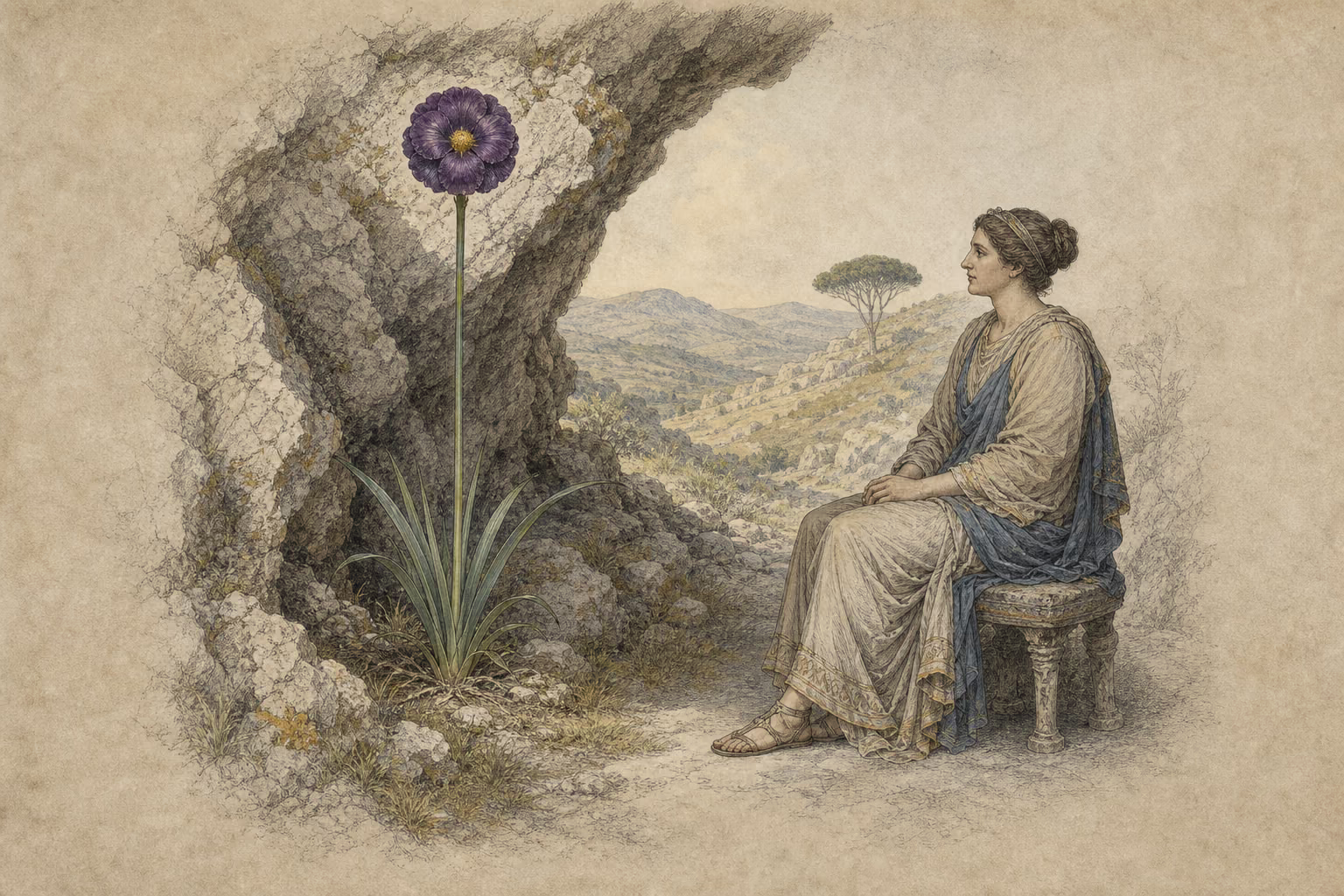
The medion has leaves like those of the cultivated seris, a stem three feet in length, and a large, round, purple flower, at its extremity. The seed is diminutive, and the root half a foot in length: it grows upon umbrageous, sheltered rocks. The root, taken in doses of two drachmæ with honey, arrests the catamenia, the electuary being used for some days. The seed, too, is administered in wine for a similar purpose.
The myosota or myosotis is a smooth plant, throwing out from a single root numerous hollowed stems, of a somewhat reddish colour; and bearing at the lower extremities swarthy, narrow, oblong leaves, sharp on the back, arranged in pairs at regular distances, and springing from delicate branches attached with axils to the main stems. The flower is blue, and the root, a finger in length, is provided with numerous filaments like hairs. This plant possesses certain septic and ulcerating properties, and hence is used for the cure of fistula of the eye. The Egyptians say that if upon the morning of the twenty-eight day of their month Thoth, a day which generally falls in our month of August, a person rubs himself with the juice of this plant before speaking to any one, he will be sure to have no diseases of the eyes all that year.
The myagros is a ferulaceous plant, with leaves like those of madder: the seed is of an oily nature—indeed, an oil is extracted from it. Ulcerations of the mouth are cured by rubbing them with the juice of this plant.
The plant called “nyma” bears three long leaves, like those of endive: applied to scars, it restores the skin to its natural colour.
“Natrix” is the name of a plant, the root of which, when taken out of the ground, has just the rank smell of the he-goat. It is used in Picenum for the purpose of keeping away from females what with a singular credulity they call by the name of “Fatui.” For my own part, however, I should think that persons requiring to be treated with such medicaments as these, must be labouring under a sort of mental hallucination.
Odontitis is a sort of hay-grass, which throws out from a single root numerous, small, jointed stems, of a triangular form and of a swarthy hue. At the joints there are small leaves, somewhat longer than those of the polygonos; and in the axils formed by these leaves is the seed, similar to barley in appearance. It has a purple, diminutive flower, and is found growing in meadows. A handful of the stems, boiled in astringent wine, is used for the cure of tooth-ache, the decoction being retained for some time in the mouth.
The othonna is a Syrian plant, resembling rocket in appearance; its leaves are pierced with numerous holes, and its flower resembles that of saffron, for which reason some persons have given it the name of “anemone.” The juice of this plant is employed in ophthalmic preparations; it is slightly pungent, of a warming nature, and astringent as it dries. It acts as a detergent upon cicatrizations, films on the eyes, and all impediments of the sight. Some say that the plant is washed and dried, and then divided into lozenges.
The onosma has leaves some four fingers in length, lying upon the ground, and indented like those of the anchusa: it has neither stem, blossom, nor seed. A pregnant woman, they say, if she eats of this plant, or even walks over it, will be sure to miscarry.
The onopordon, it is said, has strongly carminative effects upon asses, when they eat of it. It acts as a diuretic and as an emmenagogue, arrests diarrhœa, and disperses abscesses and suppurations.
The osyris bears small, swarthy, flexible branches, covered with dark leaves like those of flax. The seed, which grows upon the branches, is black at first, but afterwards changes its colour and turns red. Cosmetics for females are prepared from these branches. A decoction of the roots, taken in drink, is curative of jaundice. The roots, cut in pieces before the seed ripens, and dried in the sun, act astringently upon the bowels: gathered after the seed has ripened, and boiled in pottage, they are curative of defluxions of the abdomen: they are taken also by themselves, bruised in rain water.
The oxys is a plant with three leaves; it is given for derangement of the stomach, and patients eat it who are suffering from intestinal hernia.
The polyanthemum, by some persons called “batrachion,” by virtue of its caustic properties has an excoriating effect upon scars, and restores the skin to its proper colour. It heals white morphew also.
The Greeks give the name of “polygonos” to the plant known to us as “sanguinaria.” It is but little elevated above the ground, has leaves like those of rue, and resembles grass in appearance. The juice of it, injected into the nostrils, arrests hæmorrhage: taken with wine, it has a similar effect upon bleeding at any other part of the body, as also spitting of blood. Those who distinguish several kinds of polygonos, make this to be the male plant, and say that it is so called from the large number of seeds, or else from its numerous branches. Some call it “polygonatos,” from the number of its joints, others, again, “teuthalis,” and others, “carcinethron,” “clema,” or “myrtopetalos.”
There are some authorities to be found, however, who say that this is the female plant, and that the male is more diminutive, less swarthy, and more jointed, with a seed protruding beneath all the leaves. However this may be, these plants are of an astringent, cooling nature. The seed is laxative, and, taken in large doses, acts as a diuretic, and arrests defluxions; indeed, if there is no defluxion, it is of no use taking it. For burning heats of the stomach, the leaves are applied topically; and they are used, in the form of a liniment, for pains in the bladder, and for erysipelas. The juice is used as an injection for suppurations of the ears, and by itself, for pains in the eyes. It is administered, also, in fevers, tertian and quartan fevers more particularly, in doses of two cyathi, just before the paroxysms come on; as also in cases of cholera, dysentery, and derangement of the stomach.
There is a third kind, which grows on the mountains, and is known as “orios,” similar to a delicate reed in appearance, and having but a single stem, with numerous joints running into one another; the leaves of it are similar to those of the pitch-tree, and the root is never used. This variety, however, is not so efficacious as those already mentioned, and, indeed, is used exclusively for sciatica. A fourth kind is known as the wild polygonos: it is a shrub, almost a tree in fact, with a ligneous root, a red trunk like that of the cedar, and branches resembling those of spartum, a couple of palms in length, and with three or four dark-coloured, knotted joints. This kind, also, is of an astringent nature, and has a flavour like that of the quince. It is either boiled down in water to one third, or else dried and powdered for sprinkling upon ulcerations of the mouth and excoriations: it is chewed, also, for affections of the gums. It arrests the progress of corrosive ulcers and of all sores of a serpiginous nature, or which cicatrize with difficulty, and is particularly useful for ulcerations caused by snow. Herbalists employ it also for quinzy, and use it as a chaplet for head-ache; for defluxions of the eyes, they put it round the neck.
In cases of tertian fever, some persons pull it up with the left hand, and attach it as an amulet to the body; the same, too, in cases of hæmorrhage. There is no plant that is more generally kept by them in a dry state than the polygonos.
The pancratium is called by some the “little squill,” in preference: it has leaves like those of the white lily, but longer and thicker, and a root composed of a large, red, bulb. The juice of it, taken with meal of fitches, relaxes the bowels, and acts as a detergent upon ulcers: for dropsy, and diseases of the spleen, it is administered with honey. Some persons boil it till the water becomes sweet; the water is then poured off, and the root is pounded and divided into tablets, which are dried in the sun and used for ulcerations of the head, and other affections which require detergents. It is sometimes given for cough, a pinch in three fingers in wine, and, in the form of an electuary, for pains in the side or peripneumony.
It is administered, also, in wine, for sciatica, griping pains in the bowels, and retardations of the catamenia.
The peplis, known by the various names of “syce,” “meconion,” and “mecon aphrodes,” is a shrub-like plant, springing from a single, diminutive, root. The leaves of it resemble those of rue, but are a little larger; the seed, which lies beneath the leaves, is round, and smaller than that of the white poppy. It is ordinarily gathered in vineyards, at harvest-time, and is dried with the seed on, receivers being placed beneath to catch it as it falls. This seed, taken in drink, purges the bowels, and carries off bile and pituitous secretions: one acetabulum, taken in three heminæ of hydromel, is a middling dose. It is sprinkled also upon meat and other articles of food, as a laxative medicine.
The periclymenos is also a shrub-like plant, with two whitish, soft, leaves, arranged at intervals. At the extremity, among the leaves, is the seed, hard, and very difficult to pluck. It grows in ploughed fields and hedges, entwining around every object from which it can gain support. The seed is dried in the shade, pounded, and divided into lozenges. These lozenges are left to dissolve, in three cyathi of white wine, for a period of thirty days, and are given for diseases of the spleen; the volume of which is gradually diminished either by discharges of bloody urine, or else by alvine evacuation, the effects of the medicament being perceptible at the end of ten days. The leaves, boiled, act as a diuretic, and are useful for hardness of breathing. Taken in drink, in manner above-mentioned, they facilitate delivery, and bring away the afterbirth.
We have already spoken of pelecinon as growing in corn-fields, a plant which throws out a number of shoots from thin stems, and has leaves like those of the chick-pea. The seed, which is contained in pods of a curved shape, like diminutive horns and three or four in number, is similar to gith in appearance, bitter, and an excellent stomachic. It is used as an ingredient in antidotes.
Polygala is a palm in height, with leaves like those of the lentil at the extremity of the stem. It has an astringent taste; taken in drink, it increases the milk in nursing women.
Poterion, or, as some call it, “phrynion” or “neuras,” throws out numerous branches, is shrivelled and prickly, and covered with a thick down. The leaves of it are small and round; the branches long, soft, thin, and flexible; and the blossom elongated, and of a grass-green colour. The seed is never used, but it has a pungent flavour and a powerful smell: the plant is found growing upon moist, watery, elevations. The roots are two or three in number, some two cubits in length, sinewy, white, and firm. It is dug up in autumn, and the stem yields a juice like gum, when cut. The root is said to be of wonderful efficacy as an application for the cure of wounds, more particularly of the sinews, even when severed. A decoction of it is also taken, with honey, for relaxations of the sinews, and for weakness or wounds of those parts.
The phalangitis is by some called “phalangion,” and by others “leucanthemum,” or, as I find it written in some copies, “leucacantha.” Its branches are diminutive, never less than two in number, and running in contrary directions: the blossom is white, and similar to the flower of the red lily; the seed dark and broad, resembling the half of a lentil, but much thinner; and the root slender and of a grass-green colour. The leaves, blossoms, or seed of this plant are employed for the cure of wounds inflicted by scorpions, serpents, and the phalangium, and for the removal of griping pains in the bowels.
As for the phyteuma, I think it a mere loss of time to describe it, it being only used as an ingredient in philtres.
The Greeks give the name of “phyllon” to a plant which grows among the rocks, in mountainous spots. The female plant is of a more grass-green colour than the other, with a thin stem, a diminutive root, and a round seed, like that of the poppy. This last kind ensures the conception of issue of the same sex; while the male plant, differing only in the seed, which resembles the olive at its first appearance, ensures the conception of male issue. They are both taken in wine.
The phellandrion grows in marshy spots, and has a leaf like that of parsley: the seed of it is taken in drink for calculi and affections of the bladder.
The phalaris has a long thin stem, like a reed, with a drooping flower at the extremity; the seed is like that of sesame. This plant, too, taken with milk and honey, in wine or vinegar, breaks urinary calculi, and is curative of diseases of the bladder.
The polyrrhizon has leaves like those of myrtle, and numerous roots. These roots are pounded and administered in wine, for injuries inflicted by serpents: they are useful, also, for cattle.
The proserpinaca, a common plant enough, is an excellent remedy for the sting of the scorpion. Powdered and mixed with brine and oil, in which the mæna has been preserved, it is an excellent cure, they say, for quinzy. It is also stated that, however fatigued a person may be, to the extent even of losing his voice, he will be sure to be refreshed, by putting this plant beneath his tongue; and that if it is eaten, a vomit will be the result, productive of good effects.
Rhacoma is imported from the regions situate beyond Pontus. The root of it is similar to black costus, but smaller and somewhat redder, inodorous, and of a hot, astringent flavour; when pounded, it yields a colour like that of wine, but inclining to saffron. Applied topically, it reduces abscesses and inflammations, and heals wounds: used with raisin wine, it allays defluxions of the eyes; with honey, ecchymosis; and with vinegar, livid marks upon the skin. Reduced to powder, it is sprinkled upon malignant ulcers, and is given internally for spitting of blood, in doses of one drachma, in water. For dysentery and cœliac affections, if unattended with fever, it is administered in wine; but if there is fever, in water. It is pounded more easily when it has been steeped in water the night before. A decoction of it is given, in doses of two drachmæ, for ruptures, convulsions, contusions, and falls with violence.
In cases of pains in the chest, a little pepper and myrrh is added. When the stomach is deranged, it is taken in cold water; and the same in cases of chronic cough, purulent expectorations, liver complaint, affections of the spleen, sciatica, diseases of the kidneys, asthma, and hardness of breathing. Pounded and taken in doses of three oboli, in raisin wine, or used in the form of a decoction, it cures irritations of the trachea: applied with vinegar, it acts as a detergent upon lichens. It is taken in drink, also, for flatulency, cold shiverings, chilly fevers, hiccup, gripings of the bowels, herpetic ulcerations, oppressions of the head, vertigo attended with melancholy, lassitude accompanied with pain, and convulsions.
In the vicinity of Ariminum, there is a well-known plant called “reseda:” it disperses abscesses and all kinds of inflammations. Those who employ it for these purposes, add the following words: “Reseda, allay this disease! knowest thou not, knowest thou not, what chick it is that has torn up these roots? Let it have nor head nor feet!” This formula is repeated thrice, the party spitting on the ground each time.
The stœchas grows only in the islands of that name. It is an odoriferous plant, with leaves like those of hyssop, and of a bitter taste. Taken in drink, it promotes menstruation, and allays pains in the chest. It forms an ingredient, also, in antidotes.