LIBER XXVII · CAPUT 3
ACONITE, OTHERWISE CALLED THELYPHONON, CAMMARON, PARDALIANCHES, OR SCORPIO; FOUR REMEDIES
Latine · Mayhoff 1906
hic ergo casus, hic est ille qui pluruma in vita invenit deus —hoc habet nomen per quem intellegitur eadem et parens rerum omnium et magistra—, utraque coniectura pari, sive ista cotidie feras invenire sive semper scire iudicemus. pudendumque rursus omnia animalia, quae sint salutaria ipsis, nosse praeter hominem. sed maiores oculorum quoque medicamentis aconitum misceri saluberrime promulgavere aperta professione, ne malum quidem ullum esse sine aliquo bono. fas ergo nobis erit, qui nulla diximus venena, monstrare quale sit aconitum, vel deprehendendi gratia. folia habet cyclamini aut cucumeris, non plura IIII, ab radice, leniter hirsuta, radicem modicam, cammaro similem marino; quare quidam cammaron appellavere, alii thelyphonon ex qua diximus causa. cauda radicis incurvatur paulum scorpionum modo, quare et scorpion aliqui vocavere. nec defuere qui myoctonon appellare mallent, quoniam procul et e longinquo odore mures necat. nascitur in nudis cautibus, quas aconas nominant, et ideo aconitum aliqui dixere, nullo iuxta, ne pulvere quidem, nutriente. hanc aliqui rationed nominis adtulere; alii, quoniam vis eadem esset in morte, quae cotibus in ferri acie deterenda, statimque admota velocitas sentiretur.
English · Bostock & Riley 1855–57
It is chance, yes, it is chance that is the Deity who has made to us these numerous revelations for our practical benefit; always understanding that under this name we mean Nature, that great parent and mistress of all things: and this is evident, whether we come to the conclusion, that these wild beasts make the discovery from day to day, or that they are gifted from the first with these powers of perception. Regarded in another point of view, it really is a disgrace that all animated beings should have an exact knowledge of what is beneficial to them, with the exception of man!
The ancients, openly professing their belief that there is no evil without some admixture of good, have asserted that aconite is a remarkably useful ingredient in compositions for the eyes. It may therefore be permitted me, though I have hitherto omitted a description of the poisonous plants, to point out the characteristics of aconite, if only that it may be the more easily detected. Aconite has leaves like those of cyclaminos or of the cucumber, never more than four in number, slightly hairy, and rising from near the root. This root, which is of moderate size, resembles the sea-fish known as the “cammarus,” a circumstance owing to which the plant has received the name of “cammaron” from some; while others, for the reason already mentioned, have called it “thelyphonon.” The root is slightly curved, like a scorpion’s tail, for which reason some persons have given it the name of “scorpio.” Others, again, have preferred giving it the name of “myoctonon,” from the fact that the odour of it kills mice at a considerable distance even.
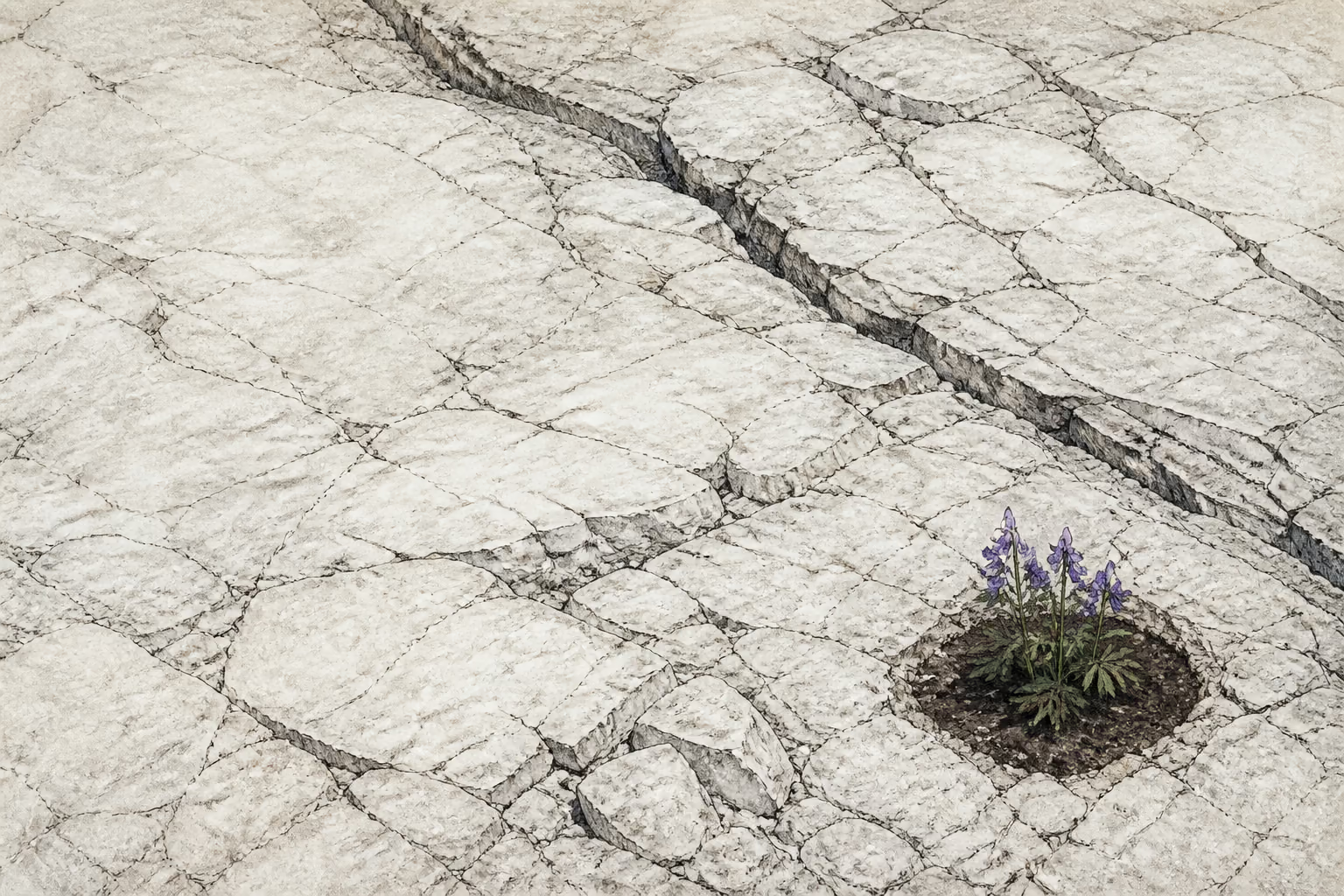
This plant is found growing upon the naked rocks known as “aconæ;” and hence it is, according to some authorities, that it is called “aconitum,” there being not so much as dust even about it to conduce to its nutriment. Such is the reason given for its name by some: but according to others, it receives this appellation from the fact that it fatally exercises the same effects upon the body that the whetstone does upon the edge of iron, being no sooner employed than its effects are felt.