LIBER XXVIII · CAPUT 20
REMARKABLE FACTS RELATIVE TO ANIMALS
Latine · Mayhoff 1906
Mira praeterea traduntur in iisdem animalibus: vestigium equi excussum ungula, ut solet plerumque, si quis collectum reponat, singultus remedium esse recordantibus, quonam loco id reposuerint; iocur luporum equinae ungulae simile esse; rumpi equos, qui vestigia luporum sub equite sequantur; talis suum discordiae vim quandam inesse; in incendiis, si fimi aliquid egeratur e stabulis, facilius extrahi nec recurrere oves bovesque; hircorum carnes virus non resipere, si panem hordeacium eo die, quo interficiantur, ederint laserve dilutum biberint, nullas vero teredinem sentire luna decrescente induratas sale. adeoque nihil omissum est, ut leporem surdum celerius pinguescere reperiamus, animalium vero medicinas: si sanguis profluat iumentis, suillum fimum ex vino infundendum, boum autem morbis sebum, sulpur vivum, alium silvestre, ovum crudum trita in vino danda aut vulpis adipem; carnem caballinam discoctam potu suum morbis mederi, omnium vero quadripedum morbis capram solidam cum corio et ranam rubetam discoctas; gallinaceos non attingi a vulpibus, qui iocur animalis eius aridum ederint, vel si pellicula ex eo collo induta galli inierint; similiter in felle mustelae; boves in Cypro contra tormina hominum excrementis sibi mederi; non supteri pedes bourn, si prius cornua ima pice liquida perunguantur; lupos in agrum non accedere, si capti unius pedibus infractis cultroque adacto paulatim sanguis circa fines agri spargatur atque ipse defodiatur in eo loco, ex quo coeperit trahi; aut si vomerem, quo primus sulcus eo anno in agro ductus sit, excussum aratro focus Larum, quo familia conveniet, urat, lupum nulli animalium nociturum in eo agro, quam diu id fiat.
Hinc deinde praevertemur ad animalia sui generis, quae aut placida non sunt aut fera.
English · Bostock & Riley 1855–57
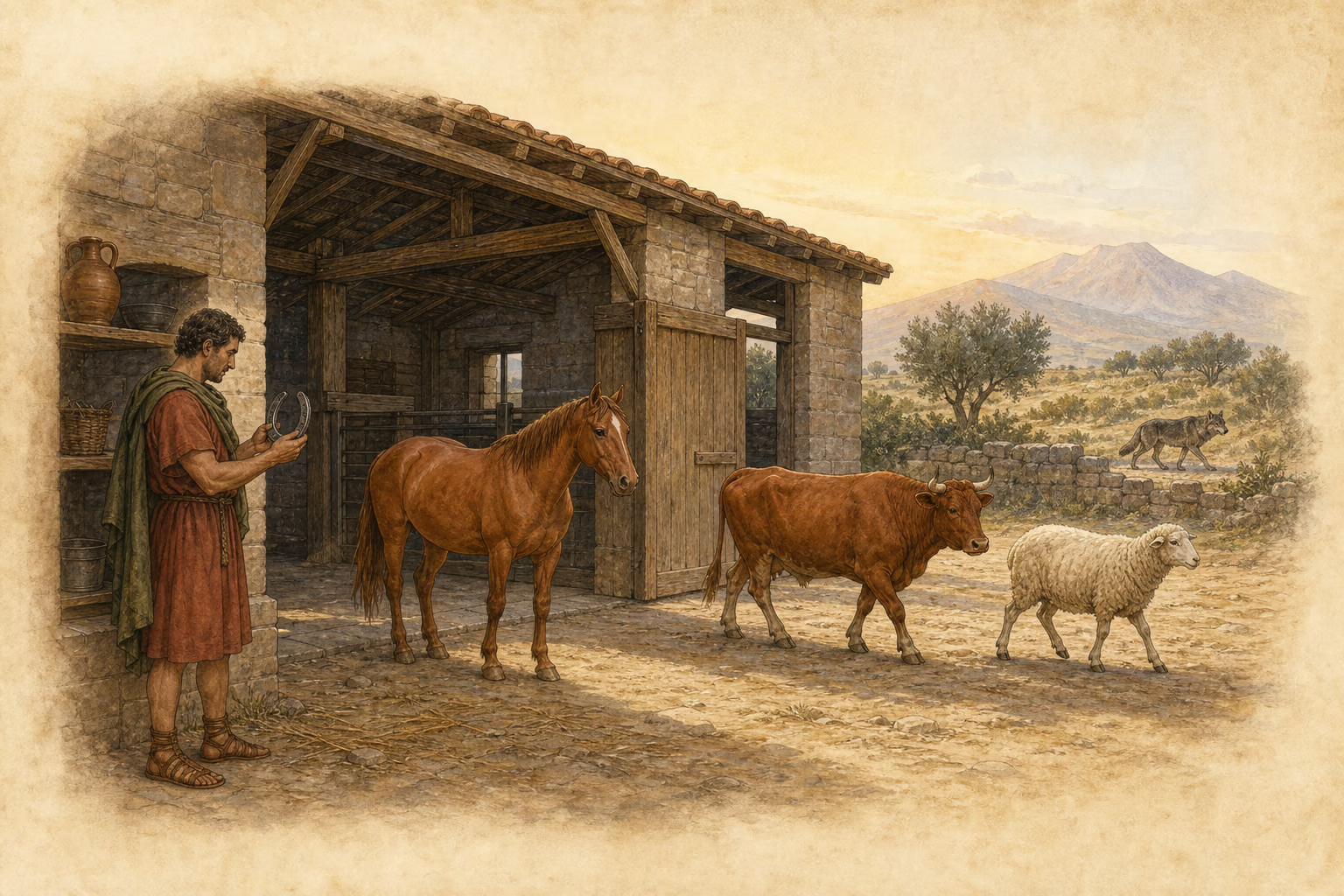
In addition to those already mentioned, there are various other marvellous facts related, with reference to these animals. When a horse-shoe becomes detached from the hoof, as often is the case, if a person takes it up and puts it by, it will act as a remedy for hiccup the moment he calls to mind the spot where he has placed it. A wolf’s liver, they say, is similar to a horse’s hoof in appearance; and a horse, they tell us, if it follows in the track of a wolf, will burst asunder beneath its rider. The pastern-bones of swine have a certain tendency to promote discord, it is said. In cases of fire, if some of the dung can be brought away from the stalls, both sheep and oxen may be got out all the more easily, and will make no attempt to return. The flesh of a he-goat will lose its rank smell, if the animal has eaten barley-bread, or drunk an infusion of laser the day on which it was killed. Meat that has been salted while the moon was on the wane, will never be attacked by worms. In fact, so great has been the care taken to omit no possible researches, that a deaf hare, we find, will grow fat sooner than one that can hear!
As to the remedies for the diseases of animals—If a beast of burden voids blood, an injection must be used of swine’s dung mixed with wine. For the maladies of oxen, a mixture of suet is used with quicksilver, and wild garlic boiled; the whole beaten up and administered in wine. The fat, too, of a fox is employed. The liquor of boiled horse-flesh, administered in their drink, is recommended for the cure of diseased swine: and, indeed, the maladies of all four-footed beasts may be effectually treated by boiling a she-goat whole, in her skin, along with a bramble-frog. Poultry, they say, will never be touched by a fox, if they have eaten the dried liver of that animal, or if the cock, when treading the hen, has had a piece of fox’s skin about his neck. The same property, too, is attributed to a weazel’s gall. The oxen in the Isle of Cyprus cure themselves of gripings in the abdomen, it is said, by swallowing human excrements: the feet, too, of oxen will never be worn to the quick, if their hoofs are well rubbed with tar before they begin work. Wolves will never approach a field, if, after one has been caught and its legs broken and throat cut, the blood is dropped little by little along the boundaries of the field, and the body buried on the spot from which it was first dragged. The share, too, with which the first furrow in the field has been traced in the current year, should be taken from the plough, and placed upon the hearth of the Lares, where the family is in the habit of meeting, and left there till it is consumed: so long as this is in doing, no wolf will attack any animal in the field.
We will now turn to an examination of those animals which, being neither tame nor wild, are of a nature peculiar to themselves.