LIBER XXIX · CAPUT 1
THE ORIGIN OF THE MEDICAL ART
Latine · Mayhoff 1906
Naturae remediorum atque multitudo instantium ac praeteritorum plura de ipsa medendi arte cogunt dicere, quamquam non ignaros, nulli ante haec Latino sermone condita ancepsque, lubricum esse rerum omnium novarum exordium, utique tam sterilis gratiae tantaeque difficultatis in promendo. sed quaestionem occurrere verisimile est omnium, qui haec noscant, cogitationi, quonam modo exoleverint in medicinae usu quae iam parata atque pertinentia erant, mirumque et indignum protinus subit, nullam artium inconstantiorem fuisse aut etiamnunc saepius mutari, cum sit fructuosior nulla. dis primum inventores suos adsignavit et caelo dicavit, nec non et hodie multifariam ab oraculis medicina petitur. auxit deinde famam etiam crimine, ictum fulmine Aesculapium fabulata, quoniam Tyndareum revocavisset ad vitam—nec tamen cessavit narrare alios revixisse opera sua—, clara Troianis temporibus, a quibus fama certior, vulnerum tamen dumtaxat remediis.
Sequentia eius, mirum dictu, in nocte densissima latuere usque ad Peloponnesiacum bellum. tune eaM revocavit in lucem Hippocrates, genitus in insula Coo in primis clara ac valida et Aesculapio dicata. is, cum fuisset mos, liberatos morbis scribere in templo eius dei quid auxiliatum esset, ut postea similitudo proficeret, exscripsisse ea traditur atque, ut Varro apud nos credit, templo cremato iis instituisse medicinam hanc, quae clinice vocatur. nec fruit postea quaestus modus, quoniam Prodicus, Selymbriae natus, e discipulis eius instituit quam vocant iatralipticen et unctoribus quoque medicorum ac mediastinis vectigal invenit.
Horum placita Chrysippus ingenti garrulitate mutavit, plurimumque et ex Chrysippo discipulus eius Erasistratus, Aristotelis filia genitus. hic Antiocho rege sanato centum talentis donatus est a rege Ptolemaeo filio eius, ut incipiamus et praemia artis ostendere.
Alia factio ab experimentis se cognominans empiricen coepit in Sicilia, Acrone Agragantino Empedoclis physici auctoritate commendato, dissederuntque hae scholae, et omnes eas damnavit Herophilus in musicos pedes venarum pulsu discripto per aetatum gradus. deserta deinde. et haec secta est, quoniam necesse erat in ea litteras scire; mutata et quam postea Asclepiades, ut rettulimus, invenerat. auditor eius Themison fuit seque inter initia adscripsit illi, mox procedente vita sua et placita mutavit, sed et illa Antonius Musa eiusdem auctoritate divi Augusti, quem contraria medicina gravi periculo exemerat. multos praetereo medicos celeberrimosque ex iis Cassios, Carpetanos, Arruntios, Rubrios. CCL HS annuae iis mercedes fuere apud principes. Q. Stertinius inputavit principibus, quod sestertiis quingenis annuis contentus esset, sescena enim sibi quaestu urbis fuisse enumeratis domibus ostendebat. par et fratri eius merces a Claudio Caesare infusa est, censusque, quamquam exhausti operibus Neapoli exornata, heredi HS ccc reliquere, quantum aetateeadem Arruntius solus. exortus deinde est Vettius Valens, adulterio Messalinae Claudii Caesaris nobilitatus, pariterque eloquentiae adsectatores et potentiae nanctus novam instituit sectam. eadem aetas Neronis principatu ad Thessalum transilivit, delentem cuncta placita et rabie quadam in omnis aevi medicos perorantem, quali prudentia ingenioque, aestimari vel uno argumento abunde potest, cum monumento suo, quod est Appia via, iatronicen se inscripserit. nullius histrionum equorumque trigarii comitatior egressus in publico erat, cum Crinas Massiliensis arte geminata, ut cautior religiosiorque, ad siderum motus ex ephemeride mathematica cibos dando horasque observando auctoritate eum praecessit, nuperque HS C??? reliquit, muris patriae moenibusque aliis paene non minore summa extructis. hi regebant fata, cum repente civitatem Charmis ex eadem Massilia invasit damnatis non solum prioribus medicis, verum et balineis, frigidaque etiam hibernis algoribus lavari persuasit. mersit aegros in lacus. videbamus senes consulares usque in ostentationem rigentes, qua de re exstat etiam Annaei Senecae adstipulatio. nec dubium est omnes istos famam novitate aliqua aucupantes anima statim nostra negotiari. hinc illae circa aegros miserae sententiarum concertationes, nullo idem censente, ne videatur accessio alterius. hinc illa infelicis monumenti inscriptio: turba se medicorum perisse. mutatur ars cottidie totiens interpolis, et ingeniorum Graeciae flatu inpellimur, palamque est, ut quisque inter istos loquendo polleat, imperatorem ilico vitae nostrae necisque fieri, ceu vero non milia gentium sine medicis degant nec tamen sine medicina, sicuti populus Romanus ultra sexcentesimum annum, neque ipse in accipiendis artibus lentus, medicinae vero etiam avidus, done expertam damnavit.
Etenim percensere insignia priscorum in his moribus convenit. Cassius Hemina ex antiquissimis auctor est primum e medicis venisse Romam Peloponneso Archagathum Lysaniae filium L. Aemilio M. Livio cos. anno urbis DXXXV, eique ius Quiritium datum et tabernam in compito Acilio emptam ob id publice. vulnerarium eum fuisse egregium, mireque gratum adventum eius initio, mox a saevitia secandi urendique transisse nomen in carnificem et in taedium artem omnesque medicos, quod clarissime intellegi potest ex M. Catone, cuius auctoritati triumphus atque censura minimum conferunt; tanto plus in ipso est. quam ob rem verba eius ipsa ponemus:
Dicam de istis Graecis suo loco, M. fili, quid Athenis exquisitum habeam et quod bonum sit illorum litteras inspicere, non perdiscere. vincam nequissimum et indocile genus illorum, et hoc puta vatem dixisse: quandoque ista gens suas litteras dabit, omnia conrumpet, tum etiam magis, si medicos suos hoc mittet. iurarunt inter se barbaros necare omnes medicina, sed hoc ipsum mercede faciunt, ut fides iis sit et facile disperdant. nos quoque dictitant barbaros et spurcius nos quam alios ʼὀπικῶν appellatione foedant. interdixi tibi de medicis.
Atqui hic Cato sescentesimo quinto anno urbis nostrae obiit, octogensimo quinto suo, ne quis illi defuisse publice tempora aut privatim vitae spatia ad experiendum arbitretur. quid ergo? damnatam ab eo rem utilissimam credimus? minime, Hercules. subicit enim qua medicina se et coniugem usque ad longam senectam perduxerit, his ipsis scilicet, quae nunc nos tractamus, profiteturque esse commentarium sibi, quo medeatur filio, servis, familiaribus, quem nos per genera usus sui digerimus. non rem antiqui damnabant, sed artem, maxime vero quaestum esse mranipretio vitae recusabant. ideo templum Aesculapii, etiam cum reciperetur is deus, extra urbem fecisse iterumque in insula traduntur et, cum Graecos Italia pellerent, diu etiam post Catonem, excepisse medicos. augebo providentiam illorum. solam hanc artium Graecarum nondum exercet Romana gravitas, in tanto fructu paucissimi Quiritium attigere, et ipsi statim ad Graecos transfugae, immo vero auctoritas aliter quam Graece eam tractantibus etiam apud inperitos expertesque linguae non est, ac minus credunt quae ad salutem suam pertinent, si intellegant. itaque, Hercules, in hac artium sola evenit, ut cuicumque medicum se professo statim credatur, cum sit periculum in nullo mendacio maius. non tamen illud intuemur; adeo blanda est sperandi pro se cuique dulcedo. nulla praeterea lex, quae puniat inscitiam capitalem, nullum exemplum vindictae. discunt periculis nostris et experimenta per mortes agunt, medicoque tantum hominem occidisse inpunitas summa est. quin immo transit convitium et intemperantia culpatur, ultroque qui periere arguuntur. sed decuriae pro more censuris principum examinantur, inquisitio per parietes agitur, et qui de nummo iudicet a Gadibus columnisque Herculis arcessitur, de exilio vero non nisi XLV electis viris datur tabella: at de iudice ipso quales in consilium eunt statim occisuri! merito, dum nemini nostrum libet scire, quid saluti suae opus sit. alienis pedibus ambulamus, alienis oculis agnoscimus, aliena memoria salutamus, aliena et vivimus opera, perieruntque rerum naturae pretia et vitae argumenta. nihil aliud pro nostro habemus quam delicias. non deseram Catonem tam ambitiosae artis invidiae a me obiectum aut senatum illum, qui ita censebat, idque non criminibus artis arreptis, ut aliquis exspectaverit. quid enim venenorum fertilius aut unde plures testamentorum insidiae? iam vero et adulteria etiam in principum domibus, ut Eudemi in Livia Drusi Caesaris, item Valentis in qua dictum est regina. non sint artis ista, sed hominum: non magis haec urbi timuit Cato, ut equidem credo, quam reginas. ne avaritiam quidem arguam rapacesque nundinas pendentibus fatis et dolorum indicaturam ac mortis arram aut arcana praecepti, squamam in oculis emovendam potius quam extrahendam. per quae effectum est, ut nihil magis pro re videretur quam multitudo grassantium; neque enim pudor, sed aemuli pretia summittunt. notum est ab eodem Charmide unum aegrum e provincialibus HsCC reconductum, Alconti vulnerum medico HS |C??? | damnato ademisse Claudium principem, eidemque in Gallia exulanti et deinde restituto adquisitum non minus intra paucos annos. et haec personis inputentur. ne faecem quidem aut inscitiam eius turpem arguamus: ipsorumprocerum intemperantiam inmodicis aquarum calidarum deverticulis, imperiosa inedia et ab isdem deficientibus cibo saepius die ingesto, mille praeterea paenitentiae modis, culinarum etiam praeceptis et unguentorum mixturis, quando nullas omisere vitae inlecebras. invehi peregrinas merces conciliarique externa pretia displicuisse maioribus crediderim equidem, non tamen hoc Catonem providisse, cum damnaret artem. theriace vocatur excogitata composition luxuria finxit rebus sexcentis, cum tot remedia dederit natura, quae singula sufficerent. Mithridatium antidotum ex rebus LIIII componitur, inter nullas pondere aequali, et quarundam rerum sexagesima denarii unius imperatur, quo deorum, per Fidem, ista monstrante! hominum enim subtilitas tanta esse non potuit; ostentatio artis et portentosa scientiae venditatio manifesta est. ac ne ipsi quidem illa novere, conperique volgo pro cinnabari Indica in medicamenta minium addi inscitia nominis, quod esse venenum docebimus inter pigmenta. verum haec ad singulorum salutem pertinent; illa autem, quae timuit Cato atque providit, innocentiora multo et parva opinatu, quae proceres artis eius de semet ipsi fateantur, illa perdidere imperii mores, illa, quae sani patimur, luctatus, ceromata ceu valitudinis causa instituta, balineae ardentes, quibus persuasere in corporibus cibos coqui, ut nemo non minus validus exiret, oboedientissimi vero efferrentur, potus deinde ieiunorum ac vomitiones et rursus perpotationes ac pilorum eviratio instituta resinis eorum, itemque pectines in feminis quidem publicati. ita est profecto: lues morum, nec aliunde maior quam e medicina, vatem prorsus cottidie facit Catonem et oraculum: satis esse ingenia Graecorum inspicere, non perdiscere.
Haec fuerint dicenda pro senatu illo sescentisque p. R. annis adversus artem, in qua condicione insidiosissima auctoritatem pessimis boni faciunt, simul contra attonitas quorundam persuasiones, qui prodesse nisi pretiosa non putant. neque enim dubitaverim aliquis fastidio futura quae dicentur animalia, at non Vergilio fuit nominare formicas nulla necessitate et curculiones ac lucifugis congesta cubilia blattis, non Homero inter proelia deorum inprobitatem muscae describere, non naturae gignere ista, cum gignat hominem. proinde causas quisque et effectus, non res aestimet.
Ordiemur autem confessis, hoc est lanis ovisque, ob id ut rebus praecipuis honos in primis perhibeatur. quaedam etiam sic alienis locis, tamen obiter, dici necesse erit. nec deerat materia pompae, si quicquam aliud intueri liberet quam fidem operis, quippe inter prima proditis etiam ex cinere phoenicis nidoque medicinis, ceu vero id certum esset atque non fabulosum. inridere est vitam remedia post millensimum annum reditura monstrare.
English · Bostock & Riley 1855–57
The nature and multiplicity of the various remedies already described or which still remain to be enlarged upon, compel me to enter upon some further details with reference to the art of medicine itself: aware as I am, that no one has hitherto treated of this subject in the Latin tongue, and that if all new enterprises are difficult or of doubtful success, it must be one in particular which is so barren of all charms to recommend it, and accompanied with such difficulties of illustration. It will not improbably suggest itself, however, to those who are familiar with this subject, to make enquiry how it is that in the practice of medicine the use of simples has been abandoned, so convenient as they are and so ready prepared to our hand: and they will be inclined to feel equal surprise and indignation when they are informed that no known art, lucrative as this is beyond all the rest, has been more fluctuating, or subjected to more frequent variations.
Commencing by ranking its inventors in the number of the gods, and consecrating for them a place in heaven, the art of medicine, at the present day even, teaches us in numerous instances to have recourse to the oracles for aid. In more recent times again, the same art has augmented its celebrity, at the cost perhaps of being charged with criminality, by devising the fable that Æsculapius was struck by lightning for presuming to raise Tyndareus to life. And this example notwithstanding, it has not hesitated to relate how that others, through its agency, have since been restored to life. Already enjoying celebrity in the days of the Trojan War, its traditions from that period have acquired an additional degree of certainty; although in those times, we may remark, the healing art confined itself solely to the treatment of wounds.
Its succeeding history, a fact that is truly marvellous, remains enveloped in the densest night, down to the time of the Peloponnesian War; at which period it was restored to light by the agency of Hippocrates, a native of Cos, an island flourishing and powerful in the highest degree, and consecrated to Æsculapius. It being the practice for persons who had recovered from a disease to describe in the temple of that god the remedies to which they had owed their restoration to health, that others might derive benefit therefrom in a similar emergency; Hippocrates, it is said, copied out these prescriptions, and, as our fellow-countryman Varro will have it, after burning the temple to the ground, instituted that branch of medical practice which is known as “Clinics.” There was no limit after this to the profits derived from the practice of medicine; for Prodicus, a native of Selymbria, one of his disciples, founded the branch of it known as “Iatraliptics,” and so discovered a means of enriching the very anointers even and the commonest drudges employed by the physicians.
In the rules laid down by these professors, changes were effected by Chrysippus with a vast parade of words, and, after Chrysippus, by Erasistratus, son of the daughter of Aristotle. For the cure of King Antiochus—to give our first illustration of the profits realized by the medical art—Erasistratus received from his son, King Ptolemæus, the sum of one hundred talents.
Another sect again, known as that of the Empirics —because it based its rules upon the results of experiment—took its rise in Sicily, having for its founder Acron of Agrigentum, a man recommended by the high authority of Empedocles the physician.
These several schools of medicine, long at variance among themselves, were all of them condemned by Herophilus, who regulated the arterial pulsation according to the musical scale, correspondingly with the age of the patient. In succeeding years again, the theories of this sect were abandoned, it being found that to belong to it necessitated an acquaintance with literature. Changes, too, were effected in the school, of which, as already stated, Asclepiades had become the founder. His disciple, Themison, who at first in his writings implicitly followed him, soon afterwards, in compliance with the growing degeneracy of the age, went so far as to modify his own methods of treatment; which, in their turn, were entirely displaced, with the authorization of the late Emperor Augustus, by Antonius Musa, a physician who had rescued that prince from a most dangerous malady, by following a mode of treatment diametrically opposite.
I pass over in silence many physicians of the very highest celebrity, the Cassii, for instance, the Calpetani, the Arruntii, and the Rubrii, men who received fees yearly from the great, amounting to no less than two hundred and fifty thousand sesterces. As for Q. Stertinius, he thought that he conferred an obligation upon the emperors in being content with five hundred thousand sesterces per annum; and indeed he proved, by an enumeration of the several houses, that a city practice would bring him in a yearly income of not less than six hundred thousand sesterces.
Fully equal to this was the sum lavished upon his brother by Claudius Cæsar; and the two brothers, although they had drawn largely upon their fortunes in beautifying the public buildings at Neapolis, left to their heirs no less than thirty millions of sesterces! such an estate as no physician but Arruntius had till then possessed.
Next in succession arose Vettius Valens, rendered so notorious by his adulterous connection with Messalina, the wife of Claudius Cæsar, and equally celebrated as a professor of eloquence. When established in public favour, he became the founder of a new sect.
It was in the same age, too, during the reign of the Emperor Nero, that the destinies of the medical art passed into the hands of Thessalus, a man who swept away all the precepts of his predecessors, and declaimed with a sort of frenzy against the physicians of every age; but with what discretion and in what spirit, we may abundantly conclude from a single trait presented by his character—upon his tomb, which is still to be seen on the Appian Way, he had his name inscribed as the “Iatronices”—the “Conqueror of the Physicians.” No stage-player, no driver of a three-horse chariot, had a greater throng attending him when he appeared in public: but he was at last eclipsed in credit by Crinas, a native of Massilia, who, to wear an appearance of greater discreetness and more devoutness, united in himself the pursuit of two sciences, and prescribed diets to his patients in accordance with the movements of the heavenly bodies, as indicated by the almanacks of the mathematicians, taking observations himself of the various times and seasons. It was but recently that he died, leaving ten millions of sesterces, after having expended hardly a less sum upon building the walls of his native place and of other towns.
It was while these men were ruling our destinies, that all at once, Charmis, a native also of Massilia, took the City by surprise. Not content with condemning the practice of preceding physicians, he proscribed the use of warm baths as well, and persuaded people, in the very depth of winter even, to immerse themselves in cold water. His patients he used to plunge into large vessels filled with cold water, and it was a common thing to see aged men of consular rank make it a matter of parade to freeze themselves; a method of treatment, in favour of which Annæus Seneca gives his personal testimony, in writings still extant.
There can be no doubt whatever, that all these men, in the pursuit of celebrity by the introduction of some novelty or other, made purchase of it at the downright expense of human life. Hence those woeful discussions, those consultations at the bed-side of the patient, where no one thinks fit to be of the same opinion as another, lest he may have the appearance of being subordinate to another; hence, too, that ominous inscription to be read upon a tomb, “It was the multitude of physicians that killed me.”
The medical art, so often modified and renewed as it has been, is still on the change from day to day, and still are we impelled onwards by the puffs which emanate from the ingenuity of the Greeks. It is quite evident too, that every one among them that finds himself skilled in the art of speech, may forthwith create himself the arbiter of our life and death: as though, forsooth, there were not thousands of nations who live without any physicians at all, though not, for all that, without the aid of medicine. Such, for instance, was the Roman people, for a period of more than six hundred years; a people, too, which has never shown itself slow to adopt all useful arts, and which even welcomed the medical art with avidity, until, after a fair experience of it, there was found good reason to condemn it.
And, indeed, it appears to me not amiss to take the present opportunity of reviewing some remarkable facts in the days of our forefathers connected with this subject. Cassius Hemina, one of our most ancient writers, says that the first physician that visited Rome was Archagathus, the son of Lysanias, who came over from Peloponnesus, in the year of the City 535, L. Æmilius and M. Livius being consuls. He states also, that the right of free citizenship was granted him, and that he had a shop provided for his practice at the public expense in the Acilian Cross-way; that from his practice he received the name of “Vulnerarius;” that on his arrival he was greatly welcomed at first, but that soon afterwards, from the cruelty displayed by him in cutting and searing his patients, he acquired the new name of “Carnifex,” and brought his art and physicians in general into considerable disrepute.
That such was the fact, we may readily understand from the words of M. Cato, a man whose authority stands so high of itself, that but little weight is added to it by the triumph which he gained, and the Censorship which he held. I shall, therefore, give his own words in reference to this subject.
“Concerning those Greeks, son Marcus, I will speak to you more at length on the befitting occasion. I will show you the results of my own experience at Athens, and that, while it is a good plan to dip into their literature, it is not worth while to make a thorough acquaintance with it. They are a most iniquitous and intractable race, and you may take my word as the word of a prophet, when I tell you, that whenever that nation shall bestow its literature upon Rome it will mar everything; and that all the sooner, if it sends its physicians among us. They have conspired among themselves to murder all barbarians with their medicine; a profession which they exercise for lucre, in order that they may win our confidence, and dispatch us all the more easily. They are in the common habit, too, of calling us barbarians, and stigmatize us beyond all other nations, by giving us the abominable appellation of Opici. I forbid you to have anything to do with physicians.”
Cato, who wrote to this effect, died in his eighty-fifth year, in the year of the City 605; so that no one is to suppose that he had not sufficient time to form his experience, either with reference to the duration of the republic, or the length of his own life. Well then—are we to conclude that he has stamped with condemnation a thing that in itself is most useful? Far from it, by Hercules! for he subjoins an account of the medical prescriptions, by the aid of which he had ensured to himself and to his wife a ripe old age; prescriptions upon which we are now about to enlarge. He asserts also that he has a book of recipes in his possession, by the aid of which he treats the maladies of his son, his servants, and his friends; a book from which we have extracted the various prescriptions according to the several maladies for which they are employed.
It was not the thing itself that the ancients condemned, but it was the art as then practised, and they were shocked, more particularly, that man should pay so dear for the enjoyment of life. For this reason it was, they say, that the Temple of Æsculapius even after he was received as a divinity, was built without the City, and afterwards on an island; for this reason, too, it was, that when, long after the time of Cato, the Greeks were expelled from Italy, the physicians were not exempted from the decree. And here I will improve upon the foresight displayed by them. Medicine is the only one of the arts of Greece, that, lucrative as it is, the Roman gravity has hitherto refused to cultivate. It is but very few of our fellow-citizens that have even attempted it, and so soon as ever they have done so, they have become deserters to the Greeks forthwith. Nay, even more than this, if they attempt to treat of it in any other language than Greek, they are sure to lose all credit, with the most ignorant even, and those who do not understand a word of Greek; there being all the less confidence felt by our people in that which so nearly concerns their welfare, if it happens to be intelligible to them. In fact, this is the only one of all the arts, by Hercules! in which the moment a man declares himself to be an adept, he is at once believed, there being at the same time no imposture, the results of which are more fraught with peril. To all this, however, we give no attention, so seductive is the sweet influence of the hope entertained of his ultimate recovery by each.
And then besides, there is no law in existence whereby to punish the ignorance of physicians, no instance before us of capital punishment inflicted. It is at the expense of our perils that they learn, and they experimentalize by putting us to death, a physician being the only person that can kill another with sovereign impunity. Nay, even more than this, all the blame is thrown upon the sick man only; he is accused of disobedience forthwith, and it is the person who is dead and gone that is put upon his trial. It is the usage at Rome for the decuries to pass examination under the censorship of the emperor, and for inquisitions to be made at our party-walls even: persons who are to sit in judgment on our monetary matters are sent for to Gades and the very Pillars of Hercules; while a question of exile is never entertained without a panel of forty-five men selected for the purpose. But when it is the judge’s own life that is at stake, who are the persons that are to hold council upon it, but those who the very next moment are about to take it!
And yet so it is, that we only meet with our deserts, no one of us feeling the least anxiety to know what is necessary for his own welfare. We walk with the feet of other people, we see with the eyes of other people, trusting to the memory of others we salute one another, and it is by the aid of others that we live. The most precious objects of existence, and the chief supports of life, are entirely lost to us, and we have nothing left but our pleasures to call our own. I will not leave Cato exposed to the hatred of a profession so ambitious as this, nor yet that senate which judged as he did, but at the same time I will pursue my object without wresting to my purpose the cries practised by its adepts, as some might naturally expect. For what profession has there been more fruitful in poisonings, or from which there have emanated more frauds upon wills? And then, too, what adulteries have been committed, in the very houses of our princes even! the intrigue of Eudemus, for example, with Livia, the wife of Drusus Cæsar, and that of Valens with the royal lady previous mentioned. Let us not impute these evils, I say, to the art, but to the men who practise it; for Cato, I verily believe, as little apprehended such practices as these in the City, as he did the presence of royal ladies there.
I will not accuse the medical art of the avarice even of its professors, the rapacious bargains made with their patients while their fate is trembling in the balance, the tariffs framed upon their agonies, the monies taken as earnest for the dispatching of patients, or the mysterious secrets of the craft. I will not mention how that cataract must be couched only, in the eye, in preference to extracting it at once—practices, all of them, which have resulted in one very great advantage, by alluring hither such a multitude of adventurers; it being no moderation on their part, but the rivalry existing between such numbers of practitioners, that keeps their charges within moderation. It is a well-known fact that Charmis, the physician already mentioned, made a bargain with a patient of his in the provinces, that he should have two hundred thousand sesterces for the cure; that the Emperor Claudius extorted from Alcon, the surgeon, ten millions of sesterces by way of fine; and that the same man, after being recalled from his exile in Gaul, acquired a sum equally large in the course of a few years.
These are faults, however, which must be imputed to individuals only; and it is not my intention to waste reproof upon the dregs of the medical profession, or to call attention to the ignorance displayed by that crew, the violation of all regimen in their treatment of disease, the evasions practised in the use of warm baths, the strict diet they imperiously prescribe, the food that is crammed into these same patients, exhausted as they are, several times a day; together with a thousand other methods of showing how quick they are to change their mind, their precepts for the regulation of the kitchen, and their recipes for the composition of unguents, it being one grand object with them to lose sight of none of the usual incitements to sensuality. The importation of foreign merchandize, and the introduction of tariffs settled by foreigners, would have been highly displeasing to our ancestors, I can readily imagine; but it was not these inconveniences that Cato had in view, when he spoke thus strongly in condemnation of the medical art.
“Theriace” is the name given to a preparation devised by luxury; a composition formed of six hundred different ingredients; and this while Nature has bestowed upon us such numbers of remedies, each of which would have fully answered the purpose employed by itself! The Mithridatic antidote is composed of four and fifty ingredients, none of which are used in exactly the same proportion, and the quantity prescribed is in some cases so small as the sixtieth part of one denarius! Which of the gods, pray, can have instructed man in such trickery as this, a height to which the mere subtlety of human invention could surely never have reached? it clearly must emanate from a vain ostentation of scientific skill and must be set down as a monstrous system of puffing off the medical art.
And yet, after all, the physicians themselves do not understand this branch of their profession; and I have ascertained that it is a common thing for them to put mineral vermilion in their medicines, a rank poison, as I shall have occasion to show when I come to speak of the pigments, in place of Indian cinnabar, and all because they mistake the name of the one drug for that of the other! These, however, are errors which only concern the health of individuals, while it is the practices which Cato foresaw and dreaded, less dangerous in themselves and little regarded, practices, in fact, which the leading men in the art do not hesitate to avow, that have wrought the corruption of the manners of our empire.
The practices I allude to are those to which, while enjoying robust health, we submit: such, for instance, as rubbing the body with wax and oil, a preparation for a wrestling match, by rights, but which, these men pretend, was invented as a preservative of health; the use of hot baths, which are necessary, they have persuaded us, for the proper digestion of the food, baths which no one ever leaves without being all the weaker for it, and from which the more submissive of their patients are only carried to the tomb; potions taken fasting; vomits to clear the stomach, and then a series of fresh drenchings with drink; emasculation, self-inflicted by the use of pitch-plasters as depilatories; the public exposure, too, of even the most delicate parts of the female body for the prosecution of these practices. Most assuredly so it is, the contagion which has seized upon the public morals, has had no more fertile source than the medical art, and it continues, day by day even, to justify the claims of Cato to be considered a prophet and an oracle of wisdom, in that assertion of his, that it is quite sufficient to dip into the records of Greek genius, without becoming thoroughly acquainted with them.
Such then is what may be said in justification of the senate and of the Roman people, during that period of six hundred years in which they manifested such repugnance to an art, by the most insidious terms of which, good men are made to lend their credit and authority to the very worst, and so strongly entered their protest against the silly persuasions entertained by those, who fancy that nothing can benefit them but what is coupled with high price.
I entertain no doubt, too, that there will be found some to express their disgust at the particulars which I am about to give, in relation to animals: and yet Virgil himself has not disdained—when, too, there was no necessity for his doing so—to speak of ants and weevils,
“And nests by beetles made that shun the light.”
Homer, too, amid his description of the battles of the gods, has not disdained to remark upon the voracity of the common fly; nor has Nature, she who engendered man, thought it beneath her to engender these insects as well. Let each then make it his care, not so much to regard the thing itself, as to rightly appreciate in each case the cause and its effects.
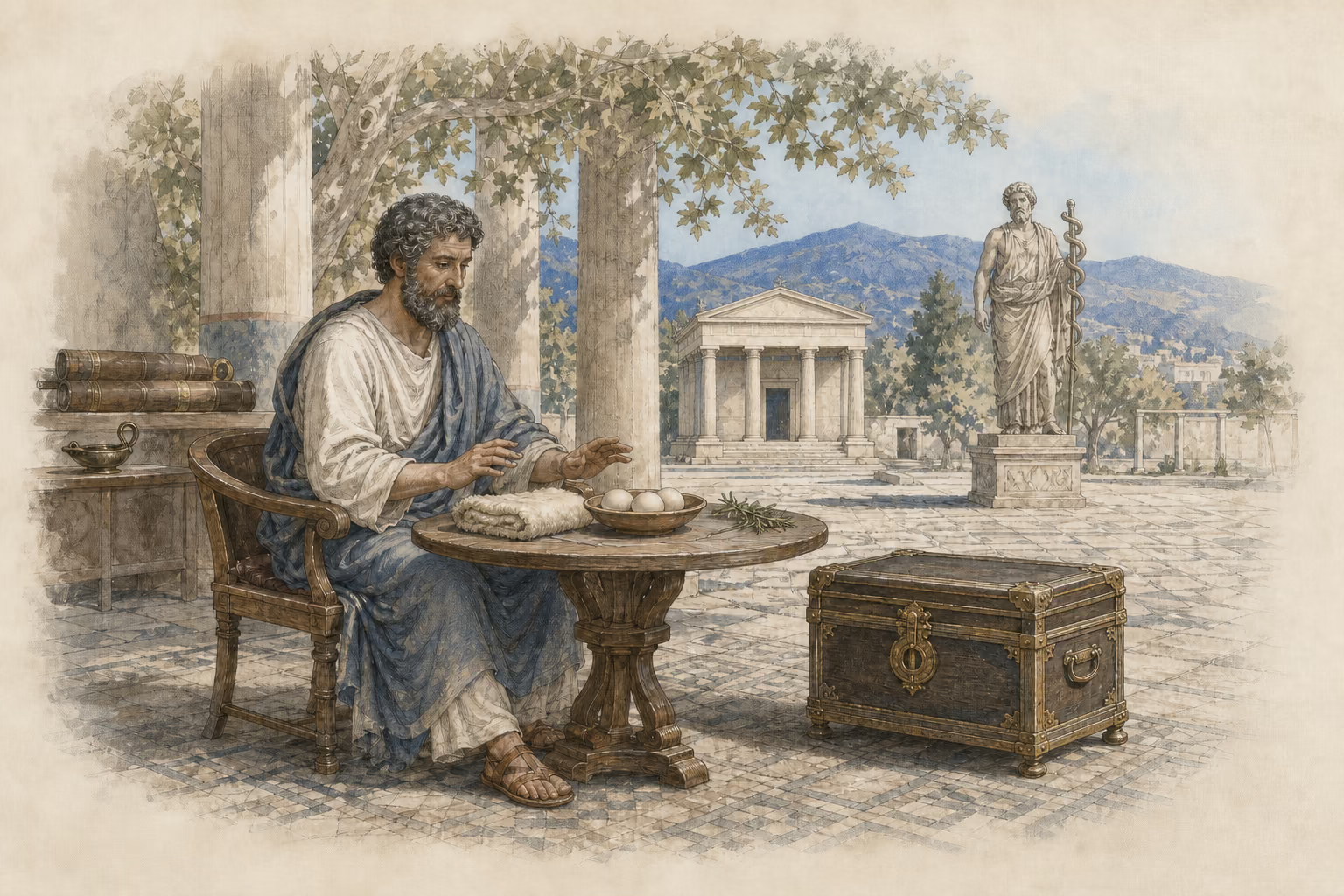
I shall begin then with some remedies that are well known, those namely, which are derived from wool and from the eggs of birds, thus giving due honour to those substances which hold the principal place in the estimation of mankind; though at the same time I shall be necessitated to speak of some others out of their proper place, according as occasion may offer. I should not have been at a loss for high-flown language with which to grace my narrative, had I made it my design to regard anything else than what, as being strictly trustworthy, becomes my work: for among the very first remedies mentioned, we find those said to be derived from the ashes and nest of the phœnix, as though, forsooth, its existence were a well ascertained fact, and not altogether a fable. And then besides, it would be a mere mockery to describe remedies that can only return to us once in a thousand years.