LIBER XXIX · CAPUT 2
THIRTY-TWO REMEDIES DERIVED FROM WOOL-GREASE
Latine · Mayhoff 1906
Lanis auctoritatem veteres Romani etiam religiosam habuere, postes a nubentibus attingi iubentes; praeterque cultum et tutelam contra frigora sucidae plurima praestant remedia ex oleo vinoque aut aceto, prout quaeque mulceri morderive opus sit et adstringi laxarive, luxatis membris dolentibusque nervis inpositae et crebro suffusae. quidam et salem admiscent luxatis; alii cum lana rutam tritam adipemque inponunt, item contusis tumentibusque. halitus quoque oris gratiores facere traditur confricatis dentibus atque gingivis admixto melle. prodest et phreneticis suffitu. sanguinem in naribus sistit cum oleo rosaceo indita et alio modo auribus opturatis spissius. quin et ulceribus vetustis inponitur cum melle. vulnera ex vino vel aceto vel aqua frigida et oleo expressa sanat. arietis vellera luta frigida ex oleo madefacta in muliebribus malis inflammationes vulvae sedant et, si procidat, suffitu reprimunt. sucida lana inposita subditaque mortuos partus evocat; sistit etiam profluvia earum. et canis rabiosi morsibus inculcata post diem septimum solvitur. reduvias sanat ex aqua frigida. eadem nitro, sulpure, oleo, aceto, pice liquida ferventibus tincta quam calidissima inposita bis die lumborum dolores sedat. sistit et sanguine ex ariete sucida articulos extremitatium praeligans. laudatissima omnis e collo, natione vero Galatica, Tarentina, Attica, Milesia. sucidam inponunt et desquamatis, percussis, lividis, incussis, conlisis, contritis, deiectis, capitis et aliis doloribus, stomachi inflammationi ex aceto et rosaceo. cinis eius inlinitur adtritis, vulneratis, ambustis. et in oculorum medicamenta additur, item in fistulas auresque suppuratas. ad hoc detonsam eam, alii evolsam, decisis summis partibus siccant carpuntque et in fictili crudo conponunt ac melle perfundunt uruntque. alii astulis taedae subiectis et subinde interstratis oleo adspersam accendunt cineremque in labellis aqua addita confricant manu et considere patiuntur, idque saepius mutantes aquam, done linguam adstringat leniter nec mordeat; tum cinerem reponunt. vis eius septica est efficacissimeque genas purgat.
Quin ipsae sordes pecudum sudorque feminum et alarum adhaerentes lanis—oesypum vocant—innumeros prope usus habent. in Atticis ovibus genito palma. fit pluribus modis, sed probatissimum lana ab iis partibus recenti concerpta aut quibuscumque sordibus sucidis primum collectis lento igni in aēneo subfervefactis et refrigeratis pinguique, quod supernatet, collecto in fictile vas iterumque decocta priore materia; quae pinguitudo utraque frigida aqua lavatur et in linteo saccatur ac sole torretur, donec candida fiat ac tralucida; tum in stagnea pyxide conditur. probatio, ut sordium virus oleat et manu fricante ex aqua non liquetur, sed albescat ut cerussa. oculis utilissimum contra inflammationes genarumque callum. quidam in testa torrent, donec pinguitudinem amittat, utilius tale existimantes erosis et duris genis, angulis scabiosis et lacrimantibus. ulcera non oculorum modo sanat, sed oris etiam et genitalium cum anserino adipe. medetur et vulvae inflammationibus et sedis rhagadiis et condylomatis cum meliloto ac butyro. reliquos usus eius digeremus. sordes quoque caudarum concretae in pilulas siccatae per se tusaeque in farinam et inlitae dentibus mire prosunt, etiam labantibus, gingivisque, si carcinoma serpat; iam vero pura vellera aut per se inposita caecis doloribus aut accepto sulpure, et cinis eorum genitalium vitiis, tantumque pollent, ut medicamentis quoque superponantur. medentur ante omnia et pecori ipsi, si fastidio non pascantur. cauda enim quam artissime praeligata, evolsa inde lana, statim vescuntur, traduntque quod extra nodum sit e cauda praemori.
English · Bostock & Riley 1855–57
The ancient Romans attributed to wool a degree of religious importance even, and it was in this spirit that they enjoined that the bride should touch the door-posts of her husband’s house with wool. In addition to dress and protection from the cold, wool, in an unwashed state, used in combination with oil, and wine or vinegar, supplies us with numerous remedies, according as we stand in need of an emollient or an excitant, an astringent or a laxative. Wetted from time to time with these liquids, greasy wool is applied to sprained limbs, and to sinews that are suffering from pain. In the case of sprains, some persons are in the habit of adding salt, while others, again, apply pounded rue and grease, in wool: the same, too, in the case of contusions or tumours. Wool will improve the breath, it is said, if the teeth and gums are rubbed with it, mixed with honey; it is very good, too, for phrenitis, used as a fumigation. To arrest bleeding at the nose, wool is introduced into the nostrils with oil of roses; or it is used in another manner, the ears being well plugged with it. In the case of inveterate ulcers it is applied topically with honey: soaked in wine or vinegar, or in cold water and oil, and then squeezed out, it is used for the cure of wounds.
Rams’ wool, washed in cold water, and steeped in oil, is used for female complaints, and to allay inflammations of the uterus. Procidence of the uterus is reduced by using this wool in the form of a fumigation. Greasy wool, used as a plaster and as a pessary, brings away the dead fœtus, and arrests uterine discharges. Bites inflicted by a mad dog are plugged with unwashed wool, and the application being removed at the end of seven days. Applied with cold water, it is a cure for agnails: steeped in a mixture of boiling nitre, sulphur, oil, vinegar, and tar, and applied twice a day, as warm as possible, it allays pains in the loins. By making ligatures with unwashed rams’ wool about the extremities of the limbs, bleeding is effectually stopped.
In all cases, the wool most esteemed is that from the neck of the animal; the best kinds of wool being those of Galatia, Tarentum, Attica, and Miletus. For excoriations, blows, bruises, contusions, crushes, galls, falls, pains in the head and other parts, and for inflammation of the stomach, unwashed wool is applied, with a mixture of vinegar and oil of roses. Reduced to ashes, it is applied to contusions, wounds, and burns, and forms an ingredient in ophthalmic compositions. It is employed, also, for fistulas and suppurations of the ears. For this last purpose, some persons take the wool as it is shorn, while others pluck it from the fleece; they then cut off the ends of it, and after drying and carding it, lay it in pots of unbaked earth, steep it well in honey, and burn it. Others, again, arrange it in layers alternately with chips of torch-pine, and, after sprinkling it with oil, set fire to it: they then rub the ashes into small vessels with the hands, and let them settle in water there. This operation is repeated and the water changed several times, until at last the ashes are found to be slightly astringent, without the slightest pungency; upon which, they are put by for use, being possessed of certain caustic properties, and extremely useful as a detergent the eyelids.
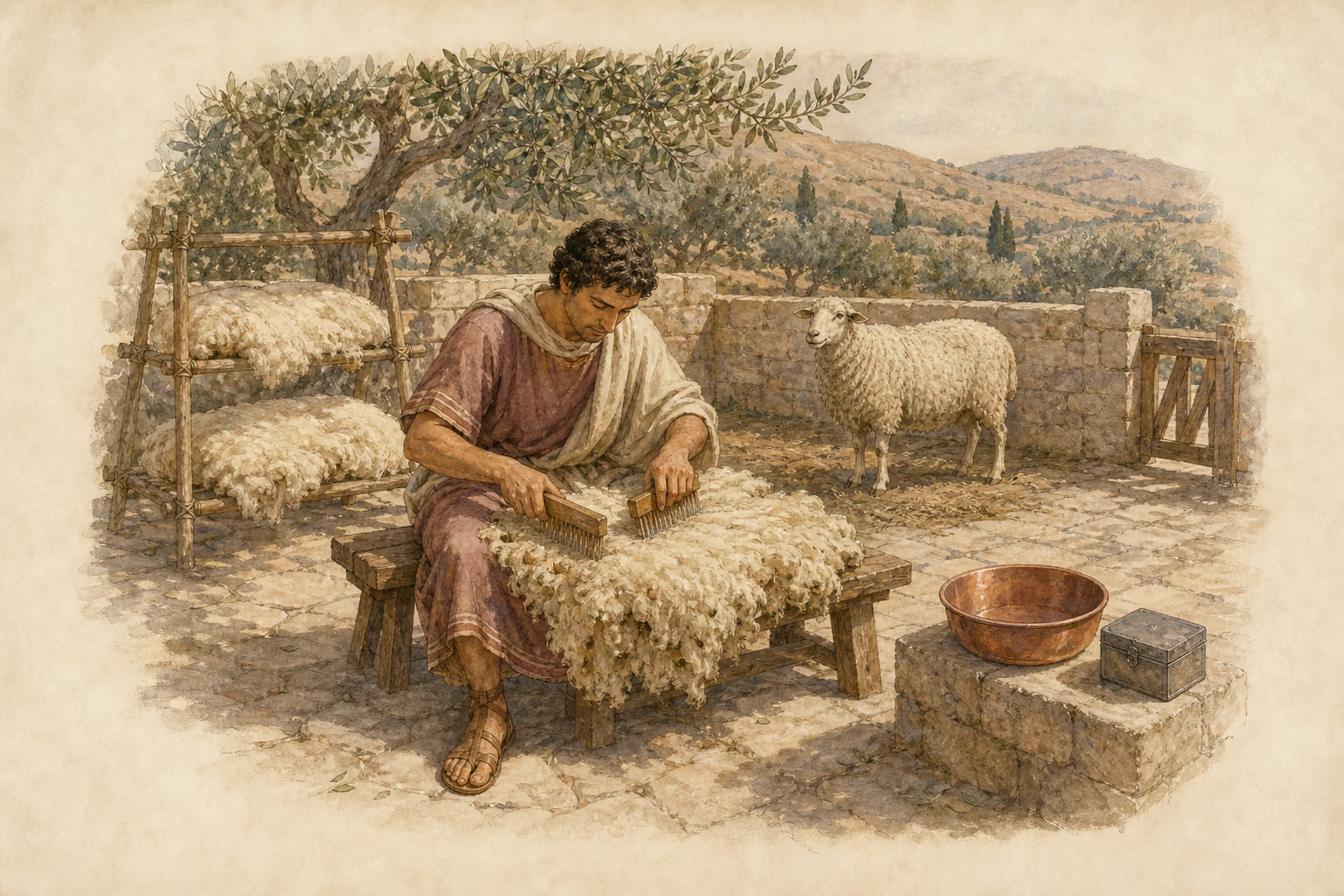
And not only this, but the filthy excretions even of sheep, the sweat adhering to the wool of the flanks and of the axillary concavities—a substance known as “œsypum” —are applied to purposes almost innumerable; the grease produced by the sheep of Attica being the most highly esteemed. There are numerous ways of obtaining it, but the most approved method is to take the wool, fresh clipped from those parts of the body, or else the sweat and grease collected from any part of the fleece, and boil it gently in a copper vessel upon a slow fire: this done, it is left to cool, and the fat which floats upon the surface collected into an earthen vessel. The material originally used is then subjected to another boiling, and the two results are washed in cold water; after which, they are strained through a linen cloth and exposed to the sun till they become bleached and quite transparent, and are then put by in a pewter box for keeping.
The best proof of its genuineness is its retention of the strong smell of the original grease, and its not melting when rubbed with water upon the hand, but turning white, like white-lead in appearance. This substance is extremely useful for inflammations of the eyes and indurations of the eyelids. Some persons bake the wool in an earthen pot, until it has lost all its grease, and are of opinion that, prepared this way, it is a more useful remedy for excoriations and indurations of the eyelids, for eruptions at the corners of the eyes, and for watery eyes. And not only does this grease heal ulcerations of the eyes, but, mixed with goose-grease, of the ears and generative organs as well; in combination also with melilote and butter, it is a cure for inflammations of the uterus, and for excoriations of the rectum and condylomata. The other uses to which it is applied, we shall detail on a more appropriate occasion.
The grease, too, of the wool about the tail is made up into pills, unmixed with any substance: these pills are dried and pulverized, being an excellent application for the teeth, when loose even, and for the gums, when attacked by spreading ulcers of a cancerous nature. Sheep’s wool, too, cleaned, is applied by itself, or with the addition of sulphur, for dull, heavy pains, and the ashes of it, burnt, are used for diseases of the generative organs: indeed, this wool is possessed of such sovereign virtues, that it is used as a covering for medicinal applications even. It is also an especial remedy for the sheep itself, when it has lost its stomach, and refuses to feed; for, upon plucking some wool from the tail, and then tying the tail therewith, as tight as possible, the sheep will fall to feeding immediately. It is said however, that the part of the tail which lies beyond the knot so made will quickly mortify and die.