LIBER XXVIII · CAPUT 9
REMEDIES FURNISHED IN COMMON BY ANIMALS OF THE SAME CLASS, WHETHER WILD OR TAME. FIFTY-FOUR MEDICINAL USES OF MILK, WITH OBSERVATIONS THEREON
Latine · Mayhoff 1906
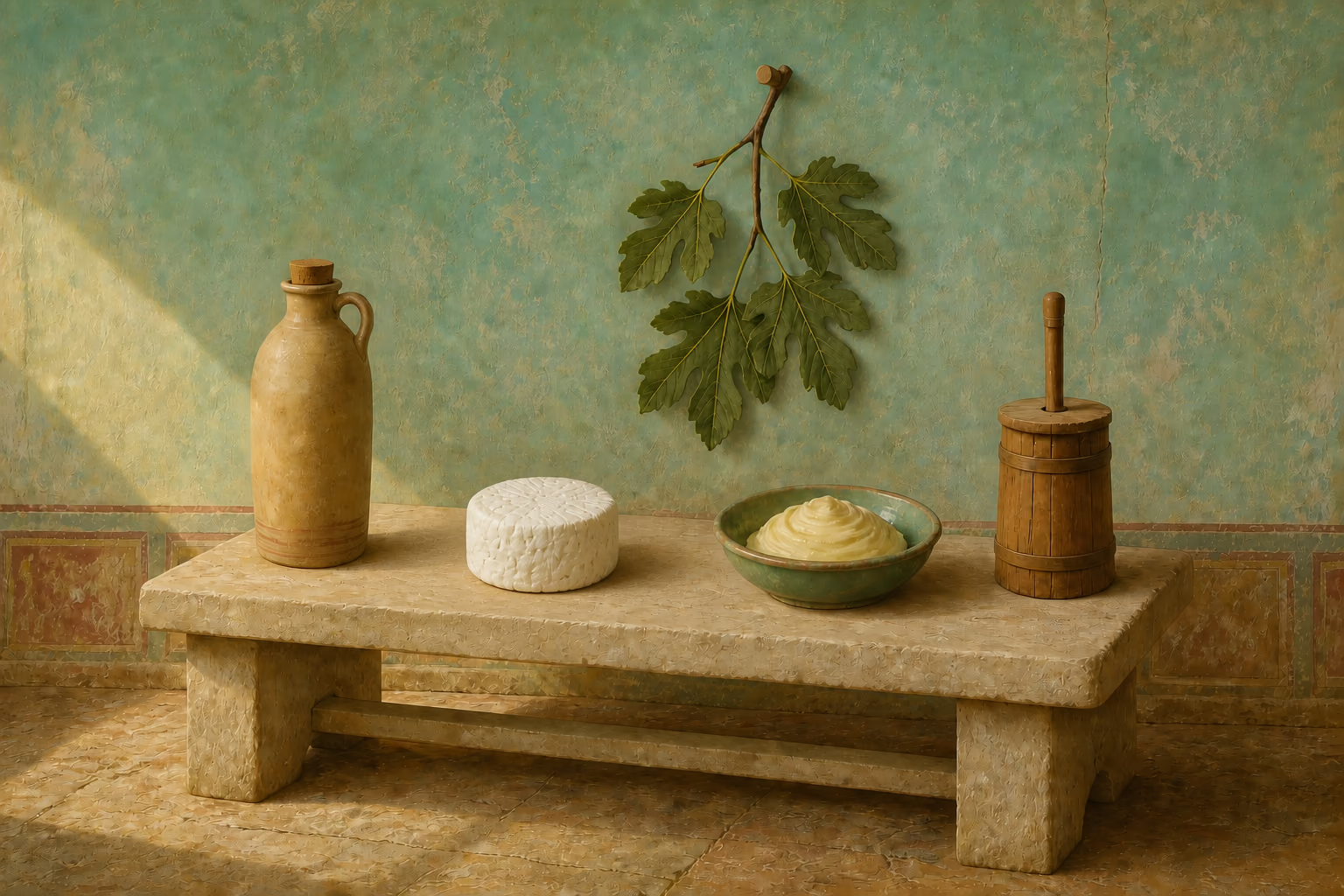
Nunc praevertemur ad nostrum orbem, primumque communia animalium remedia atque eximia dicemus, sicuti e lactis usu. utilissimum cuique maternum. concipere nutrices exitiosum est; hi sunt enim infantes, qui colostrati appellantur, densato lacte in casei speciem. est autem colostra prima a partu spongea densitas lactis. maxime autem alit quodcumque humanum, mox caprinum, unde fortassis fabulae Iovem ita nutritum dixere. dulcissimum ab hominis camelinum, efficacissimum ex asinis. magnorum animalium et corporum facilius redditur. stomacho adcommodatissimum caprinum, quoniam fronde magis quam herba vescuntur, bubulum medicatius, ovillum dulcius et magis alit, stomacho minus utile, quoniam est pinguius. omne autem vernum aquatius aestivo et de novellis. probatissimum vero quod in ungue haeret nec defluit; innocentius decoctum, praecipue cum calculis marinis. alvus maxime solvitur bubulo, minus autem inflat quodcumque decoctum. usus lactis ad omnia intus exulcerata, maxime renes, vesicam, interanea, fauces, pulmones, foris pruritum cutis, eruptiones pituitae poti ab abstinentia nam ut in Arcadia bubulum biberent phthisici, syntectici, cachectae, diximus in ratione herbarum. sunt inter exempla qui asininum bibendo liberati sint podagra chiragraque. medici speciem unam addidere lactis generibus, quod schiston appellavere. id fit hoc modo: fictili novo fervet, 5 caprinum maxime, ramisque ficulneis recentibus miscetur additis totidem cyathis mulsi, quot sint heminae lactis. cum fervet, ne circumfundatur, praestat cyathus argenteus cum frigida aqua demissus ita, ne quid infundat. ablatum deinde igni refrigeratione dividitur et discedit serum a lacte. quidam et ipsum serum iam multo potentissimum decocunt ad tertias partes et sub diu refrigerant. bibitur autem efficacissime heminis per intervalla, satis diebus quinae; melius a potu gestari. datur comitialibus, melancholicis, paralyticis, in lepris, elephantiasi, articulariis morbis. infunditur quoque lac contra rosiones a mledicamentis factas et, si urat dysinteria, decoctum cum marinis lapillis aut cum tisana hordeacia. item ad intestinorum rosiones bubulum aut ovillum utilius. recens quoque dysintericis infunditur, ad colum autem crudum, item vulvae et propter serpentium ictus potisve pityocampis, bupresti, cantharidum aut salamandrae venenis, privatim bubulum iis, qui Colchicum biberint ant cicutam aut dorycnium aut leporem marinum, sicut asininum contra gypsum et cerussam et sulpur et argentum vivum, item durae alvo in febri. gargarizatur quoque faucibus exulceratis. utilissime et bibitur ab imbecillitate vires recolligentibus, quos atrophos vocant, in febri etiam, quae careat dolore capitis. pueris ante cibum lactis asinini heminam dari aut si exitus cibi rosiones sentirent, antiqui in arcanis habuerunt, si hoc non esset, caprini. bubuli serum orthopnoicis prodest ante cetera addito nasturtio. inunguntur etiam oculi in lactis heminas additis sesamae drachmis IIII tritis in lippitudine. caprino lienes sanantur, post bidui inediam tertio die hedera pastis capris, per triduum poto sine alio cibo. lactis usus alias contrarius capitis doloribus, hepaticis, splenicis, nervorum vitio, febres habentibus, vertigini praeterquam purgationis gratia, gravedini, tussientibus, lippis. ovillum utilissimum tenesmo, dysinteriae; nec non phthisicis hoc et mulieris saluberrimum qui dicerent fuerunt.
De generibus caseorum diximus, cum de uberibus singulisque membris animalium diceremus. Sextius eosdem effectus equino quos bubulo tradit; hunc vocant hippacen. stomacho utiles qui non sunt salsi, id est recentes. veteres alvum sistunt corpusque minuunt, stomacho in- utiliores; et in totum salsa minuunt corpus, alunt mollia. caseus recens cum melle suggillata emendat, mollis alvum sistit, sedat tormina pastillis in vino austero decoctis rursusque in patina tostis cum melle. saprum vocant qui cum sale et sorbis siccis e vino tritus potusque medetur coeliacis. genitalium carbunculis caprinus tritus inpositus, item acidus cum oxymelite maculis in balineo inlitus oleo interlinitur.
E lacte fit et butyrum, barbararum gentium lautissimus cibus et qui divites a plebe discernat. plurimum e bubulo—et inde nomen—, pinguissimum ex ovibus fit et caprino, sed hieme calefacto lacte, aestate expresso tantum, crebro iactatu in longis vasis angusto foramine spiritum accipientibus sub ipso ore alias praeligato. additur paulum aquae, ut acescat. quod est maxime coactum, in summo fluitat; id exemptum addito sale oxygala appellant. relicum decocunt in ollis; ibi quod supernatat, butyrum est, oleosum natura. quo magis virus resipit, hoc praestantius iudicatur. pluribus conpositionibus miscetur inveteratum. natura eius adstringere, mollire, replere, purgare.
Oxygala fit et alio modo, acido lacte addito in recens, quod velint acescere, utilissimum stomacho. effectus dicemus suis locis.
Proxima in communibus adipi laus est, sed maxime suillo, apud antiquos etiam religiosius. certe novae nuptae intrantes etiam nunc sollemne habent postes eo attingere. inveteratur duobus modis, cum sale aut sincerus; tanto fit utilior. axungiam Graeci etiam appellavere iam in voluminibus suis. neque est occulta virium causa, quoniam id animal herbarum radicibus vescitur; itaque etiam fimo innumeri usus. quam ob rem non de alia loquemur [sue]. multo efficacior e femina et quae non pepererit, multo vero praestantior in apris essedicitur usus axungiae ad emollienda, excalfacienda, discutienda purgandaque. medicorum aliqui admixto anseris adipe taurorumque sebo et oesypo ad podagras uti iubent; si vero permaneat dolor, cum cera, myrto, resina, pice. sincera axungia medetur ambustis vel nive, pernionibus autem cum hordei cinere et galla pari modo. prodest et confricatis membris, itinerumque lassitudines et fatigationes levat. ad tussim veterem recens decoquitur quadrantis pondere in vini cyathis III addito melle. vetus etiam phthisis pilulis sumpta sanat, quae sine sale inveterata est. omnino enim non nisi ad ea, quae purganda sint aut quae non sint exulcerata, salsa recipitur. quidam quadrantes axungiae et mulsi in vini cyathis ternis decocunt contra phthisis, quarto quoque die picem liquidam in ovo sumi iubent. circumligatur et lateribus, pectori, scapulis eorum, qui phthisim sentiunt, tantaque est vis, ut genibus etiam adalligata redeat in os sapor eamque expuere videantur. e sue, quae non pepererit, aptissime utuntur, ad cutem mulieres, contra scabiem vero quivis admixto iumentorum sebo pro parte tertia et pice pariterque subfervefactis. sincera partus in abortun vergentes nutrit collyrii modo subdita. cicatrices concolores facit cerussa admixta vel argenti spuma, at cum sulpure unguium scrabritias emendat. medetur et capillo fluenti et ulceribus in capite mulierum cum gallae parte quarta et infumata pilis oculorum. datur et phthisicis unciatim cum vini veteris hemina decocta, donec III unciae e toto restent; aliqui et mellis exiguum adiciunt. panis inlinitur cum calce, item furunculis duritiaeque mammarum. rupta et convulsa et spasmata et luxata sanat, clavos et rimas callique vitia cum helleboro albo, parotidas admixta farina salsamentariae testae, quo genere proficit et ad strumas. pruritus et papulas in balineo perunctis tollit, alioque etiamnum modo podagricis prodest mixto oleo vetere, contrito una sarcophago lapide et quinquefolio tuso in vino vel cum calce aut cum cinere. fit et peculiare emplastrum LXXV $X$ ponderi c spumae argenteae mixtis, utilissime contra ulcerum inflammationes adipe verrino. et inungui putant utile, quaeque serpant inlinere cum resina. antiqui axibus vehiculorum perunguendis maxime ad faciliorem circumactum rotarum utebantur, unde nomen, sic quoque utili medicina cum illa ferrugine rotarum ad sedis vitia virilitatisque et per se axungia. medici antiqui maxime probabant renibus detractam exemptisque venis aqua caelesti fricabant crebro decoquebantque fictili novo saepius, tum demum adservantes. convenit salsam magis mollire, excalfacere, discutere, utilioremque esse vino lotam. Masurius palmam lupino adipi dedisse antiquos tradidit. ideo novas nuptas illo perunguere postes solitas, ne quid mali medicamenti inferretur.
Quae ratio adipis, eadem in iis, quae ruminant, sebi est, aliis modis, non minoris potentiae. perficitur omne exemptis venis aqua marina vel salsa lotum, mox in pila tusum aspersa marina crebro; postea coquitur, donee odor omnis aboleatur, mox adsiduo sole ad candorem reducitur. a renibus autem omne laudatissimum est. si vero vetus revocetur ad curam, liquefieri prius iubent, mox frigida aqua lavari saepius, dein liquefacere adfuso vino quam odoratissimo. eodemque modo iterum ac saepius cocunt, donec virus evanescat. multi privatim sic taurorum leonumque ac pantherarum et camelorum pinguia curari iubent. usus dicetur suis locis.
Communis et medullarum est. omnes molliunt, explent, siccant, excalfaciunt. laudatissima e cervis, mox vitulina, dein hircina et caprina. curantur ante autumnum. recentes lotae siccataeque in umbra, per cribrum dein liquatae per lintea exprimuntur ac reponuntur in fictili locis frigidis.
Inter omnia autem communia animalium vel praestantissimum effectu fel est. vis eius excalfacere, mordere, scindere, extrahere, discutere. minorum animalium subtilius intellegitur et ideo ad oculorum medicamenta utilius existimatur. taurino praecipua potentia, etiam in aere pelvibusque aureo colore obducendis. omne autem curatur recens praeligato ore lino crasso, demissum in ferventem aquam semihora, mox siccatum sine sole atque in melle conditum. damnatur equinum tantum inter venena. ideo flamini sacrorum equum tangere non licet, cum Romae publicis sacris equus etiam immoletur.
Quin et sanguis eorum septicam vim habet; item equarum, praeterquam virginum, erodit, emarginat ulcera. taurinus quidem recens inter venena est excepta Aegira. ibi enim sacerdos Terrae vaticinatura sanguinem tauri bibit prius quam in specus descendat. tantum potest sympathia illa, de qua loquimur, ut aliquando religione aut loco fiat. Drusus tribunus plebei traditur caprinum bibisse, cum pallore et invidia veneni sibi dati insimulare Q. Caepionem inimicum vellet. hircorum sanguini tanta vis est, ut ferramentorum subtilitas non aliter acrius induretur, scabritia poliatur vehementius quam lima. non igitur et sanguis animalium inter communia dici potest, et ideo suis quisque dicetur effectibus.
Digeremus enim in mala singula usus primumque contra serpentes. exitio his esse cervos nemo ignorat ut, si quae sunt, extractas cavernis mandentes. nec vero ipsi spirantesque tantum adversantur, sed membratim quoque. fugari eas nidore cornus eorum, si uratur, dictum est; at e summo gutture ustis ossibus congregari dicuntur. pelles eiusdem animalis substratae securos praestant ab eo metu somnos, coagulum. ex aceto potum ab ictu; et si omnino tractatum sit, eo die non ferit serpens. testes quoque eius inveterati vel genitale vetus maris salutariter dantur in vino; item venter, quem centipellionem vocant. fugiunt et omnino dentem cervi habentes ant medulla perunctos sebove cervi aut vituli. summis autem remediis praefertur hinnulei coagulum matris utero execti, ut indicavimus. sanguine cervino, si una urantur dracontion et cunilago et anchusa lentisci ligno, contrahi serpentes tradunt, dissipari deinde, si sanguine detracto adiciatur pyrethrum. invenio apud auctores Graecos, animal cervo minus et pilo demum simile, quod ophion vocaretur, Sardiniam tantum ferre solitam. hoc interisse arbitror et ideo medicinas ex eo omitto. —
English · Bostock & Riley 1855–57
We will now return to our own part of the world, speaking, first of all, of certain remedies common to animals in general, but excellent in their nature; such as the use of milk, for example. The most beneficial milk to every creature is the mother’s milk. It is highly dangerous for nursing women to conceive: children that are suckled by them are known among us as “colostrati,” their milk being thick, like cheese in appearance—the name “colostra,” it should be remembered, is given to the first milk secreted after delivery, which assumes a spongy, coagulated form. The most nutritive milk, in all cases, is woman’s milk, and next to that goats’ milk, to which is owing, probably, the fabulous story that Jupiter was suckled by a goat. The sweetest, next to woman’s milk, is camels’ milk; but the most efficacious, medicinally speaking, is asses’ milk. It is in animals of the largest size and individuals of the greatest bulk, that the milk is secreted with the greatest facility. Goats’ milk agrees the best with the stomach, that animal browsing more than grazing. Cows’ milk is considered more medicinal, while ewes’ milk is sweeter and more nutritive, but not so well adapted to the stomach, it being more oleaginous than any other.
Every kind of milk is more aqueous in spring than in summer, and the same in all cases where the animal has grazed upon a new pasture. The best milk of all is that which adheres to the finger nail, when placed there, and does not run from off it. Milk is most harmless when boiled, more particularly if sea pebbles have been boiled with it. Cows’ milk is the most relaxing, and all kinds of milk are less apt to inflate when boiled. Milk is used for all kinds of internal ulcerations, those of the kidneys, bladder, intestines, throat, and lungs in particular; and externally, it is employed for itching sensations upon the skin, and for purulent eruptions, it being taken fasting for the purpose. We have already stated, when speaking of the plants, how that in Arcadia cows’ milk is administered for phthisis, consumption, and cachexy. Instances are cited, also, of persons who have been cured of gout in the hands and feet, by drinking asses’ milk.
To these various kinds of milk, medical men have added another, to which they have given the name of “schiston;” following being the usual method of preparing it. Goats’ milk, which is used in preference for the purpose, is boiled in a new earthen vessel, and stirred with branches of a fig-tree newly gathered, as many cyathi of honied wine being added to it as there are semisextarii of milk. When the mixture boils, care is taken to prevent it running over, by plunging into it a silver cyathus measure filled with cold water, none of the water being allowed to escape. When taken off the fire, the constituent parts of it divide as it cools, and the whey is thus separated from the milk. Some persons, again, take this whey, which is now very strongly impregnated with wine, and, after boiling it down to one third, leave it to cool in the open air. The best way of taking it, is in doses of one semisextarius, at stated intervals, during five consecutive days; after taking it, riding exercise should be used by the patient. This whey is administered in cases of epilepsy, melancholy, paralysis, leprosy, elephantiasis, and diseases of the joints.
Milk is employed as an injection where excoriations have been caused by the use of strong purgatives; in cases also where dysentery is productive of chafing, it is similarly employed, boiled with sea pebbles or a ptisan of barley. Where, however, the intestines are excoriated, cows’ milk or ewes’ milk is the best. New milk is used as an injection for dysentery; and in an unboiled state, it is employed for affections of the colon and uterus, and for injuries inflicted by serpents. It is also taken internally as an antidote to the venom of cantharides, the pine-caterpillar, the buprestis, and the salamander. Cows’ milk is particularly recommended for persons who have taken colchicum, hemlock, dorycnium, or the flesh of the sea-hare; and asses’ milk, in cases where gypsum, white-lead, sulphur, or quick-silver, have been taken internally. This last is good too for constipation attendant upon fever, and is remarkably useful as a gargle for ulcerations of the throat. It is taken, also, internally, by patients suffering from atrophy, for the purpose of recruiting their exhausted strength; as also in cases of fever unattended with head-ache. The ancients held it as one of their grand secrets, to administer to children, before taking food, a semisextarius of asses’ milk, or for want of that, goats’ milk; a similar dose, too, was given to children troubled with chafing of the rectum at stool. It is considered a sovereign remedy for hardness of breathing, to take cows’ milk whey, mixed with nasturtium. In cases of ophthalmia, too, the eyes are fomented with a mixture of one semisextarius of milk and four drachmæ of pounded sesame.
Goats’ milk is a cure for diseases of the spleen; but in such case the goats must fast a couple of days, and be fed on ivy-leaves the third; the patient, too, must drink the milk for three consecutive days, without taking any other nutriment. Milk, under other circumstances, is detrimental to persons suffering from head-ache, liver complaints, diseases of the spleen, and affections of the sinews; it is bad for fevers, also, vertigo—except, indeed, where it is required as a purgative—oppression of the head, coughs, and ophthalmia. Sows’ milk is extremely useful in cases of tenesmus, dysentery, and phthisis; authors have been found too, to assert that it is very wholesome for females.
We have already spoken of the different kinds of cheese when treating of the mamillæ and other parts of animals. Sextius attributes the same properties to mares’ milk cheese that he does to cheese made of cows’ milk: to the former he gives the names of “hippace.” Cheese is best for the stomach when not salted, or, in other words, when new cheese is used. Old [salted] cheese has a binding effect upon the bowels, and reduces the flesh, but is more wholesome to the stomach [than new salted cheese]. Indeed, we may pronounce of aliments in general, that salt meats reduce the system, while fresh food has a tendency to make flesh. Fresh cheese, applied with honey, effaces the marks of bruises. It acts, also, emolliently upon the bowels; and, taken in the form of tablets, boiled in astringent wine and then toasted with honey on a platter, it modifies and alleviates griping pains in the bowels.
The cheese known as “saprum,” is beaten up, in wine, with salt and dried sorb apples, and taken, in drink, for the cure of cœliac affections. Goats’ milk cheese, pounded and applied to the part affected, is a cure for carbuncle of the generative organs; sour cheese, also, with oxymel, is productive of a similar effect. In the bath it is used as a friction, alternately with oil, for the removal of spots.
From milk, too, butter is produced; held as the most delicate food among barbarous nations, and one which distinguishes the wealthy from the multitude at large. It is mostly made from cows’ milk, and hence its name; but the richest butter is that made from ewes’ milk. There is a butter made also from goats’ milk; but previously to making it, the milk should first be warmed, in winter. In summer it is extracted from the milk by merely shaking it to and fro in a tall vessel, with a small orifice at the mouth to admit the air, but otherwise closely stopped, a little water being added to make it curdle the sooner. The milk that curdles the most, floats upon the surface; this they remove, and, adding salt to it, give it the name of “oxygala.” They then take the remaining part and boil it down in pots, and that portion of it which floats on the surface is butter, a substance of an oily nature. The more rank it is in smell, the more highly it is esteemed. When old, it forms an ingredient in numerous compositions. It is of an astringent, emollient, repletive, and purgative nature.
Oxygala, too, is prepared another way, sour milk being added to the fresh milk which is wanted to curdle. This preparation is extremely wholesome to the stomach: of its properties we shall have occasion to speak in another place.
Among the remedies common to living creatures, fat is the substance held in the next highest esteem, that of swine in particular, which was employed by the ancients for certain religious purposes even: at all events, it is still the usage for the newly-wedded bride, when entering her husband’s house, to touch the door-posts with it. There are two methods of keeping hogs’ lard, either salted or fresh; indeed, the older it is, the better. The Greek writers have now given it the name of “axungia,” or axle-grease, in their works. Nor, in fact, is it any secret, why swine’s fat should be possessed of such marked properties, seeing that the animal feeds to such a great extent upon the roots of plants—owing too, to which, its dung is applied to such a vast number of purposes. It will be as well, therefore, to promise, that I shall here speak only of the hog that feeds in the open field, and no other; of which kind it is the female that is much the most useful—if she has never farrowed, more particularly. But it is the fat of the wild boar that is held in by far the highest esteem of all.
The distinguishing properties, then, of swine’s-grease, are emollient, calorific, resolvent, and detergent. Some physicians recommend it as an ointment for the gout, mixed with goose-grease, bull-suet, and wool-grease: in cases, however, where the pain is persistent, it should be used in combination with wax, myrtle, resin, and pitch. Hogs’ lard is used fresh for the cure of burns, and of blains, too, caused by snow: with ashes of burnt barley and nutgalls, in equal proportions, it is employed for the cure of chilblains. It is good also for excoriations of the limbs, and for dispelling weariness and lassitude arising from long journeys. For the cure of chronic cough, new lard is boiled down, in the proportion of three ounces to three cyathi of wine, some honey being added to the mixture. Old lard too, if it has been kept without salt, made up into pills and taken internally, is a cure for phthisis: but it is a general rule not to use it salted in any cases except where detergents are required, or where there are no symptoms of ulceration. For the cure of phthisis, some persons boil down three ounces of hogs’ lard and honied wine, in three cyathi of ordinary wine; and after swathing the sides, chest, and shoulders of the patient with compresses steeped in the preparation, administer to him, every four days, some tar with an egg: indeed, so potent is this composition, that if it is only attached to the knees even, the flavour of it will ascend to the mouth, and the patient will appear to spit it out, as it were.
The grease of a sow that has never farrowed, is the most useful of all cosmetics for the skin of females; but in all cases, hogs’ lard is good for the cure of itch-scab, mixed with pitch and beef-suet in the proportion of one-third, the whole being made lukewarm for the purpose. Fresh hogs’ lard, applied as a pessary, imparts nutriment to the infant in the womb, and prevents abortion. Mixed with white lead or litharge, it restores scars to their natural colour; and, in combination with sulphur, it rectifies malformed nails. It prevents the hair also from falling off; and, applied with a quarter of a nutgall, it heals ulcers upon the head in females. When well smoked, it strengthens the eyelashes. Lard is recommended also for phthisis, boiled down with old wine, in the proportion of one ounce to a semisextarius, till only three ounces are left; some persons add a little honey to the composition. Mixed with lime, it is used as a liniment for inflamed tumours, boils, and indurations of the mamillæ: it is curative also of ruptures, convulsions, cramps, and sprains. Used with white hellebore, it is good for corns, chaps, and callosities; and, with pounded earthenware which has held salted provisions, for imposthumes of the parotid glands and scrofulous sores. Employed as a friction in the bath, it removes itching sensations and pimples: but for the treatment of gout there is another method of preparing it, by mixing it with old oil, and adding pounded sarcophagus stone and cinquefoil bruised in wine, or else with lime or ashes. A peculiar kind of plaster is also made of it for the cure of inflammatory ulcers, seventy-five denarii of hogs’ lard being mixed with one hundred of litharge.
It is reckoned a very good plan also to anoint ulcers with boars’ grease, and, if they are of a serpiginous nature, to add resin to the liniment. The ancients used to employ hogs’ lard in particular for greasing the axles of their vehicles, that the wheels might revolve the more easily, and to this, in fact, it owes its name of “axungia.” When hogs’ lard has been used for this purpose, incorporated as it is with the rust of the iron upon the wheels, it is remarkably useful as an application for diseases of the rectum and of the generative organs. The ancient physicians, too, set a high value upon the medicinal properties of hogs’ lard in an unmixed state: separating it from the kidneys, and carefully removing the veins, they used to wash and rub it well in rain water, after which they boiled it several times in a new earthen vessel, and then put it by for keeping. It is generally agreed that it is more emollient, calorific, and resolvent, when salted; and that it is still more useful when it has been rinsed in wine.
Massurius informs us, that the ancients set the highest value of all upon the fat of the wolf: and that it was for this reason that the newly-wedded bride used to anoint the door-posts of her husband’s house with it, in order that no noxious spells might find admittance.
Corresponding with the grease of the swine, is the suet that is found in the ruminating animals, a substance employed in other ways, but no less efficacious in its properties. The proper mode of preparing it, in all cases, is to take out the veins and to rinse it in sea or salt-water, after which it is beaten up in a mortar, with a sprinkling of sea-water in it. This done, it is boiled in several waters, until, in fact, it has lost all smell, and is then bleached by continual exposure to the sun; that of the most esteemed quality being the fat which grows about the kidneys. In case stale suet is required for any medicinal purpose, it is recommended to melt it first, and then to wash it in cold water several times; after which, it must again be melted with a sprinkling of the most aromatic wine that can be procured, it being then boiled again and again, until the rank smell has totally disappeared.
Many persons recommend that the fat of bulls, lions, panthers, and camels, in particular, should be thus prepared. As to the various uses to which these substances are applied, we shall mention them on the appropriate occasions.
Common too, to all these animals, is marrow; a substance which in all cases is possessed of certain emollient, expletive, desiccative, and calorific properties. The most highly esteemed of all is deer’s marrow, the next best being that of the calf, and then that of the goat, both male and female. These substances are prepared before autumn, by washing them in a fresh state, and drying them in the shade; after which they are passed through a sieve, and then strained through linen, and put by in earthen pots for keeping, in a cool spot.
But among the substances which are furnished in common by the various animals, it is the gall, we may say, that is the most efficacious of all. The properties of this substance are of a calorific, pungent, resolvent, extractive, and dispersive nature. The gall of the smaller animals is looked upon as the most penetrating; for which reason it is that it is generally considered the most efficacious for the composition of eye-salves. Bull’s gall is possessed of a remarkable degree of potency, having the effect of imparting a golden tint to the surface of copper even and to vessels made of other metals. Gall in every case is prepared in the following manner: it is taken fresh, and the orifice of the vesicle in which it is contained being tied fast with a strong linen thread, it is left to steep for half an hour in boiling water; after which it is dried in the shade, and then put away for keeping, in honey.
That of the horse is condemned, being reckoned among the poisons only. Hence it is that the Flamen of the Sacrifices is not allowed to touch a horse, notwithstanding that it is the custom to immolate one of these animals at the public sacrifices at Rome.
The blood, also, of the horse is possessed of certain corrosive properties; and so, too, is mare’s blood—except, indeed, where the animal has not been covered—it having the effect of cauterizing the margins of ulcers, and so enlarging them. Bull’s blood too, taken fresh, is reckoned among the poisons; except, indeed, at Ægira, at which place the priestess of the Earth, when about to foretell coming events, takes a draught of bull’s blood before she descends into the cavern: so powerful, in fact, is the agency of that sympathy so generally spoken of, that it may occasionally originate, we find, in feelings of religious awe, or in the peculiar nature of the locality.
Drusus, the tribune of the people, drank goats’ blood, it is said; it being his object by his pallid looks to suggest that his enemy, Q. Cæpio, had given him poison, and so expose him to public hatred. So remarkably powerful is the blood of the he-goat, that there is nothing better in existence for sharpening iron implements, the rust produced by this blood giving them a better edge even than a file. Considering, however, that the blood of all animals cannot be reckoned as a remedy in common, will it not be advisable, in preference, to speak of the effects that are produced by that of each kind?
We will therefore classify the various remedies, according to the maladies for which they are respectively used; and, first of all, those to which man has recourse for injuries inflicted by serpents. That deer are destructive to those reptiles no one is ignorant; as also of the fact that they drag them from their holes when they find them, and so devour them. And it is not only while alive and breathing that deer are thus fatal to serpents, but even when dead and separated limb from limb. The fumes of their horns, while burning, will drive away serpents, as already stated; but the bones, it is said, of the upper part of a stag’s throat, if burnt upon a fire, will bring those reptiles together. Persons may sleep upon a deer’s skin in perfect safety, and without any apprehension of attacks by serpents; its rennet too, taken with vinegar, is an effectual antidote to the stings of those reptiles; indeed, if it has been only touched by a person, he will be for that day effectually protected from them. The testes, dried, or the genitals of the male animal, are considered to be very wholesome, taken in wine, and so are the umbles, generally known as the “centipellio.” Persons having about them a deer’s tooth, or who have taken the precaution of rubbing the body with a deer or fawn’s marrow, will be sure to repel the attacks of all serpents.
But the most effectual remedy of all is thought to be the rennet of a fawn that has been cut from the uterus of the dam, as already mentioned in another place. Deer’s blood, burnt upon a fire of lentisk wood, with dracontium, cunilago, and alkanet, will attract serpents, they say; while, on the other hand, if the blood is removed and pyrethrum substituted for it, they will take to flight.
I find an animal mentioned by Greek writers, smaller than the stag, but resembling it in the hair, and to which they give the name of “ophion.” Sardinia, they say, is the only country that produces it; I am of opinion, however, that it is now extinct, and for that reason I shall not enlarge upon its medicinal properties.