LIBER XXIX · CAPUT 5
VARIOUS COUNTER-POISONS
Latine · Mayhoff 1906
et sebum autem struthocamelinum tune venisse HS XXX obiter dictum sit, efficacioris ad omnia usus, quam est anserinus adips.
Diximus et mellis venenati genera. contra utuntur melle, in quo apes sint mortuae. idem potum in vino remedium est vitiorum, quae e cibo piscium gignuntur.
In canis rabiosi morsu tuetur a pavore aquae canini capitis cinis inlitus vulneri. oportet autem comburi omnia eodem modo, ut semel dicamus, in vase fictili novo argilla circumlito atque ita in furnum indito. idem et in potione proficit. quidam ob id edendum dederunt. aliqui et vermem e cadavere canino adalligavere menstruave canis in panno subdidere calici aut intus ipsius caudae pilos combustos inseruere vulneri. cor caninum habentem fugiunt canes; non latrant vero lingua canina in calciamento subdita pollici aut caudam mustelae, quae abscisa ea dimissa sit, habentes. est limus salivae sub lingua rabiosi canis, qui datus in potu hydrophobos fieri non patitur; multo tamen utilissime iocur eius, qui in rabie momorderit, datur, si fieri possit, crudum mandendum; sin minus, quoquo modo coctum, aut ius coctis carnibus. est vermiculus in lingua canum, qui vocatur a Graecis lytta, quo exempto infantibus catulis nec rabidi fitut nec fastidium sentiunt. idem ter igni circumlatus datur morsis a rabioso, ne rabidi fiant. et cerebello gallinaceo occurritur, sed id devoratum anno tantum eo prodest. aiunt et cristam galli contritam efficaciter inponi et anseris adipem cum melle. salliuntur et carnes eorum, qai rabidi fuerint, ad eadem remedia in cibo dandae. quin et necantur catuli statim in aqua ad sexum eius, qui momorderit, ut iocur crudum devoretur ex iis. pradest et fimum gallinaceum, dumtaxat rufum, ex aceto inpositum et muris aranei caudae cinis ita, ut ipse, cui abscisa sit, vivus dimittatur, glaebula ex hirundinum nido inlita ex aceto, vel pulli hirundinis combusti, membrana sive senectus anguium vernatione exuta cum cancro masculo ex vino trita; hac etiam per se reposita in arcis armariisque tineas necant. mali tanta vis est, ut urina quoque calcata rabiosi canis noceat, maxime ulcus habentibus. remedio est fimum caballinum adspersum aceto et calefactum in fico inpositum. minus hoc miretur qui cogitet lapidem a cane morsum usque in proverbium discordiae venisse. qui in urinam canis suam egesserit, torporem lumborum sentire dicunt.—(Lacerta, quam sepa, alii chalcidem vocant, in vino pota morsus suos sanat).—
Veneficiis ex mustela silvestri factis contrarium est ius gallinacei veteris large haustum; peculiariter contra aeonita addi parum salis oporteat. gallinarum fimum, dumtaxat candidum, in hysopo decoctum aut mulso contra venena fungorum boletorumque, item inflationes ac strangulationes, quod miremur, cum, si aliud animal gustaverit id fimum, torminibus et inflationibus adficiatur. sanguis anserinus contra lepores marinos valet cum olei aequa portione, idem contra mala medicamenta omnia adversatur cum Lemnia rubrica et spinae albae suco, ut pastillorum drachmis quinis e cyathis ternis aquae bibatur. item mustelae catulus, ut supra diximus praeparatus, coagulum quoque agninum adversus omnia mala medicamenta pollet; item sanguis anatum Ponticarmn; itaque et spissatus servatur vinoque diluitur; quidam feminae anatis efficaciorem putant. simili modo contra venena omnia ciconiarum ventriculus valet, coagulum pecoris, ius ex care arietum, privatim adversus cantharidas, item lac ovium calidum praeterque iis, qui buprestim aut aconitum biberint, columbarum silvestrium fimum privatim contra argenti vivi potum, contra toxica mustela vulgaris inveterata drachmis binis pota.
English · Bostock & Riley 1855–57
We may here remark, too, that it was on the same occasion that some ostrich fat was sold, at the price of thirty thousand sesterces, a substance which is preferable to goose-grease in every respect.
We have already spoken of various kinds of poisonous honey: the antidote employed for it is honey in which the bees have been stifled. This honey, too, taken in wine, is a remedy for indispositions caused by eating fish.
When a person has been bitten by a mad dog, he may be preserved from hydrophobia by applying the ashes of a dog’s head to the wound. All ashes of this description, we may here remark once for all, are prepared in the same method; the substance being placed in a new earthen vessel well covered with potter’s clay, and put into a furnace. These ashes, too, are very good, taken in drink, and hence some recommend the head itself to be eaten in such cases. Others, again, attach to the body of the patient a maggot, taken from the carcase of a dead dog; or else place the menstruous blood of a bitch, in a linen cloth, beneath his cup, or insert in the wound ashes of hairs from the tail of the dog that inflicted the bite. Dogs will fly from any one who has a dog’s heart about him, and they will never bark at a person who carries a dog’s tongue in his shoe, beneath the great toe, or the tail of a weasel which has been set at liberty after being deprived of it. There is beneath the tongue of a mad dog a certain slimy spittle, which, taken in drink, is a preventive of hydrophobia: but much the most useful plan is, to take the liver of the dog that has inflicted the injury, and eat it raw, if possible; should that not be the case, it must be cooked in some way or other, or else a broth must be taken, prepared from the flesh.
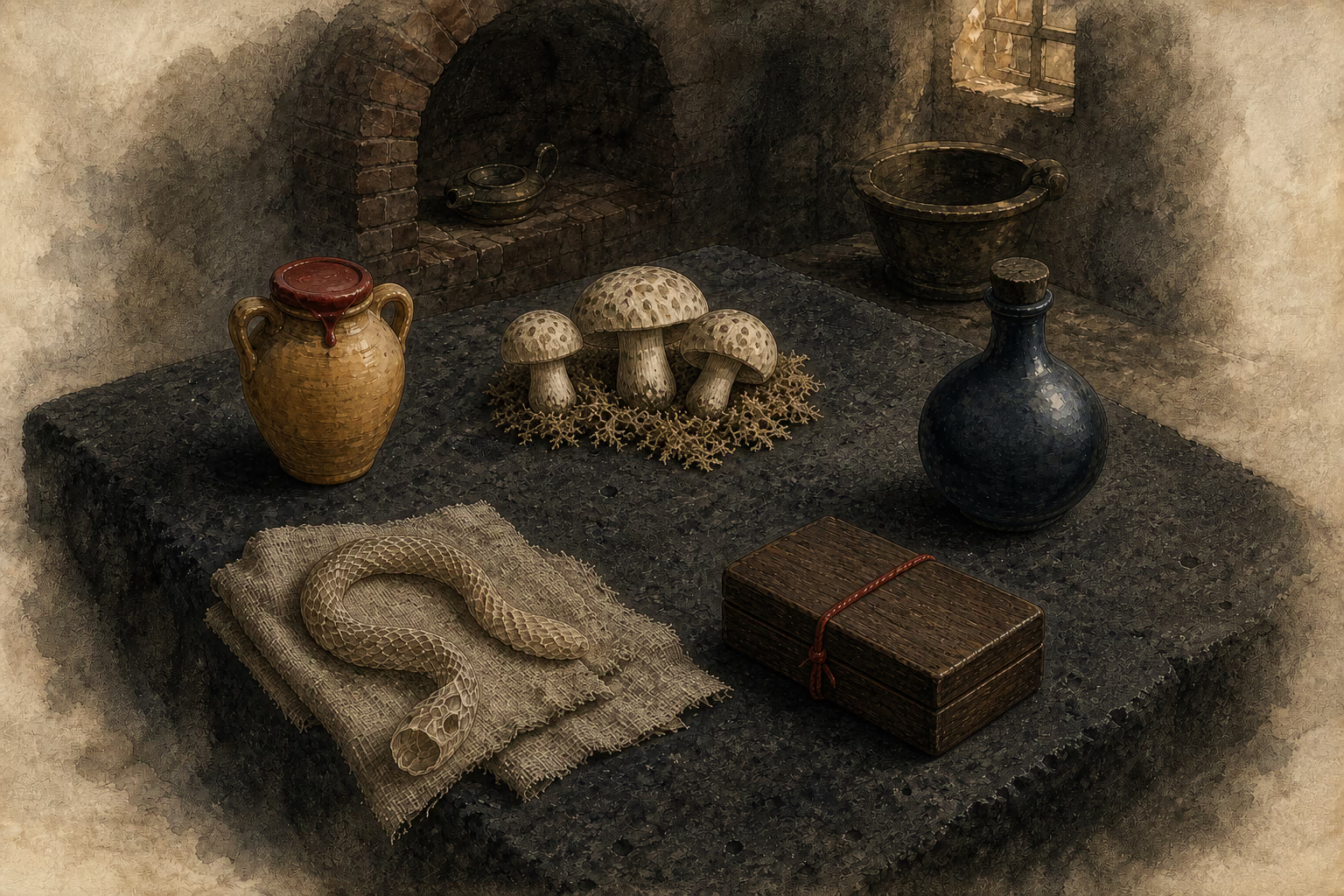
There is a small worm in a dog’s tongue, known as “lytta” to the Greeks: if this is removed from the animal while a pup, it will never become mad or lose its appetite. This worm, after being carried thrice round a fire, is given to persons who have been bitten by a mad dog, to prevent them from becoming mad. This madness, too, is prevented by eating a cock’s brains; but the virtue of these brains lasts for one year only, and no more. They say, too, that a cock’s comb, pounded, is highly efficacious as an application to the wound; as also, goose-grease, mixed with honey. The flesh also of a mad dog is sometimes salted, and taken with the food, as a remedy for this disease. In addition to this, young puppies of the same sex as the dog that has inflicted the injury, are drowned in water, and the person who has been bitten eats their liver raw. The dung of poultry, provided it is of a red colour, is very useful, applied with vinegar; the ashes, too, of the tail of a shrew-mouse, if the animal has survived and been set at liberty; a clod from a swallow’s nest, applied with vinegar; the young of a swallow, reduced to ashes; or the skin or old slough of a serpent that has been cast in spring, beaten up with a male crab in wine: this slough, I would remark, put away by itself in chests and drawers, destroys moths.
So virulent is the poison of the mad dog, that its very urine even, if trod upon, is injurious, more particularly if the person has any ulcerous sores about him. The proper remedy in such case is to apply horse-dung, sprinkled with vinegar, and warmed in a fig. These marvellous properties of the poison will occasion the less surprise, when we remember that, “a stone bitten by a dog” has become a proverbial expression for discord and variance. Whoever makes water where a dog has previously watered, will be sensible of numbness in the loins, they say.
The lizard known by some persons as the “seps,” and by others as the “chalcidice,” taken in wine, is a cure for its own bite.
Where persons have been poisoned by noxious preparations from the wild weasel, the proper remedy is the broth of an old cock, taken in considerable quantities. This broth, too, is particularly good, taken as a counter-poison for aconite, in combination with a little salt. Poultry dung—but the white part only—boiled with hyssop, or with honied wine, is an excellent antidote to the poison of fungi and of mushrooms: it is a cure also for flatulency and suffocations; a thing the more to be wondered at, seeing that if any other living creature only tastes this dung, it is immediately attacked with griping pains and flatulency. Goose blood, taken with an equal quantity of olive oil, is an excellent neutralizer of the venom of the sea-hare: it is kept also as an antidote for all kinds of noxious drugs, made up into lozenges with red earth of Lemnos and juice of white-thorn, five drachmæ of the lozenges being taken in three cyathi of water. The same property belongs also to the young of the weasel, prepared in manner already mentioned.
Lambs’ rennet is an excellent antidote to all noxious preparations; the blood, also, of ducks from Pontus; for which reason it is preserved in a dry state, and dissolved in wine when wanted, some persons being of opinion that the blood of the female bird is the most efficacious. In a similar manner, the crop of a stork acts as an universal counter-poison; and so does sheep’s rennet. A broth made from ram’s flesh is particularly good as a remedy for cantharides: sheep’s milk also, taken warm; this last being very useful in cases where persons have drunk an infusion of aconite, or have swallowed the buprestis in drink. The dung of wood-pigeons is particularly good taken internally as an antidote to quicksilver; and for narcotic poisons the common weasel is kept dried, and taken internally, in doses of two drachmæ.