LIBER XXIX · CAPUT 6
REMEDIES FOR ALOPECY
Latine · Mayhoff 1906
Alopecias replet fimi pecudum cinis cum oleo cyprio et melle, item ungularum muli vel mulae ex oleo myrteo, praeterea, ut Varro noster tradit, nurinum fimum, quod ille muscerdas appellat, aut muscarum capita recentia prius folio ficulneo asperatas. alii sanguine muscarum utuntur, alii x diebus cinerem earum inlinunt cum cinere chartae vel nucum ita, ut sit tertia portio e muscis; alii lacte mulierum cum brassica cinerem nuscarum subigunt, quidam melle tantum. nullum animal minus docile existimatur minorisve intellectus; eo mirabilius est Olympiae sacro certamine nubes earum immolato tauro deo, quem Myioden vocant, extra territorium id abire. alopecias cinis et e murium capitibus caudisque et totius muris emendat, praecipue si veneficio accident haec iniuria, item irenacei cinis cum melle aut corium combustum cum pice liquida. caput quidem eius ustum per se etiam cicatricibus pilos reddit, alopecias autem in ea curatione praeparari oportet novacula; et sinapi quidam ex aceto uti maluerunt. quae de irenaceo dicentur, omnia tanto magis valebunt in hy- strice. lacertae quoque, ut docuimus combustae cum radice recentis harundinis, quae, ut una cremari possit, minutim findenda est, ita myrteo oleo permixto cinere, capillorum deluvia continent. efficacius virides lacertae omnia eadem praestant, etiamnum utilius admixto sale et adipe ursino et cepa tusa. quidam denas virides in x sextariis olei veteris discocunt, contenti semel in mense unguere. pellium viperinarum cinis alopecias celerrime explet, item gallinarum fimum recens inlitum. corvi ovum in aereo vase permixtum inlitumque deraso capite nigritiam capilli adfert, sed, donec inarescat, oleum in ore habendum est, ne et dentes simul nigrescant, idque in umbra faciendum neque ante quadriduum abluendum. alii sanguine et cerebro eius utuntur cum vino nigro; alii excocunt ipsum et nocte concubia in plumbeum vas condunt. aliqui alopecias cantharide trita inlinunt cum pice liquida, nitro praeparata cute—caustica vis earum, cavendumque ne exulcerent alte—, postea ad ulcera ita facta capita murium et fel murium et fimum cum helleboro et pipere inlini iubent.
Lendes tolluntur adipe canino vel anguibus in cibo sumptis anguillarum modo aut eorum vernatione, quam exuunt, pota, porrigines felle ovillo cum creta Cimolia inlito capite, donec inarescat.
Capitis doloribus remedio sunt coclearum, quae nudae inveniuntur nondum peractae, ablata capita et his duritia lapidea exempta—est autem calculi latitudine, ea- que adalligantur, set minutae fronti inlinuntur tritae, item oesypum —, ossa e capite vulturis adalligata aut cerebrum cum oleo et cedria, peruncto capite et intus naribus inlitis, cornicis cerebrum coctum in cibo sumptum vel noctuae, gallinaceus, si inclusus abstineatur die ac nocte, pari inedia eius, cuius doleat, evulsis collo plumis circumligatisque vel cristis, mustelae cinis inlitus, surculus ex nido milui pulvino subiectus, murina pellis cremata ex aceto inlito cinere, limacis inter duas orbitas inventae ossiculum per aurum, argentum, ebur traiectum in pellicula canina adalligatum, quod remedium pluribus semperque prodest. fracto capiti aranei tela ex oleo et aceto inposita non nisi vulnere sanato abscedit. haee et vulneribus tonstrinarum sanguinem sistit, a cerebro vero profluentem anseris sanguis aut anatis infusus, adeps earundem alitum cum rosaceo. cocleae matutina pascentis harundine caput praecisum, maxime luna plena, lineo panno adalligant capitis doloribus liceo aut cera alba ad- dita fronti inlinunt. et pilos caninos panno adalligant.
Cerebrum cornicis in ci o sumptum palpebras gignere dicitur, oesypum cum murra calido specillo inlitum. idem praestare muscarum fimique murini cinerem aequis portionibus, ut efficiatur dimidium pondus denarii, promittitur, additis II sextis denarii e stibi, ut omnia oesypo inlinantur; item murini ca uli triti in vino vetere ad crassitudinem acopi. pilos in iis incommodos evulsos renasci non patitur fel irenacei, ovorum stelionis liquor, salamandrae cinis, lacertae viridis fel in vino albo sole coactum ad crassitudinem mellis in aereo vase, hirundinis pullorum cinis cum lacte tithymalli, spuma coclearum.
Glaucomata dicunt Magi cerebro catuli septem dierum emendari specillo demisso in dexteram partem, si dexter oculus curetur, in sinistram, si sinister, aut felle recenti axionis; noctuarum est id genus, quibus pluma aurium modo micat. suffusionem oculorum canino felle malebat quam hyaenae curari Apollonius Pitanaeus cum melle, item albugines. murium capitum caudaeque cinere ex melle inunctis claritatem visus restitui dicunt, multoque magis gliris aut muris silvestris cinere aut aquilae cerebro vel felle cum Attico melle. cinis e capite soricis cum stibi tritus lacrimosis oculis plurimum confert —stibi quid sit dicemus in metallis —, mustelae cinis suffusionibus, item lacertae, hirundinis cerebrum. cocleae tritae fronti inlitae epiphoras sedant sive per se sive cum polline sive cum ture; sic et solatis, id est sole correptis, prosunt. vivas quoque cremare et cinere earum cum melle Cretico inunguere caligines utilissimum est. iumentorum oculis membrana aspidis, quam exuit vere, cum adipe eiusdem claritatem inunctis facit. viperam vivam in fictili novo comburere addito feniculi suco ad cyathum unum et turis manna una atque ita suffusiones oculorum et caligines inunguere utilissimum est; medicamentum id echeon vocatur. fit et collyrium e vipera in olla putrefacta vermiculisque enatis cum croco tritis. et uritur in olla cum sale, quem lingendo claritatem oculorum consecuntur et stomachi totiusque corporis tempestivitates; hic sal et pecori datur salubritatis causa et in antidotum contra serpentes additur. quidam et ad oculos viperis utuntur in cibis. primum omnium occisae statim salem in os addi iubent, donee liquescat, mox IIII digitorum mensura utrimque praecisa exemptisque interaneis discoquunt in aqua, oleo, sale, aneto et aut statim vescuntur aut pane colligunt, ut saepius utantur. ius praeter supra dicta pediculos e toto corpore expellit pruritusque etiam summae cutis. effectum ostendit et per se capitis viperini cinis—utilissime eo oculos inungunt —itemnque adips viperinus. de felle non audaciter suaserim quae praecipiunt, quoniam, ut suo loco docuimus, non aliud est serpentium venenum. anguium adeps aerugini mixtus ruptas oculorum partes sanat, et membrana sive senectus vernatione eorun exuta si adfricetur, claritatem facit. boae quoque fel praedicatur ad albugines, suffusiones, caligines, adeps similiter ad claritatem.
Aquilae, quam diximus pullos ad contuendum solemn experiri, felle mixto cum melle Attico inunguntur nubeculae et caligationes suffusionesque oculorum. eadem vis est et in vulturino felle cum porri suco et melle exiguo, item in gallinacei felle ad argema et albugines ex aqua diluto, item suffusiones oculorum, maxime candidi gallinacei. fimum quoque gallinaceorum, dumtaxat rubrum, lusciosis inlini monstrant. laudant et gallinae fel et praecipue adipem contra pusulas in pupillis, nec scilicet eius rei gratia saginant. adiuvat mirifice et ruptas oculorum tuniculas admixtis schisto et haematite lapidibus. fimum quoque earum, dumtaxat candidum, in oleo vetere corneisque pyxidibus adservant ad pupillarum albugines. qua in mentione significandum est pavones fimum suum resorbere tradi invidentes hominum utilitatibus. accipiter decoctus in rosaceo efficacissimus ad inunctiones omnium vitiorum putatur, item fimi eius cinis cum Attico melle. laudatur et milui iocur, fimum columbarum ex aceto ad aegilopia, similiter ad albugines et cicatrices, fel anserinum, sanguis anatum contusis oculis ita, ut postea oesypo et melle inunguantur, fel perdicum cum mellis aequo pondere, per se vero ad claritatem. ex Hippocratis putant auctoritate adici, quod in argentea pyxide id servari iubent. ova perdicum in vase aereo decocta cum melle ulceribus oculorum et glaucomatis medentur. columbarum, palumbium, turturum, perdicum sanguis oculis cruore suffusis exinie prodest. in columbis masculae efficaciorem putant; vena autem sub ala ad hunc usum inciditur, quoniam suo calore utilior est. superinponi oportet splenium e melle decoctum lanamque sucidam ex oleo aut vino. earundem avium sanguis nyctalopas sanat et iocur ovium, ut in capris diximus, efficacius fulvae. decocto quoque eius oculos abluere suadent et medulla dolores tumoresque inlinere. bubonis oculorum cinis collyrio mixtus claritatem oculis facere promittitur. turturis fimum albugines extenuat, item coclearum cinis, fimum cenchridis; accipitrum generis hanc Graeci faciunt. argema ex melle omnibus, quae supra scripta sunt, sanatur. mel utilissimum oculis, in quo apes sint inmortuae. ciconiae pullum qui ederit, negatur annis multis continuis lippiturus, item qui draconis caput habeat. huius adipe et melle cum oleo vetere incipientes caligines discuti tradunt. hirundinum pullos plena luna excaecant, restitutaque eorum acie capita comburuntur; cinere cum melle utuntur ad claritatem et dolores ac lippitudines et ictus.
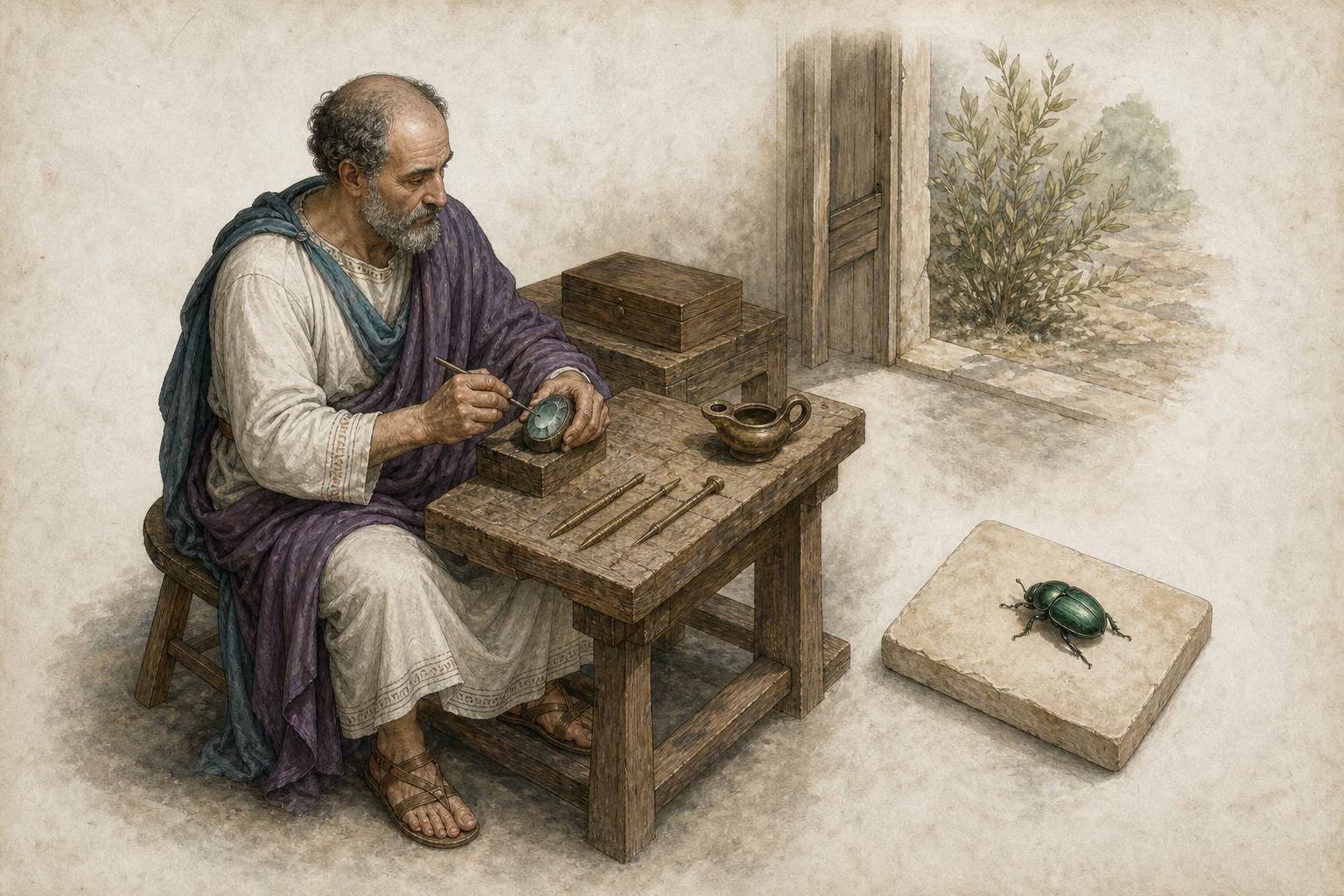
Lacertas quoque pluribus modis ad oculorum remedia adsumunt. alii viridem includunt novo fictili et lapillos, qui vocantur cinaedia, quae et inguinum tumoribus adalligari solent, novem signis signant et singulos detrahunt per dies; nono emittunt lacertam, lapillos servant ad oculorum dolores. alii terram substernunt lacertae viridi excaecatae et una in vitreo vase anulos includunt e ferro solido vel auro. cum recepisse visum lacertam apparuit per vitrum, emissa ea anulis contra lippitudinem utuntur, alii capitis cinere pro stibi ad scabritias. quidam viridem, collo longo, in sabulosis nascentem comburunt et incipientem epiphoram inungunt, item glaucomata. mustelae etiam oculis punctu erutis aiunt visum reverti, eademque quae in lacertis et anulis faciunt; serpentis oculum dextrum adalligatum contra epiphoras prodesse, si serpens viva dimittatur. lacrimantibus sine fine oculis cinis stelionum capitis cum stibi eximie medetur. aranei muscarii tela et praecipue spelunca ipsa inposita per frontem ad duo tempora in splenio aliquo ita, ut a puero inpube et capiatur et inponatur nec is triduo se ostendat ei, cui medebitur, neve alter nudis pedibus terram attingat his diebus, mirabiliter epiphoris mederi dicitur; albugines quoque tollere inunctione araneus candidus, longissimis ac tenuissimis pedibus, contritus in oleo vetere. is etiam, cuius crassissimum textum est in contignationibus fere, adalligatus panno epiphoras sanare traditur. scarabaei viridis natura contuentium visum exacuit; itaque gemmarum scalptores contuitu eorum adquiescunt.
Aures purgat fel pecudis cum melle, canini lactis instillatio sedat dolorem, gravitatem adeps cum absinthio et oleo vetere, item adeps anserinus. quidam adiciunt sucum cepae, alii pari modo. utuntur et per se ovis formicarum, namque et huic animali est medicina, constatque ursos aegros hoc cibo sanari. anserum omniumque avium adeps praeparatur.... exemptisque venis omnibus patina nova fictili operta in sole subdita aqua ferventi liquatus saccatusque lineis saccis et in fictili novo repositus loco frigido; minus putrescit addito melle. murium cinis cum melle instillatus aut cum rosaceo decoctus aurium dolores sedat. si aliquod animal intraverit, praeciputum remedium est murium fel aceto dilutum; si aqua intraverit, adeps anserinus cum cepae suco. gliris detracta pelle intestinisque exemptis discoquitur melle in vase novo. medici malunt e nardo decoqui usque ad tertias atque ita adservari, dein, cum opus sit, strigili tepefacta infundere. constat deplorata aurium vitia eo remedio sanari aut si terreni vermes cum adipe anseris decocti infundantur; item ex arboribus rubri cum oleo triti exulceratis et ruptis auribus praeclare medentur. lacertae inveteratae, in os pendentium addito sale, contusas et ab ictu miseras aures sanant, efficacissime autem ferrugineas maculas habentes, lineis etiam per caudam distinctae. milipeda, ab aliis centipeda aut multipeda dicta, animal est e vermibus terrae, pilosum, multis pedibus arcuatim repens tactuque. contrahens se.; oniscon Graeci vocant, alii iulon. efficacem narrant ad aurium dolores in cortice Punici mali decoctum et porri suco. addunt et rosaceum et in alteram aurem infundunt. illam autem, quae non arcuatur, sepa Graeci vocant, alii scolopendram, minorem perniciosamque. cocleae, quae sunt in usu cibi, cum murra aut turis polline adpositae, item minutae, latae fracturis aurium inlinuntur cum melle. senectus serpentium fervente testa usta instillatur rosaceo admixta, contra omnia quidem vitia efficax, sed contra graveolentiam praecipue ac, si purulenta sint, ex aceto, melius cum felle caprino vel bubulo aut testudinis marinae —vetustior anno eadem membrana non prodest, nec imbre perfusa, ut aliqui putant —, aranei sanies cum rosaceo aut per se in lana vel cum croco, gryllus cum sua terra effossus et inlitus. magnam auctoritatem huic animali perhibet Nigidius, maiorem Magi, quoniam retro ambulet terramque terebret, stridat noctibus. venantur eum formica circumligata capillo in cavernam eius coniecta, efflato prius pulvere, ne sese condat; ita formicae conplexu extrahitur. ventris gallinaceorum membrana, quae abici solet, inveterata et in vino trita auribus purulentis calida infunditur, gallinarum adeps. est quaedam pinguitudo blattae, si caput avellatur; hanc tritam una cum rosaceo auribus mire prodesse dicunt, sed lanam, qua incluserint, post paulum extrahendam; celerrime enim id pingue transire in animal fierique vermiculum. alii binas ternasve in oleo decoctas efficacissime auribus mederi scribunt et tritas in linteolo inponi contusis. hoc quoque animal inter pudenda est, sed propter admirationem naturae priscorumque curae totum in hoc loco explicandum. plura earum genera fecerunt: molles, quas in oleo decoctas verrucis efficaciter inlini experti sunt. alterum genus myloecon appellavere circa molas fere nascens; his capite detracto adtritas lepras sanasse Musaeum pycten in exemplis reliquerunt. tertium genus et odoris taedio invisum, exacuta dune; cum pisselaeo sanare ulcera alias insanabilia, strumas, panos diebus XXI inpositas, percussa, contusa et cacoëthe, scabiem furunculosque detractis pedibus et pinnis. nos haec etiam audita fastidimus; at, Hercules, Diodorus et in morbo regio et orthopnoicis se dedisse tradit cum resina et melle. tantum potestatis habet ars ea pro medicamento dandi quidquid velit. humanissimi eorum cinerem crematarum servandum ad hos usus in cornea pyxide censuere aut tritas clysteribus infundendas orthopnoicis aut rheumaticis. infixa utique corpori inlitas extrahere constat. mel utilissimum auribus quoque est, in quo apes inmortuae sint. parotidas comprimit columbinum stercus vel per se vel cum farina hordeacea aut avenacea, noctuae cerebrum vel iocur cum oleo infusum auriculae [a parotide ], multipeda cum resinae parte tertia inlita, grylli sive inliti sive adalligati.
Ad reliqua morborum genera medicinam ex isdem animalibus aut eiusdem generis sequenti dicemus volumine.
English · Bostock & Riley 1855–57
Where the hair has been lost through alopecy, it is made to grow again by using ashes of burnt sheep’s dung, with oil of cyprus and honey; or else the hoof of a mule of either sex, burnt to ashes and mixed with oil of myrtle. In addition to these substances, we find our own writer, Varro, mentioning mouse-dung, which he calls “muscerda,” and the heads of flies, applied fresh, the part being first rubbed with a fig-leaf. Some recommend the blood of flies, while others, again, apply ashes of burnt flies for ten days, in the proportion of one part of the ashes to two of ashes of papyrus or of nuts. In other cases, again, we find ashes of burnt flies kneaded up with woman’s milk and cabbage, or, in some instances, with honey only. It is generally believed that there is no creature less docile or less intelligent than the fly; a circumstance which makes it all the more marvellous that at the sacred games at Olympia, immediately after the immolation of the bull in honour of the god called “Myiodes,” whole clouds of them take their departure from that territory. A mouse’s head or tail, or, indeed, the whole of the body, reduced to ashes, is a cure for alopecy, more particularly when the loss of the hair has been the result of some noxious preparation. The ashes of a hedge-hog, mixed with honey, or of its skin, applied with tar, are productive of a similar effect. The head, too, of this last animal, reduced to ashes, restores the hair to scars upon the body; the place being first prepared, when this cure is made use of, with a razor and an application of mustard: some persons, however, prefer vinegar for the purpose. All the properties attributed to the hedge-hog are found in the porcupine in a still higher degree.
A lizard burnt, as already mentioned, with the fresh root of a reed, cut as fine as possible, to facilitate its being reduced to ashes, and then mixed with oil of myrtle, will prevent the hair from coming off. For all these purposes green lizards are still more efficacious, and the remedy is rendered most effectual, when salt is added, bears’ grease, and pounded onions. Some persons boil ten green lizards in ten sextarii of oil, and content themselves with rubbing the place with the mixture once a month. Alopecy is also cured very speedily with the ashes of a viper’s skin, or by an application of fresh poultry dung. A raven’s egg, beaten up in a copper vessel and applied to the head, previously shaved, imparts a black colour to the hair; care must be taken, however, to keep some oil in the mouth till the application is quite dry, or else the teeth will turn black as well. The operation must be performed also in the shade, and the liniment must not be washed off before the end of three days. Some persons employ the blood and brains of a raven, in combination with red wine; while others, again, boil down the bird, and put it, at bedtime, in a vessel made of lead. With some it is the practice, for the cure of alopecy, to apply bruised cantharides with tar, the skin being first prepared with an application of nitre:—it should be remembered, however, that cantharides are possessed of caustic properties, and due care must be taken not to let them eat too deep into the skin. For the ulcerations thus produced, it is recommended to use applications made of the heads, gall, and dung of mice, mixed with hellebore and pepper.
Nits are destroyed by using dogs’ fat, eating serpents cooked like eels, or else taking their sloughs in drink. Porrigo is cured by applying sheep’s gall with Cimolian chalk, and rubbing the head with the mixture till dry.
A good remedy for head-ache are the heads taken from the snails which are found without shells, and in an imperfect state. In these heads there is found a hard stony substance, about as large as a common pebble: on being extracted from the snail, it is attached to the patient, the smaller snails being pounded and applied to the forehead. Wool-grease, too, is used for a similar purpose; the bones of a vulture’s head, worn as an amulet; or the brains of that bird, mixed with oil and cedar resin, and applied to the head and introduced into the nostrils. The brains of a crow or owlet, are boiled and taken with the food: or a cock is put into a coop, and kept without food a day and a night, the patient submitting to a similar abstinence, and attaching to his head some feathers plucked from the neck or the comb of the fowl. The ashes, too, of a weasel are applied in the form of a liniment; a twig is taken from a kite’s nest, and laid beneath the patient’s pillow; or a mouse’s skin is burnt, and the ashes applied with vinegar: sometimes, also, the small bone is extracted from the head of a snail that has been found between two cart ruts, and after being passed through a gold ring, with a piece of ivory, is attached to the patient in a piece of dog’s skin; a remedy well known to most persons, and always used with success.
For fractures of the cranium, cobwebs are applied, with oil and vinegar; the application never coming away till a cure has been effected. Cobwebs are good, too, for stopping the bleeding of wounds made in shaving. Discharges of blood from the brain are arrested by applying the blood of a goose or duck, or the grease of those birds with oil of roses. The head of a snail cut off with a reed, while feeding in the morning, at full moon more particularly, is attached to the head in a linen cloth, with an old thrum, for the cure of head-ache; or else a liniment is made of it, and applied with white wax to the forehead. Dogs’ hairs are worn also, attached to the forehead in a cloth.
A crow’s brains, taken with the food, they say, will make the eyelashes grow; or else wool-grease, applied with warmed myrrh, by the aid of a fine probe. A similar result is promised by using the following preparation: burnt flies and ashes of mouse-dung are mixed in equal quantities, to the amount of half a denarius in the whole; two sixths of a denarius of antimony are then added, and the mixture is applied with wool-grease. For the same purpose, also, the young ones of a mouse are beaten up, in old wine, to the consistency of the strengthening preparations known as “acopa.” When eyelashes are plucked out that are productive of inconvenience, they are prevented from growing again by using a hedge-hog’s gall; the liquid portion, also, of a spotted lizard’s eggs; the ashes of a burnt salamander; the gall of a green lizard, mixed with white wine, and left to thicken to the consistency of honey in a copper vessel in the sun; the ashes of a swallow’s young, mixed with the milky juice of tithymalos; or else the slime of snails.
According to what the magicians say, glaucoma may be cured by using the brains of a puppy seven days old; the probe being inserted in the right side [of the eye], if it is the right eye that is being operated on, and in the left side, if it is the left. The fresh gall, too, of the asio is used, a bird belonging to the owlet tribe, with feathers standing erect like ears. Apollonius of Pitanæ used to prefer dog’s gall, in combination with honey, to that of the hyæna, for the cure of cataract, as also of albugo. The heads and tails of mice, reduced to ashes and applied to the eyes, improve the sight, it is said; a result which is ensured with even greater certainty by using the ashes of a dormouse or wild mouse, or else the brains or gall of an eagle. The ashes and fat of a field-mouse, beaten up with Attic honey and antimony, are remarkably useful for watery eyes—what this antimony is, we shall have occasion to say when speaking of metals.
For the cure of cataract, the ashes of a weasel are used, as also the brains of a lizard or swallow. Weasels, boiled and pounded, and so applied to the forehead, allay defluxions of the eyes, either used alone, or else with fine flour or with frankincense. Employed in a similar manner, they are very good for sun-stroke, or in other words, for injuries inflicted by the sun. It is a remarkably good plan, too, to burn these animals alive, and to use their ashes, with Cretan honey, as a liniment for films upon the eyes. The cast-off slough of the asp, with the fat of that reptile, forms an excellent ointment for improving the sight in beasts of burden. To burn a viper alive in a new earthen vessel, with one cyathus of fennel juice, and a single grain of frankincense, and then to anoint the eyes with the mixture, is remarkably good for cataract and films upon the eyes; the preparation being generally known as “echeon.” An eye-salve, too, is prepared, by leaving a viper to putrefy in an earthen pot, and bruising the maggots that breed in it with saffron. A viper, too, is burnt in a vessel with salt, and the preparation is applied to the tip of the tongue, to improve the eyesight, and to act generally as a corrective of the stomach and other parts of the body. This salt is given also to sheep, to preserve them in health, and is used as an ingredient in antidotes to the venom of serpents.
Some persons, again, use vipers as an article of food: when this is done, it is recommended, the moment they are killed, to put some salt in the mouth and let it melt there; after which, the body must be cut away to the length of four fingers at each extremity, and, the intestines being first removed, the remainder boiled in a mixture of water, oil, salt, and dill. When thus prepared, they are either eaten at once, or else kneaded in a loaf, and taken from time to time as wanted. In addition to the above-mentioned properties, viper-broth cleanses all parts of the body of lice, and removes itching sensations as well upon the surface of the skin. The ashes, also, of a viper’s head, used by themselves, are evidently productive of considerable effects; they are employed very advantageously in the form of a liniment for the eyes; and so, too, is viper’s fat. I would not make so bold as to advise what is strongly recommended by some, the use, namely, of vipers’ gall; for that, as already stated on a more appropriate occasion, is nothing else but the venom of the serpent. The fat of snakes, mixed with verdigrease, heals ruptures of the cuticle of the eyes; and the skin or slough that is cast off in spring, employed as a friction for the eyes, improves the sight. The gall of the boa is highly vaunted for the cure of albugo, cataract, and films upon the eyes, and the fat is thought to improve the sight.
The gall of the eagle, which tests its young, as already stated, by making them look upon the sun, forms, with Attic honey, an eye-salve which is very good for the cure of webs, films, and cataracts of the eye. A vulture’s gall, too, mixed with leek-juice and a little honey, is possessed of similar properties; and the gall of a cock, dissolved in water, is employed for the cure of argema and albugo: the gall, too, of a white cock, in particular, is recommended for cataract. For short-sighted persons, the dung of poultry is recommended as a liniment, care being taken to use that of a reddish colour only. A hen’s gall, too, is highly spoken of, and the fat in particular, for the cure of pustules upon the pupils, a purpose for which hens are expressly fattened. This last substance is marvellously useful for ruptures of the coats of the eyes, incorporated with the stones known as schistos and hæmatites. Hens’ dung, too, but only the white part of it, is kept with old oil in boxes made of horn, for the cure of white specks upon the pupil of the eye. While mentioning this subject, it is worthy of remark, that peacocks swallow their dung, it is said, as though they envied man the various uses of it. A hawk, boiled in oil of roses, is considered extremely efficacious as a liniment for all affections of the eyes, and so are the ashes of its dung, mixed with Attic honey. A kite’s liver, too, is highly esteemed; and pigeons’ dung, diluted with vinegar, is used as an application for fistulas of the eye, as also for albugo and marks upon that organ. Goose gall and duck’s blood are very useful for contusions of the eyes, care being taken, immediately after the application, to anoint them with a mixture of wool-grease and honey. In similar cases, too, gall of partridges is used, with an equal quantity of honey; but where it is only wanted to improve the sight, the gall is used alone. It is generally thought, too, upon the authority of Hippocrates, that the gall to be used for these purposes should be kept in a silver box.
Partridges’ eggs, boiled in a copper vessel, with honey, are curative of ulcers of the eyes, and of glaucoma. For the treatment of blood-shot eyes, the blood of pigeons, ring-doves, turtle-doves, and partridges is remarkably useful; but that of the male pigeon is generally looked upon as the most efficacious. For this purpose, a vein is opened beneath the wing, it being warmer than the rest of the blood, and consequently more beneficial. After it is applied, a compress, boiled in honey, should be laid upon it, and some greasy wool, boiled in oil and wine. Nyctalopy, too, is cured by using the blood of these birds, or the liver of a sheep—the most efficacious being that of a tawny sheep—as already stated by us when speaking of goats. A decoction, too, of the liver is recommended as a wash for the eyes, and, for pains and swellings in those organs, the marrow, used as a liniment. The eyes of a horned owl, it is strongly asserted, reduced to ashes and mixed in an eye-salve, will improve the sight. Albugo is made to disappear by using the dung of turtle-doves, snails burnt to ashes, and the dung of the cenchris, a kind of hawk, according to the Greeks. All the substances above mentioned, used in combination with honey, are curative of argema: honey, too, in which the bees have died, is remarkably good for the eyes.
A person who has eaten the young of the stork will never suffer from ophthalmia for many years to come, it is said; and the same when a person carries about him the head of a dragon: it is stated, too, that the fat of this last-named animal, applied with honey and old oil, will disperse incipient films of the eyes. The young of the swallow are blinded at full moon, and the moment their sight is restored, their heads are burnt, and the ashes are employed, with honey, to improve the sight, and for the cure of pains, ophthalmia, and contusions of the eyes.
Lizards, also, are employed in numerous ways as a remedy for diseases of the eyes. Some persons enclose a green lizard in a new earthen vessel, together with nine of the small stones known as “cinædia,” which are usually attached to the body for tumours in the groin. Upon each of these stones they make nine marks, and remove one from the vessel daily, taking care, when the ninth day is come, to let the lizard go, the stones being kept as a remedy for affections of the eyes. Others, again, blind a green lizard, and after putting some earth beneath it, enclose it in a glass vessel, with some small rings of solid iron or gold. When they find, by looking through the glass, that the lizard has recovered its sight, they set it at liberty, and keep the rings as a preservative against ophthalmia. Others employ the ashes of a lizard’s head as a substitute for antimony, for the treatment of eruptions of the eyes. Some recommend the ashes of the green lizard with a long neck that is usually found in sandy soils, as an application for incipient defluxions of the eyes, and for glaucoma. They say, too, that if the eyes of a weasel are extracted with a pointed instrument, its sight will return; the same use being made of it as of the lizards and rings above mentioned. The right eye of a serpent, worn as an amulet, is very good, it is said, for defluxions of the eyes, due care being taken to set the serpent at liberty after extracting the eye. For continuous watering of the eyes, the ashes of a spotted lizard’s head, applied with antimony, are remarkably efficacious.
The cobweb of the common fly-spider, that which lines its hole more particularly, applied to the forehead across the temples, in a compress of some kind or other, is said to be marvellously useful for the cure of defluxions of the eyes: the web must be taken, however, and applied by the hands of a boy who has not arrived at the years of puberty; the boy, too, must not show himself to the patient for three days, and during those three days neither of them must touch the ground with his feet uncovered. The white spider, with very elongated, thin, legs, beaten up in old oil, forms an ointment which is used for the cure of albugo. The spider, too, whose web, of remarkable thickness, is generally found adhering to the rafters of houses, applied in a piece of cloth, is said to be curative of defluxions of the eyes. The green scarabæus has the property of rendering the sight more piercing of those who gaze upon it: hence it is that the engravers of precious stones use these insects to steady their sight.
A sheep’s gall, mixed with honey, is a good detergent of the ears. Pains in those organs are allayed by injecting a bitch’s milk; and hardness of hearing is removed by using dogs’ fat, with wormwood and old oil, or else goose-grease. Some persons add juice of onions and of garlic, in equal proportions. The eggs, too, of ants are used, by themselves, for this purpose; these insects being possessed, in fact, of certain medicinal properties, and bears, it is well known, curing themselves when sick, by eating them as food. Goose-grease, and indeed that of all birds, is prepared by removing all the veins and leaving the fat, in a new, shallow, earthen vessel, well covered, to melt in the sun, some boiling water being placed beneath it; which done, it is passed through linen strainers, and is then put by in a cool spot, in a new earthen vessel, for keeping: with the addition of honey it is less liable to turn rancid. Ashes of burnt mice, injected with honey or boiled with oil of roses, allay pains in the ears. In cases where an insect has got into the ears, a most excellent remedy is found in an injection of mouse gall, diluted with vinegar: where, too, water has made its way into the passages of the ear, goose-grease is used, in combination with juice of onions. Some persons skin a dormouse, and after removing the intestines boil the body in a new vessel with honey. Medical men, however, prefer boiling it down to one-third with nard, and recommend it to be kept in that state, and to be warmed when wanted, and injected with a syringe. It is a well-known fact, that this preparation is an effectual remedy for the most desperate maladies of the ears: the same, too, with an injection of earth-worms boiled with goose-grease. The red worms, also, that are found upon trees, beaten up with oil, are a most excellent remedy for ulcerations and ruptures of the ears. Lizards, which have been suspended for some time and dried, with salt in the mouth, are curative of contusions of the ears, and of injuries inflicted by blows: the most efficacious for this purpose are those which have iron-coloured spots upon the skin, and are streaked with lines along the tail.
Millepedes, known also as “centipedes” or “multipedes,” are insects belonging to the earth-worm genus, hairy, with numerous feet, forming curves as they crawl, and contracting themselves when touched: the Greeks give to this insect the name of “oniscos,” others, again, that of “tylos.” Boiled with leek-juice in a pomegranate rind, it is highly efficacious, they say, for pains in the ears; oil of roses being added to the preparation, and the mixture injected into the ear opposite to the one affected. As for that kind which does not describe a curve when moving, the Greeks give it the name of “seps,” while others, again, call it “scolopendra;” it is smaller than the former one, and is injurious. The snails which are commonly used as food, are applied to the ears with myrrh or powdered frankincense; and those with a small, broad, shell are employed with honey as a liniment for fractured ears. Old sloughs of serpents, burnt in a heated potsherd and mixed with oil of roses, are used as an injection for the ears, which is considered highly efficacious for all affections of those organs, and for offensive odours arising therefrom in particular. In cases where there is suppuration of the ears, vinegar is used, and it is still better if goat’s gall, ox-gall, or that of the sea tortoise, is added. This slough, however, is good for nothing when more than a year old; the same, too, when it has been drenched with rain, as some think. The thick pulp of a spider’s body, mixed with oil of roses, is also used for the ears; or else the pulp applied by itself with saffron or in wool: a cricket, too, is dug up with some of its earth, and applied. Nigidius attributes great virtues to this insect, and the magicians still greater, and all because it walks backwards, pierces the earth, and chirrups by night! The mode of catching it is by throwing an ant, made fast with a hair, into its hole, the dust being first blown away to prevent it from concealing itself: the moment it seizes the ant, it is drawn out.
The dried craw of poultry, a part that is generally thrown away, is beaten up in wine, and injected warm, for suppurations of the ears; the same, too, with the grease of poultry.
On pulling off the head of a black beetle, it yields a sort of greasy substance, which, beaten up with rose oil, is marvellously good, they say, for affections of the ears: care must be taken, however, to remove the wool very soon, or else this substance will be speedily transformed into an animal, in the shape of a small grub. Some writers assert that two or three of these insects, boiled in oil, are extremely efficacious for the ears; and that they are good, beaten up and applied in linen, for contusions of those organs.
This insect, also, is one of those that are of a disgusting character; but I am obliged, by the admiration which I feel for the operations of Nature, and for the careful researches of the ancients, to enter somewhat more at large upon it on the present occasion. Their writers have described several varieties of it; the soft beetle, for instance, which, boiled in oil, has been found by experience to be a very useful liniment for warts. Another kind, to which they have given the name of “mylœcon,” is generally found in the vicinity of mills: deprived of the head, it has been found to be curative of leprosy—at least Musa and Picton have cited instances to that effect. There is a third kind, again, odious for its abominable smell, and tapering at the posterior extremities. Used in combination with pisselæon, it is curative, they say, of ulcers of a desperate nature, and, if kept applied for one-and-twenty days, for scrofulous sores and inflamed tumours. The legs and wings being first removed, it is employed for the cure of bruises, contusions, cancerous sores, itch-scabs, and boils—remedies, all of them, quite disgusting even to hear of. And yet, by Hercules! Diodorus tells us that he has administered this remedy internally, with resin and honey, for jaundice and hardness of breathing; such unlimited power has the medical art to prescribe as a remedy whatever it thinks fit!
Physicians who keep more within bounds, recommend the ashes of these insects to be kept for these various purposes in a box made of horn; or else that they should be bruised and injected in a lavement for hardness of breathing and catarrhs. At all events, that, applied externally, they extract foreign substances adhering to the flesh, is a fact well known.
Honey, too, in which the bees have died, is remarkably useful for affections of the ears. Pigeons’ dung, applied by itself, or with barley-meal or oat-meal, reduces imposthumes of the parotid glands; a result which is equally obtained by injecting into the ear an owlet’s brains or liver, mixed with oil, or by applying the mixture to the parotid glands; also, by applying millepedes with one-third part of resin; by using crickets in the form of a liniment; or by wearing crickets attached to the body as an amulet. The other kinds of maladies, and the several remedies for them, derived from the same animals or from others of the same class, we shall describe in the succeeding Book.