LIBER III · CAPUT 16
THE EIGHTH REGION OF ITALY; THE PADUS
Latine · Mayhoff 1906
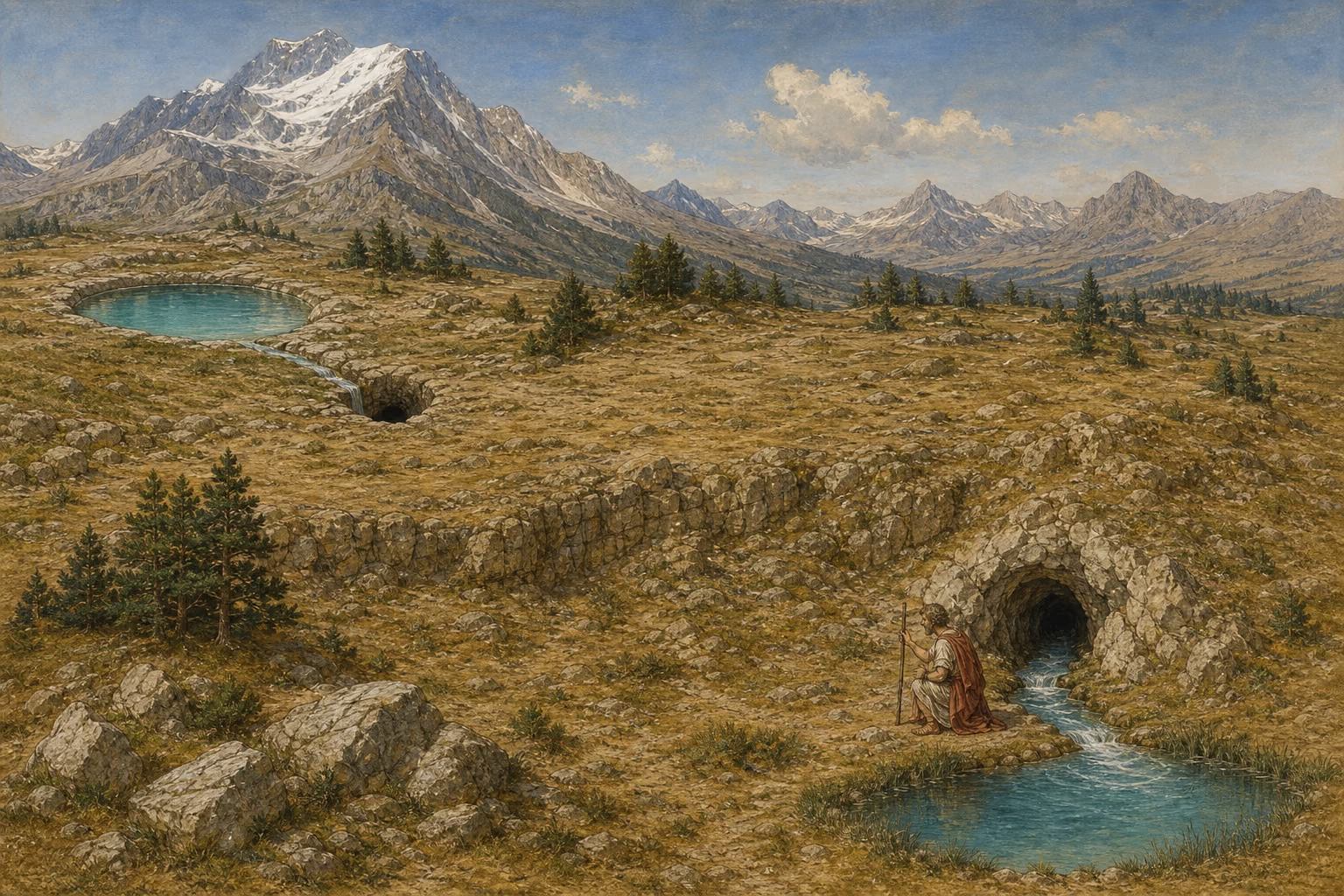
Padus, e gremio Vesuli montis celsissimum in cacumen Alpium elati finibus Ligurum Bagiennorum visendo fonte profluens condensque se cuniculo et in Forovibiensium agro iterum exoriens, nullo amnium claritate inferior, graecis dictus Eridanus ac poena Phaethontis inlustratus, augetur ad canis ortus liquatis nivibus, agris quam navigiis torrentior, nihil tamen ex rapto sibi vindicans atque, ubi linquit, ubertate largitor.CCC p. a fonte addens meatu duo de LXXXX nec amnes tantum Appenninos Alpinosque navigabiles capiens, sed lacus quoque inmensos in eum sese exonerantes, omni numero XXX flumina in mare Hadriaticum defert, celeberrima ex iis Appennini latere Iactum, Tanarum, Trebiam Placentinum, Tarum, Inciam, Gabellum, Scultennam, Rhenum, Alpium vero Sturam, Orgum, Durias duas, Sesitem, Ticinum, Lambrum, Adduam, Ollium, Mincium. nec alius amnium tam brevi spatio maioris incrementi est. urguetur quippe aquarum mole et in profundum agitur, gravis terrae, quamquam diductus in flumina et fossas inter Ravennam Altinumque per CXX, tamen, qua largius vomit, Septem Maria dictus facere. Augusta fossa Ravennam trahitur, ubi Padusa vocatur, quondam Messanicus appellatus. proximum inde ostium magnitudinem portus habet qui Vatreni dicitur, qua Claudius Caesar e Britannia triumphans praegrandi illa domo verius quam nave intravit Hadriam. hoc ante Eridanum ostium dictum est, ab aliis Spineticum ab urbe Spina, quae fuit iuxta, praevalens, ut Delphicis creditum est thesauris, condita a Diomede. auget ibi Padum Vatrenus amnis ex Forocorneliensi agro. proximum inde ostium Caprasiae, dein Sagis, dein Volane, quod ante Olane vocabatur, omnia ea fossa Flavia, quam primi a Sagi fecere Tusci egesto amnis impetu per transversum in Atrianorum paludes quae Septem Maria appellantur, nobili portu oppidi Tuscorum Atriae, a quo Atriaticum mare ante appellabatur quod nunc Hadriaticum. inde ostia plena Carbonaria, Fossiones acPhilistina, quod alii Tartarum vocant, omnia ex Philistinae fossae abundatione nascentia, accedentibus Atesi ex Tridentinis Alpibus et Togisono ex Patavinorum agris. pars eorum et proximum portum facit Brundulum, sicut Aedronem Meduaci duo ac fossa Clodia. his se Padus miscet ac per haec effundit, plerisque, ut in Aegypto Nilus quod vocant Delta, triquetram figuram inter Alpes atque oram maris facere proditus, stadiorumII circuitu. pudet a Graecis Italiae rationem mutuari, Metrodorus tamen Scepsius dicit, quoniam circa fontem arbor multa sit picea, quales Gallice vocentur padi, hoc nomen accepisse, Ligurum quidem lingua amnem ipsum Bodincum vocari, quod significet fundo carentem. cui argumento adest oppidum iuxta Industria vetusto nomine Bodincomagum, ubi praecipua altitudo incipit.
English · Bostock & Riley 1855–57
The Padus descends from the bosom of Mount Vesulus, one of the most elevated points of the chain of the Alps, in the territories of the Ligurian Vagienni, and rises at its source in a manner that well merits an inspection by the curious; after which it hides itself in a subterranean channel until it rises again in the country of the Forovibienses. It is inferior in fame to none whatever among the rivers, being known to the Greeks as the Eridanus and famous as the scene of the punishment of Phaëton. At the rising of the Dog-star it is swollen by the melted snows; but, though it proves more furious in its course to the adjoining fields than to the vessels that are upon it, still it takes care to carry away no portion of its banks, and when it recedes, renders them additionally fertile. Its length from its source is 300 miles, to which we must add eighty-eight for its sinuosities; and it receives from the Apennines and Alps not only several navigable rivers, but immense lakes as well, which discharge themselves into its waters, thus conveying altogether as many as thirty streams into the Adriatic Sea.
Of these the best known are the following—flowing from the range of the Apennines, the Jactus, the Tanarus, the Trebia which passes Placentia, the Tarus, the Incia, the Gabellus, the Scultenna, and the Rhenus: from the chain of the Alps, the Stura, the Orgus, the two Duriæ, the Sessites, the Ticinus, the Lambrus, the Addua, the Ollius, and the Mincius. There is no river known to receive a larger increase than this in so short a space; so much so indeed that it is impelled onwards by this vast body of water, and, invading the land, forms deep channels in its course: hence it is that, although a portion of its stream is drawn off by rivers and canals between Ravenna and Altinum, for a space of 120 miles, still, at the spot where it discharges the vast body of its waters, it is said to form seven seas.
By the Augustan Canal the Padus is carried to Ravenna, at which place it is called the Padusa, having formerly borne the name of Messanicus. The nearest mouth to this spot forms the extensive port known as that of Vatrenus, where Claudius Cæsar, on his triumph over the Britons, entered the Adriatic in a vessel that deserved rather the name of a vast palace than a ship. This mouth, which was formerly called by some the Eridanian, has been by others styled the Spinetic mouth, from the city of Spina, a very powerful place which formerly stood in the vicinity, if we may form a conclusion from the amount of its treasure deposited at Delphi; it was founded by Diomedes. At this spot the river Vatrenus, which flows from the territory of Forum Cornelî, swells the waters of the Padus.
The next mouth to this is that of Caprasia, then that of Sagis, and then Volane, formerly called Olane; all of which are situate upon the Flavian Canal, which the Tuscans formerly made from Sagis, thus drawing the impetuous stream of the river across into the marshes of the Atriani, which they call the Seven Seas; and upon which is the noble port of Atria, a city of the Tuscans, from which place the sea was formerly called the Atriatic, though now the Adriatic.
We next come to the overflowing mouths of Carbonaria, and the Fosses of Philistina, by some called Tartarus, all of which originate in the overflow of the waters in the Philistinian Canal, swollen by the streams of the Atesis, descending from the Tridentine Alps, and of the Togisonus, flowing from the territory of the Patavini. A portion of them also forms the adjoining port of Brundulum, in the same manner as Edron is formed by the two rivers Meduacus and the Clodian Canal. With the waters of these streams the Padus unites, and with them discharges itself into the sea, forming, according to most writers, between the Alps and the sea-shore a triangular figure, 2000 stadia in circumference, not unlike the Delta formed by the Nile in Egypt. I feel somewhat ashamed to have to borrow from the Greeks any statement in reference to Italy; Metrodorus of Scepsos, however, informs us that this river has obtained its name of Padus from the fact, that about its source there are great numbers of pine-trees, which in the Gallic language are called “padi.” In the tongue of the Ligurians this river is called “Bodincus,” which signifies “the bottomless.” This derivation is in some measure supported by the fact that near this river there is the town of Industria, of which the ancient name was Bodincomagum, and where the river begins to be of greater depth than in other parts.