LIBER III · CAPUT 17
THE ELEVENTH REGION OF ITALY; ITALIA TRANSPADANA
Latine · Mayhoff 1906
Transpadana appellatur ab eo regio undecima, tota in mediterraneo, cui marina cuncta fructuoso alveo inportat. oppida Vibi Forum, Segusio, coloniae ab Alpium radicibus Augusta Taurinorum — inde navigabili Pado — antiqua Ligurum stirpe, dein Salassorum Augusta Praetoria iuxta geminas Alpium fores, Graias atque Poeninas — his Poenos, Grais Herculem transisse memorant —, oppidum Eporedia Sibyllinis a populo Romano conditum iussis. eporedias Galli bonos equorum domitores vocant. Vercellae Libiciorum ex Salluis ortae, Novaria ex Vertamocoris, Vocontiorum hodieque pago, non, ut Cato existimat, Ligurum, ex quibus Laevi et Marici condidere Ticinum non procul a Pado, sicut Boi Transalpibus profecti Laudem Pompeiam, Insubres Mediolanum. Oromobiorum stirpis esse Comum atque Bergomum et Licini Forum aliquotque circa populos auctor est Cato, sed originem gentis ignorare se fatetur, quam docet Cornelius Alexander ortam a graecia interpretatione etiam nomiuis vitam in montibus degentium. in hoc situ interiit oppidum Oromobiorum parra, unde Bergomates Cato dixit ortos, etiamnum prodente se altius quam fortunatius situm. interiere et Caturiges, Insubrum exsules, et Spina supra dicta, item Melpum opulentia praecipuum, quod ab Insubribus et Bois et Senonibus deletum eo die, quo Camillus Veios ceperit, Nepos Cornelius tradidit.
English · Bostock & Riley 1855–57
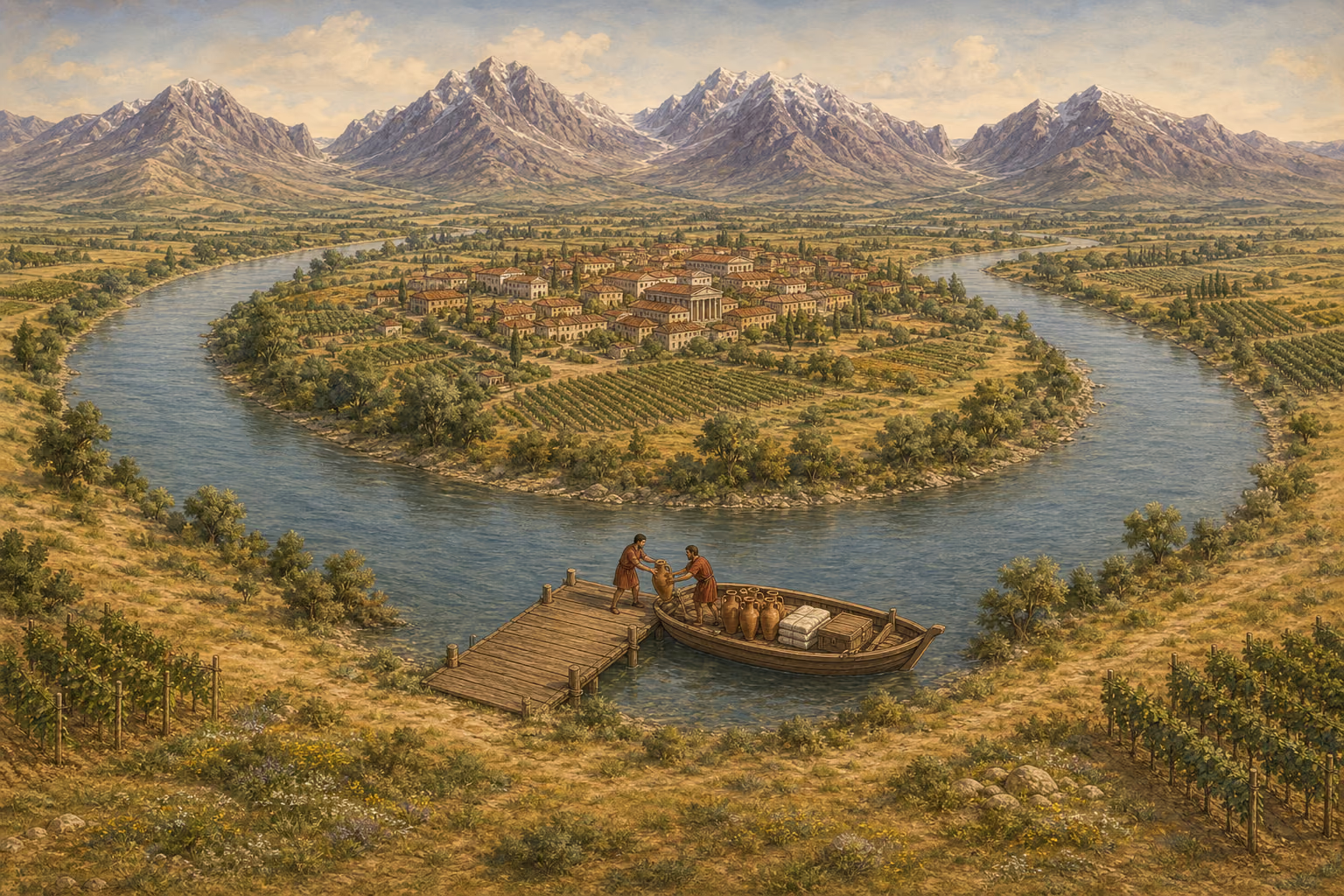
From the river Padus the eleventh region receives its name of Transpadana; to which, situate as it is wholly in the interior, the river, by its bounteous channel, conveys the gifts of all the seas. The towns are Vibî Forum and Segusio; and, at the foot of the Alps, the colony of Augusta Taurinorum, at which place the Padus becomes navigable, and which was founded by the ancient race of the Ligurians, and of Augusta Prætoria of the Salassi, near the two passes of the Alps, the Grecian and the Penine (by the latter it is said that the Carthaginians passed into Italy, by the Grecian, Hercules)—the town of Eporedia, the foundation of which by the Roman people was enjoined by the Sibylline books; the Gauls call tamers of horses by the name of “Eporediæ”—Vercellæ, the town of the Libici, derived its origin from the Salluvii, and Novaria, founded by the Vertacomacori, is at the present day a district of the Vocontii, and not, as Cato supposes, of the Ligurians; of whom two nations, called the Lævi and the Marici, founded Ticinum, not far from the Padus, as the Boii, descended from the Transalpine nations, have founded Laus Pompeia and the Insubres Mediolanum.
From Cato we also learn that Comum, Bergomum, and Licinîforum, and some other peoples in the vicinity, originated with the Orobii, but he admits that he is ignorant as to the origin of that nation. Cornelius Alexander however informs us that they came from Greece, interpreting their name as meaning “those who live upon the mountains.” In this district, Parra has disappeared, a town of the Orobii, from whom, according to Cato, the people of Bergomum are descended; its site even yet shows that it was situate in a position more elevated than fruitful. The Caturiges have also perished, an exiled race of the Insubres, as also Spina previously mentioned; Melpum too, a place distinguished for its opulence, which, as we are informed by Cornelius Nepos, was destroyed by the Insubres, the Boii, and the Senones, on the very day on which Camillus took Veii.