LIBER III · CAPUT 4
OF THE PROVINCE OF GALLIA NARBONENSIS
Latine · Mayhoff 1906
Narbonensis provincia appellatur pars Galliarum quae interno mari adluitur, Bracata antea dicta, amne Varo ab Italia discreta Alpiumque vel saluberrimis Romano imperio iugis, a reliqua vero Gallia latere septentrionali montibus Cebenna et Iuribus, agrorum cultu, virorum morumque dignatione, amplitudine opum nulli provinciarum postferenda breviterque Italia verius quam provincia. in ora regio Sordonum intusque Consuaranorum, flumina Tecum, Vernodubrum, oppida Illiberis, magnae quondam urbis tenue vestigium, Ruscino Latinorum, flumen Atax, e Pyrenaeo Rubrensem permeans lacum, Narbo Martius Decumanorum colonia XII p. a maria distans, flumina Araris, Liria. oppida de cetero rara praeiacentibus stagnis: Agatha quondam Massiliensium et regio Volcarum Tectosagum atlque ubi Rhoda Rhodiorum fuit, unde dictus multo Galliarum fertilissimus Rhodanus amnis, ex Alpibus se rapiens per Lemannum lacum segnemque deferens Ararim nec minus se ipso torrentes Isaram et Druantiam. Libica appellantur duo eius ora modica, ex his alterum Hispaniense, alterum Metapinum, tertium idemque amplissimum Massalioticum. sunt auctores et Heracleam oppidum in ostio Rhodani fuisse. ultra fossae ex Rhodano, C. Mari opere et nomine insignes, stagnum Mastromela, oppidum Maritima Avaticorum, superque Campi Lapidei, Herculis proeliorum memoria, regio Anatiliorum et intus Dexivatium Cavarumque; rursus a mari Tricorium et intus Tritollorum Vocontiorumque et Segovellaunorum, mox Allobrogum. at in ora Massilia Graecorum Phocaeensium foederata, promunturium Zao, Citharista portus, regio Camactulicorum, dein Suelteri supraque Verucini. in ora autem Athenopolis Massiliensium, Forum Iuli Octavanorum colonia, quae Pacensis appellatur et Classica, amnis nomine Argenteus, regio Oxubiorum Ligaunorumque, super quos Suebri, Quariates, Adunicates. at in ora oppidum Latinum Antipolis, regio Deciatium, amnis Varus, ex Alpium monte Caenia profusus.
In mediterraneo coloniae Arelate Sextanorum, Baeterrae Septimanorum, Arausio Secundanorum, in agro Cavarum Valentia, Vienna Allobrogum. oppida Latina Aquae Sextiae Salluviorum, Avennio Cavarum, Apta Iulia Vulgientium, Alebaece Reiorum Apollinarium, Alba Helvorum, Augusta Tricastinorum, Anatilia, Aerea, Bormani, Comani, Cabellio, Carcasum Volcarum Tectosagum, Cessero, Carbantorate Meminorum, Caenicenses, Cambolectri qui Atlantici cognominantur, Forum Voconi, Glanum Libii, Lutevani qui et Foroneronienses, Nemausum Arecomicorum, Piscinae, Ruteni, Samnagenses, Tolosani Tectosagum Aquitaniae contermini, Tasgoduni, Tarusconienses, Vmbranici, Vocontiorum civitatis foederatae duo capita Vasio et Lucus Augusti, oppida vero ignobilia XVIIII, sicut XXIIII Nemausiensibus adtributa. adiecit formulae Galba Imperator ex Inalpinis Avanticos atque Bodionticos, quorum oppidum Dinia. longitudinem provinciae Narbonensis CCCLXX p. Agrippa tradit, latitudinem CCXLVIII.
English · Bostock & Riley 1855–57
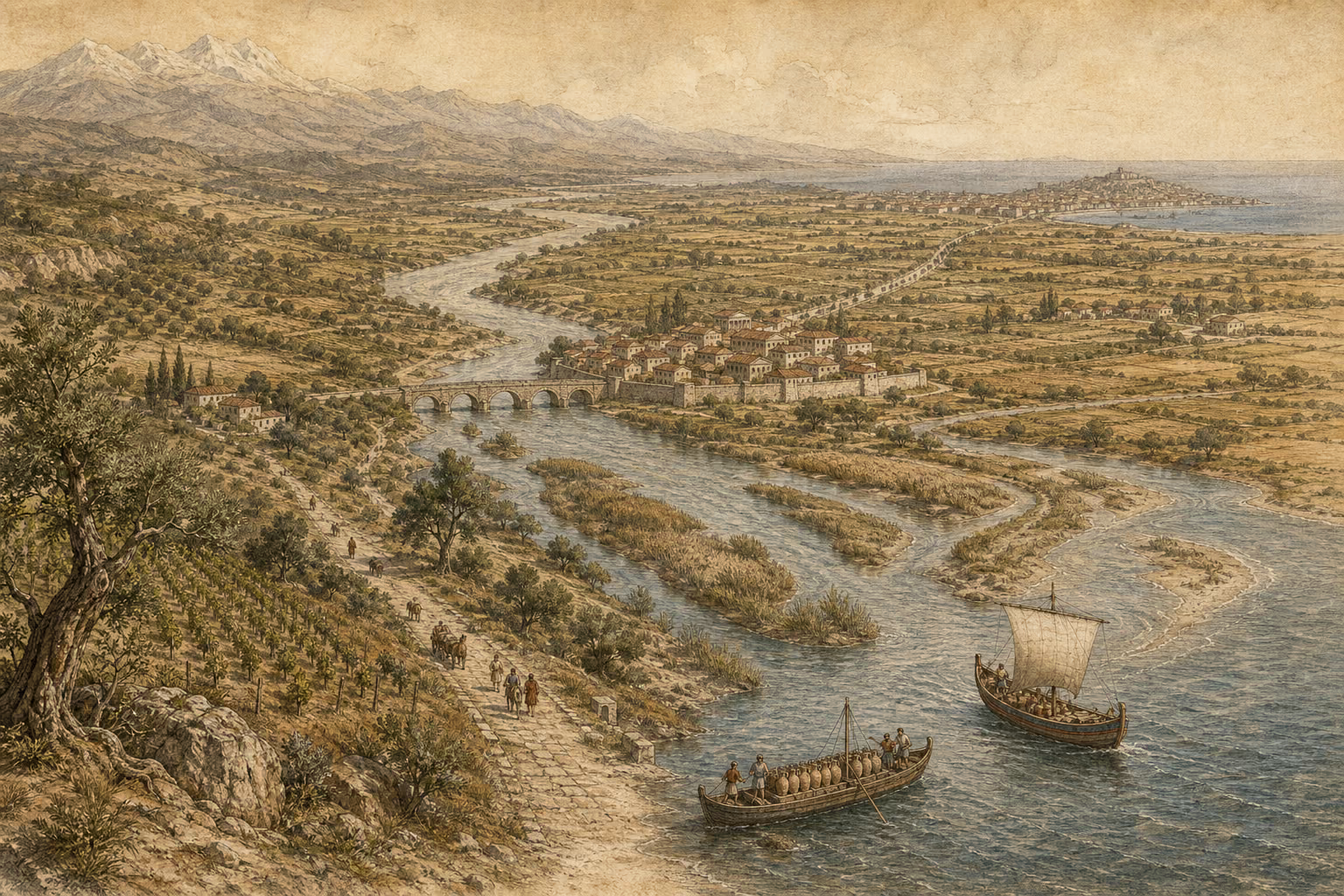
That part of the Gallias which is washed by the inland sea is called the province of [Gallia] Narbonensis, having formerly borne the name of Braccata. It is divided from Italy by the river Varus, and by the range of the Alps, the great safeguards of the Roman Empire. From the remainder of Gaul, on the north, it is separated by the mountains Cebenna and Jura. In the cultivation of the soil, the manners and civilization of the inhabitants, and the extent of its wealth, it is surpassed by none of the provinces, and, in short, might be more truthfully described as a part of Italy than as a province. On the coast we have the district of the Sordones, and more inland that of the Consuarani. The rivers are the Tecum and the Vernodubrum. The towns are Illiberis, the scanty remains of what was formerly a great city, and Ruscino, a town with Latian rights. We then come to the river Atax, which flows from the Pyrenees, and passes through the Rubrensian Lake, the town of Narbo Martius, a colony of the tenth legion, twelve miles distant from the sea, and the rivers Arauris and Liria. The towns are otherwise but few in number, in consequence of the numerous lakes which skirt the sea-shore. We have Agatha, formerly belonging to the Massilians, and the district of the Volcæ Tectosages; and there is the spot where Rhoda, a Rhodian colony, formerly stood, from which the river takes its name of Rhodanus; a stream by far the most fertilizing of any in either of the Gallias. Descending from the Alps and rushing through lake Lemanus, it carries along with it the sluggish Arar, as well as the torrents of the Isara and the Druentia, no less rapid than itself. Its two smaller mouths are called Libica, one being the Spanish, and the other the Metapinian mouth; the third and largest is called the Massiliotic. There are some authors who state that there was formerly a town called Heraclea at the mouth of the Rhodanus or Rhone.
Beyond this are the Canals leading out of the Rhone, a famous work of Caius Marius, and still distinguished by his name; the Lake of Mastramela, the town of Maritima of the Avatici, and, above this, the Stony Plains, memorable for the battles of Hercules; the district of the Anatilii, and more inland, that of the Desuviates and the Cavari. Again, close upon the sea, there is that of the Tricorii, and inland, there are the Tricolli, the Vocontii, and the Segovellauni, and, after them, the Allobroges.
On the coast is Massilia, a colony of Phocæan Greeks, and a federate city; we then have the Promontory of Zao, the port of Citharista, and the district of the Camatullici; then the Suelteri, and above them the Verrucini. Again, on the coast, we find Athenopolis, belonging to the Massilians, Forum Julii Octavanorum, a colony, which is also called Pacensis and Classica, the river Argenteus, which flows through it, the district of the Oxubii and that of the Ligauni; above whom are the Suetri, the Quariates and the Adunicates. On the coast we have Antipolis, a town with Latian rights, the district of the Deciates, and the river Varus, which proceeds from Mount Cema, one of the Alps.
The colonies in the interior are Arelate Sextanorum, Beterræ Septimanorum, and Arausio Secundanorum; Valentia in the territory of the Cavari, and Vienna in that of the Allobroges. The towns that enjoy Latian rights are Aquæ Sextiæ in the territory of the Saluvii, Avenio in that of the Cavari, Apta Julia in that of the Volgientes, Alebece in that of the Reii Apollinares, Alba in that of the Helvi, and Augusta in that of the Tricastini, Anatilia, Aeria, the Bormanni, the Comaci, Cabellio, Carcasum in the territory of the Volcæ Tectosages, Cessero, Carpentoracte in the territory of the Memini, the Cenicenses, the Cambolectri, surnamed the Atlantici, Forum Voconi, Glanum Livi, the Lutevani, also called the Foroneronienses, Nemausum in the territory of the Arecomici, Piscenæ, the Ruteni, the Sanagenses, the Tolosani in the territory of the Tectosages on the confines of Aquitania, the Tasconi, the Tarusconienses, the Umbranici, Vasio and Lucus Augusti, the two capitals of the federate state of the Vocontii. There are also nineteen towns of less note, as well as twenty-four belonging to the people of Nemausum. To this list the Emperor Galba added two tribes dwelling among the Alps, the Avantici and the Bodiontici, to whom belongs the town of Dinia. According to Agrippa the length of the province of Gallia Narbonensis is 370 miles, and its breadth 248.