LIBER III · CAPUT 5
OF ITALY
Latine · Mayhoff 1906
Italia dehinc primique eius Ligures, mox Etruria, Vmbria, Latium, ibi Tiberina ostia et Roma, terrarum caput, XVI p. intervallo a mari. Volscum postea litus et Campaniae, Picentinum inde ac Lucanum Bruttiumque, quo longissime in meridiem ab Alpium paene lunatis iugis in maria excurrit Italia. ab eo Graeciae ora, mox Sallentini, Poeduculi, Apuli, Paeligni, Frentani, Marrucini, Vestini, Sabini, Picentes, Galli, Vmbri, Tusci, Veneti, Carni, Iapudes, Histri, Liburni. nec ignoro ingrati ac segnis animi existimari posse merito, si obiter atque in transcursu ad hune modum dicatur terra omnium terrarum alumna eadem et parens, numine deum electa quae caelum ipsum clarius faceret, sparsa congregaret imperia ritusque molliret et tot populorum discordes ferasque linguas sermonis commercio contraheret ad conloquia et humanitatem homini daret breviterque una cunctarum gentium in toto orbe patria fieret. sed quid agam? tanta nobilitas omnium locorum, quos quis attigerit, tanta rerum singularum populorumque claritas tenet. urbs Roma vel sola in ea,.... et digna iam tam festa cervice facies, quo tandem narrari debet opere? qualiter Campaniae ora per se felixque illa ac beata amoenitas, ut palam sit uno in loco gaudentis opus esse naturae? iam vero tota ea vitalis ac perennis salubritas, talis caeli temperies, tam fertiles campi, tam aprici colles, tam innoxii saltus, tam opaca nemora, tam munifica silvarum genera, tot montium adflatus, tanta frugum vitiumque et olearum fertilitas, tam nobilia pecudi vellera, tam opima tauris colla, tot lacus, tot amnium fontiumque ubertas totam eam perfundens, tot maria, portus, gremiumque terrarum commercio patens undique et tamquam iuvandos ad mortales ipsa avide in maria procurrens! neque ingenia ritusque ac viros et lingua manuque superatas commemoro gentes. ipsi de ea iudicavere Grai, genus in gloriam sui effusissimum, quotam partem ex ea appellando Graeciam Magnam! nimirum id, quod in caeli mentione fecimus, hac quoque in parte faciendum est, ut notas quasdam et pauca sidera attingamus. legentes tantum quaeso meminerint ad singula toto orbe edissertanda festinari.
Est ergo folio maxime querno adsimulata, multo proceritate amplior quam latitudine, in laevam se flectens cacumine et Amazonicae figura desinens parmae, ubi a medio excursu Cocynthos vocatur, per sinus lunatos duo cornua emittens, Leucopetram dextra, Lacinium sinistra. patet longitudine ab Inalpino fine Praetoriae Augustae per urbem Capuamque cursu meante Regium oppidum, in umero eius situm, a quo veluti cervicis incipit flexus, decies centena et viginti milia passuum, multoque amplior mensura fieret Lacinium usque, ni talis obliquitas in latus degredi videretur. latitudo eius varia est, quadringentorum decem milium inter duo maria Inferum et Superum amnesque Varum atque Arsiam, media autem ferme circa urbem Romam ab ostio Aterni amnis in Hadriaticum mare influentis ad Tiberina ostia CXXXVI, et paulo minus a Castro Novo Hadriatici maris Alsium ad Tuscum aequor, haud ullo in loco CC latitudinem excedens. universae autem ambitus a Varo ad ArsiamXX, XLVIIII p. efficit. abest a circumdatis terris Histria ac Liburnia quibusdam locis centena milia, ab Epiro et Illyrico quinquaginta, ab Africa minus ducenta, ut auctor est M. Varro, ab Sardinia centum viginti milia, ab Sicilia MD, a Corcyra minus LXXX, ab Issa L???. incedit per maria caeli regione ad meridiem quidem, sed, si quis id diligenti subtilitate exigat, inter sextam horam primamque brumalem.
Nunc ambitum eius urbesque enumerabimus, qua in re praefari necessarium est auctorem nos Divum Augustum secuturos discriptionemque ab eo factam Italiae totius in regiones XI, sed ordine eo, qui litorum tractu fiet; urbium quidem vicinitates oratione utique praepropera servari non posse, itaque interiore parte digestionem in litteras eiusdem nos secuturos, coloniarum mentione signata, quas ille in eo prodidit numero. nec situs originesque persequi facile est, Ingaunis Liguribus — ut ceteri omittantur — agro tricies dato.
Igitur ab amne Varo Nicaea a Massiliensibus conditum, fluvius Palo, Alpes populique Inalpini multis nominibus, sed maxime Capillati, oppido Vediantiorum civitatis Cemene- lo, portus Herculis Monoeci, Ligustina ora. Ligurum celeberrimi ultra Alpes Sallui, Deciates, Oxubi, citra Veneni, Turri, Soti, Bagienni, Statielli, Binbelli, Maielli, Caburriates, Casmonates, Velleiates et quorum oppida in ora proxime dicemus. flumen Rutuba, oppidum Album Intimilium, flumen Merula, oppidum Album Ingaunum, portus Vadorum Sabatium, flumen Porcifera, oppidum Genua, fluvius Fertor, portus Delphini, Tigulia intus, Segesta Tiguliorum, flumen Macra, Liguriae finis. a tergo autem supra dictorum omnium Appenninus mons Italiae amplissimus, perpetuis iugis ab Alpibus tendens ad Siculum fretum. ab altero eius 49 latere ad Padum amnem Italiae ditissimum omnia nobilibus oppidis nitent, Libarna, Dertona colonia, Iria, Vardacate, Industria, Pollentia, Carrea quod Potentia cognominatur, Foro Fulvi quod Valentinum, Augusta Bagiennorum, Alba Pompeia, Hasta, Aquis Statiellorum. haec regio ex discriptione Augusti nona est. patel ora Liguriae inter amnes Varum et Macram CCXI p.
Adnectitur septima, in qua Etruria est ab amne Macra, ipsa mutatis saepe nominibus. Vmbros inde exegere antiquitus Pelasgi, hos Lydi, a quorum rege Tyrrheni, mox a sacrifico ritu lingua Graecorum Tusci sunt cognominati. primum Etruriae oppidum Luna, portu nobile, colonia Luca a mari recedens propiorque Pisae inter amnes Auserem et Arnum, ortae a Pelopidis sive a Teutanis, Graeca gente. vada Volaterrana, fluvius Caecina, Populonium, Etruscorum quondam hoc tantum in litore. hinc amnes Prile, mox Vmbro, navigiorum capax, et ab eo tractus Vmbriae portusque Telamo, Cosa Volcientium a populo Romano deducta, Graviscae, Castrum Novum, Pyrgi, Caeretanus amnis et ipsum Caere intus m. p. VII, Agylla a Pelasgis conditoribus dictum, Alsium, Fregenae, Tiberis amnis a Macra CCLXXXIIII p. intus coloniae Falisca, Argis orta, ut auctor est Cato, quae cognominatur Etruscorum, Lucus Feroniae, Rusellana, Seniensis, Sutrina. de cetero Arretini Veteres, Arretini Fidentiores, Arretini Iulienses, Amitinenses, Aquenses cognomine Taurini, Blerani, Cortonenses, Capenates, Clusini Novi, Clusini Veteres, Florentini praefluenti Arno adpositi, Faesulae, Ferentinum, Fescennia, Hortanum, Herbanum, Nepet, Novem Pagi, Praefectura Claudia Foroclodi, Pistorium, Perusia, Suanenses, Saturnini qui ante Aurini vocabantur, Subertani, Statonienses, Tarquinienses, Tuscanienses, Vetulonienses, Veientani, Vesentini, Volaterrani, Volcentani cognomine Etrusci, Volsinienses. in eadem parte oppidorum veterum nomina retinent agri Crustuminus, Caletranus.
Tiberis, antea Thybris appellatus et prius Albula, e media fere longitudine Appennini finibus Arretinorum profluit, tenuis primo nec nisi piscinis corrivatus emissusque navigabilis, sicuti Tinia et Clanis influentes in eum, novenorum ita conceptu dierum, si non adiuvent imbres. sed Tiberis propter aspera et confragosa ne sic quidem, praeterquam trabibus verius quam ratibus, longe meabilis fertur, per CL p. non procul Tiferno Perusiaque et Ocriculo Etruriam ab Vmbris ac Sabinis, mox citra XVI p. urbis Veientem agruma Crustumino, dein Fidenatem Latinumque a Vaticano dirimens. sed infra Arretinum Clanim duobus et quadraginta fluviis auctus, praecipuis autem Nare et Aniene, qui et ipse navigabilis Latium includit a tergo, nec minus tamen aquis ac tot fontibus in urbem perductis, et ideo quamlibet magnarum navium ex Italo maria capax, rerum in toto orbe nascentium mercator placidissimus, pluribus prope solus quam ceteri in omnibus terris amnes accolitur aspiciturque villis. nullique fluviorum minus licet inclusis utrimque lateribus, nec tamen ipse depugnat, quamquam creber ac subitus incrementis est, nusquam magis aquis quam in ipsa urbe stagnantibus. quin immo vates intellegitur potius ac monitor, auctu semper religiosus verius quam saevus.
Latium antiquum a Tiberi Cerceios servatum est m. p. L longitudine: tam tenues primordio imperi fuere radices. colonis saepe mutatis tenuere alii aliis temporibus, Aborigines, Pelasgi, Arcades, Siculi, Aurunci, Rutuli et ultra Cerceios Volsci, Osci, Ausones, unde nomen Lati processit ad Lirim amnem. in principio est Ostia colonia ab Romano rege deducta, oppidum Laurentum, lucusIovis Indigetis, amnis Numicius, Ardea a Danaë Persei matre condita. dein quondam Aphrodisium, Antium colonia, Astura flumen et insula, fluvius Nymphaeus, Clostra Romana, Cercei, quondam insula inmenso quidem mari circumdata, ut creditur Homero, et nunc planitie. mirum est quod hac de re tradere hominum notitiae possumus. Theophrastus, qui primus externorum aliqua de Romanis diligentius scripsit —nam Theopompus, ante quem nemo mentionem habuit, urbem dumtaxat a Gallis captam dixit, Clitarchus, ab eo proximus, legationem tantum ad Alexandrum missam— hic iam plus quam ex fama Cerceiorum insulae et mensuram posuit stadia LXXX in eo volumine, quod scripsit Nicodoro Atheniensium magistratu, qui fuit urbis nostrae CCCCXL anno. quicquid ergo terrarum est praeter X??? p. ambitus adnexum insulae, post eum annum accessit Italiae. aliud miraculum a Cerceis palus Pomptina est, quem locum XXIIII urbium fuisse Mucianus ter consul prodidit. dein flumen Aufentum, supra quod Tarracina oppidum, lingua volscorum Anxur dictum, et ubi fuere Amyclae sive Amynclae, a serpentibus deletae, dein locus Speluncae, lacus Fundanus, Caieta portus, oppidum Formiae, Hormiae dictum, ut existimavere, antiqua Laestrygonum sedes. ultra fuit oppidum Pirae, est colonia Minturnae, Liri amne divisa, Clani olim appellate, Sinuessa, extremum in adiecto Latio, quam quidam Sinopen dixere vocitatam. hinc felix illa Campania, ab hoc sinu incipiunt vitiferi colles et temulentia nobilis suco per omnes terras incluto atque, ut veteres dixere, summum Liberi Patris cum Cerere certamen. hinc setini et Caecubi protenduntur agri; his iunguntur Falerni, Caleni, dein consurgunt Massici, Gaurani Surrentinique montes. ibi Leborini campi sternuntur et in delicias alicae politur messis. haec litora fontibus calidis rigantur praeterque cetera in toto mari conchylio et pisce nobili adnotantur. nusquam generosior oleae liquor est, hoc quoque certamen humanae voluptatis. tenuere Osci, Graeci, Vmbri, Tusci, Campani. in ora Savo fluvius, Volturnum oppidum cum amne, Liternum, Cumae Chalcidensium, Misenum, portus Baiarum, Bauli, lacus Lucrinus et Avernus, iuxta quem Cimmerium oppidum quondam, dein Puteoli colonia Dicaearchea dicti, postque Phlegraei campi, Acherusia palus Cumis vicina; litore autem Neapolis, Chalcidensium et ipsa, Parthenope a tumulo Sirenis appellata, Herculaneum, Pompei baud procul spectato monte Vesuvio, adluente vero Sarno amne, ager Nucerinus etVIIII p. a mari ipsa Nuceria, Surrentum cum promunturio Minervae, Sirenum quondam sede. navigatio a Cerceis II de LXXX patet. regio ea a tiberi prima Italiae servatur ex discriptione Augusti.
Intus coloniae Capua, ab XL campo dicta, Aquinum, suessa, Venafrum, Sora, Teanum Sidicinum cognomine, Nola; oppida Abellinum, Aricia, Alba Longa, Acerrani, Allifani, Atinates, Aletrinates, Anagnini, Atellani, Aefulani, Arpinates, Auximates, Abellani, Alfaterni et qui ex agro Latino, item Hernico, item Labicano cognominantur, Bovillae, Caiatia, Casinum, Calenum, Capitulum Hernicum, Cereatini qui Mariani cognominantur, Corani a Dardano Troiano orti, Cubulterini, Castrimoenienses, Cingulani, Cabienses in monte albano, Foropopulienses ex Falerno, Frusinates, Ferentinates, Freginates, Fabraterni Veteres, Fabraterni Novi, Ficolenses, fregellani, Forum Appi, Forentani, Gabini, Interamnates Sucasini qui et Lirenates vocantur, Ilionenses, Lanivini, Norbani, Nomentani, Praenestini urbe quondam Stephane dicta, Privernates, Setini, Signini, Suessulani, Telesini, Trebulani cognomine Ballienses, Trebani, Tusculani, Verulani, veliterni, Vlubrenses, Vrbanates superque Roma ipsa, cuius nomen alterum dicere nisi arcanis caerimoniarum nefas habetur optimaque et salutari fide abolitum enuntiavit valerius Soranus luitque mox poenas. non alienum videtur inserere hoc loco exemplum religionis antiquae ob hoc maxime silentium institutae. namque diva Angerona, cui sacrificatur a. d. XII kal. Ian., ore obligato obsignatoque simulacrum habet.
Vrbem tris portas habentem Romulus reliquit aut, ut plurimas tradentibus credamus, IIII. moenia eius collegere ambitu imperatoribus censoribusque Vespasianis anno conditae DCCCXXVI m. p. XIII.CC, conplexa montes septem. ipsa dividitur in regiones XIIII, compita Larum CCLXV. eiusdem spatium mensura currente a miliario in capite Romani fori statute ad singulas portas, quae sunt hodie numero XXXVII, ita ut XII portae semel numerentur praetereanturque ex veteribus VII, quae esse desierunt, efficit passuum per directum XX.M.DCCLXV. ad extrema vero tectorum cum castris praetoriis ab eodem miliario per vicos omnium viarum mensura colligit paulo amplius LX p. quod si quis altitudinem tectorum addat, dignam profecto aestimationem concipiat fateaturque nullius urbis magnitudinem in toto orbe potuisse ei comparari. clauditur ab oriente aggere Tarquini Superbi, inter prima opere mirabill; namque eum muris aequavit qua maxime patebat aditu plano. cetera munita erat praecelsis muris aut abruptis montibus, nisi quod exspatiantia tecta multas addidere urbes.
In prima regione praeterea fuere in Latio clara oppida satricum, Pometia, Scaptia, Politorium, Tellena, Tifata, Caenina, Ficana, Crustumeria, Ameriola, Medullum, Corniculum, Saturnia ubi nunc Roma est, Antipolis quod nunc Ianiculum in parte Romae, Antemnae, Camerium, Collatia, Amitinum, Norbe, Sulmo, et cum iis carnem in monte albano soliti accipere populi Albenses: Albani, Aesolani, Accienses, Abolani, Bubetani, Bolani, Cusuetani, Coriolani, fidenates, Foreti, Hortenses, Latinienses, Longani, Manates, Macrales, Munienses, Numinienses, Olliculani, Octulani, Pedani, Poletaurini, Querquetulani, Sicani, Sisolenses, Tolerienses, Tutienses, Vimitellari, Velienses, Venetulani, Vitellenses. ita ex antiquo Latio LIII populi interiere sine vestigiis. in Campano autem agro Stabiae oppidum fuere usque ad Cn. Pompeium L. Catonem cos. pr. kal. Mai., quo die L. Sulla legatus bello sociali id delevit, quod nunc in villaim abiit. intercidit ibi et Taurania. sunt morientes Casilini reliquiae. praeterea auctor est Antias oppidum latinorum Apiolas captum a L. Tarquinio rege, ex cuius praeda Capitolium is inchoaverit. a Surrentino ad Silerum amnem XXX m. p. ager Picentinus fuit Tuscorum, templo iunonis Argivae ab Iasone condito insignis. intus oppidum Salerni, Picentia.
A Silero regio tertia et ager Lucanus Bruttiusque incipit, nec ibi rara incolarum mutatione. tenuerunt eum Pelasgi, Oenotri, Itali, Morgetes, Siculi, Graeciae maxime populi, novissime Lucani Samnitibus orti duce Lucio. oppidum Paestum, Graecis Posidonia appellatum, sinus Paestanus, oppidum Elea quae nunc Velia, promunturium Palinurum, a quo sinu recedente traiectus ad Columnam Regiam C m. p. proximum autem flumen Melpes, oppidum Buxentum, Graeciae Pyxus, Laus amnis. fuit et oppidum eodem nomine. ab eo Bruttium litus, oppidum Blanda, flumen Baletum, portus Parthenius Phocensium et sinus Vibonensis, locus Clampetiae, oppidum Tempsa, a Graecis Temese dictum, et Crotoniensium Terina sinusque ingens Terinaeus. oppidum Consentia intus. in paeninsula fluvius Acheron, a quo oppidani Aceruntini. Hippo, quod nunc Vibonem Valentiam appellamus, portus Herculis, Metaurus amnis, Tauroentum oppidum, portus Orestis et Medma. oppidum Scyllaeum, Crataeis fluvius, mater, ut dixere, Scyllae. dein Columna Regia, Siculum fretum ac duo adversa promunturia, ex Italia Caenus, e Sicilia Pelorum, XII stadiorum intervallo, unde Regium XCIV. inde Appennini silva Sila, promunturium Leucopetra XV p., ab ea LI Locri, cognominati a promunturio Zephyrio. absunt a Silero CCCIII.
Et includitur Europae sinus primus. in eo maria nuncupantur: unde inrumpit, Atlanticum, ab aliis Magnum; qua intrat, Porthmos a Graecis, a nobis Gaditanum fretum; cum intravit, Hispanum quatenus Hispanias adluit, ab aliis Hibericum aut Baliaricum; mox Gallicum ante Narbonensem provinciam; hinc Ligusticum; ab eo ad Siciliam insulam Tuscum, quod ex Graecis alii Notium, alii Tyrrenum, e nostris plurimi Inferum vocant. ultra Siciliam quod est ad sallentinos, Ausonium Polybius appellat, Eratosthenes autem inter ostium oceani et Sardiniam quicquid est Sardoum, inde ad Siciliam Tyrrenum, ab hac Cretam usque Siculum, ab ea Creticum.
Insulae per haec maria primae omnium Pityussae Graecis dictae a frutice pineo; nunc Ebusus vocatur utraque, civitate foederata, angusto freto interfluente. patent XLVI, absunt ab Dianio DCC stadia, totidem Dianium per continentem a Carthagine Nova, tantundem a Pityussis in altum Baliares duae et Sucronem versus Colubraria. Baliares funda bellicosas Graeci Gymnasias dixere. maior C p. est longitudine, circuitu vero CCCCLXXV. oppida habet civium Romanorum Palmam et Pollentiam, Latina Guium et Tucim, et foederatum Bocchorum fuit. ab ea XXX distat minor, longitudine XL, circuitu CL. civitates habet Iamonem, Saniseram, Magonem. a maiore XII in altum abest Capraria, insidiosa naufragiis, et e regione Palmae urbis Menariae ac Tiquadra et parva Hannibalis. Ebusi terra serpentes fugat, Colubrariae parit, ideo infesta omnibus nisi Ebusitanam terrain inferentibus; Graeci Ophiussam dixere. nec cuniculos Ebusus gignit, populantes Baliarium messes.
Sunt aliae viginti ferme parvae mari vadoso, Galliae autem ora in Rhodani ostio Metina, mox quae Blascorum vocatur, et tres Stoechades a vicinis Massiliensibus dictae propter ordinem quo sitae sunt. nomina singulis Prote, Mese, quae et Pomponiana vocatur, tertia Hypaea, ab iis Sturium, Phoenice, Phila, Lero et Lerina adversum Antipolim, in qua Berconi oppidi memoria.
English · Bostock & Riley 1855–57
Next comes Italy, and we begin with the Ligures, after whom we have Etruria, Umbria, Latium, where the mouths of the Tiber are situate, and Rome, the Capital of the world, sixteen miles distant from the sea. We then come to the coasts of the Volsci and of Campania, and the districts of Picenum, of Lucania, and of Bruttium, where Italy extends the farthest in a southerly direction, and projects into the [two] seas with the chain of the Alps, which there forms pretty nearly the shape of a crescent. Leaving Bruttium we come to the coast of [Magna] Græcia, then the Salentini, the Pediculi, the Apuli, the Peligni, the Frentani, the Marrucini, the Vestini, the Sabini, the Picentes, the Galli, the Umbri, the Tusci, the Veneti, the Carni, the Iapydes, the Histri, and the Liburni.
I am by no means unaware that I might be justly accused of ingratitude and indolence, were I to describe thus briefly and in so cursory a manner the land which is at once the foster-child and the parent of all lands; chosen by the providence of the Gods to render even heaven itself more glorious, to unite the scattered empires of the earth, to bestow a polish upon men’s manners, to unite the discordant and uncouth dialects of so many different nations by the powerful ties of one common language, to confer the enjoyments of discourse and of civilization upon mankind, to become, in short, the mother-country of all nations of the Earth.
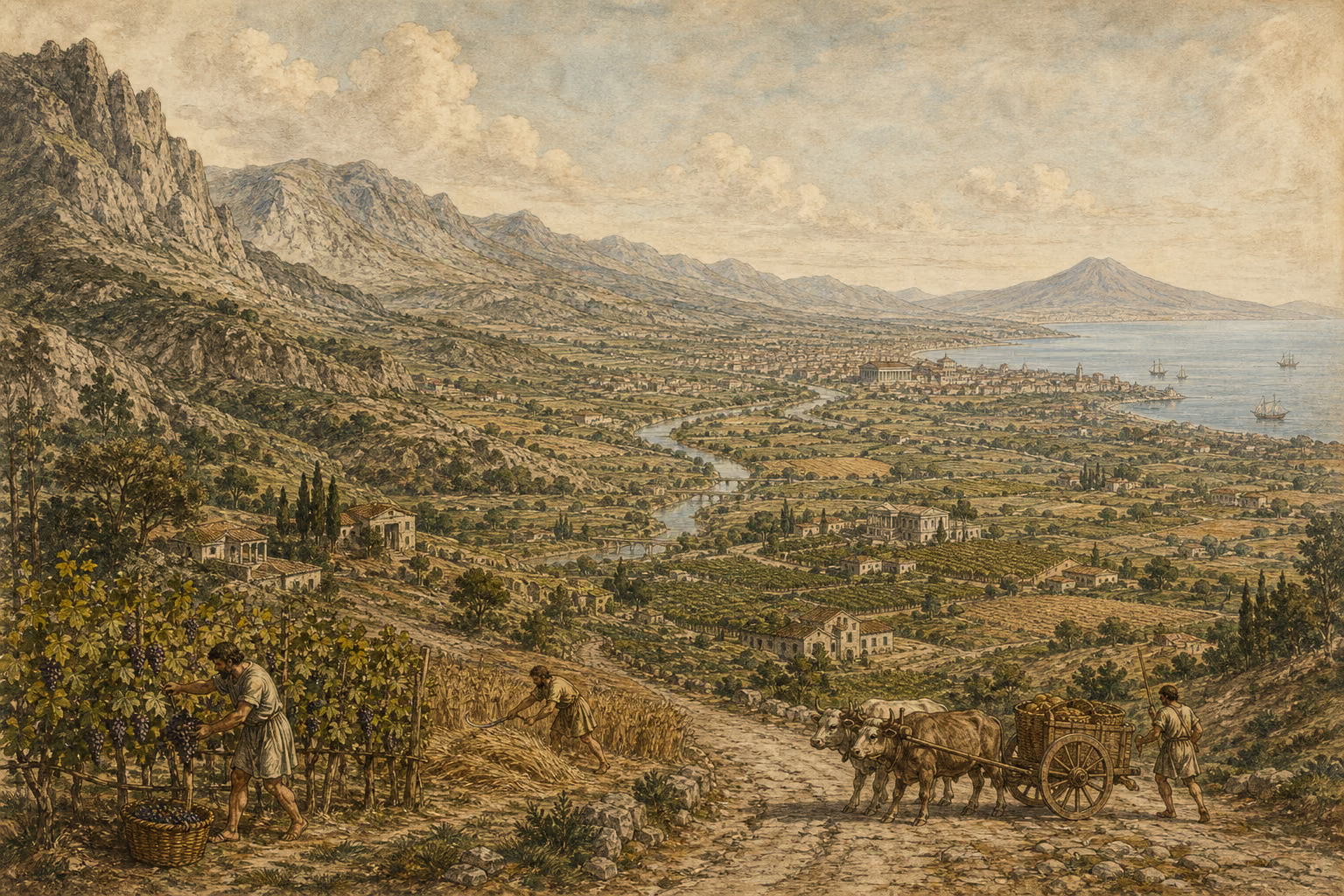
But how shall I commence this undertaking? So vast is the number of celebrated places (what man living could enumerate them all?), and so great the renown attached to each individual nation and subject, that I feel myself quite at a loss. The city of Rome alone, which forms a portion of it, a face well worthy of shoulders so beauteous, how large a work would it require for an appropriate description! And then too the coast of Campania, taken singly by itself! so blest with natural beauties and opulence, that it is evident that when nature formed it she took a delight in accumulating all her blessings in a single spot—how am I to do justice to it? And then the climate, with its eternal freshness and so replete with health and vitality, the sereneness of the weather so enchanting, the fields so fertile, the hill sides so sunny, the thickets so free from every danger, the groves so cool and shady, the forests with a vegetation so varying and so luxuriant, the breezes descending from so many a mountain, the fruitfulness of its grain, its vines, and its olives so transcendent; its flocks with fleeces so noble, its bulls with necks so sinewy, its lakes recurring in never-ending succession, its numerous rivers and springs which refresh it with their waters on every side, its seas so many in number, its havens and the bosom of its lands opening everywhere to the commerce of all the world, and as it were eagerly stretching forth into the very midst of the waves, for the purpose of aiding as it were the endeavours of mortals!
For the present I forbear to speak of its genius, its manners, its men, and the nations whom it has conquered by eloquence and force of arms. The very Greeks themselves, a race fond in the extreme of expatiating on their own praises, have amply given judgment in its favour, when they named but a small part of it ‘Magna Græcia.’ But we must be content to do on this occasion as we have done in our description of the heavens; we must only touch upon some of these points, and take notice of but a few of its stars. I only beg my readers to bear in mind that I am thus hastening on for the purpose of giving a general description of everything that is known to exist throughout the whole earth.
I may premise by observing that this land very much resembles in shape an oak leaf, being much longer than it is broad; towards the top it inclines to the left, while it terminates in the form of an Amazonian buckler, in which the spot at the central projection is the place called Cocinthos, while it sends forth two horns at the end of its crescent-shaped bays, Leucopetra on the right and Lacinium on the left. It extends in length 1020 miles, if we measure from the foot of the Alps at Prætoria Augusta, through the city of Rome and Capua to the town of Rhegium, which is situate on the shoulder of the Peninsula, just at the bend of the neck as it were. The distance would be much greater if measured to Lacinium, but in that case the line, being drawn obliquely, would incline too much to one side. Its breadth is variable; being 410 miles between the two seas, the Lower and the Upper, and the rivers Varus and Arsia: at about the middle, and in the vicinity of the city of Rome, from the spot where the river Aternus flows into the Adriatic sea, to the mouth of the Tiber, the distance is 136 miles, and a little less from Castrum-novum on the Adriatic sea to Alsium on the Tuscan; but in no place does it exceed 200 miles in breadth. The circuit of the whole, from the Varus to the Arsia, is 3059 miles.
As to its distance from the countries that surround it—Istria and Liburnia are, in some places, 100 miles from it, and Epirus and Illyricum 50; Africa is less than 200, as we are informed by M. Varro; Sardinia is 120, Sicily 1 1 ⁄ 2, Corsica less than 80, and Issa 50. It extends into the two seas towards the southern parts of the heavens, or, to speak with more minute exactness, between the sixth hour and the first hour of the winter solstice.
We will now describe its extent and its different cities; in doing which, it is necessary to premise, that we shall follow the arrangement of the late Emperor Augustus, and adopt the division which he made of the whole of Italy into eleven districts; taking them, however, according to their order on the sea-line, as in so hurried a detail it would not be possible otherwise to describe each city in juxtaposition with the others in its vicinity. And for the same reason, in describing the interior, I shall follow the alphabetical order which has been adopted by that Emperor, pointing out the colonies of which he has made mention in his enumeration. Nor is it a very easy task to trace their situation and origin; for, not to speak of others, the Ingaunian Ligurians have had lands granted to them as many as thirty different times.
To begin then with the river Varus; we have the town of Nicæa, founded by the Massilians, the river Paulo, the Alps and the Alpine tribes, distinguished by various names, but more especially the Capillati, Cemenelio, a town of the state of the Vediantii, the port of Hercules Monæcus, and the Ligurian coast. The more celebrated of the Ligurian tribes beyond the Alps are the Salluvii, the Deciates, and the Oxubii; on this side of the Alps, the Veneni, and the Vagienni, who are derived from the Caturiges, the Statielli, the Bimbelli, the Magelli, the Euburiates, the Casmonates, the Veleiates, and the peoples whose towns we shall describe as lying near the adjoining coast. The river Rutuba, the town of Albium Intemelium, the river Merula, the town of Albium Ingaunum, the port of Vadum Sabatiorum, the river Porcifera, the town of Genua, the river Feritor, the Portus Delphini, Tigullia, Tegesta of the Tigullii, and the river Macra, which is the boundary of Liguria.
Extending behind all the before-mentioned places are the Apennines, the most considerable of all the mountains of Italy, the chain of which extends unbroken from the Alps to the Sicilian sea. On the other side of the Apennines, towards the Padus, the richest river of Italy, the whole country is adorned with noble towns; Libarna, the colony of Dertona, Iria, Barderate, Industria, Pollentia, Carrea surnamed Potentia, Foro Fulvî or Valentinum, Augusta of the Vagienni, Alba Pompeia, Asta, and Aquæ Statiellorum. This is the ninth region, according to the arrangement of Augustus. The coast of Liguria extends 211 miles, between the rivers Varus and Macra.
Next to this comes the seventh region, in which is Etruria, a district which begins at the river Macra, and has often changed its name. At an early period the Umbri were expelled from it by the Pelasgi; and these again by the Lydians, who from a king of theirs were named Tyrrheni, but afterwards, from the rites observed in their sacrifices, were called, in the Greek language, Tusci. The first town in Etruria is Luna, with a noble harbour, then the colony of Luca, at some distance from the sea, and nearer to it again the colony of Pisæ, between the rivers Auser and Arnus, which owes its origin to Pelops and the Pisans, or else to the Teutani, a people of Greece. Next is Vada Volaterrana, then the river Cecinna, and Populonium formerly belonging to the Etrurians, the only town they had on this coast. Next to these is the river Prile, then the Umbro, which is navigable, and where the district of Umbria begins, the port of Telamon, Cosa of the Volcientes, founded by the Roman people, Graviscæ, Castrum novum, Pyrgi, the river Cæretanus, and Cære itself, four miles inland, called Agylla by the Pelasgi who founded it, Alsium, Fregenæ, and the river Tiber, 284 miles from the Macra.
In the interior we have the colonies of Falisci, founded by the Argives, according to the account of Cato, and surnamed Falisci Etruscorum, Lucus Feroniæ, Rusellana, the Senienses, and Sutrina. The remaining peoples are the Arretini Veteres, the Arretini Fidentes, the Arretini Julienses, the Amitinenses, the Aquenses, surnamed Taurini, the Blerani, the Cortonenses, the Capenates, the Clusini Novi, the Clusini Veteres, the Florentini, situate on the stream of the Arnus, Fæsulæ, Ferentinum, Fescennia, Hortanum, Herbanum, Nepeta, Novem Pagi, the Claudian præfecture of Foroclodium, Pistorium, Perusia, the Suanenses, the Saturnini, formerly called the Aurinini, the Subertani, the Statones, the Tarquinienses, the Tuscanienses, the Vetulonienses, the Veientani, the Vesentini, the Volaterrani, the Volcentini, surnamed Etrusci, and the Volsinienses. In the same district the territories of Crustumerium and Caletra retain the names of the ancient towns.
The Tiber or Tiberis, formerly called Thybris, and previously Albula, flows down from nearly the central part of the chain of the Apennines, in the territory of the Arretini. It is at first small, and only navigable by means of sluices, in which the water is dammed up and then discharged, in the same manner as the Timia and the Glanis, which flow into it; for which purpose it is found necessary to collect the water for nine days, unless there should happen to be a fall of rain. And even then, the Tiber, by reason of its rugged and uneven channel, is really more suitable for navigation by rafts than by vessels, for any great distance. It winds along for a course of 150 miles, passing not far from Tifernum, Perusia, and Ocriculum, and dividing Etruria from the Umbri and the Sabini, and then, at a distance of less than sixteen miles from the city, separating the territory of Veii from that of Crustuminum, and afterwards that of the Fidenates and of Latium from Vaticanum.
Below its union with the Glanis from Arretinum the Tiber is swollen by two and forty streams, particularly the Nar and the Anio, which last is also navigable and shuts in Latium at the back; it is also increased by the numerous aqueducts and springs which are conveyed to the City. Here it becomes navigable by vessels of any burden which may come up from the Italian sea; a most tranquil dispenser of the produce of all parts of the earth, and peopled and embellished along its banks with more villas than nearly all the other rivers of the world taken together. And yet there is no river more circumscribed than it, so close are its banks shut in on either side; but still, no resistance does it offer, although its waters frequently rise with great suddenness, and no part is more liable to be swollen than that which runs through the City itself. In such case, however, the Tiber is rather to be looked upon as pregnant with prophetic warnings to us, and in its increase to be considered more as a promoter of religion than a source of devastation.
Latium has preserved its original limits, from the Tiber to Circeii, a distance of fifty miles: so slender at the beginning were the roots from which this our Empire sprang. Its inhabitants have been often changed, and different nations have peopled it at different times, the Aborigines, the Pelasgi, the Arcades, the Seculi, the Aurunci, the Rutuli, and, beyond Circeii, the Volsci, the Osci, and the Ausones whence the name of Latium came to be extended as far as the river Liris.
We will begin with Ostia, a colony founded by a king of Rome, the town of Laurentum, the grove of Jupiter Indiges, the river Numicius, and Ardea, founded by Danaë, the mother of Perseus. Next come the former site of Aphrodisium, the colony of Antium, the river and island called Astura, the river Nymphæus, the Clostra Romana, and Circeii, formerly an island, and, if we are to believe Homer, surrounded by the open sea, though now by an extensive plain. The circumstances which we are enabled to publish on this subject for the information of the world are very remarkable. Theophrastus, the first foreigner who treated of the affairs of Rome with any degree of accuracy (for Theopompus, before whose time no Greek writer had made mention of us, only stated the fact that the city had been taken by the Gauls, and Clitarchus, the next after him, only spoke of the embassy that was sent by the Romans to Alexander)—Theophrastus, I say, following something more than mere rumour, has given the circuit of the island of Circeii as being eighty stadia, in the volume which he wrote during the archonship of Nicodorus at Athens, being the 440th year of our city. Whatever land therefore has been annexed to that island beyond the circumference of about ten miles, has been added to Italy since the year previously mentioned.
Another wonderful circumstance too.—Near Circeii are the Pomptine Marshes, formerly the site, according to Mucianus, who was thrice consul, of four-and-twenty cities. Next to this comes the river Ufens, upon which is the town of Terracina, called, in the language of the Volsci, Anxur; the spot too where Amyclæ stood, a town destroyed by serpents. Next is the site of the Grotto, Lake Fundanus, the port of Caieta, and then the town of Formiæ, formerly called Hormiæ, the ancient seat of the Læstrygones, it is supposed. Beyond this, formerly stood the town of Pyræ; and we then come to the colony of Minturnæ, which still exists, and is divided by the river Liris, also called the Glanis. The town of Sinuessa is the last in the portion which has been added to Latium; it is said by some that it used to be called Sinope.
At this spot begins that blessed country Campania, and in this vale first take their rise those hills clad with vines, the juice of whose grape is extolled by Fame all over the world; the happy spot where, as the ancients used to say, father Liber and Ceres are ever striving for the mastery. Hence the fields of Setia and of Cæcubum extend afar, and, next to them those of Falernum and of Calinum. As soon as we have passed these, the hills of Massica, of Gaurus, and of Surrentum rise to our view. Next, the level plains of Laborium are spread out far and wide, where every care is bestowed on cultivating crops of spelt, from which the most delicate fermenty is made. These shores are watered by warm springs, while the seas are distinguished beyond all others for the superlative excellence of their shell and other fish. In no country too has the oil of the olive a more exquisite flavour. This territory, a battle-ground as it were for the gratification of every luxurious pleasure of man, has been held successively by the Osci, the Greeks, the Umbri, the Tusci, and the Campani.
On the coast we first meet with the river Savo, the town of Volturnum with a river of the same name, the town of Liternum, Cumæ, a Chalcidian colony, Misenum, the port of Baiæ, Bauli, the Lucrine Lake, and Lake Avernus, near which there stood formerly a town of the Cimmerians. We then come to Puteoli, formerly called the colony of Dicæarchia, then the Phlegræan Plains, and the Marsh of Acherusia in the vicinity of Cumæ.
Again, on the coast we have Neapolis, also a colony of the Chalcidians, and called Parthenope from the tomb there of one of the Sirens, Herculaneum, Pompeii, from which Mount Vesuvius may be seen at no great distance, and which is watered by the river Sarnus; the territory of Nuceria, and, at the distance of nine miles from the sea, the town of that name, and then Surrentum, with the Promontory of Minerva, formerly the abode of the Sirens. The distance thence by sea to Circeii is seventy-eight miles. This region, beginning at the Tiber, is looked upon as the first of Italy according to the division of Augustus.
Inland there are the following colonies:—Capua, so called from its champaign country, Aquinum, Suessa, Venafrum, Sora, Teanum surnamed Sidicinum, Nola; and the towns of Abelia, Aricia, Alba Longa, the Acerrani, the Allifani, the Atinates, the Aletrinates, the Anagnini, the Atellani, the Affilani, the Arpinates, the Auximates, the Abellani, the Alfaterni (both those who take their names from the Latin, the Hernican and the Labicanian territory), Bovillæ, Calatia, Casinum, Calenum, Capitulum of the Hernici, the Cereatini, surnamed Mariani, the Corani, descended from the Trojan Dardanus, the Cubulterini, the Castrimœnienses, the Cingulani, the Fabienses on the Alban Mount, the Foropopulienses of the Falernian district, the Frusinates, the Ferentinates, the Freginates, the old Frabaterni, the new Frabaterni, the Ficolenses, the Fregellani, Forum Appî, the Forentani, the Gabini, the Interamnates Succasini, also surnamed Lirinates, the Ilionenses Lavinii, the Norbani, the Nomentani, the Prænestini (whose city was formerly called Stephané), the Privernates, the Setini, the Signini, the Suessulani, the Telesini, the Trebulani, surnamed Balinienses, the Trebani, the Tusculani, the Verulani, the Veliterni, the Ulubrenses, the Urbinates, and, last and greater than all, Rome herself, whose other name the hallowed mysteries of the sacred rites forbid us to mention without being guilty of the greatest impiety. After it had been long kept buried in secresy with the strictest fidelity and in respectful and salutary silence, Valerius Soranus dared to divulge it, but soon did he pay the penalty of his rashness.
It will not perhaps be altogether foreign to the purpose, if I here make mention of one peculiar institution of our forefathers which bears especial reference to the inculcation of silence on religious matters. The goddess Angerona, to whom sacrifice is offered on the twelfth day before the calends of January [21st December], is represented in her statue as having her mouth bound with a sealed fillet.
Romulus left the city of Rome, if we are to believe those who state the very greatest number, having three gates and no more. When the Vespasians were emperors and censors, in the year from its building 826, the circumference of the walls which surrounded it was thirteen miles and two-fifths. Surrounding as it does the Seven Hills, the city is divided into fourteen districts, with 265 cross-roads under the guardianship of the Lares. If a straight line is drawn from the mile-column placed at the entrance of the Forum, to each of the gates, which are at present thirty-seven in number (taking care to count only once the twelve double gates, and to omit the seven old ones, which no longer exist), the result will be [taking them altogether], a straight line of twenty miles and 765 paces. But if we draw a straight line from the same mile-column to the very last of the houses, including therein the Prætorian encampment, and follow throughout the line of all the streets, the result will then be something more than seventy miles. Add to these calculations the height of the houses, and then a person may form a fair idea of this city, and will certainly be obliged to admit that there is not a place throughout the whole world that for size can be compared to it. On the eastern side it is bounded by the agger of Tarquinius Superbus, a work of surpassing grandeur; for he raised it so high as to be on a level with the walls on the side on which the city lay most exposed to attack from the neighbouring plains. On all the other sides it has been fortified either with lofty walls or steep and precipitous hills, but so it is, that its buildings, increasing and extending beyond all bounds, have now united many other cities to it.
Besides those previously mentioned, there were formerly in the first region the following famous towns of Latium: Satricum, Pometia, Scaptia, Politorium, Tellene, Tifata, Cænina, Ficana, Crustumerium, Ameriola, Medullum, Corniculum, Saturnia, on the site of the present city of Rome, Antipolis, now Janiculum, forming part of Rome, Antemnæ, Camerium, Collatia, Amitinum, Norbe, Sulmo, and, with these, those Alban nations who used to take part in the sacrifices upon the Alban Mount, the Albani, the Æsulani, the Accienses, the Abolani, the Bubetani, the Bolani, the Cusuetani, the Coriolani, the Fidenates, the Foretii, the Hortenses, the Latinienses, the Longulani, the Manates, the Macrales, the Mutucumenses, the Munienses, the Numinienses, the Olliculani, the Octulani, the Pedani, the Polluscini, the Querquetulani, the Sicani, the Sisolenses, the Tolerienses, the Tutienses, the Vimitellarii, the Velienses, the Venetulani, and the Vitellenses. Thus we see, fifty-three peoples of ancient Latium have passed away without leaving any traces of their existence.
In the Campanian territory there was also the town of Stabiæ, until the consulship of Cneius Pompeius and L. Cato, when, on the day before the calends of May [30th of April], it was destroyed in the Social War by L. Sulla the legatus, and all that now stands on its site is a single farmhouse. Here also Taurania has ceased to exist, and the remains of Casilinum are fast going to ruin. Besides these, we learn from Antias that king L. Tarquinius took Apiolæ, a town of the Latins, and with its spoils laid the first foundations of the Capitol. From Surrentum to the river Silarus, the former territory of Picentia extends for a distance of thirty miles. This belonged to the Etruscans, and was remarkable for the temple of the Argive Juno, founded by Jason. In it was Picentia, a town of the territory of Salernum.
At the Silarus begins the third region of Italy, consisting of the territory of Lucania and Bruttium; here too there have been no few changes of the population. These districts have been possessed by tbe Pelasgi, the Œnotrii, the Itali, the Morgetes, the Siculi, and more especially by people who emigrated from Greece, and, last of all, by the Leucani, a people sprung from the Samnites, who took possession under the command of Lucius. We find here the town of Pæstum, which received from the Greeks the name of Posidonia, the Gulf of Pæstum, the town of Elea, now known as Velia, and the Promontory of Palinurum, a point at which the land falls inwards and forms a bay, the distance across which to the pillar of Rhegium is 100 miles. Next after Palinurum comes the river Melpes, then the town of Buxentum, called in [Magna] Græcia Pyxus, and the river Laus; there was formerly a town also of the same name.
At this spot begins the coast of Bruttium, and we come to the town of Blanda, the river Batum, Parthenius, a port of the Phocians, the bay of Vibo, the place where Clampetia formerly stood, the town of Temsa, called Temese by the Greeks, and Terina founded by the people of Crotona, with the extensive Gulf of Terina; more inland, the town of Consentia. Situate upon a peninsula is the river Acheron, from which the people of Acherontia derive the name of their town; then Hippo, now called Vibo Valentia, the Port of Hercules, the river Metaurus, the town of Tauroentum, the Port of Orestes, and Medma. Next, the town of Scyllæum, the river Cratæis, the mother of Scylla it is said; then the Pillar of Rhegium, the Straits of Sicily, and the two promontories which face each other, Cænys on the Italian, and Pelorus on the Sicilian side, the distance between them being twelve stadia. At a distance thence of twelve miles and a half, we come to Rhegium, after which begins Sila, a forest of the Apennines, and then the promontory of Leucopetra, at a distance of fifteen miles; after which come the Locri, who take their surname from the promontory of Zephyrium, being distant from the river Silarus 303 miles.
At this spot ends the first great Gulf of Europe; the seas in which bear the following names:—That from which it takes its rise is called the Atlantic, by some the Great Atlantic, the entrance of which is, by the Greeks, called Porthmos, by us the Straits of Gades. After its entrance, as far as it washes the coasts of Spain, it is called the Hispanian Sea, though some give it the name of the Iberian or Balearic Sea. Where it faces the province of Gallia Narbonensis it has the name of the Gallic, and after that, of the Ligurian, Sea. From Liguria to the island of Sicily, it is called the Tuscan Sea, the same which is called by some of the Greeks the Notian, by others the Tyrrhenian, while many of our people call it the Lower Sea. Beyond Sicily, as far as the country of the Salentini, it is styled by Polybius the Ausonian Sea. Eratosthenes however gives to the whole expanse that lies between the inlet of the ocean and the island of Sardinia, the name of the Sardoan Sea; thence to Sicily, the Tyrrhenian; thence to Crete, the Sicilian; and beyond that island, the Cretan Sea.
The first islands that we meet with in all these seas are the two to which the Greeks have given the name of Pityussæ, from the pine-tree, which they produce. These islands now bear the name of Ebusus, and form a federate state. They are separated by a narrow strait of the sea, and are forty-six miles in extent. They are distant from Dianium 700 stadia, Dianium being by land the same distance from New Carthage. At the same distance from the Pityussæ, lie, in the open sea, the two Baleares, and, over against the river Sucro, Colubraria. The Baleares, so formidable in war with their slingers, have received from the Greeks the name of Gymnasiæ.
The larger island is 100 miles in length, and 475 in circumference. It has the following towns; Palma and Pollentia, enjoying the rights of Roman citizens, Cinium and Tucis, with Latin rights: Bocchorum, a federate town, is no longer in existence. At thirty miles’ distance is the smaller island, 40 miles in length, and 150 in circumference; it contains the states of Jamnon, Sanisera, and Magon.
In the open sea, at twelve miles’ distance from the larger island, is Capraria with its treacherous coast, so notorious for its numerous shipwrecks; and, opposite to the city of Palma, are the islands known as the Mænariæ, Tiquadra, and Little Hannibalis.
The earth of Ebusus has the effect of driving away serpents, while that of Colubraria produces them; hence the latter spot is dangerous to all persons who have not brought with them some of the earth of Ebusus. The Greeks have given it the name of Ophiusa. Ebusus too produces no rabbits to destroy the harvests of the Baleares. There are also about twenty other small islands in this sea, which is full of shoals. Off the coast of Gaul, at the mouth of the Rhodanus, there is Metina, and near it the island which is known as Blascon, with the three Stœchades, so called by their neighbours the Massilians, on account of the regular order in which they are placed; their respective names are Prote, Mese, also called Pomponiana, and Hypæa. After these come Sturium, Phœnice, Phila, Lero, and, opposite to Antipolis, Lerina, where there is a remembrance of a town called Vergoanum having once existed.