LIBER XXX · CAPUT 12
REMEDIES FOR ERYSIPELAS
Latine · Mayhoff 1906
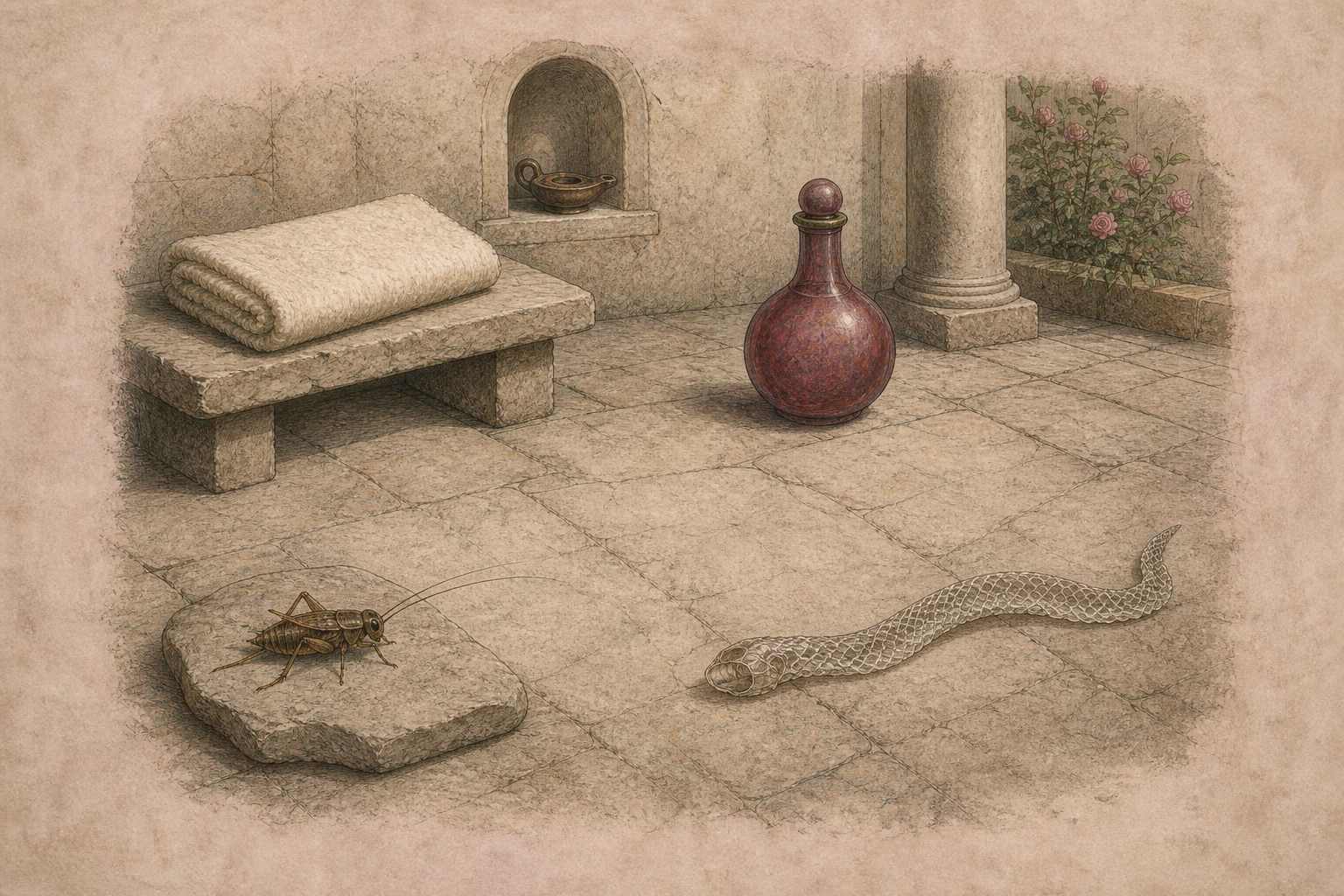
Igni sacro medetur oesypum cum pompholyge et rosaceo, ricini sanguis, vermes terreni ex aceto inliti, gryllus contritus in manibus, quo genere praestat, ut qui id fecerit, antequam incipiat vitium, toto ei anno non accidat —oportet autem eum ferro cum terra cavernae suae tolli—, anseris adeps, viperae caput aridum adservatum et combustum, dein ex aceto inpositum, senectus serpentium ex aqua inlita a balneo cum bitumine et sebo agnino.
Carbunculus fimo columbino aboletur per se inlito vel cum lini semine ex aceto mulso, item apibus, quae in melle sint mortuae, inpositis polentaque inposita insuper. si in verendis sit, ceterisque ibi ulceribus occurrit ex melle oesypum cum plumbi squamis, item fimum pecudum incipientibus carbunculis. tubera et quaecumque molliri opus sit efficacissime anserino adipe curantur; idem praestat et gruum adeps.
Furunculis mederi dicitur araneus, priusquam nominetur, inpositus et tertio die solutus, mus araneus pendens enecatus sic, ut terram ne postea attingat, ter circumlatus furunculo, totiens expuentibus medente et cui is medebitur, ex gallinaceo fimo, quod est rufum, maxime recens inlitum ex aceto, ventriculus ciconiae ex vino decoctus, muscae inpari numero infricatae digito medico, sordes ex pecudum auriculis,. sebum ovium vetus cum cinere capilli mulierum, sebum arietis cum cinere pumicis et salis pari pondere.
Ambustis canini capitis cinis medetur, item glirium cum oleo, fimum ovium cum cera, murium cinis, coclearum quoque sic, ut ne cicatrix quidem appareat, adips viperinus, fimi columbini cinis ex oleo inlitus; nervorum nodis capitis viperini cinis in oleo cyprino, terreni vermes cum melle inliti. dolores eorum.... adips, amphisbaena mortua adalligata, adips vulturinus cum.... venter arefactus tritusque cum adipe suillo inveterato, cinis e capite bubonis in mulso potus cum lilii radice, si Magis credimus. in contractione nervorum caro palumbina in cibis prodest et inveterata, irenacei spasticis, item mustelae cinis, serpentium senectus in pelle taurina adalligata. spasmos fieri prohibetet opisthotonos milui iocur aridum III obolis in aquae mulsae cyathis III potum.
Reduvias et quae in digitis nascuntur pterygia tollunt canini capitis cinis aut vulva decocta in oleo, superinlito butyro ovillo cum melle, item folliculus cuiuslibet animalium fellis; unguium scabritiam cantharides cum pice tertio die solutae aut locustae frictae cum sebo hircino, pecudum sebum. aliqui miscent viscum et porcillacam, alii aeris florem et viscum ita, ut tertio die solvant.
English · Bostock & Riley 1855–57
For the cure of erysipelas, wool-grease is used, with pompholix and oil of roses; the blood also extracted from a tick; earth worms, applied in vinegar; or else a cricket crushed between the hands—the good effect of this last being that the person who uses this precaution before the malady has made its appearance, will be preserved therefrom for a whole year. Care must be taken also that iron is used for the removal of the cricket, with some of the earth about its hole. Goose-grease is also employed for this purpose; a viper’s head, dried and burnt, and applied with vinegar; or a serpent’s slough, applied to the body, immediately after the bath, with bitumen and lamb suet.
Carbuncles are removed by an application of pigeons’ dung, either alone or in combination with linseed and oxymel; or of bees that have died in the honey. A sprinkling of polenta upon the sores is also used. For carbuncles and other sores of the generative organs, wool-grease is used as a remedy, with refuse of lead; and for incipient carbuncles, sheep’s dung is employed. Tumours and all other affections that stand in need of emollients are treated most effectually with goose-grease; that of cranes, too, is equally efficacious.
For boils the following remedies are prescribed; a spider, applied before mentioning the insect by name, care being taken to remove it at the end of two days; a shrew-mouse, suspended by the neck till it is dead, care being taken not to let it touch the earth when dead, and to pass it three times around the boil, both operator and patient spitting on the floor each time; poultry-dung, that of a red colour in particular, applied fresh with vinegar; the crop of a stork, boiled in wine; flies, an uneven number of them, rubbed upon the patient with the ring finger; the filth from sheep’s ears; stale mutton suet, with ashes of women’s hair; ram suet also, with ashes of burnt pumice and an equal quantity of salt.
For burns, the ashes of a dog’s head are used; ashes of burnt dormice, with oil; sheep’s dung, with wax; ashes also of burnt snails, an application so effectual, as not to leave a scar even. Viper’s fat, too, is used, and ashes of burnt pigeons’ dung, applied with oil.
For nodosities in the sinews, the ashes of a viper’s head are applied, with oil of Cyprus; or else earth-worms, with honey. Pains in the sinews should be treated with an application of grease; the body of a dead amphisbæna, worn as an amulet; vulture’s grease, dried with the crop of the bird and beaten up with stale hog’s lard; or else ashes of the head of a horned owl, taken in honied wine with a lily root—that is, if we believe what the magicians tell us. For contractions of the sinews, the flesh of ring-doves is very good, dried and taken with the food: and for spasmodic affections, the ashes of a hedge-hog or weasel are used. A serpent’s slough, attached to the patient’s body in a piece of bull’s hide, is a preventive of spasms: and the dried liver of a kite, taken in doses of three oboli, in three cyathi of hydromel, is a preservative against opisthotony.
Agnails and hangnails upon the fingers are removed by using the ashes of a burnt dog’s head, or the uterus of a bitch boiled in oil, the fingers being first rubbed with a liniment of ewe-milk butter, mixed with honey. The gall-bladder, too, of any animal is very useful for this purpose. Malformed nails are healed with an application of cantharides and pitch, which is removed at the end of two days; or else with locusts fried with he-goat suet; or with an application of mutton suet. Some mix mistletoe and purslain with these ingredients; while others, again, use verdigrease and mistletoe, removing the application at the end of two days.