LIBER XXX · CAPUT 7
REMEDIES FOR DYSENTERY
Latine · Mayhoff 1906
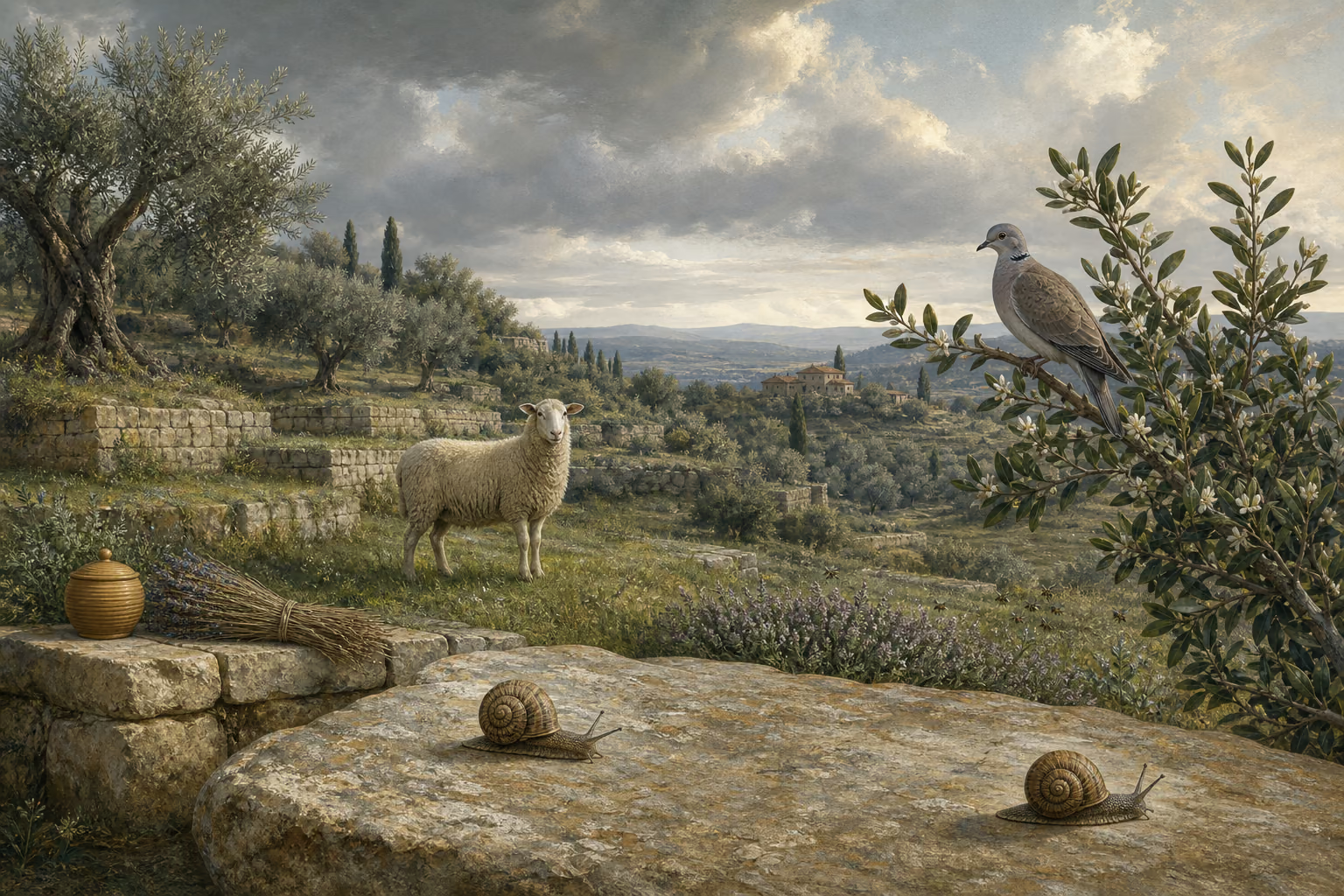
Dysintericos recreant femina pecudum decocta cum lini semine ea aqua pota, caseus ovillus vetus, sebum ovium decoctum in vino austero. hoc et ileo medetur et tussi veteri, dysintericis stelio transmarinus ablatis intestinis et capite pedibusque ac cute decoctus aeque et in cibo sumptus, cocleae II cum ovo, utraque cum putamine contrita atque in vase novo addito sale et passi cyathis II aut palmarum suco et aquae cyathis III subfervefacta et in potu data. prosunt et combustae, ut cinis earum bibatur in vino, addito resinae momento. cocleae nudae, de quibus diximus, in Africa maxime inveniuntur, utilissimae dysintericis, quinae combustae cum denarii dimidii pondere acaciae; ex eo cinere dantur coclearia bina in vino myrtite aut quolibet austero cum pari modo caldae. quidam omnibus Africanis ita utuntur, alii totidem Africanas velatas infundunt potius et, si maior fluctio sit, addunt acaciam fabae magnitudine. senectus anguium dysinteriae et tenesmis in stagneo vase decoquitur cum rosaceo vel, si in alio, cum stagno inlinitur. ius ex gallinaceis isdem medetur, sed veteris gallinacei vehementius salsum ius alvum ciet. membrana gallinarum tosta et data in oleo ac sale coeliacorum dolores mulcet — abstineri autem frugibus ante et gallinam et hominem oporteat —, fimunm columbinum tostum potumque. caro palumbis in aceto decocta dysintericis et coeliacis medetur, turdus inassatus cum myrti bacis dysintericis, item merulae, mel, in quo apes sint inmortuae, decoctum.
Gravissimum vitium alvi ileos appellatur. huic resisti aiunt discerpti vespertilionis sanguine, etiam inlito ventre subveniri. sistit alvum coclea sicut diximus in suspiriosis temperata, item cinis earum, quae vivae crematae sint, potus ex vino austero, gallinaceorum iocur assum aut ventriculi membrana, quae abici solet, inveterata admixto papaveris suco—alii recentem torrent ex vino bibendam —, ius perdicum et per se ventriculus contritus ex vino nigro, item palumbis ferus ex posca decoctus, lien pecudis tostus et in vino tritus, fimum columbinum cum melle inlitum, ossifragi venter arefactus et potus, iis, qui cibos non conficiant, utilissimus, vel si manu tantum teneant capientes cibum. quidam adalligant ex hac causa, sed continuare non debent, maciem enim facit. sistit et anatum mascularum sanguis. inflationes discutit coclearum cibus, tormina lien ovium tostus atque e vino potus, palumbis ferns ex posca decoctus,. adips otidis ex vino, cinis ibide sine pennis cremata potus. quod praeterea traditur in torminibus, mirum est, anate adposita ventri transire morbum anatemque emori. tormina et melle curantur, in quo sint apes inmortuae, decocto. coli vitium efficacissime sanatur ave galerita assa in cibo sumpta. quidam in vase novo cum plumis exuri iubent conterique in cinerem, bibi ex aqua coclearibus ternis per quadriduum, quidam cor eius adalligari femini; aliis recens tepensque adhuc devoratur. consularis Asprenatum domus est, in qua alter e fratribus colo liberatus est ave hac in cibo sumpta et corde eius armilla aurea incluso, alter sacrificio quodam facto crudis laterculis ad formam camini atque, ut sacrum peractum est, obstructo sacello. unum est ossifrago intestinum mirabili natura omnia devorata conficienti; huius partem extremam adalligatam prodesse contra colum constat. —Sunt occulti interaneorum morbi, de quibus mirum proditur. si catuli, priusquam videant, adplicentur triduo stomacho maxime ac pectori et ex ore aegri suctum lactis accipiant, transire vim morbi, postremo exanimari dissectisque palam fieri aegri causas; monent humari debere eos obrutos terra. Magi quidem vespertilionis sanguine contacto ventre in totum annum caveri tradunt aut in dolore, si quis aquam ter pedes eluens haurire sustineat.
English · Bostock & Riley 1855–57
Dysentery is cured by taking the broth of a leg of mutton, boiled with linseed in water; by eating old ewe-milk cheese; or by taking mutton suet boiled in astringent wine. This last is good, too, for the iliac passion, and for inveterate coughs. Dysentery is removed also, by taking a spotted lizard from beyond seas, boiled down till the skin only is left, the head, feet, and intestines, being first removed. A couple of snails also, and an egg, are beaten up, shells and all, in both cases, and made lukewarm in a new vessel, with some salt, three cyathi of water, and two cyathi of raisin-wine or date-juice, the decoction being taken in drink. Ashes, too, of burnt snails, are very serviceable, taken in wine with a modicum of resin.
The snails without shells, which we have mentioned as being mostly found in Africa, are remarkably useful for dysentery, five of them being burnt with half a denarius of gum acacia, and taken, in doses of two spoonfuls, in myrtle wine or any other kind of astringent wine, with an equal quantity of warm water. Some persons employ all kinds of African snails indiscriminately in this manner; while others, again, make use of a similar number of African snails or broad-shelled snails, as an injection, in preference: in cases, too, where the flux is considerable, they add a piece of gum acacia, about the size of a bean. For dysentery and tenesmus, the cast-off slough of a snake is boiled in a pewter vessel with oil of roses: if prepared in any other kind of vessel, it is applied with an instrument made of pewter. Chicken-broth is also used as a remedy for these affections; but the broth of an old cock, strongly salted, acts more powerfully as a purgative upon the bowels. A pullet’s craw, grilled and administered with salt and oil, has a soothing effect upon cœliac affections; but it is absolutely necessary that neither fowl nor patient should have eaten corn for some time before. Pigeons’ dung, also, is grilled and taken in drink. The flesh of a ring-dove, boiled in vinegar, is curative of dysentery and cœliac affections: and for the cure of the former, a thrush is recommended, roasted with myrtle-berries; a blackbird, also; or honey, boiled, in which the bees have died.
One of the most dangerous of maladies is that known by the name of “ileos:” it may be combatted, they say, by tearing a bat asunder, and taking the blood, or by rubbing the abdomen with it. Diarrhœa is arrested more particularly by taking snails, prepared in manner already mentioned for cases of asthma; the ashes, also, of snails burnt alive, administered in astringent wine; the liver of poultry grilled; the dried craw of poultry, a part that is usually thrown away, mixed with poppy-juice—in some cases it is used fresh, grilled, and taken in wine—partridge broth; the craw of partridges beaten up by itself in red wine; a wild ringdove boiled in oxycrate; a sheep’s milt, grilled and beaten up in wine; or else pigeons’ dung, applied with honey. The crop of an ossifrage, dried and taken in drink, is remarkably useful for patients whose digestion is impaired—indeed, its good effects may be felt if they only hold it in the hand while eating. Hence it is that some persons wear it attached to the body as an amulet; a practice which must not be too long continued, it being apt to cause a wasting of the flesh. The blood, too, of a drake has an astringent effect.
Flatulency is dispelled by eating snails; and griping pains in the bowels, by taking a sheep’s milt grilled, with wine; a wild ringdove boiled in oxycrate; the fat of an otis in wine; or the ashes of an ibis, burnt without the feathers, administered in drink. Another prescription mentioned for griping pains in the bowels is of a very marvellous nature: if a duck, they say, is applied to the abdomen, the malady will pass into the bird, and it will die. Gripings of the bowels are treated also with boiled honey in which the bees have died.
Colic is most effectually cured by taking a roasted lark with the food. Some recommend, however, that it should be burnt to ashes in a new vessel, feathers and all, and then pounded and taken for four consecutive days, in doses of three spoonfuls, in water. Some say that the heart of this bird should be attached to the thigh, and, according to others, the heart should be swallowed fresh, quite warm, in fact. There is a family of consular dignity, known as the Asprenates, two brothers, members of which, were cured of colic; the one by eating a lark and wearing its heart in a golden bracelet; the other, by performing a certain sacrifice in a chapel built of raw bricks, in form of a furnace, and then blocking up the edifice the moment the sacrifice was concluded. The ossifrage has a single intestine only, which has the marvellous property of digesting all that the bird has swallowed: the extremity of this intestine, it is well known, worn as an amulet, is an excellent remedy for colic.
There are certain concealed maladies incident to the intestines, in relation to which there are some marvellous statements made. If to the stomach and chest, more particularly, blind puppies are applied, and suckled with milk from the patient’s mouth, the virulence of the malady, it is said, will be transferred to them, and in the end they will die: on opening them, too, the causes of the malady will be sure to be discovered. In all such cases, however, the puppies must be allowed to die, and must be buried in the earth. According to what the magicians say, if the abdomen is touched with a bat’s blood, the person will be proof against colic for a whole year: when a patient, too, is attacked with the pains of colic, if he can bring himself to drink the water in which he has washed his feet, he will experience a cure.