LIBER XXXI · CAPUT 2
THE DIFFERENT PROPERTIES OF WATERS
Latine · Mayhoff 1906
Emicant benigne passimque in plurimis terris alibi frigidae, alibi calidae, alibi iunctae, sicut in Tarbellis Aquitanica gente et in Pyrenaeis montibus tenui intervallo discernente, alibi tepidae, egelidae, atque auxilia morborum profitentes et e cunctis animalibus hominum tantum causa erumpentes augent numerum deorum nominibus variis urbesque condunt, sicut Puteolos in Campania, Statiellas in Liguria, Sextias in Narbonensi provincia. nusquam tamen largius quam in Baiano sinu nec pluribus auxiliandi generibus: aliae sulpuris vi,aliae aluminis, aliae salis, aliae nitri, aliae bituminis, nonnul etiam acida salsave mixtura, vapore ipso aliquae prosunt, tantaque est vis, ut balneas calefaciant ac frigidam etiam in soliis fervere cogant. quae in Baiano Posidianae vocantur, nominee accepto a Claudii Caesaris liberto, obsonia quoque per cocunt. vaporant et in mari ipso quae Licinii Crassi fuere, mediosque inter fluctus existit aliquid valetudini salutare.
lam generatim nervis prosunt pedibusve aut coxendicibus, aliae luxatis fractisve, inaniunt alvos, sanant vulnera, capiti, auribus privatim medentur, oculis vero Ciceronianae. dignum memoratu, villa est ab Averno lacu Puteolos tendentibus inposita litori, celebrata porticu ac nemore, quam vocabat M. Cicero Academiam ab exemplo Athenarum, ibi compositis voluminibus eiusdem nominis, in qua et monumenta sibi instauraverat, ceu vero non et in toto terrarum orbe fecisset. huius in parte prima exiguo post obitum ipsius Antistio Vetere possidente eruperunt fontes calidi perquam salubres oculis, celebrati carmine Laureae Tulli, qui fuit e libertis eius, ut protinus noscatur etiam ministeriorum haustus ex illa maiestate ingenii. ponam enim ipsum carmen, ut ubique et non ibi tantum legi queat:
Quo tua, Romanae vindex clarissime linguae, silva loco melius surgere iussa viret atque Academiae celebratam nomine villam nunc reparat cultu sub potiore Vetus, hoc etiam apparent lymphae non ante repertae, languida quae infuso lumina rore levant. nimirum locus ipse sui Ciceronis honori hoc dedit, hac fontes cum patefecit ope, ut, quoniam totum legitur sine fine per orbem, sint plures oculis quae medeantur aquae.
In eadem Campaniae regione Sinuessanae aquae sterilitatem feminarum et virorum insaniam abolere produntur, in Aenaria insula calculosis mederi et quae vocatur Acidula ab Teano SidicinoIII p.—haec frigida —, item in Stabiano quae Dimidia vocatur et in Venafrano ex fonte Acidulo. idem contingit in Velino lacu potantibus, item in Syriae fonte iuxta Taurum montem auctor est M. Varro et in Phrygiae Gallo flumine Callimachus. sed ibi in potando necessaries modus, ne lymphatos agat, quod in Aethiopia accidere iis, qui e fonte Rubro biberint, Ctesias scribit. iuxta Romam Albulae aquae volneribus medentur, egelidae hae, sed Cutiliae in Sabinis gelidissimae suctu quodam corpora invadunt, ut prope morsus videri possit, aptissimae stomacho, nervis, universo corpori. Thespiarum fons conceptus mulieribus repraesentat, item in Arcadia flumen Elatum, custodit autem Linus fons in eadem Arcadia abortusque fieri non patitur. e diverso in Pyrrha flumen, quod Aphrodisium vocatur, steriles facit. Lacu Alphio vitiligines tolli Varro auctor est Titiumque praetura functum marmorei signi faciem habuisse propter id vitium. Cydnus Ciliciae amnis podagricis medetur, sicut apparet epistula Cassi Parmensis ad M. Antonium. contra aquarum culpa in Troezene omnium pedes vitia sentiunt. Tungri civitas Galliae fontem habet insignem plurimis bullis stillantem, ferruginei saporis, quod ipsum non nisi in fine potus intellegitur. purgat hic corpora, tertianas febres discutit, calculorum vitia. eadem aqua igne admoto turbida fit ac postremo rubescit. Leucogaei fontes inter Puteolos et Neapolim oculis et vulneribus medentur. Cicero in admirandis posuit Reatinis tantum paludibus ungulas iumentorum indurari.
Eudicus in Hestiaeotide fontes duos tradit esse, Ceronam, ex quo bibentes oves nigras fieri, Nelea, ex quo albas, ex utroque varias, Theophrastus Thuriis Crathim candorem facere, Sybarim nigritiam bubus ac pecori, quin et homines sentire differentiam eam; nam qui e Sybari bibant, nigriores esse durioresque et crispo capillo, qui e Crathi candidos mollioresque ac porrecta coma. item in Macedonia qui velint sibi candida nasci, ad Haliacmonem ducere, qui nigra aut fusca, ad Axium. idem omnia fusca nasci quibusdam in locis dicit et fruges quoque, sicut in Messapis, at in Lusis Arcadiae quodam fonte mures terrestres vivere et conversari. Erythris Aleos amnis pilos gignit in corporibus.
In Boeotia ad Trophonium deum iuxta flumen Hercynnum e duobus fontibus alter memoriam, alter oblivionem adfert, inde nominibus inventis. in Cilicia apud oppidum Cescum rivus fluit Nuus, ex quo bibentium subtiliores sensus fieri M. Varro tradit, at in Cea insula fontem esse, quo hebetes fiant, Zamae in Africa, ex quo canorae voces.— Vinum taedio venire iis, qui ex Clitorio lacu biberint, ait Eudoxus, set Theopompus inebriari fontibus iis, quos diximus, Mucianus Andri e fonte Liberi patris statis diebus septenis eius dei vinum fluere, si auferatur e conspectu templi, sapore in aquam transeunte, PolyclitusLipari iuxta Solos Ciliciae ungui, Theophrastus hoc idem in Aethiopia eiusdem nominis fonte, Lycos in Indis Oratis fontem esse, cuius aqua lucernae luceant; idem Ecbatanis traditur. Theopompus in Scotusaeis lacum esse dicit, qui volneribus medeatur, Iuba in Trogodytis lacum Insanum male- fica vi appellatum ter die fieri amarum salsumque ac deinde dulcem totiensque et nocte, scatentem albis serpentibus vicenum cubitorum; idem in Arabia fontem exilire tanta vi, ut nullum non pondus inpactum respuat; Theophrastus Marsyae fontem in Phrygia ad Celaenarum oppidum saxa egerere. non procul ab eo duo sunt fontes Claeon et Gelon ab effectu Graecorum nominum dicti. Cyzici fons Cupidinis vocatur, ex quo potantes amorem deponere Mucianus credit.
Cranone est fons calidus citra summum fervorem, qui vino addito triduo calorem potionis custodit in vasis. sunt et Mattiaci in Germania fontes calidi trans Rhenum, quorum haustus triduo fervet, circa margines vero pumicem faciunt aquae.
Quod si quis fide carere ex his aliqua arbitratur, discat in nulla parte naturae maiora esse miracula, quamquam inter initia operis abunde multa rettulimus. Ctesias tradit Silan vocari stagnum in Indis, in quo nihil innatet, omnia mergantur; Caelius apud nos in Averno etiam folia subsidere, Varro aves, quae advolaverint, emori. contra in Africae lacu Apuscidamo omnia fluitant, nihil mergitur, item in Siciliae fonte Phinthia, ut Apion tradit, et in Medorum lacu puteoque Saturni. item fluvii fons Limyrae transire solet in loca vicina portendens aliquid; mirum quoque quod cum piscibus transit. responsa ab his petunt incolae cibo, quem rapiunt adnuentes, si vero eventum negent, caudis abigunt. amnis Alcas in Bithynia Bryazum adluit—hoc est et templo et deo nomen—, cuius gurgitem periuri negantur pati velut flammam urentem. et in Cantabria fontes Tamarici in auguriis habentur. tres sunt octonis pedibus distantes, in unum alveum coeunt vasto amne. singuli siccantur duodenis diebus, aliquando vicenis, citra suspicionem ullam aquae, cum sit vicinus illis fons sine intermissione largus. dirum est non profluere eos aspicere volentibus, sicut proxime Larcio Licinio legato pro praetore post septem dies accidit. in Iudaea rivus sabbatis omnibus siccatur.
E diverso miracula alia dira. Ctesias in Armenia fontem esse scribit, ex quo nigros pisces ilico mortem adferre in cibis. quod et circa Danuvii exortum audivi, done veniatur ad fontem alveo adpositum, ubi finitur id genus piscium, ideoque ibi caput amnis eius intellegit fama. hoc idem et in Lydia in stagno Nympharum tradunt. in Arcadia ad Pheneum aqua profluit e saxis Styx appellata, quae ilico necat, ut diximus, sed esse pisces parvos in ea tradit Theophrastus, letales et ipsos, quod non in alio genere mortiferorum fontium. necare aquas Theopompus et in Thracia apud Cichros dicit, Lycos in Leontinis tertio die quam quis biberit, Varro ad Soracten in fonte, cuius sit latitudo quattuor pedum; sole oriente eum exundare ferventi similem; aves, quae degustaverint, iuxta mortuas iacere. namque et haec insidiosa condicio est, quod quaedam etiam blandiuntur aspectu, ut ad Nonacrim Arcadiae, omnino nulla deterrent qualitate. hanc putant nimio frigore esse noxiam, utpote cum profluens ipsa lapidescat. aliter circa Thessalica Tempe, quoniam virus omnibus terrori est, traduntque aëna etiam ac ferrum erodi illa aqua. profluit, ut indicavimus, brevi spatio, mirumque, siliqua silvestris amplecti radicibus fontem eum dicitur, semper florens purpura. et quaedam sui generis herba in labris fontis viret. in Macedonia non procul Euripidis poetae sepulchro duo rivi confluunt, alter saluberrimi potus, alter mortiferi.
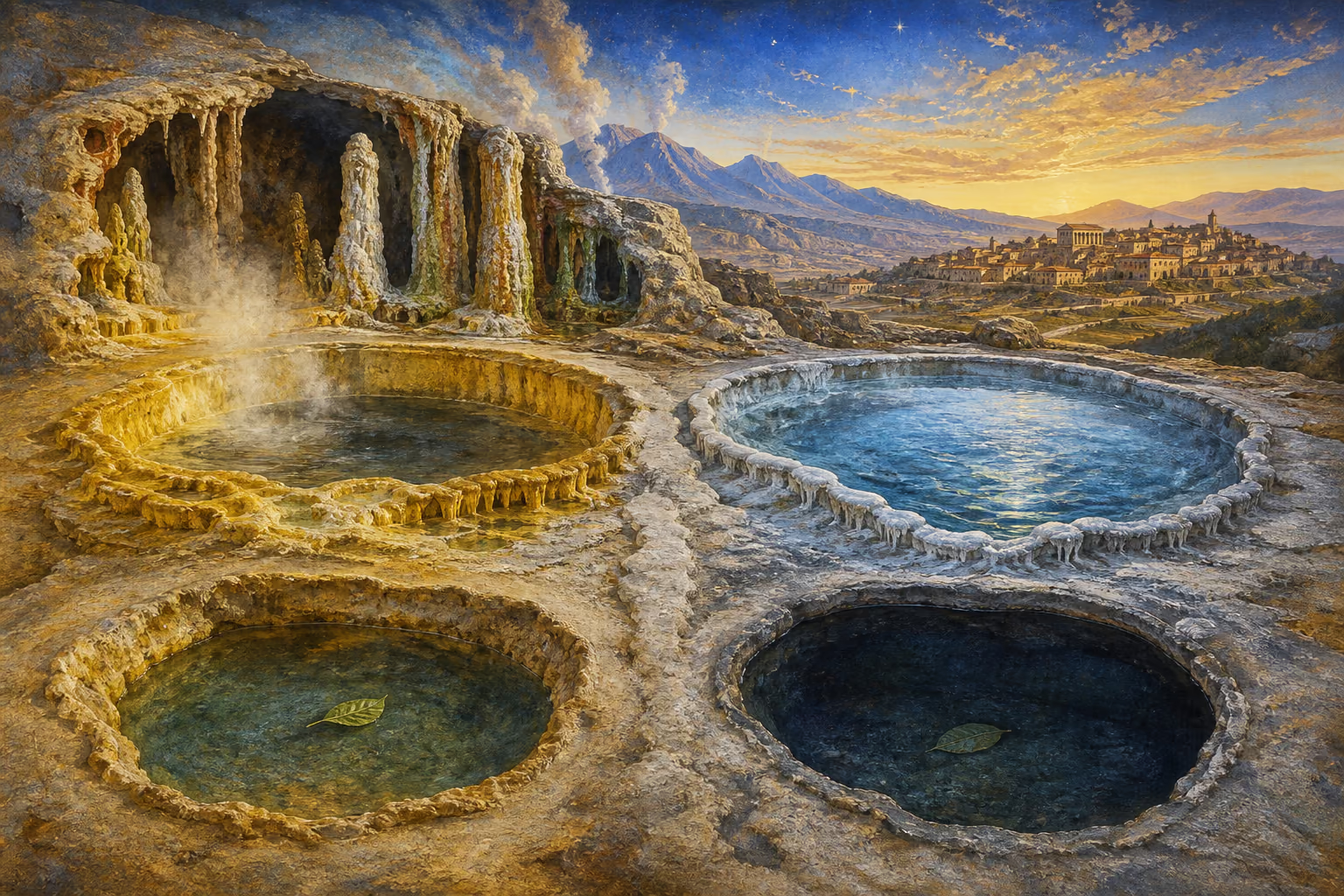
In Perperenis fons est, quamcumque rigat, lapideam faciens terram, item calidae aquae in Euboeae Aedepso. nam quae adit rivus saxa in altitudinem crescunt. in Eurymenis deiectae coronae in fontem lapideae fiunt. in Colossis flumen est, quo lateres coniecti lapidei extrahuntur. in Scyretico metallo arbores, quaecumque flumine adluuntur, saxeae fiunt cum ramis. destillantes quoque guttae lapide durescunt in antris, conchatis ideo, nam Miezae in Macedonia etiam pendentes in ipsis camaris, at in Corycio cum cecidere, in quibusdam speluncis utroque modo columnasque faciunt, ut in Phausia Cherrhonesi adversae Rhodo in antro magno, etiam discolori aspectu. et hactenus contenti simus exemplis.
English · Bostock & Riley 1855–57
On all sides, and in a thousand countries, there are waters bounteously springing forth from the earth, some of them cold, some hot, and some possessed of these properties united: those in the territory of the Tarbelli, for instance, a people of Aquitania, and those among the Pyrenæan Mountains, where hot and cold springs are separated by only the very smallest distance. Then, again, there are others that are tepid only, or lukewarm, announcing thereby the resources they afford for the treatment of diseases, and bursting forth, for the benefit of man alone, out of so many animated beings.
Under various names, too, they augment the number of the divinities, and give birth to cities; Puteoli, for example, in Campania, Statyellæ in Liguria, and Sextiæ in the province of Gallia Narbonensis. But nowhere do they abound in greater number, or offer a greater variety of medicinal properties than in the Gulf of Baiæ; some being impregnated with sulphur, some with alum, some with salt, some with nitre, and some with bitumen, while others are of a mixed quality, partly acid and partly salt. In other cases, again, it is by their vapours that waters are so beneficial to man, being so intensely hot as to heat our baths even, and to make cold water boil in our sitting-baths; such, for instance, as the springs at Baiæ, now known as “Posidian,” after the name of a freedman of the Emperor Claudius; waters which are so hot as to cook articles of food even. There are others, too,—those, for example, formerly the property of Licinius Crassus—which send forth their vapours in the sea even, thus providing resources for the health of man in the very midst of the waves!
According to their respective kinds, these waters are beneficial for diseases of the sinews, feet, or hips, for sprains or for fractures; they act, also, as purgatives upon the bowels, heal wounds, and are singularly useful for affections of the head and ears: indeed, the waters of Cicero are good for the eyes. The country-seat where these last are found is worthy of some further mention: travelling from Lake Avernus towards Puteoli, it is to be seen on the sea-shore, renowned for its fine portico and its grove. Cicero gave it the name of Academia, after the place so called at Athens: it was here that he composed those treatises of his that were called after it; it was here, too, that he raised those monuments to himself; as though, indeed, he had not already done so throughout the length and breadth of the known world.
Shortly after the death of Cicero, and when it had come into the possession of Antistius Vetus, certain hot springs burst forth at the very portals of this house, which were found to be remarkably beneficial for diseases of the eyes, and have been celebrated in verse by Laurea Tullius, one of the freedmen of Cicero; a fact which proves to demonstration that his servants even had received inspiration from that majestic and all-powerful genius of his. I will give the lines, as they deserve to be read, not there only, but everywhere:
Great prince of Roman eloquence, thy grove, / Where erst thou bad’st it rise, is verdant now: / Thy villa, from fair Academia nam’d, / From Vetus now its finish’d graces takes. / Here, too, fair streams burst forth, unknown before, / Which with their spray the languid eyes relieve. / The land, I ween, these bounteous springs reveal’d, / To honour Cicero, its ancient lord. / Throughout the world his works by eyes are scann’d; / May eyes unnumber’d by these streams be heal’d.
In Campania, too, are the waters of Sinuessa, remedial, it is said, for sterility in females, and curative of insanity in men.
The waters of the island of Ænaria are curative of urinary calculi, it is said; and the same is the case with the cold spring of Acidula, four miles distant from Teanum Sidicinum, the waters at Stabiæ, known as the Dimidiæ, and those in the territory of Venafrum, which take their rise in the spring of Acidula. Patients suffering from these complaints may be cured also by drinking the waters of Lake Velia; the same effects being produced by those of a spring in Syria, near Mount Taurus, M. Varro says, and by those of the river Gallus in Phrygia, as we learn from Callimachus. In taking the waters, however, of this last, the greatest moderation is necessary, as they are apt to cause delirium; an effect equally produced, Ctesias tells us, by the waters of the Red Fountain in Æthiopia.
The tepid waters of Albula, near Rome, have a healing effect upon wounds. Those of Cutilia, again, in the Sabine territory, are intensely cold, and by a kind of suction penetrate the body to such a degree as to have the effect of a mordent almost. They are remarkably beneficial for affections of the stomach, sinews, and all parts of the body, in fact.
The waters of Thespiæ ensure conception to females; the same, too, with those of the river Elatus in Arcadia. The spring Linus, also in Arcadia, acts as a preservative of the fœtus and effectually prevents abortion. The waters of the river Aphrodisius, on the other hand, in the territory of Pyrrhæa, are productive of sterility.
The waters of Lake Alphius remove white morphew, Varro tells us; who also mentions the fact that one Titius, a personage who had held the prætorship, had a face to all appearance like that of a marble statue, in consequence of this disease. The waters of the river Cydnus, in Cilicia, are curative of gout, as would appear from a letter addressed by Cassius of Parma to Marcus Antonius. At Trœzen, on the contrary, all the inhabitants are subject to diseases of the feet, owing to the bad quality of the water there. The state of the Tungri, in Gaul, has a spring of great renown, which sparkles as it bursts forth with bubbles innumerable, and has a certain ferruginous taste, only to be perceived after it has been drunk. This water is strongly purgative, is curative of tertian fevers, and disperses urinary calculi: upon the application of fire it assumes a turbid appearance, and finally turns red. The springs of Leucogæa, between Puteoli and Neapolis, are curative of eye diseases and of wounds. Cicero, in his work entitled “Admiranda,” has remarked that it is only by the waters of the marshes of Reate that the hoofs of beasts of burden are hardened.
Eudicus informs us that in Hestiæotis there are two springs; one of which, Cerona, renders sheep black that drink of it, while the other, called Neleus, turns them white: if, again, a sheep should happen to drink their waters mixed, its fleece will be mottled. According to Theophrastus, the water of the Crathis, a river of Thurii, makes sheep and cattle white, while that of the river Sybaris turns them black.
And not only this, but human beings even, Theophrastus tells us, are sensible of this difference: for persons who drink the water of the Sybaris, he says, become more swarthy and more hardy, the hair inclining to curl: while those, again, who drink of the Crathis become fair and more soft-skinned, with the hair growing straight and long. So, too, in Macedonia, persons who wish the produce to be white, drive their cattle to the river Haliacmon, while those who desire a black or tawny colour, take them to water at the Axius. Upon the same authority, too, we learn that in certain localities, as in the country of the Messapii, for instance, all the productions, the cereals even, grow of a tawny colour; and that at Lusi, in Arcadia, there is a certain fountain in which land-mice live and dwell. The river Aleos, which passes through Erythræ, promotes the growth of hair upon the body.
At the Temple of the god Trophonius, in Bœotia, near the river Hercynnus, there are two fountains, one of which aids the memory, while the other is productive of forgetfulness: hence the names which they respectively bear.
Near the town of Cescum, in Cilicia, runs the river Nus, the waters of which, according to Varro, sharpen the intellect; while those of a certain spring in the island of Cea dull the senses. At Zama, in Africa, there is a spring, the waters of which render the voice more musical.
Eudoxus says that persons who drink the water of Lake Clitorius take a distaste for wine, and Theopompus asserts that the waters of the springs already named are productive of inebriety. According to Mucianus, there is a fountain at Andros, consecrated to Father Liber, from which wine flows during the seven days appointed for the yearly festival of that god, the taste of which becomes like that of water the moment it is taken out of sight of the temple.
Polyclitus says, that the water of the river Liparis, near Soli, in Cilicia, is used as a substitute for oil, and Theophrastus mentions a spring of that name in Æthiopia, which is possessed of similar properties. Lycus says, that at Tasitia there is a fountain of it, the water of which emits light: the same is asserted, too, of a spring at Ecbatana. According to Theopompus, there is a lake at Scotussa, the waters of which heal wounds.
Juba says, that in the country of the Troglodytæ there is a lake, called the “Lake of Insanity,” from its highly noxious properties: thrice a day it becomes salt and bitter, and then again fresh, the same taking place as many times during the night. It is full, he says, of white serpents, twenty cubits long. He mentions, also, a certain spring in Arabia, which rises from the ground with such remarkable force, as to throw back any object pressed down upon it, however weighty.
Theophrastus makes mention of the fountain of Marsyas, near the city of Celænæ, in Phrygia, which throws up masses of stone. Not far from it are two other springs, called Clæon and Gelon by the Greeks, from the effects which they respectively produce. At Cyzicus is a fountain known as that of Cupido, the waters of which, Mucianus believes, cure those who drink thereof of love.
At Crannon there are certain hot springs, though not at boiling heat, the water of which, mixed with wine, preserves it warm in the vessels for a period of three days. The same is the case, too, with the springs of Mattiacum in Germany, beyond the river Rhenus, the water of which retains its boiling heat three days. The margin of these springs is covered with pumice, formed by the action of the water.
If any of the above-mentioned facts have the appearance of being incredible to a person, I would have him know that there is no department of Nature which presents greater marvels than this, independently of the numerous peculiarities which have been already mentioned in an earlier part of this work. Ctesias informs us that, in India, there is a lake of standing water, upon which nothing will float, every object instantly sinking to the bottom. Cælius says that in the waters of Lake Avernus, in our own part of the world, the very leaves of the trees even will sink; and, according to Varro, these waters are fatal to such birds as fly towards them.
On the other hand, again, in the waters of Lake Apuscidamus, in Africa, nothing will sink; the same, too, Apion tells us, with the fountain of Plinthia in Sicily, as also a certain lake in Media, and the well of Saturn. The spring of Limyra not unfrequently makes its way through the neighbouring localities, and when it does so, is always portentous of some coming event. It is a singular thing too, that the fish always accompany its waters on these occasions; the inhabitants of the adjoining districts being in the habit of consulting them by offering them food. When the fishes seize it with avidity, the answer is supposed to be favourable; but if, on the other hand, they reject the food, by flapping it with their tails, the response is considered to be unfavourable. The river Holcas, in Bithynia, runs close to Bryazus, the name of a temple and of a divinity there worshipped; persons guilty of perjury, it is said, cannot endure contact with its waters, which burn like flame.
The sources, too, of the Tamaricus, a river of Cantabria, are considered to possess certain powers of presaging future events: they are three in number, and, separated solely by an interval of eight feet, unite in one channel, and so form a mighty stream. These springs are often dry a dozen times in the day, sometimes as many as twenty, without there being the slightest trace of water there: while, on the other hand, a spring close at hand is flowing abundantly and without intermission. It is considered an evil presage when persons who wish to see these springs find them dry: a circumstance which happened very recently, for example, to Lartius Licinius, who held the office of legatus after his prætorship; for at the end of seven days after his visit he died.
In Judæa there is a river that is dry every Sabbath day.
There are other marvels again, connected with water, but of a more fatal nature. Ctesias states in his writings, that there is a spring in Armenia, the fishes in which are black, and, if used as food, productive of instantaneous death. I have heard the same, too, with reference to the waters near the sources of the river Danuvius, until a spring is reached which is near its main channel, and beyond which this poisonous kind of fish is not to be found. Hence it is that this spot is generally looked upon as the source of the river. The same, too, is reported of the Lake of the Nymphs, in Lydia. Near the river Pheneus, in Achaia, there flows from the rocks a spring known as the Styx, the waters of which, as already stated, are instantly fatal. And not only this, but there are also small fish in it, Theophrastus says, which are as deadly as the water, a thing that is not the case with the fish of any other poisonous springs. Theopompus says, that at the town of Cychri, in Thrace, the waters are deadly; and Lycus states, that at Leontium there is a spring, the waters of which are fatal at the end of a couple of days to those who drink thereof. Varro speaks also of a spring upon Mount Soracte, some four feet in breadth, the waters of which bubble forth at sunrise, as though they were boiling; birds, he says, which only taste thereof, fall dead close by.
And then, besides, we meet with this insidious circumstance, that in some cases, waters of this nature are inviting even in their appearance; those at Nonacris, in Arcadia, for example, the water of which fountain possesses no apparent quality to excite mistrust, though, owing to its intense coldness, it is generally looked upon as highly injurious, seeing that it petrifies as it flows. It is otherwise with the waters of Tempe, in Thessaly, their baneful properties inspiring universal terror, and possessing the property of corroding copper even and iron, it is said. This stream runs a short distance only, as already stated; and it is truly marvellous that, according to general report, the banks of its source are surrounded with the roots of a wild carob, always covered with purple flowers, while the margin is clothed with a green herbaceous plant of a peculiar species. In Macedonia, not far from the tomb of the Poet Euripides, is the confluence of two streams, the water of one of which is extremely wholesome, that of the other fatal.
At Perperena, there is a spring which petrifies the ground wherever it flows, the same being the case also, with the hot waters at Ædepsus, in Eubœa; for there, wherever the stream falls, the rocks are continually increasing in height. At Eurymenæ, chaplets, when thrown into the waters of a certain fountain there, are turned to stone. At Colossæ there is a river, into the water of which if bricks are thrown, when taken out they are found changed into stone. In the mines of Scyros, the trees petrify that are watered by the river, branches and all. In the caverns of Mount Corycus, the drops of water that trickle down the rocks become hard in the form of a stone. At Mieza, too, in Macedonia, the water petrifies as it hangs from the vaulted roofs of the rocks; but at Corycus it is only when it has fallen that it becomes hard.
In other caverns, again, the water petrifies both ways, and so forms columns; as we find the case in a vast grotto at Phausia, a town of the Chersonesus of the Rhodians, the columns of which are tinted with various colours. These instances will suffice for the present.