LIBER XXXI · CAPUT 5
HISTORICAL OBSERVATIONS UPON WATERS WHICH HAVE SUDDENLY MADE THEIR APPEARANCE OR SUDDENLY CEASED
Latine · Mayhoff 1906
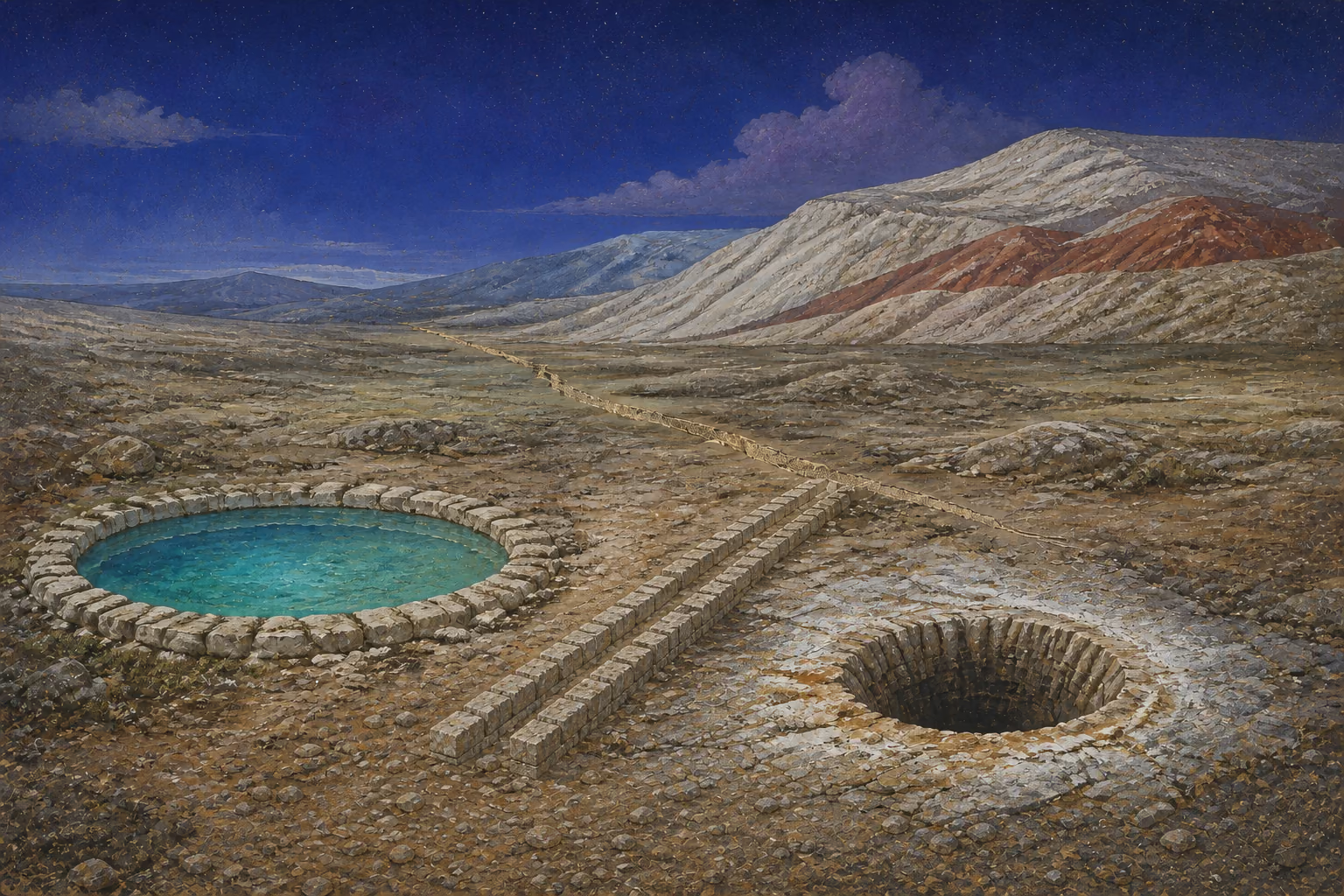
terrae quoque motus profundunt sorbentque aquas, sicut circa Pheneum Arcadiae quinquies accidisse constat. sic et in Coryco monte amnis erupit posteaque coeptus est coli. illa mutatio mira, cuius causa nulla evidens apparet, sicut in Magnesia e calida facta frigida, salis non mutato sapore, et in Caria, ubi Neptuni templum est, amnis, qui fuerat ante dulcis, mutatus in salem est. et illa miraculi plena, Arethusam Syracusis fimum redolere per Olympia, verique simile, quoniam Alpheus in eam insulam sub maria permeet. Rhodiorum fons in Cherroneso nono anno purgamenta egerit. mutantur et colores aquarum, sicut Babylone lacus aestate rubras habet diebus XI et Borysthenes statis temporibus caeruleus fertur, quamquam omnium aquarum tenuissimus ideoque innatans Hypani, in quo et illud mirabile, austris flantibus superiorem Hypanim fieri. sed tenuitatis argumentum et aliud est, quod nullum halitum, non modo nebulam, emittat. qui volunt diligentes circa haec videri, dicunt aquas graviores post brumam fieri.
English · Bostock & Riley 1855–57
Earthquakes also are apt to discover or swallow up springs of water; a thing that has happened, it is well known, on five different occasions in the vicinity of Pheneus, a town of Arcadia. So too, upon Mount Coryeus, a river burst forth; after which, the soil was subjected to cultivation. These changes are very surprising where there is no apparent cause for them; such as the occurrence at Magnesia, for instance, where the warm waters became cold, but without losing their brackish flavour; and at the Temple of Neptune in Caria, where the water of the river, from being fresh, became salt. Here, too, is another fact, replete with the marvellous—the fountain of Arethusa at Syracuse has a smell of dung, they say, during the celebration of the games at Olympia, a thing that is rendered not improbable by the circumstance, that the river Alpheus makes its way to that island beneath the bed of the sea. There is a spring in the Chersonesus of the Rhodians which discharges its accumulated impurities every nine years.
Waters, too, sometimes change their colour; as at Babylon, for example, where the water of a certain lake for eleven days in summer is red. In the summer season, too, the current of the Borysthenes is blue, it is said, and this, although its waters are the most rarefied in existence, and hence float upon the surface of those of the Hypanis; —though at the same time there is this marvellous fact, that when south winds prevail, the waters of the Hypanis assume the upper place. Another proof, too, of the surpassing lightness of the water of the Borysthenes, is the fact that it emits no exhalations, nor, indeed, the slightest vapour even. Authors that would have the credit of diligent research in these enquiries, assure us that water becomes heavier after the winter-solstice.