LIBER XXXI · CAPUT 7
THE VARIOUS KINDS OF SALT; THE METHODS OF PREPARING IT, AND THE REMEDIES DERIVED FROM IT. TWO HUNDRED AND FOUR OBSERVATIONS THEREUPON
Latine · Mayhoff 1906
Sal omnis aut fit aut gignitur, utrumque pluribus modis, sed causa gemina, coacto umore vel siccato. siccatur in lacu Tarentino aestivis solibus, totumque stagnum in salem abit, modicum alioqui, altitudine genua non excedens, item in Sicilia in lacu, qui Cocanicus vocatur, et alio iuxta Gelam. horum extremitates tantum inarescunt, sicut in Phrygia, Cappadocia, Aspendi, ubi largius coquitur et usque ad medium. aliud etiam in eo mirabile, quod tantundem nocte subvenit, quantum die auferas. omnis e stagnis sal minutus atque non glaeba est. aliud genus ex aquis maris sponte gignitur spuma in extremis litoribus ac scopulis relicta. hic omnis rore densatur, et est acrior qui in scopulis invenitur. sunt etiamnum naturales differentiae tres. namque in Bactris duo lacus vasti, alter ad Scythas versus, alter ad Arios, sale exaestuant, sicut ad Citium in Cypro et circa Memphin extrahunt e lacu, dein sole siccant. sed et summa fluminum densantur in salem, amne reliquo veluti sub gelu fluente, ut apud Caspias portas quae salis flumina appellantur, item circa Mardos et Armenios. praeterea et apud Bactros amnes Ochus et Oxus ex adpositis montibus deferunt salis ramenta. sunt et in Africa lacus, et quidem turbidi, salem ferentes. ferunt quidem et calidi fontes, sicut Pagasaei. et hactenus habent se genera ex aquis sponte provenientia. sunt et montes nativi salis, ut in Indis Oromenus, in quo lapicidinarum modo caeditur renascens, maiusque regum vectigal ex eo est quam ex auro atque margaritis. effoditur et e terra, ut palam est umore densato, in Cappadocia. ibi quidem caeditur specularium lapidum modo; pondus magnum glaebis, quas micas vulgus appellat. Gerris Arabiae oppido muros domosque massis salis faciunt aqua feruminantes. invenit et iuxta Pelusium Ptolemaeus rex, cum castra faceret. quo exemplo postea inter Aegyptum et Arabiam etiam squalentibus locis coeptus est inveniri detractis harenis, qualiter et per Africae sitientia usque ad Hammonis oraculum, is quidem crescens cum luna noctibus. nam et Cyrenaici tractus nobilitantur Hammoniaco et ipso, quia sub harenis inveniatur, appellato. similis est colore alumini, quod schiston vocant, longis glaebis neque perlucidis, ingratus sapore, sed medicinae utilis. probatur quam maxime perspicuus, rectis scissuris. insigne de eo proditur, quod levissimus intra specus suos in lucem universam prolatus vix credibili pondere ingravescat. causa evidens, cuniculorum spiritu madido sic adiuvante molientes, ut adiuvant aquae. adulteratur Siculo, quem Cocanicum appellavimus, nec non et Cyprio mire simili. in Hispania quoque citeriore Egelestae caeditur glaebis paene translucentibus, cui iam pridem palma a plerisque medicis inter omnia salis genera perhibetur. omnis locus, in quo reperitur sal, sterilis est nihilque gignit. et in totum sponte nascens intra haec est.
Facticii varia genera. volgaris plurimusque in salinis mari adfuso non sine aquis dulcibus riguis, sed imbre maxime iuvante ac super omnia sole multo.... que, aliter non inarescens. Africa circa Uticam construit acervos salis ad collium speciem, qui ubi sole lunaque induruere, nullo umore liquescunt vixque etiam ferro caeduntur. fit tamen et in Creta sine riguis mare in salinas iufundentibus et circa Aegyptum ipso mari influente in solum, ut credo, Nilo sucosum. fit et puteis in salinas ingestis. prima densatio Babylone in bitumen liquidum cogitur oleo simile, quo et in lucernis utuntur. hoc detracto subest sal. et in Cappadocia e puteis ac fonte aquam in salinas ingerunt. in Chaonia excocunt aquam e fonte refrigerandoque salem faciunt inertem nec candidum. Galliae Germaniaeque ardentibus lignis aquam salsam infundunt; Hispaniae quadam sui parte e puteis hauriunt muriam appellantes. illi quidem et lignum referre arbitrantur. quercus optima, ut quae per se cinere sincero vim salis reddat, alibi corylus laudatur. ita infuso liquore salso arbor etiam in salem vertitur. quicumque ligno confit sal niger est. Apud Theophrastum invenio Umbros harundinis et iunci cinerem decoquere aqua solitos, done exiguum superesset umoris. quin et e muria salsamentorum recoquitur iterumque consumpto liquore ad naturam suam redit, vulgo e menis iucundissimus.
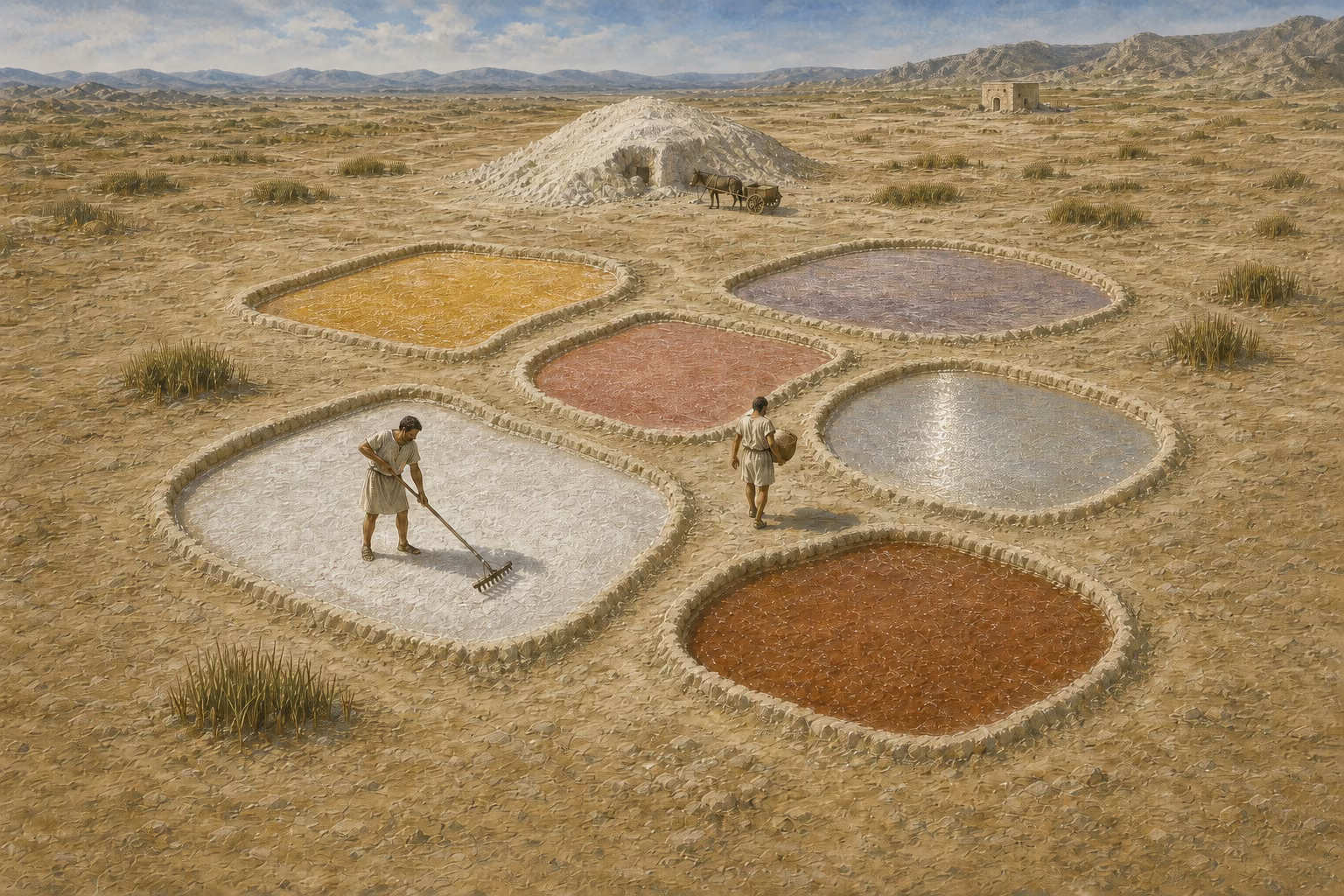
Marinorum maxume laudatur Cyprius a Salamine, at e stagnis Tarentinus ac Phrygius, qui Tattaeus vocatur. hi duo oculis utiles. e Cappadocia qui in laterculis adfertur, cutis nitorem dicitur facere. magis tamen extendit is, quem Citium appellavimus, itaque a partu ventrem eo cum melanthio inlinunt. salsissimus sal qui siccissimus, suavissimus omnium Tarentinus atque candidissimus, set de cetero fragilis qui maxime candidus. pluvia dulcescit omnis, suaviorem tamen rores faciunt, sed copiosum aquilonis flatus. austro non nascitur. flos salis non fit nisi aquilonibus. in igni nec crepitat nec exilit Tragasaeus neque Acanthius, ab oppido appellatus, nec ullius spuma aut ramentum tenuius. Agrigentinus ignium patiens ex aqua exilit. sunt et colorum differentiae. rubet Memphi, rufus est circa Oxum, Centuripis purpureus, circa Gelam in eadem Sicilia tanti splendoris, ut imaginem recipiat. in Cappadocia crocinus effoditur, tralucidus et odoratissimus. ad medicinae usus antiqui Tarentinum maxime laudabant, ab hoc quemcumque e marinis, ex eo genere spumeum praecipue, iumentorum vero et boum oculis Tragasaeum et Baeticum. ad opsonium et cibum utilior quisquis facile liquescit, item umidior, minorem enim amaritudinem habent, ut Atticus et Euboicus. servandis carnibus aptior acer et siccus, ut Megaricus. conditur etiam odoribus additis et pulmentarii vicem implet, excitans aviditatem invitansque in omnibus cibis ita, ut sit peculiaris ex eo intellectus inter innumera condimenta, item in mandendo quaesitus garo. quin et pecudes armentaque et iumenta sale maxime sollicitantur ad pastus, multo tum largiore lacte multoque gratiore etiam in caseo dote. ergo, Hercules, vita humanior sine sale non quit degere, adeoque necessarium elementum est, uti transient intellectus ad voluptates animi quoque eximias. sales appellantur, omnisque vitae lepos et summa hilaritas laborumque requies non alio magis vocabulo constat. honoribus etiam militiaeque interponitur salariis inde dictis, magna apud antiquos et auctoritate, sicut apparet ex nomine Salariae viae, quoniam illa salem in Sabinos portari convenerat. Ancus Marcius rex salis modiosVI in congiario dedit populis et salinas primus instituit. Varro etiam pulmentarii vice usos veteres auctor est, et salem cum pane esitasse eos proverbio apparet. maxime tamen in sacris intellegitur auctoritas, quando nulla conficiuntur sine mola salsa.
Salinarum sinceritas summam fecit suam differentiam quadam favilla salis, quae levissima ex eo est et candidissima. appellatur et flos salis, in totum diversa res umidiorisque naturae et crocei coloris aut rufi, veluti rubigo salis, odore quoque ingrato ceu gari dissentiens a sale, non modo a spuma. Aegyptus invenit, videturque Nilo deferri. et fontibus tamen quibusdam innatat. optimum ex eo quod olei quandam pinguitudinem reddit; est enim etiam in sale pinguitudo, quod miremur. adulteratur autem tinguiturque rubrica aut plerumque testa trita, qui fucus aqua deprehenditur diluente facticium colorem, cum verus ille non nisi oleo resolvatur et unguentarii propter colorem eo maxime utantur. canitia in vasis summa est, media vero pars umidior, ut diximus. floris natura aspera, excalfactoria, stomacho inutilis, sudorem ciet, alvum solvit in vino et aqua, acopis et zmecticis utilis. detrahit et ex palpebris pilos. ima faecis concutiuntur, ut croci color redeat.
Praeter haec etiamnum appellatur in salinis salsugo, ab aliis salsilago, tota liquida, a marina aqua salsiore vi distans.— Aliud etiamnum liquoris exquisiti genus, quod garum vocavere, intestinis piscium ceterisque, quae abicienda essent, sale maceratis, ut sit illa putrescentium sanies. hoc olim conficiebatur ex pisce, quem Graeci garon vocabant, capite eius usto suffitu extrahi secundas monstrantes,
English · Bostock & Riley 1855–57
All salt is either native or artificial; both kinds being formed in various ways, but produced from one of these two causes, the condensation or the desiccation, of a liquid. The Lake of Tarentum is dried up by the heat of the summer sun, and the whole of its waters, which are at no time very deep, not higher than the knee in fact, are changed into one mass of salt. The same, too, with a lake in Sicily, Cocanicus by name, and another in the vicinity of Gela. But in the case of these two last, it is only the sides that are thus dried up; whereas in Phrygia, in Cappadocia, and at Aspendus, where the same phænomena are observable, the water is dried up to a much larger extent, to the very middle of the lake, in fact. There is also another marvellous circumstance connected with this last—however much salt is taken out of it in the day, its place is supplied again during the night. Every kind of lake-salt is found in grains, and not in the form of blocks.
Sea-water, again, spontaneously produces another kind of salt, from the foam which it leaves on shore at high-water mark, or adhering to rocks; this being, in all cases, condensed by the action of the sun, and that salt being the most pungent of the two which is found upon the rocks.
There are also three different kinds of native salt. In Bactriana there are two vast lakes; one of them situate on the side of Scythia, the other on that of Ariana, both of which throw up vast quantities of salt. So, too, at Citium, in Cyprus; and, in the vicinity of Memphis, they extract salt from the lake and dry it in the sun. The surface-waters of some rivers, also, condense in the form of salt, the rest of the stream flowing beneath, as though under a crust of ice; such as the running waters near the Caspian Gates for instance, which are known as the “Rivers of Salt.” The same is the case, too, in the vicinity of the Mardi and of the people of Armenia. In Bactriana, also, the rivers Ochus and Oxus carry down from the mountains on their banks, fragments of salt. There are also in Africa some lakes, the waters of which are turbid, that are productive of salt. Some hot springs, too, produce salt—those at Pagasæ for example. Such, then, are the various kinds of salt produced spontaneously by water.
There are certain mountains, also, formed of native salt; that of Oromenus, in India, for example, where it is cut out like blocks from a quarry, and is continually reproduced, bringing in a larger revenue to the sovereigns of those countries than that arising from their gold and pearls. In some instances it is dug out of the earth, being formed there, evidently, by the condensation of the moisture, as in Cappadocia for example, where it is cut in sheets, like those of mirror-stone. The blocks of it are very heavy, the name commonly given to them being “mica.” At Gerrhæ, a city of Arabia, the ramparts and houses are constructed of blocks of salt, which are soldered together by being moistened with water. King Ptolemæus discovered salt also in the vicinity of Pelusium, when he encamped there; a circumstance which induced other persons to seek and discover it in the scorched tracts that lie between Egypt and Arabia, beneath the sand. In the same manner, too, it has been found in the thirsting deserts of Africa, as far as the oracle of Hammon, a locality in which the salt increases at night with the increase of the moon.
The districts of Cyrenaica are ennobled, too, by the production of hammoniacum, a salt so called from the fact of its being found beneath the sands there. It is similar in colour to the alum known as “schiston,” and consists of long pieces, by no means transparent, and of an unpleasant flavour, but highly useful in medicine; that being held in the highest esteem, which is the clearest and divides into straight flakes. There is one remarkable fact mentioned in connexion with it: so long as it lies under ground in its bed it is extremely light, but the moment it is exposed to the light, it is hardly credible to what an extent its weight is increased. The reason for this is evident: the humid vapours of the excavations bear the masses upwards, as water does, and so aid the workmen. It is adulterated with the Sicilian salt which we have mentioned as being found in Lake Cocanicus, as also with that of Cyprus, which is marvellously like it. At Egelasta, in Nearer Spain, there is a salt, hewn from the bed in almost transparent blocks, and to which for this long time past most medical men, it is said, have given the preference over all other salt. Every spot in which salt is found is naturally barren, and produces nothing. Such are the particulars, in general, which have been ascertained with reference to native salt.
Of artificial salt there are several kinds; the common salt, and the most abundant, being made from sea-water drained into salt-pans, and accompanied with streams of fresh water; but it is rain more particularly, and, above all things, the sun, that aids in its formation; indeed without this last it would never dry. In the neighbourhood of Utica, in Africa, they build up masses of salt, like hills in appearance; and when these have been hardened by the action of the sun and moon, no moisture will ever melt them, and iron can hardly divide them. In Crete, however, salt is made without the aid of fresh water, and merely by introducing sea-water into the salt-pans. On the shores of Egypt, salt is formed by the overflow of the sea upon the land, already prepared for its reception, in my opinion, by the emanations of the river Nilus. It is made here, also, from the water of certain wells, discharged into salt-pans. At Babylon, the result of the first condensation is a bituminous liquid, like oil, which is used for burning in lamps; when this is skimmed off, the salt is found beneath. In Cappadocia, also, both well and spring-water are introduced into the salt-pans. In Chaonia there is a spring, from the water of which, when boiled and left to cool, there is an inert salt obtained, not so white as ordinary salt. In the Gallic provinces and in Germany, it is the practice to pour salt-water upon burning wood.
In one part of Spain, they draw a brine for this purpose from deep-sunk pits, to which they give the name of “muria;” being of opinion, also, that it makes a considerable difference upon what kind of wood it is poured. That of the quercus they look upon as the best, as the ashes of it, unmixed, have the pungency of salt. In other places, again, the wood of the hazel is held in high esteem; and thus, we see, by pouring brine upon it, charcoal even is converted into salt. All salt that is thus prepared with burning wood is black. I find it stated by Theophrastus, that the Umbri are in the habit of boiling ashes of reeds and bulrushes in water, till there remains but little moisture unconsumed. The brine, too, of salted provisions is sometimes boiled over again, and, as soon as all the moisture has evaporated, the salt resumes its original form. That prepared from the pickle of the mæna has the finest flavour.
Of the various kinds of sea-salt, the most esteemed is that of Salamis, in Cyprus; and of the lake-salts, that of Tarentum, and the salt known as Tattæan salt, which comes from Phrygia: these last two are also good for the eyes. That of Cappadocia, which is imported in small cubes, imparts a fine colour, it is said, to the skin; but, for effacing wrinkles, that which we have already spoken of as the salt of Citium is the best: hence it is that, in combination with gith, it is used by females as a liniment for the abdomen after childbirth. The drier the salt, the stronger it is in taste; but the most agreeable of all, and the whitest known, is that of Tarentum. In addition to these particulars, we would remark also, that the whiter salt is, the more friable it is. Rain-water deadens every kind of salt, but dew-water makes it more delicate in flavour. North-easterly winds render the formation of salt more abundant, but, while south winds prevail, it never increases. It is only while north-easterly winds prevail, that flower of salt is formed. Neither the salt of Tragasa, nor the Acanthian salt—so called from the town where it is found—will decrepitate or crackle in the fire; nor will the froth of salt do so, or the outside scrapings, or refined salt. The salt of Agrigentum resists fire, but decrepitates in water.
There are differences, too, in the colour of salt: at Memphis it is deep red, russet-coloured in the vicinity of the Oxus, purple at Centuripa, and so remarkably bright at Gela, situate also in Sicily, as to reflect the image of objects. In Cappadocia there is a saffron-coloured fossil salt, transparent and remarkably odoriferous. For medicinal purposes, the ancients esteemed the salt of Tarentum in particular, and next to that all the marine salts, those collected from sea-foam more especially. For maladies of the eyes in cattle and beasts of burden, the salt of Tragasa and that of Bætica are employed. For made dishes and ordinary food, the more easily a salt liquefies and the moister it is, the more highly it is esteemed; there being less bitterness in salt of this description, that of Attica and of Eubœa, for example. For keeping meat, a pungent, dry, salt, like that of Megara, is best. A conserve of salt is also made, with the addition of various odoriferous substances, which answers all the purpose of a choice sauce, sharpening the appetite, and imparting a relish to all kinds of food: indeed, among the innumerable condiments which we use, the flavour of salt is always distinctly perceptible; and when we take garum with our food, it is its salt flavour that is considered so exquisite. And not only this, but sheep even, cattle, and beasts of burden, are induced to graze all the better by giving them salt; it having the effect, also, of considerably augmenting the milk, and imparting a superior flavour to the cheese.
We may conclude, then, by Hercules! that the higher enjoyments of life could not exist without the use of salt: indeed, so highly necessary is this substance to mankind, that the pleasures of the mind, even, can be expressed by no better term, than the word “salt,” such being the name given to all effusions of wit. All the amenities, in fact, of life, supreme hilarity, and relaxation from toil, can find no word in our language to characterize them better than this. Even in the very honours, too, that are bestowed upon successful warfare, salt plays its part, and from it, our word “salarium” is derived. That salt was held in high esteem by the ancients, is evident from the Salarian Way, so named from the fact that, by agreement, the Sabini carried all their salt by that road. King Ancus Martius gave six hundred modii of salt as a largess to the people, and was the first to establish salt-works. Varro also informs us, that the ancients used salt by way of a relishing sauce; and we know, from an old proverb, that it was the practice with them to eat salt with their bread. But it is in our sacred rites more particularly, that its high importance is to be recognized, no offering ever being made unaccompanied by the salted cake.
That which mainly distinguishes the produce of salt-works, in respect of its purity, is a sort of efflorescence, which forms the lightest and whitest part of salt. The name “flower of salt” is given, also, to a substance of an entirely different character, more humid by nature, and of a red or saffron colour; a kind of “rust of salt,” as it were, with an unpleasant smell like that of garum, and differing therein not only from froth of salt, but from salt itself. This substance is found in Egypt and, as it would appear, is conveyed thither by the waters of the Nilus; though it is to be found floating upon the surface of certain springs as well. The best kind is that which yields a certain fatty substance, like oil—for salt even, a thing that is quite marvellous to think of, is not without a degree of unctuousness.
This substance is sophisticated, and coloured with red earth, or in most instances, with powdered potsherds; an adulteration to be detected by the agency of water, which washes off the fictitious colour, the natural colour being only removable by the agency of oil. Indeed, it is for its colour that perfumers more particularly make such extensive use of this drug. When seen in the vessels, the surface of it is white, but that which lies in the middle is moister, as already stated. It is of an acrid nature, calorific, and bad for the stomach. It acts also as a sudorific, and, taken with wine and water, has a purgative effect upon the bowels. It is very useful, also, as an ingredient in acopa and in detersive compositions, and is remarkably efficacious for the removal of hairs from the eye-lids. It is the practice to shake up the sediment, in order to renovate the saffron colour of the drug.
In addition to these substances, there is another, known in the salt-works by the name of “salsugo,” or “salsilago:” it is quite liquid, salter in taste than sea-water, but inferior to it in its properties.
Another liquid, too, of a very exquisite nature, is that known as “garum:” it is prepared from the intestines of fish and various parts which would otherwise be thrown away, macerated in salt; so that it is, in fact, the result of their putrefaction. Garum was formerly prepared from a fish, called “garos” by the Greeks; who assert, also, that a fumigation made with its head has the effect of bringing away the afterbirth.