LIBER XXXIV · CAPUT 15
METHODS OE PREVENTING RUST
Latine · Mayhoff 1906
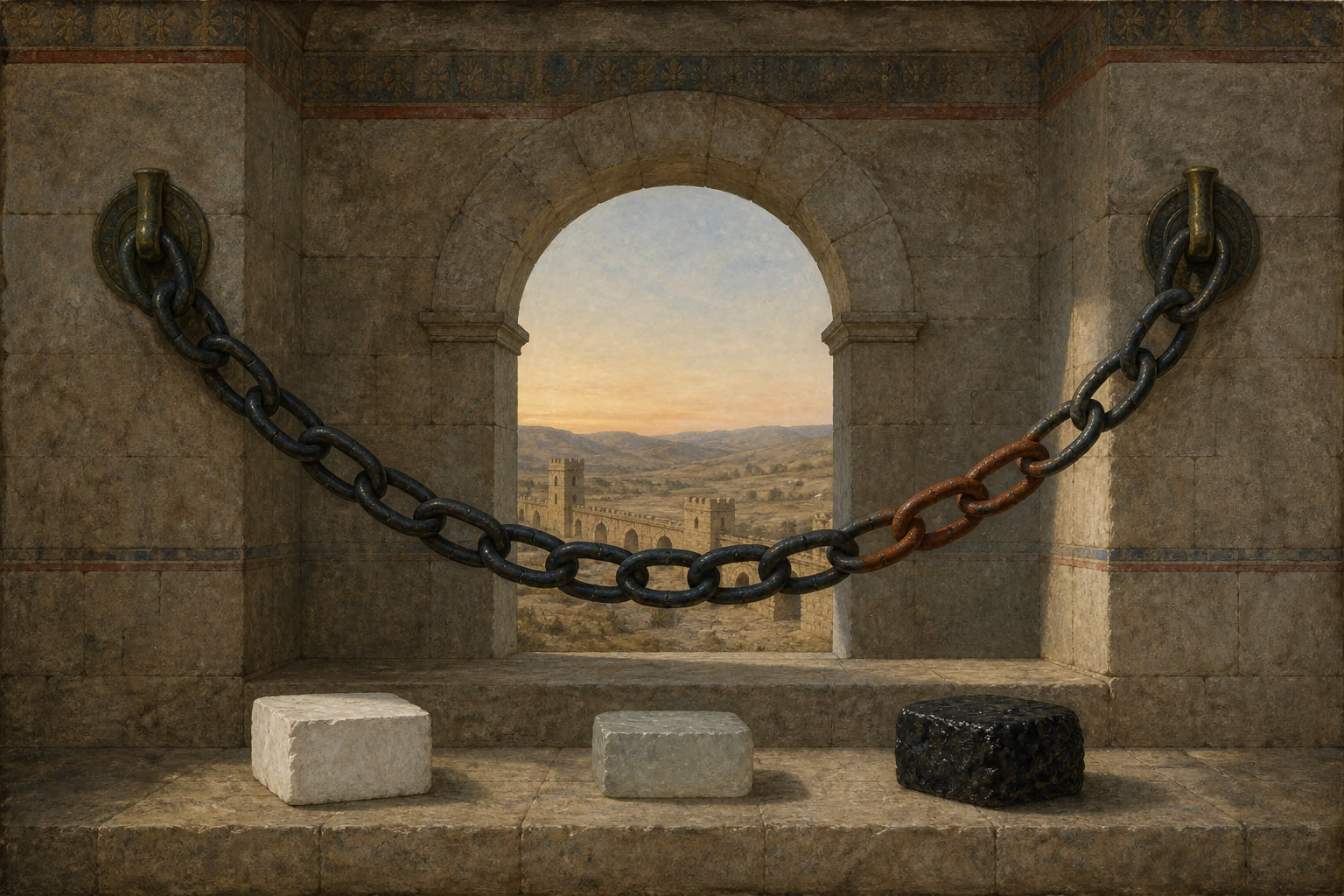
Ferrum accensum igni, nisi duretur ictibus, corrumpitur. rubens non est habile tundendo neque antequam albescere incipiat. aceto aut alumine inlitum fit aeri simile. a robigine vindicatur cerussa et gypso et liquida pice. haec est ferro a Graecis antipathia dicta. ferunt quidem et religione quadam id fieri et exstare ferream catenam apud Euphraten amnem in urbe, quae Zeugma appellatur, qua Alexander Magnus ibi iunxerit pontem, cuius anulos, qui refecti sint, robigine infestari, carentibus ea prioribus.
Medicina e ferro est et alia quam secandi. namque et circumscribi circulo terve circumlato mucrone et adultis et infantibus prodest contra noxia medicamenta, et praefixisse in limine evulsos sepulchris clavos adversus noctumas lymphationes, pungique leviter mucrone, quo percussus homo sit, contra dolores laterum pectorumque subitos, qui punctionem adferant. quaedam ustione sanantur, privatim vero canis rabidi morsus, quippe etiam praevalente morbo expaventesque potum usta plaga ilico liberantur. calfit etiam ferro candente potus in multis vitiis, privatim vero dysentericis.
Est et robigo ipsa in remediis, et sic proditur Telephum sanasse Achilles, sive id aerea sive ferrea cuspide fecit; ita certe pingitur ex ea decutiens gladio. sed robigo ferri deraditur umido ferro clavis veteribus. potentia eius ligare, siccare, sistere. emendat alopecias inlita. utuntur et ad scabritias genarum pusulasque totius corporis cum cera et myrteo oleo, ad ignes vero sacros ex aceto, item ad scabiem, paronychia digitorum et pterygia in linteolis. sistit et feminarum profluvia inposita velleribus, plagis quoque recentibus vino diluta et cum murra subacta, condylomatis ex aceto. podagras quoque inlita lenit.
Squama quoque ferri in usu est ex acie aut mucronibus, maxime simili, sed acriore vi quam robigo, quam ob rem et contra epiphoras oculorum adsumitur. sanguinem sistit, cum volnera ferro maxime fiant. sistit et feminarum profluvia. inponitur et contra lienium vitia, et haemorroidas compescit ulcerumque serpentia. et genis prodest farinae modo adspersa paullisper. praecipua tamen commendatio eius in hygremplastro ad purganda vulnera fistulasque et omnem callum erodendum et rasis ossibus carnes recreandas. componitur hoc modo: propolis oboli VI, Cimoliae cretae drachmae VI, aeris tusi drachmae II, squamae ferri totidem, cerae X, olei sextarius. his adieitutr, cum sunt repurganda volnera aUt replenda, ceratum.
English · Bostock & Riley 1855–57
Of all metals, the ores of iron are found in the greatest abundance. In the maritime parts of Cantabria which are washed by the Ocean, there is a steep and lofty mountain, which, however incredible it may appear, is entirely composed of this metal, as already stated in our description of the parts bordering upon the Ocean.
Iron which has been acted upon by fire is spoiled, unless it is forged with the hammer. It is not in a fit state for being hammered when it is red-hot, nor, indeed, until it has begun to assume a white heat. By sprinkling vinegar or alum upon it, it acquires the appearance of copper. It is protected from rust by an application of ceruse, gypsum, and tar; a property of iron known by the Greeks as “antipathia.” Some pretend, too, that this may be ensured by the performance of certain religious ceremonies, and that there is in existence at the city of Zeugma, upon the Euphrates, an iron chain, by means of which Alexander the Great constructed a bridge across the river; the links of which that have been replaced are attacked with rust, while the original links are totally exempt from it.
Iron is employed in medicine for other purposes besides that of making incisions. For if a circle is traced with iron, or a pointed weapon is carried three times round them, it will preserve both infant and adult from all noxious influences: if nails, too, that have been extracted from a tomb, are driven into the threshold of a door, they will prevent night-mare. A slight puncture with the point of a weapon, with which a man has been wounded, will relieve sudden pains, attended with stitches in the sides or chest. Some affections are cured by cauterization with red-hot iron, the bite of the mad dog more particularly; for even if the malady has been fully developed, and hydrophobia has made its appearance, the patient is instantly relieved on the wound being cauterized. Water in which iron has been plunged at a white heat, is useful, as a potion, in many diseases, dysentery more particularly.
Rust itself, too, is classed among the remedial substances; for it was by means of it that Achilles cured Telephus, it is said, whether it was an iron weapon or a brazen one that he used for the purpose. So it is, however, that he is represented in paintings detaching the rust with his sword. The rust of iron is usually obtained for these purposes by scraping old nails with a piece of moistened iron. It has the effect of uniting wounds, and is possessed of certain desiccative and astringent properties. Applied in the form of a liniment, it is curative of alopecy. Mixed with wax and myrtle-oil, it is applied to granulations of the eyelids, and pustules in all parts of the body; with vinegar it is used for the cure of erysipelas; and, applied with lint, it is curative of itch, whitlows on the fingers, and hang-nails. Used as a pessary with wool, it arrests female discharges. Diluted in wine, and kneaded with myrrh, it is applied to recent wounds, and, with vinegar, to condylomatous swellings. Employed in the form of a liniment, it alleviates gout.
The scales of iron, which are procured from a fine point or a sharp edge, are also made use of, being very similar in effect to rust, but more active; for which reason they are employed for defluxions of the eyes. They arrest bleeding, also, more particularly from wounds inflicted with iron; and they act as a check upon female discharges. They are applied, too, for diseases of the spleen, and they arrest hæmorrhoidal swellings and serpiginous ulcers. They are useful also for affections of the eyelids, gradually applied in the form of a fine powder. But their chief recommendation is, their great utility in the form of a hygremplastrum or wet plaster, for cleansing wounds and fistulous sores, consuming all kinds of callosities, and making new flesh on bones that are denuded. The following are the ingredients: of pitch, six oboli, of Cimolian chalk, six drachmæ, two drachmæ of pounded copper, the same quantity of scales of iron, six drachmæ of wax, and one sextarius of oil. To these is added some cerate, when it is wanted to cleanse or fill up wounds.