LIBER XXXV · CAPUT 1
THE HONOUR ATTACHED TO PAINTING
Latine · Mayhoff 1906
Metallorum, quibus opes constant, adgnascentiumque iis natura indicata propemodum est, ita conexis rebus, ut inmensa medicinae silva officinarumque tenebrae et morosa caelandi fingendique ac tinguendi subtilitas simul dicerentur. restant terrae ipsius genera lapidumque vel numerosiore serie, plurimis singula a Graecis praecipue voluminibus tractata. nos in iis brevitatem sequemur utilem instituto, modo nihil necessarium- aut naturale omittentes,
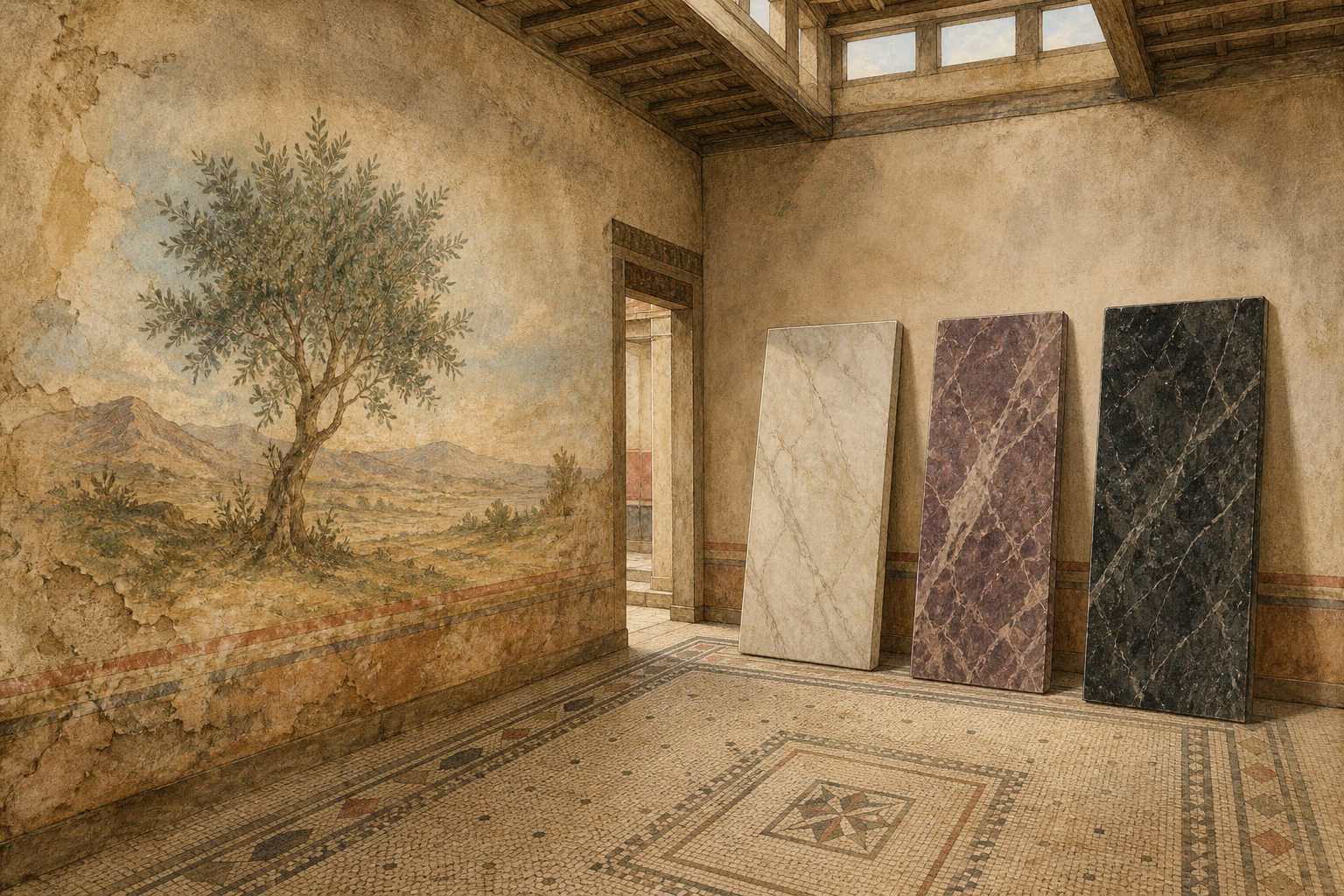
primumque dicemus quae restant de pictura, arte quondam nobili—tunc cum expeteretur regibus populisque—et alios nobilitante, quos esset dignata posteris tradere, nunc vero in totum marmoribus pulsa, iam quidem et auro, nec tantum ut parietes toti operiantur, verum et interraso marmore vermiculatisque ad effigies rerum et animalium crustis. non placent iam abaci nec spatia montes in cubiculo dilatantia: coepimus et lapide.pingere. hoc Claudii principatu inventum, Neronis vero maculas, quae non essent in crustis, inserendo unitatem variare, ut ovatus esset Numidicus, utpurpura distingueretur Synnadicus, qualiter illos nasci optassent deliciae. montium haec subsidia deficientium, nec cessat luxuria id agere, ut quam plurimum incendiis perdat.
English · Bostock & Riley 1855–57
I have now given at considerable length an account of the nature of metals, which constitute our wealth, and of the substances that are derived from them; so connecting my various subjects, as, at the same time, to describe an immense number of medicinal compositions which they furnish, the mysteries thrown upon them by the druggists, and the tedious minutiæ of the arts of chasing, and statuary, and of dyeing. It remains for me to describe the various kinds of earths and stones; a still more extensive series of subjects, each of which has been treated of, by the Greeks more particularly, in a great number of volumes. For my own part, I propose to employ a due degree of brevity, at the same time omitting nothing that is necessary or that is a product of Nature.
I shall begin then with what still remains to be said with reference to painting, an art which was formerly illustrious, when it was held in esteem both by kings and peoples, and ennobling those whom it deigned to transmit to posterity. But at the present day, it is completely banished in favour of marble, and even gold. For not only are whole walls now covered with marble, but the marble itself is carved out or else marqueted so as to represent objects and animals of various kinds. No longer now are we satisfied with formal compartitions of marble, or with slabs extended like so many mountains in our chambers, but we must begin to paint the very stone itself! This art was invented in the reign of Claudius, but it was in the time of Nero that we discovered the method of inserting in marble spots that do not belong to it, and so varying its uniformity; and this, for the purpose of representing the marble of Numidia variegated with ovals, and that of Synnada veined with purple; just, in fact, as luxury might have willed that Nature should produce them. Such are our resources when the quarries fail us, and luxury ceases not to busy itself, in order that as much as possible may be lost whenever a conflagration happens.