LIBER XXXV · CAPUT 3
WHEN SHIELDS WERE FIRST INVENTED WITH PORTRAITS UPON THEM; AND WHEN THEY WERE FIRST ERECTED IN PUBLIC
Latine · Mayhoff 1906
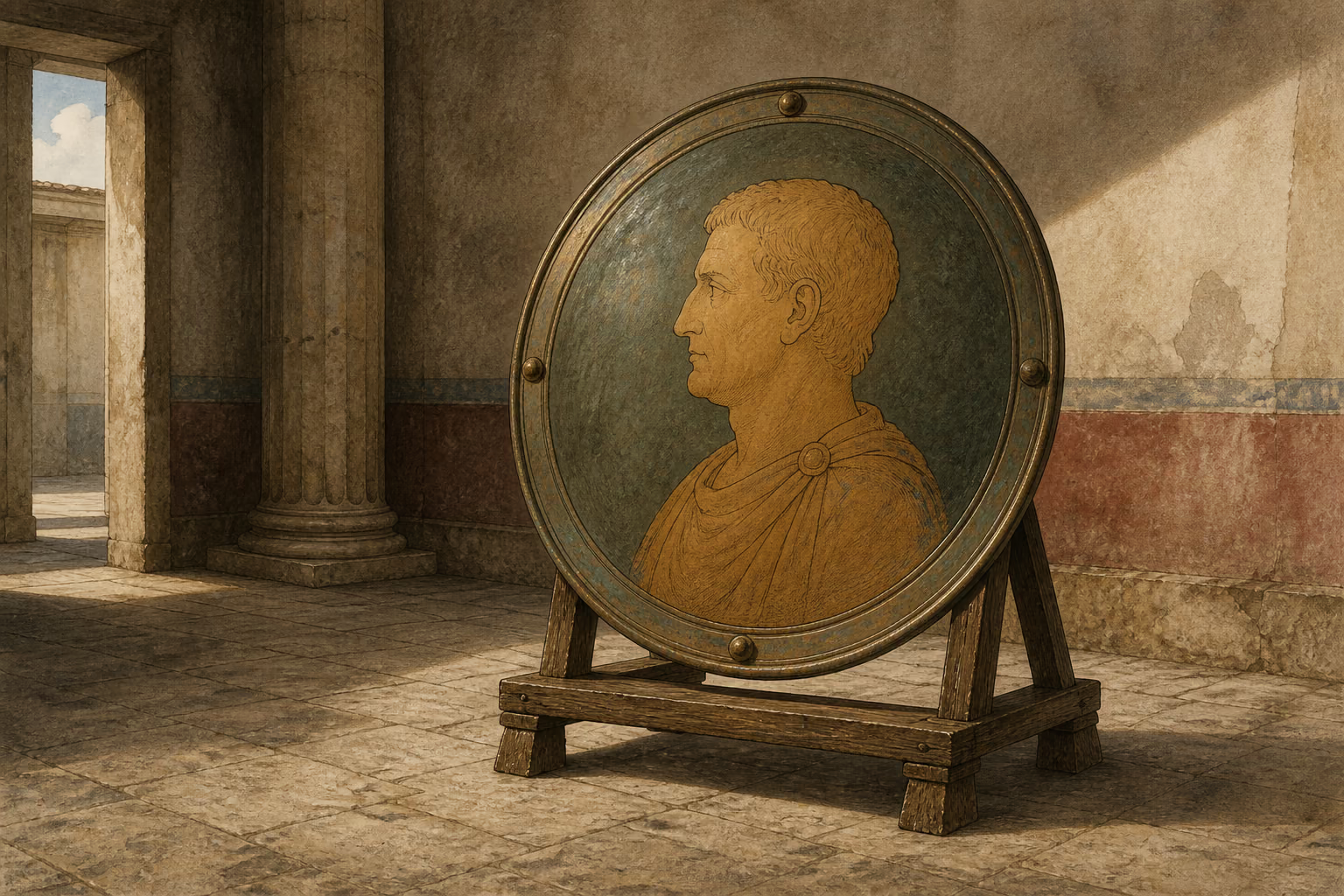
Verum clupeos in sacro vel publico dicare privatim primus instituit, ut reperio, Appius Claudius [qui consul cum P. Servilio fuit anno urbis CCLVIIII]. posuit enim in Bellonae aede maiores suos, placuitque in excelso spectari in titulos honorum legi, decora res, utique si liberum turba parvulis imaginibus ceu nidum aliquem subolis pariter ostendat, quales clupeos nemo non gaudens favensque aspicit. post eum M. Aemilius collega in consulatu Quinti Lutatii non in basilica modo Aemilia, verum et domi suae posuit, id quoque Martio exemplo. scutis enim, qualibus apud Troiam pugnatum est, continebantur imagines, unde et nomen habuere clupeorum, non, ut perversa grammaticorum suptilitas voluit, a cluendo. origo plena virtutis, faciem reddi in scuto cuiusque, qui fuerit usus illo. Poeni ex auro factitavere et clupeos et imagines secumque vexere. in castris certe captis talem Hasdrubalis invenit Marcius, Scipionum in Hispania ultor, isque clupeus supra fores Capitolinae aedis usque ad incendium primum fuit. maiorum quidem nostrorum tanta securitas in ea re adnotatur, ut L. Manlio, Q. Fulvio cos. anno urbis DLXXV M. Aufidius tutelae Capitolio redemptor docuerit patres argenteos esse clupeos, qui pro aereis per aliquot iam lustra adsignabantur.
De picturae initiis incerta nec instituti operis quaestio est. Aegyptii sex milibus annorum aput ipsos inventam, priusquam in Graeciam transiret, adfirmant, vana praedicatione, ut palam est; Graeci autem alii Sicyone, alii aput Corinthios repertam, omnes umbra hominis lineis circumducta, itaque primam talem, secundam singulis coloribus et monochromaton dictam, postquam operosior inventa erat, duratque talis etiam nunc. inventam liniarem a Philocle Aegyptio vel Cleanthe Corinthio primi exercuere Aridices Corinthius et Telephanes Sicyonius, sine ullo etiamnum hi colore, iam tamen spargentes linias intus. ideo et quos pinxere adscribere institutum. primus inlevit eas colore testae, ut ferunt, tritae Ecphantus Corinthius. hunc eodem nomine alium fuisse quam tradit Cornelius Nepos secutum in Italiam Damaratum, Tarquinii Prisci regis Romani patrem, fugientem a Corintho tyranni iniurias Cypseli, mox docebimus.
Iam enim absoluta erat pictura etiam in Italia. exstant certe hodieque antiquiores urbe picturae Ardeae in aedibus sacris, quibus equidem nullas aeque miror, tam longo aevo durantes in orbitate tecti veluti recentes. similiter Lanivi, ubi Atalante et Helena comminus pictae sunt nudae ab eodem artifice, utraque excellentissima forma, sed altera ut virgo, ne ruinis quidem templi concussae. Gains princeps tollere eas conatus est libidine accensus, si tectorii natura permisisset. durant et Caere antiquiores et ipsae, fatebiturque quisquis eas diligenter aestimaverit nullam artium celerius consummatam, cum Iliacis temporibus non fuisse eam appareat.
English · Bostock & Riley 1855–57
So far as I can learn, Appius Claudius, who was consul with P. Servilius, in the year of the City, 259, was the first to dedicate shields in honour of his own family in a sacred or public place. For he placed representations of his ancestors in the Temple of Bellona, and desired that they might be erected in an elevated spot, so as to be seen, and the inscriptions reciting their honours read. A truly graceful device; more particularly when a multitude of children, represented by so many tiny figures, displays those germs, as it were, which are destined to continue the line: shields such as these, no one can look at without a feeling of pleasure and lively interest.
More recently, M. Æmilius, who was consul with Quintus Lutatius, not only erected these shields in the Æmilian Basilica, but in his own house as well; in doing which he followed a truly warlike example. For, in fact, these portraits were represented on bucklers, similar to those used in the Trojan War; and hence it is that these shields received their present name of “clypei,” and not, as the perverse subtleties of the grammarians will have it, from the word “cluo.” It was an abundant motive for valour, when upon each shield was represented the features of him who had borne it. The Carthaginians used to make both their bucklers and their portraits of gold, and to carry them with them in the camp: at all events, Marcius, the avenger of the Scipios in Spain, found one of this kind on capturing the camp of Hasdrubal, and it was this same buckler that remained suspended over the gate of the Capitoline Temple until the time when it was first burnt. Indeed, in the days of our ancestors, so assured was the safety of these shields, that it has been a subject of remark, that in the consulship of L. Manlius and Q. Fulvius, in the year of the City, 575, M. Aufidius, who had given security for the safety of the Capitol, informed the senate that the bucklers there which for some lustra had been assessed as copper, were in reality made of silver.
We have no certain knowledge as to the commencement of the art of painting, nor does this enquiry fall under our consideration. The Egyptians assert that it was invented among themselves, six thousand years before it passed into Greece; a vain boast, it is very evident. As to the Greeks, some say that it was invented at Sicyon, others at Corinth; but they all agree that it originated in tracing lines round the human shadow. The first stage of the art, they say, was this, the second stage being the employment of single colours; a process known as “monochromaton,” after it had become more complicated, and which is still in use at the present day. The invention of line-drawing has been assigned to Philocles, the Egyptian, or to Cleanthes of Corinth. The first who practised this line-drawing were Aridices, the Corinthian, and Telephanes, the Sicyonian, artists who, without making use of any colours, shaded the interior of the outline by drawing lines; hence, it was the custom with them to add to the picture the name of the person represented. Ecphantus, the Corinthian, was the first to employ colours upon these pictures, made, it is said, of broken earthenware, reduced to powder. We shall show on a future occasion, that it was a different artist of the same name, who, according to Cornelius Nepos, came to Italy with Demaratus, the father of the Roman king, Tarquinius Priscus, on his flight from Corinth to escape the violence of the tyrant Cypselus.
But already, in fact, had the art of painting been perfectly developed in Italy. At all events, there are extant in the temples at Ardea, at this day, paintings of greater antiquity than Rome itself; in which, in my opinion, nothing is more marvellous, than that they should have remained so long unprotected by a roof, and yet preserving their freshness. At Lanuvium, too, it is the same, where we see an Atalanta and a Helena, without drapery, close together, and painted by the same artist. They are both of the greatest beauty, the former being evidently the figure of a virgin, and they still remain uninjured, though the temple is in ruins. The Emperor Caius, inflamed with lustfulness, attempted to have them removed, but the nature of the plaster would not admit of it. There are in existence at Cære, some paintings of a still higher antiquity. Whoever carefully examines them, will be forced to admit that no art has arrived more speedily at perfection, seeing that it evidently was not in existence at the time of the Trojan War.