LIBER XXXV · CAPUT 8
THE AGE OF PAINTING; WITH THE NAMES OF THE MORE CELEBRATED WORKS AND ARTISTS, FOUR HUNDRED AND FIVE IN NUMBER
Latine · Mayhoff 1906
Nunc celebres in ea arte quam maxima brevitate percurram, neque enim instituti operis est talis executio; itaque quosdam vel in transcursu et in aliorum mentione obiter nominasse satis erit, exceptis operum claritatibus quae et ipsa conveniet attingi, sive exstant sive intercidere.
Non constat sibi in hac parte Graecorum diligentia multas post olympiadas celebrando pictores quam statuarios ac toreutas, primumque olympiade LXXXX, cum et Phidian ipsum initio pictorem fuisse tradatur clipeumque Athenis ab eo pictum, praeterea in confesso sit LXXX tertia fuisse fratrem eius Panaenum, qui clipeum intus pinxit Elide Minervae, quam fecerat Colotes, discipulus Phidiae et ei in faciendo love Olympio adiutor. quid? quod in confesso perinde est Bularchi pictoris tabulam, in qua erat Magnetum proelium, a Candaule, rege Lydiae Heraclidarum novissimo, qui et Myrsilus vocitatus est, repensam auro? tanta iam dignatio picturae erat. circa Romuli id aetatem accident necesse est, etenim duode- vicensima olympiade interiit Candaules aut, ut quidam tradunt, eodem anno quo Romulus, nisi fallor, manifesta iam tunc claritate artis, adeo absolutione. quod si recipi necesse est, simul apparet multo vetustiora principia eosque, qui monochromatis pinxerint, quorum aetas non traditur, aliquanto ante fuisse, Hygiaenontem, Dinian, Charmadan et, qui primus in pictura marem a femina discreverit, Eumarum Atheniensem, figuras omnes imitari ausum, quique inventa eius excoluerit, Cimonem Cleonaeum. hic catagrapha invenit, hoc est obliquas imagines, et varie formare voltus, respicientes suspicientesve vel despicientes; articulis membra distinxit, venas protulit, praeterque in vestibus rugas et sinus invenit. Panaenus quidem frater Phidiae etiam proelium Atheniensium adversus Persas apud Marathona factum pinxit. adeo iam colorum usus increbruerat adeoque ars perfecta erat, ut in eo proelio iconicos duces pinxisse tradatur, Atheniensium Miltiadem, Callimachum, Cynaegirum, barbarorum Datim, Artaphernen.
English · Bostock & Riley 1855–57
I shall now proceed to enumerate, as briefly as possible, the more eminent among the painters; it not being consistent with the plan of this work to go into any great lengths of detail. It must suffice therefore, in some cases, to name the artist in a cursory manner only, and with reference to the account given of others; with the exception, of course, of the more famous productions of the pictorial art, whether still in existence or now lost, all of which it will be only right to take some notice of. In this department, the ordinary exactness of the Greeks has been somewhat inconsistent, in placing the painters so many Olympiads after the statuaries and toreutic artists, and the very first of them so late as the ninetieth Olympiad; seeing that Phidias himself is said to have been originally a painter, and that there was a shield at Athens which had been painted by him; in addition to which, it is universally agreed that in the eighty-third Olympiad, his brother Panænus painted, at Elis, the interior of the shield of Minerva, which had been executed by Colotes, a disciple of Phidias and his assistant in the statue of the Olympian Jupiter. And then besides, is it not equally admitted that Candaules, the last Lydian king of the race of the Heraclidæ, very generally known also by the name of Myrsilus, paid its weight in gold for a picture by the painter Bularchus, which represented the battle fought by him with the Magnetes? so great was the estimation in which the art was already held. This circumstance must of necessity have happened about the period of our Romulus; for it was in the eighteenth Olympiad that Candaules perished, or, as some writers say, in the same year as the death of Romulus: a thing which clearly demonstrates that even at that early period the art had already become famous, and had arrived at a state of great perfection.
If, then, we are bound to admit this conclusion, it must be equally evident that the commencement of the art is of much earlier date, and that those artists who painted in monochrome, and whose dates have not been handed down to us, must have flourished at even an anterior period; Hygiænon, namely, Dinias, Charmadas, Eumarus, of Athens, the first who distinguished the sexes in painting, and attempted to imitate every kind of figure; and Cimon of Cleonæ, who improved upon the inventions of Eumarus.
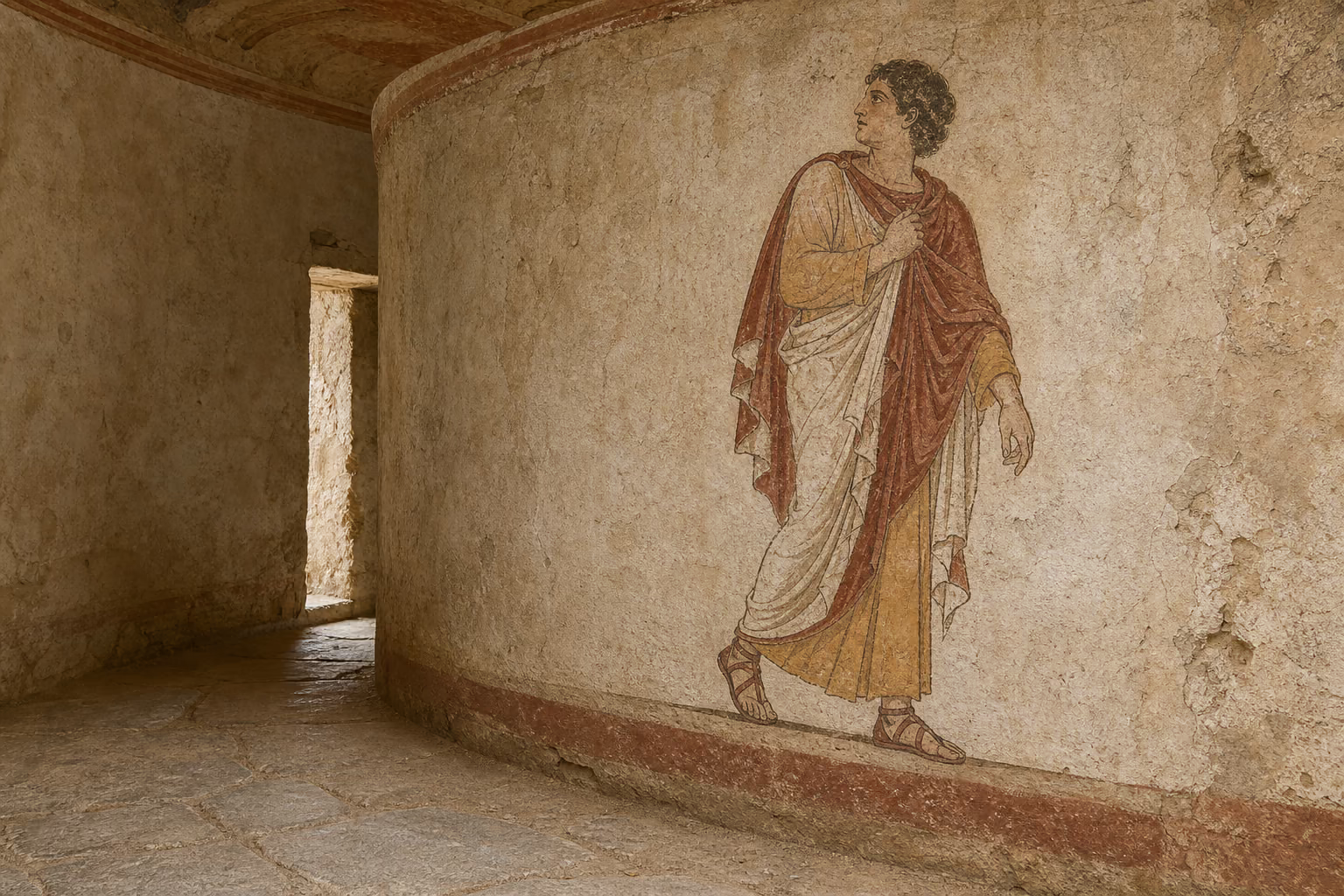
It was this Cimon, too, who first invented foreshortenings, or in other words, oblique views of the figure, and who first learned to vary the features by representing them in the various attitudes of looking backwards, upwards, or downwards. It was he, too, who first marked the articulations of the limbs, indicated the veins, and gave the natural folds and sinuosities to drapery. Panænus, too, the brother of Phidias, even executed a painting of the battle fought by the Athenians with the Persians at Marathon: so common, indeed, had the employment of colours become, and to such a state of perfection had the art arrived, that he was able to represent, it is said, the portraits of the various generals who commanded at that battle, Miltiades, Callimachus, and Cynægirus, on the side of the Athenians, and, on that of the barbarians, Datis and Artaphernes.