LIBER XXXVI · CAPUT 1
LUXURY DISPLAYED IN THE USE OF VARIOUS KINDS OF MARBLE
Latine · Mayhoff 1906
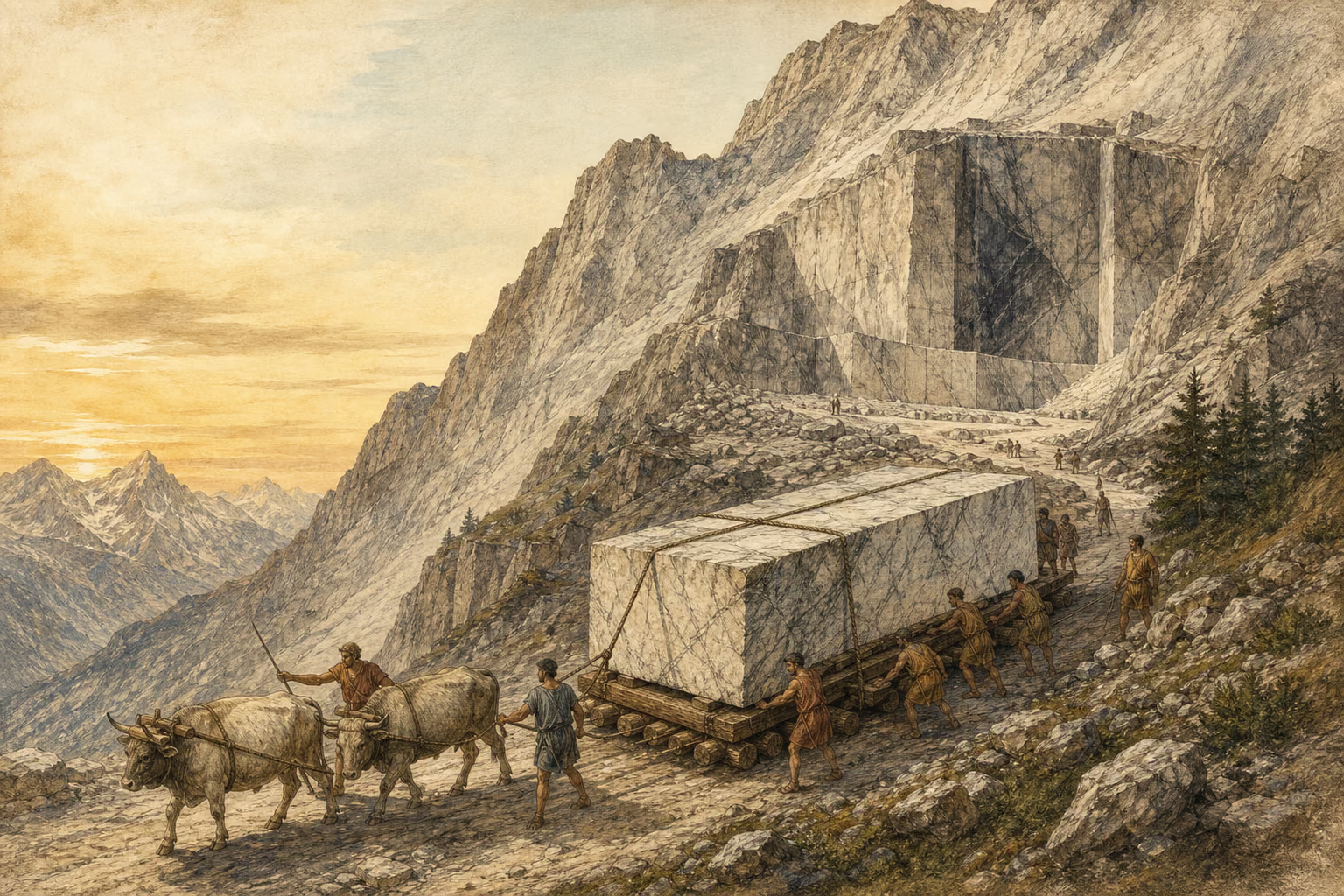
Lapidum natura restat, hoc est praecipua morum insania, etiam ut gemmae cum sucinis atque crystallinis murrinisque sileantur. omnia namque, quae usque ad hoc volumen tractavimus, hominum genita causa videri possunt: montes natura sibi fecerat ut quasdam compages telluris visceribus densandis, simul ad fluminum impetus domandos fluctusque frangendos ac minime quietas partes coercendas durissima sui materia. caedimus hos trahimusque nulla alia quam deliciarum causa, quos transcendisse quoque mirum fuit. in portento prope maiores habuere Alpis ab Hannibale exsuperatas et postea a Cimbris: nunc ipsae caeduntur in mille genera marmorum. promunturia aperiuntur mari, et rerum natura agitur in planum; evehimus ea, quae separandis gentibus pro terminis constituta erant, navesque marmorum causa fiunt, ac per fluctus, saevissimam rerum naturae partem, huc illuc portantur iuga, maiore etiamnum venia quam cum ad frigidos potus vas petitur in nubila caeloque proximae rupes cavantur, ut bibatur glacie. secum quisque cogitet, et quae pretia horum audiat, quas vehi trahique moles videat, et quam sine iis multorum sit beatior vita. ista facere, immo verius pati mortales quos ob usus quasve ad voluptates alias nisi ut inter maculas lapidum iaceant, ceu vero non tenebris noctium, dimidia parte vitae cuiusque, gaudia haec auferentibus!
Ingens ista reputantem subit etiam antiquitatis rubor. exstant censoriae leges Claudianae in cenis glires et alia dictu minora adponi vetantes: marmora invehi, maria huis rei causa transiri quae vetaret, lex nulla lata est.
English · Bostock & Riley 1855–57
It now remains for us to speak of stones, or, in other words, the leading folly of the day; to say nothing at all of our taste for gems and amber, crystal and murrhine vases. For everything of which we have previously treated, down to the present Book, may, by some possibility or other, have the appearance of having been created for the sake of man: but as to the mountains, Nature has made those for herself, as a kind of bulwark for keeping together the bowels of the earth; as also for the purpose of curbing the violence of the rivers, of breaking the waves of the sea, and so, by opposing to them the very hardest of her materials, putting a check upon those elements which are never at rest. And yet we must hew down these mountains, forsooth, and carry them off; and this, for no other reason than to gratify our luxurious inclinations: heights which in former days it was reckoned a miracle even to have crossed!
Our forefathers regarded as a prodigy the passage of the Alps, first by Hannibal, and, more recently, by the Cimbri: but at the present day, these very mountains are cut asunder to yield us a thousand different marbles, promontories are thrown open to the sea, and the face of Nature is being everywhere reduced to a level. We now carry away the barriers that were destined for the separation of one nation from another; we construct ships for the transport of our marbles; and, amid the waves, the most boisterous element of Nature, we convey the summits of the mountains to and fro: a thing, however, that is even less unpardonable than to go on the search amid the regions of the clouds for vessels with which to cool our draughts, and to excavate rocks, towering to the very heavens, in order that we may have the satisfaction of drinking from ice! Let each reflect, when he hears of the high prices set upon these things, when he sees these ponderous masses carted and carried away, how many there are whose life is passed far more happily without them. For what utility or for what so-called pleasure do mortals make themselves the agents, or, more truly speaking, the victims of such undertakings, except in order that others may take their repose in the midst of variegated stones? Just as though too, the shades of night, which occupy one half of each man’s existence, would forbear to curtail these imaginary delights.
Indeed, while making these reflections, one cannot but feel ashamed of the men of ancient times even. There are still in existence censorial laws, which forbid the kernels in the neck of swine to be served at table, dormice too, and other things too trifling to mention: and yet there has been no law passed, forbidding marble to be imported, or the seas to be traversed in search of it!