LIBER XXXVI · CAPUT 10
THE OBELISK WHICH SERVES AS A DIAL IN THE CAMPUS MARTIUS
Latine · Mayhoff 1906
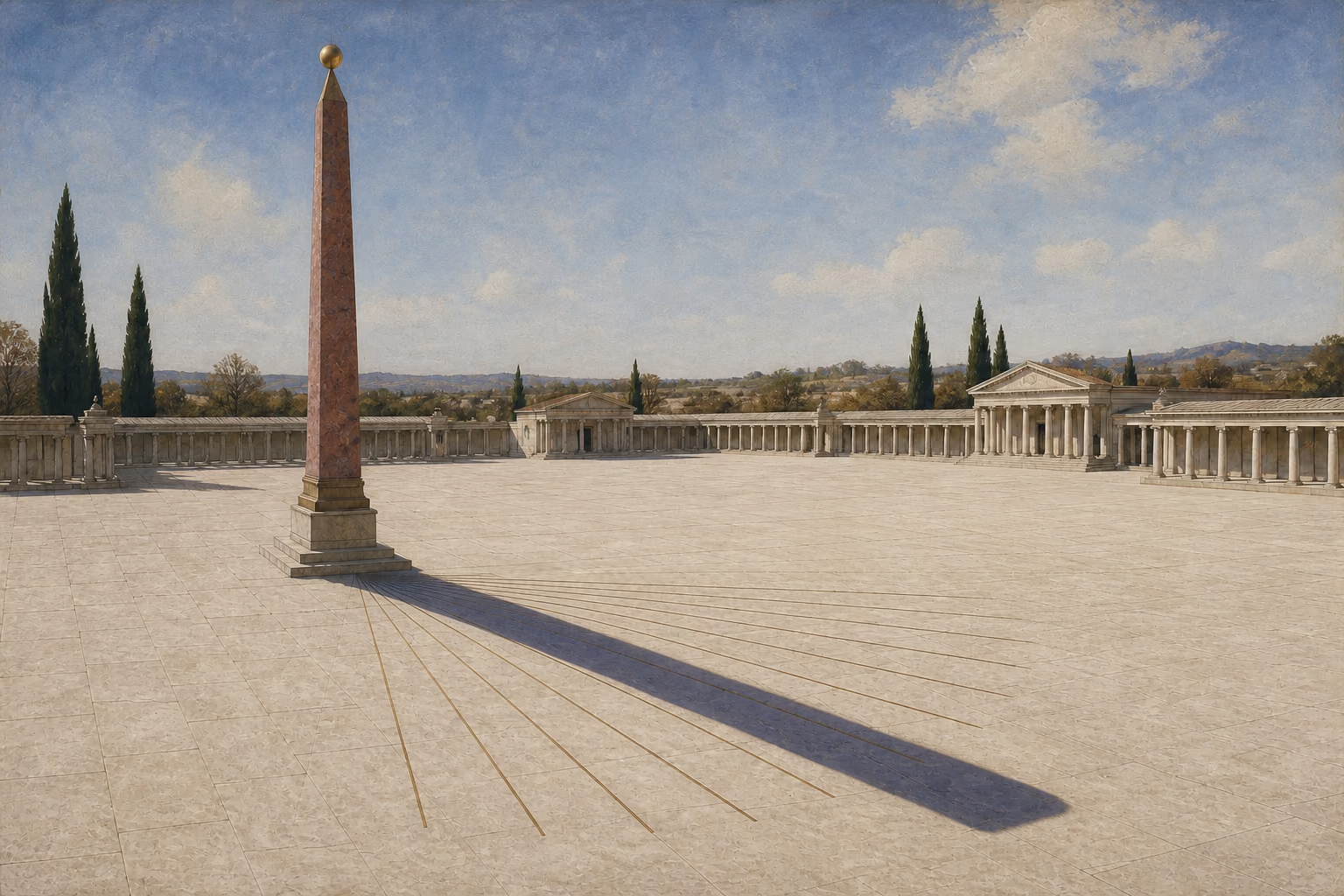
Ei, qui est in campo, divus Augustus addidit mirabilem usum ad deprendendas solis umbras dierumque ac noctium ita magnitudines, strato lapide ad longitudinem obelisci, cui par fieret umbra brumae confectae die sexta hora paulatimque per regulas, quae sunt ex aere inclusae, singulis diebus decresceret ac rursus augesceret, digna cognitu res, ingenio Facundi Novi mathematici. is apici auratam pilam addidit, cuius vertice umbra colligeretur in se ipsam, alias enormiter iaculante apice, ratione, ut ferunt, a capite hominis intellecta. haec observatio xxx iam fere annis non congruit, sive solis ipsius dissono cursu et caeli aliqua ratione mutato sive universa tellure a centro suo aliquid emota (ut deprehendi et aliis in locis accipio) sive urbis tremoribus ibi tantum gnomone intorto sive inundationibus Tiberis sedimento molis facto, quamquam ad altitudinem inpositi oneris in terram quoque dicuntur acta fundamenta.—
English · Bostock & Riley 1855–57
The one that has been erected in the Campus Martius has been applied to a singular purpose by the late Emperor Augustus; that of marking the shadows projected by the sun, and so measuring the length of the days and nights. With this object, a stone pavement was laid, the extreme length of which corresponded exactly with the length of the shadow thrown by the obelisk at the sixth hour on the day of the winter solstice. After this period, the shadow would go on, day by day, gradually decreasing, and then again would as gradually increase, correspondingly with certain lines of brass that were inserted in the stone; a device well deserving to be known, and due to the ingenuity of Facundus Novus, the mathematician. Upon the apex of the obelisk he placed a gilded ball, in order that the shadow of the summit might be condensed and agglomerated, and so prevent the shadow of the apex itself from running to a fine point of enormous extent; the plan being first suggested to him, it is said, by the shadow that is projected by the human head. For nearly the last thirty years, however, the observations derived from this dial have been found not to agree: whether it is that the sun itself has changed its course in consequence of some derangement of the heavenly system; or whether that the whole earth has been in some degree displaced from its centre, a thing that, I have heard say, has been remarked in other places as well; or whether that some earthquake, confined to this city only, has wrenched the dial from its original position; or whether it is that in consequence of the inundations of the Tiber, the foundations of the mass have subsided, in spite of the general assertion that they are sunk as deep into the earth as the obelisk erected upon them is high.