LIBER XXXVI · CAPUT 9
OBELISKS
Latine · Mayhoff 1906
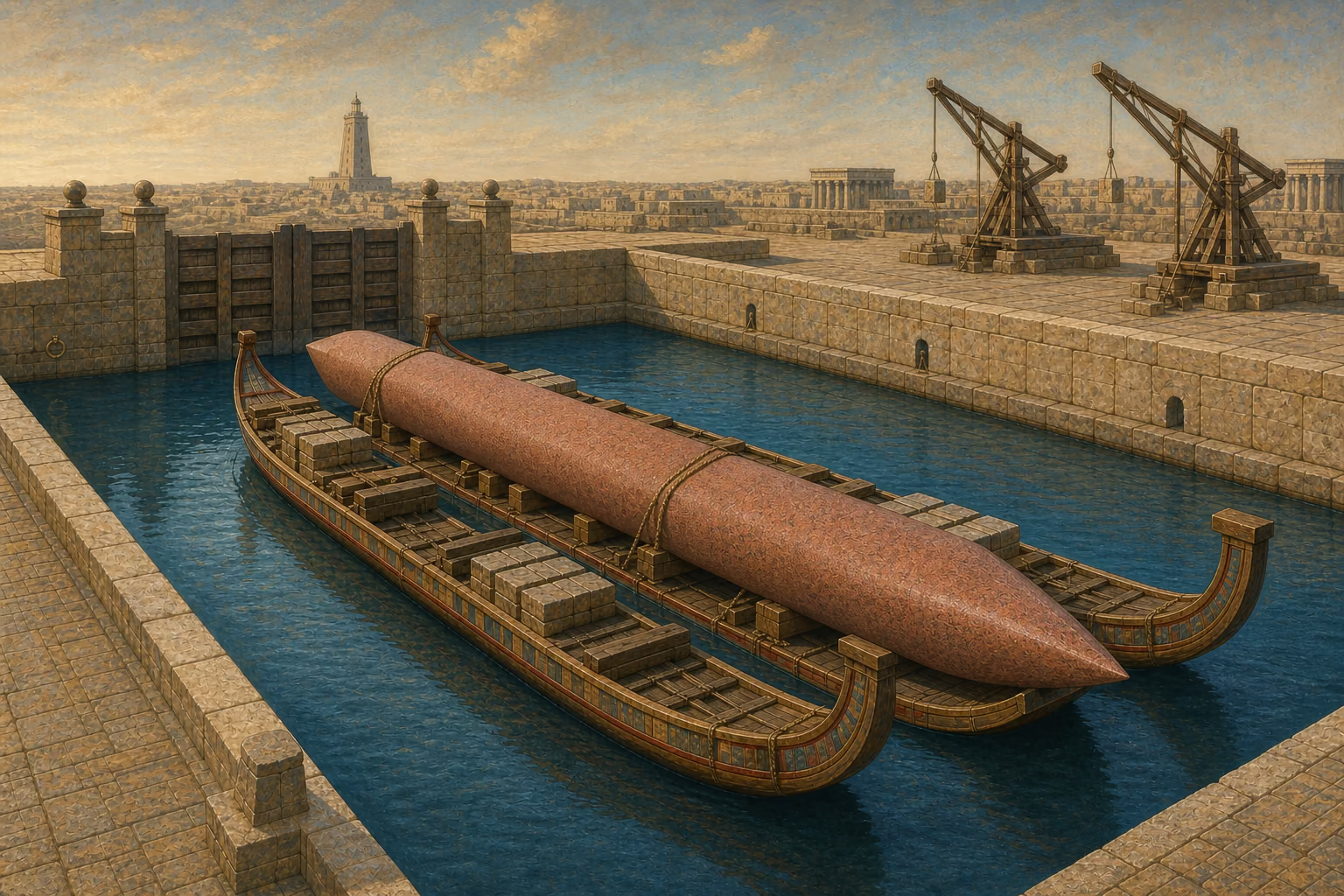
opus id fecisse dicuntur CXX hominum. ipse rex, cum surrecturus esset verereturque, ne machinae ponderi non sufficerent, quo maius periculum curae artificum denuntiaret, filium suum adalligavit cacumini, ut salus eius apud molientes prodesset et lapidi. hac admiratione operis effectum est, ut, cum oppidum id expugnaret Cambyses rex ventumque esset incendiis ad crepidines obelisci, extingui iuberet molis reverentia qui nullam habuerat urbis. sunt et alii duo, unus a Zmarre positus, alter a Phio sine notis, quadragenum octonum cubitorum. Alexandriae statuit unum Ptolemaeus Philadelphus octoginta cubitorum. exciderat eum Necthebis rex purum, maiusque opus in devehendo statuendove inventum est quam in excidendo. a Satyro architecto aliqui devectum tradunt rate, Callixenus a Phoenice, fossa perducto usque ad iacentem obeliscum Nilo, navesque duas in latitudinem patulas pedalibus ex eodem lapide ad rationem geminati per duplicem mensuram ponderis oneratas ita, ut subirent obeliscum pendentem extremitatibus suis in ripis utrimque; postea egestis laterculis adlevatas naves excepisse onus; statutum autem in sex talis e monte eodem, et artificem donatum talentis L. hic fruit in Arsinoeo positus a rege supra dicto munus amoris, coniuge eademque sorore Arsinoe. inde eum navalibus incommodum Maximus quidam praefectus Aegypti transtulit in forum, reciso cacumine, dum vult fastigium addere auratum, quod postea omisit. et alii duo sunt Alexandreae ad portum in Caesaris templo, quos excidit Mesphres rex, quadragenum binum cubitorum.
Super omnia accessit difficultas mari Romam devehendi, spectatis admodum navibus. divus Augustus eam, quae priorem advexerat, miraculi gratia Puteolis perpetuis navalibus dicaverat; incendio consumpta ea est. divus Claudius aliquot per annos adservatam, qua C. Caesar inportaverat, omnibus quae umquam in mari visa sunt mirabiliorem, in ipsa turribus Puteolis e pulvere exaedificatis, perductam Ostiam portus gratia mersit. alia ex hoc cura navium, quae Tiberi subvehant, quo experimento patuit non minus aquarum huic amni esse quam Nilo. is autem obeliscus, quem divus Augustus in circo magno statuit, excisus est a rege Psemetnepserphreo, quo regnante Pythagoras in Aegypto fuit, LXXXV pedum et dodrantis praeter basim eiusdem lapidis; is vero, quem in campo Martio, novem pedibus minor, a Sesothide. inscripti ambo rerum naturae interpretationem Aegyptiorum philosophia continent.—
English · Bostock & Riley 1855–57
It is said that one hundred and twenty thousand men were employed upon this work; and that the king, when it was on the point of being elevated, being apprehensive that the machinery employed might not prove strong enough for the weight, with the view of increasing the peril that might be entailed by due want of precaution on the part of the workmen, had his own son fastened to the summit; in order that the safety of the prince might at the same time ensure the safety of the mass of stone. It was in his admiration of this work, that, when King Cambyses took the city by storm, and the conflagration had already reached the very foot of the obelisk, he ordered the fire to be extinguished; he entertaining a respect for this stupendous erection which he had not entertained for the city itself.
There are also two other obelisks, one of them erected by Zmarres, and the other by Phius; both of them without inscriptions, and forty-eight cubits in height. Ptolemæus Philadelphus had one erected at Alexandria, eighty cubits high, which had been prepared by order of King Necthebis: it was without any inscription, and cost far more trouble in its carriage and elevation, than had been originally expended in quarrying it. Some writers inform us that it was conveyed on a raft, under the inspection of the architect Satyrus; but Callixenus gives the name of Phœnix. For this purpose, a canal was dug from the river Nilus to the spot where the obelisk lay; and two broad vessels, laden with blocks of similar stone a foot square, the cargo of each amounting to double the size, and consequently double the weight, of the obelisk, were brought beneath it; the extremities, of the obelisk remaining supported by the opposite sides of the canal. The blocks of stone were then removed, and the vessels, being thus gradually lightened, received their burden. It was erected upon a basis of six square blocks, quarried from the same mountain, and the artist was rewarded with the sum of fifty talents. This obelisk was placed by the king above-mentioned in the Arsinoœum, in testimony of his affection for his wife and sister Arsinoë. At a later period, as it was found to be an inconvenience to the docks, Maximus, the then præfect of Egypt, had it transferred to the Forum there, after removing the summit for the purpose of substituting a gilded point; an intention which was ultimately abandoned.
There are two other obelisks, which were in Cæsar’s Temple at Alexandria, near the harbour there, forty-two cubits in height, and originally hewn by order of King Mesphres. But the most difficult enterprise of all, was the carriage of these obelisks by sea to Rome, in vessels which excited the greatest admiration. Indeed, the late Emperor Augustus consecrated the one which brought over the first obelisk, as a lasting memorial of this marvellous undertaking, in the docks at Puteoli; but it was destroyed by fire. As to the one in which, by order of the Emperor Caius, the other obelisk had been transported to Rome, after having been preserved for some years and looked upon as the most wonderful construction ever beheld upon the seas, it was brought to Ostia, by order of the late Emperor Claudius; and towers of Puteolan earth being first erected upon it, it was sunk for the construction of the harbour which he was making there. And then, besides, there was the necessity of constructing other vessels to carry these obelisks up the Tiber; by which it became practically ascertained, that the depth of water in that river is not less than that of the river Nilus.
The obelisk that was erected by the late Emperor Augustus in the Great Circus, was originally quarried by order of King Semenpserteus, in whose reign it was that Pythagoras visited Egypt. It is eighty-five feet and three quarters in height, exclusive of the base, which is a part of the same stone. The one that he erected in the Campus Martius, is nine feet less in height, and was originally made by order of Sesothis. They are both of them covered with inscriptions, which interpret the operations of Nature according to the philosophy of the Egyptians.