LIBER XXXVI · CAPUT 8
LYGDINUS; CORALLITIC STONE; STONE OF ALABANDA; STONE OF THEBAIS; STONE OF SYENE
Latine · Mayhoff 1906
hunc aliqui lapidem alabastriten vocant, quem cavant et ad vasa unguentaria, quoniam optume servare incorrupta dicatur. idem et ustus emplastris convenit. nascitur circa Thebas Aegyptias et Damascum Syriae. hic ceteris candidior, probatissimus vero in Carmania, mox in India, iam quidem et in Syria Asiaque, vilissimus autem et sine ullo nitore in Cappadocia. probantur quam maxime mellei coloris, in vertices maculosi atque non tralucidi. vitia in iis corneus colos aut candidus et quidquid simile vitro est.
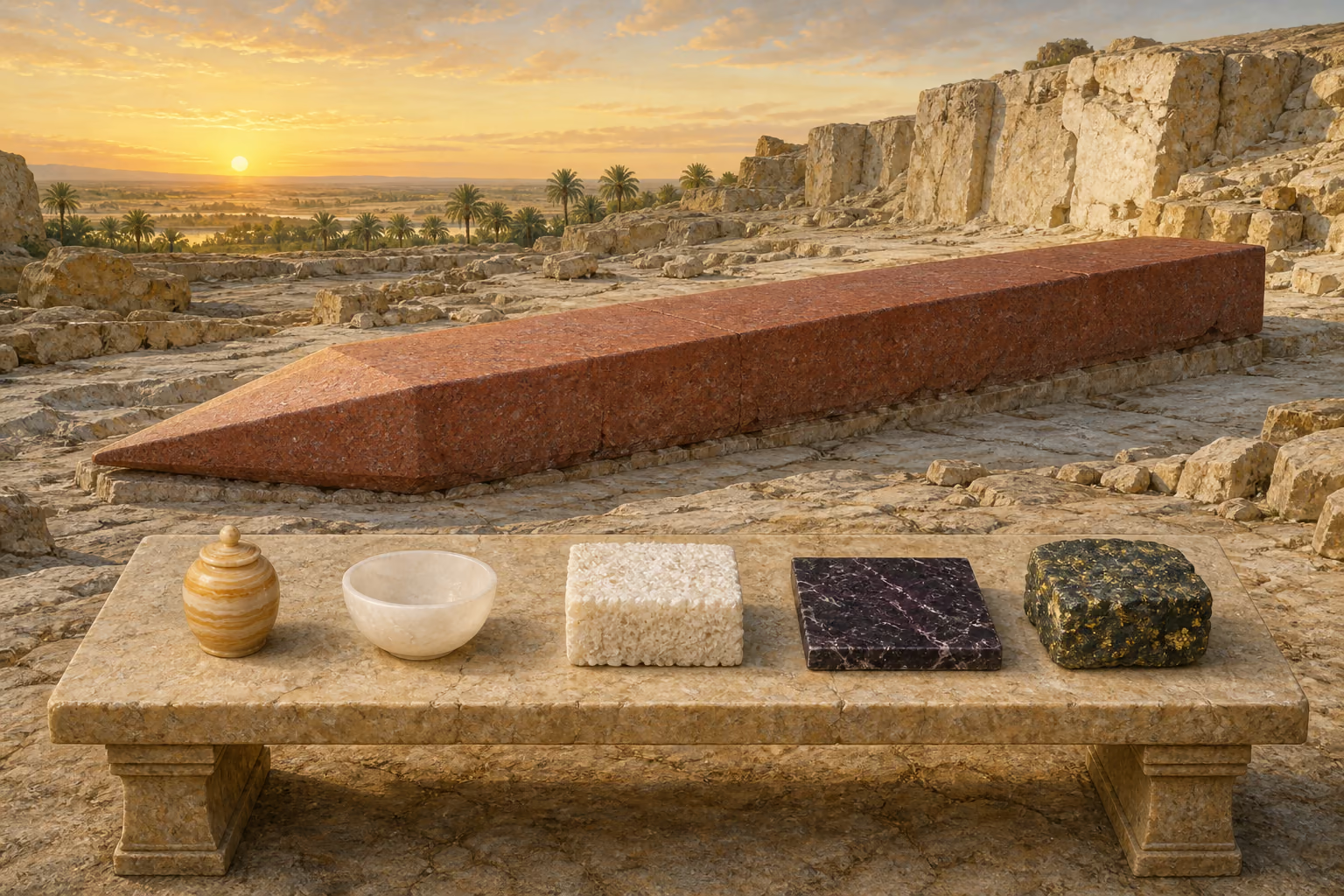
Paulum distare ab eo in unguentorum fide multi existimant lygdinos, in Paro repertos amplitudine qua lances craterasque non excedant, antea ex Arabia tantum advehi solitos, candoris eximii. magnus et duobus contrariae inter se naturae honos, corallitico in Asia reperto mensurae non ultra bina cubita, candore proximo ebori et quadam similitudine. e diverso niger est Alabandicus terrae suae nomine, quamquam et Mileti nascens, ad purpuram tamen magis aspectu declinante. idem liquatur igni funditurque ad usum vitri. Thebaicus lapis interstinctus aureis guttis invenitur in Africae parte Aegypto adscripta, coticulis ad terenda collyria quadam utilitate naturali conveniens, circa Syenen vero Thebaidis syenites, quem antea pyrrhopoecilon vocabant.
Trabes ex eo fecere reges quodam certamine, obeliscos vocantes Solis numini sacratos. radiorum eius argumentum in effigie est, et ita significatur nomine Aegyptio. primus omnium id instituit Mespheres, qui regnabat in Solis urbe, somnio iussus; hoc ipsum inscriptum in eo, etenim scalpturae illae effigiesque quas videmus Aegyptiae sunt litterae. postea et alii excidere reges. statuit eos in supra dicta urbe Sesothes quattuor numero, quadragenum octonum cubitorum longitudine, Rhamsesis autem, quo regnante Ilium captum est, CXXXX cubitorum. idem..... digressis inde, ubi fuit Mnevidis regia, posuit alium, longitudine quidem CXX cubitorum, sed prodigiosa crassitudine, undenis per latera cubitis.
English · Bostock & Riley 1855–57
This stone is called “alabastrites” by some, and is hollowed out into vessels for holding unguents, it having the reputation of preserving them from corruption better than anything else. In a calcined state, it is a good ingredient for plaisters. It is found in the vicinity of Thebes in Egypt and of Damascus in Syria, that of Damascus being whiter than the others. The most esteemed kind, however, is that of Carmania, the next being the produce of India, and then, those of Syria and Asia. The worst in quality is that of Cappadocia, it being utterly destitute of lustre. That which is of a honey colour is the most esteemed, covered with spots curling in whirls, and not transparent. Alabastrites is considered defective, when it is of a white or horn colour, or approaching to glass in appearance.
Little inferior to it for the preservation of unguents, in the opinion of many, is the stone, called “lygdinus,” that is found in Paros, and never of a larger size than to admit of a dish or goblet being made of it. In former times, it was only imported from Arabia, being remarkable for its extreme whiteness.
Great value is placed also upon two other kinds of stone, of quite a contrary nature; corallitic stone, found in Asia, in blocks not more than two cubits in thickness, and of a white somewhat approaching that of ivory, and in some degree resembling it; and Alabandic stone, which, on the other hand, is black, and is so called from the district which produces it: though it is also to be found at Miletus, where, however, it verges somewhat more upon the purple. It admits of being melted by the action of fire, and is fused for the preparation of glass.
Thebaic stone, which is sprinkled all over with spots like gold, is found in Africa, on the side of it which lies adjacent to Egypt; the small hones which it supplies being peculiarly adapted, from their natural properties, for grinding the ingredients used in preparations for the eyes. In the neighbourhood of Syene, too, in Thebais, there is a stone found that is now known as “syenites,” but was formerly called “pyrrhopœcilon.”
Monarchs, too, have entered into a sort of rivalry with one another in forming elongated blocks of this stone, known as “obelisks,” and consecrated to the divinity of the Sun. The blocks had this form given to them in resemblance to the rays of that luminary, which are so called in the Egyptian language.
Mesphres, who reigned in the City of the Sun, was the first who erected one of these obelisks, being warned to do so in a dream; indeed, there is an inscription upon the obelisk to this effect; for the sculptures and figures which we still see engraved thereon are no other than Egyptian letters.
At a later period other kings had these obelisks hewn. Sesosthes erected four of them in the above-named city, forty-eight cubits in height. Rhamsesis, too, who was reigning at the time of the capture of Troy, erected one, a hundred and forty cubits high. Having quitted the spot where the palace of Mnevis stood, this monarch erected another obelisk, one hundred and twenty cubits in height, but of prodigious thickness, the sides being no less than eleven cubits in breadth.