LIBER XXXVI · CAPUT 14
THE TEMPLE OF DIANA AT EPHESUS
Latine · Mayhoff 1906
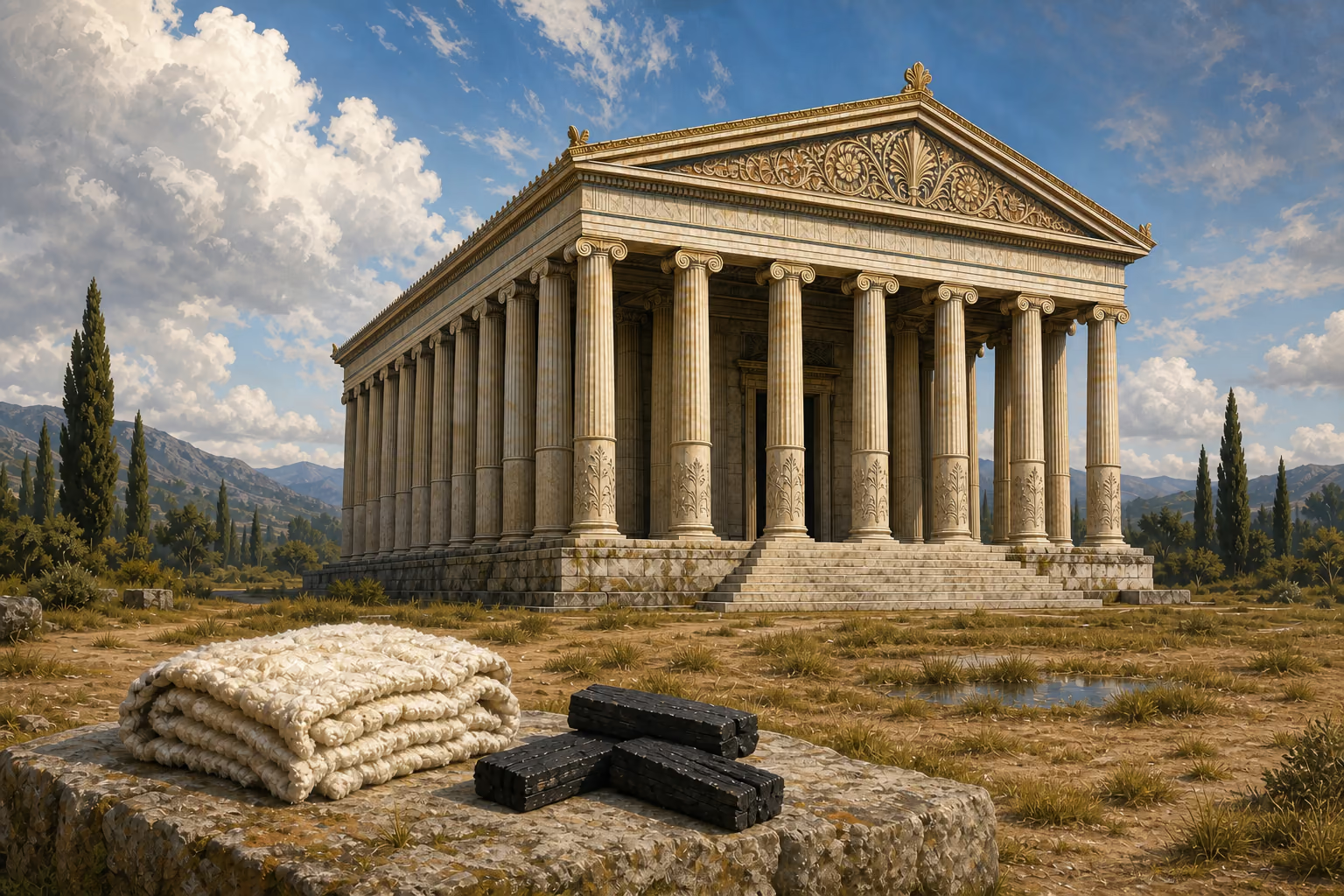
Graecae magnificentiae vera admiratio exstat templum Ephesiae Dianae CXX annis factum a tota Asia. in solo id palustri fecere, ne terrae motus sentiret aut hiatus timeret, rursus ne in lubrico atque instabili fundamenta tantae molis locarentur, calcatis ea substravere carbonibus, dein velleribus lanae. universo templo longitudo est ccccxxv pedum, latitudo ccxxv, columnae CXXVII a singulis regibus factae LX pedum altitudine, ex iis XXXVI caelatae, una a Scopa. operi praefuit Chersiphron architectus. summa miraculi epistylia tantae molis attolli potuisse; id consecutus ille est aeronibus harenae plenis, molli clivo super capita columnarum exaggerato, paulatim exinaniens imos, ut sensim opus in loco sederet. difficillime hoc contigit in limine ipso, quod foribus inponebat; etenim ea maxima moles fuit nec sedit in cubili, anxio artifice mortis destinatione suprema. tradunt in ea cogitatione fessum nocturno tempore in quiete vidisse praesentem deam, cui templum fieret, hortantem, ut viveret: se composuisse lapidem. atque ita postera luce apparuit; pondere ipso correctus videbatur. cetera eius operis ornamenta plurium librorum instar optinent, nihil ad specimen naturae pertinentia.
English · Bostock & Riley 1855–57
The most wonderful monument of Græcian magnificence, and one that merits our genuine admiration, is the Temple of Diana at Ephesus, which took one hundred and twenty years in building, a work in which all Asia joined. A marshy soil was selected for its site, in order that it might not suffer from earthquakes, or the chasms which they produce. On the other hand, again, that the foundations of so vast a pile might not have to rest upon a loose and shifting bed, layers of trodden charcoal were placed beneath, with fleeces covered with wool upon the top of them. The entire length of the temple is four hundred and twenty-five feet, and the breadth two hundred and twenty-five. The columns are one hundred and twenty-seven in number, and sixty feet in height, each of them presented by a different king. Thirty-six of these columns are carved, and one of them by the hand of Scopas. Chersiphron was the architect who presided over the work.
The great marvel in this building is, how such ponderous architraves could possibly have been raised to so great a height. This, however, the architect effected by means of bags filled with sand, which he piled up upon an inclined plane until they reached beyond the capitals of the columns; then, as he gradually emptied the lower bags, the architraves insensibly settled in the places assigned them. But the greatest difficulty of all was found, in laying the lintel which he placed over the entrance-doors. It was an enormous mass of stone, and by no possibility could it be brought to lie level upon the jambs which formed its bed; in consequence of which, the architect was driven to such a state of anxiety and desperation as to contemplate suicide. Wearied and quite worn out by such thoughts as these, during the night, they say, he beheld in a dream the goddess in honour of whom the temple was being erected; who exhorted him to live on, for that she herself had placed the stone in its proper position. And such, in fact, next morning, was found to be the case, the stone apparently having come to the proper level by dint of its own weight. The other decorations of this work would suffice to fill many volumes, but they do not tend in any way to illustrate the works of Nature.