LIBER XXXVI · CAPUT 13
LABYRINTHS
Latine · Mayhoff 1906
Dicamus et labyrinthos, vel portentosissimum humani inpendii opus, sed non, ut existimari potest, falsum. durat etiam nunc in Aegypto in Heracleopolite nomo qui primus factus est ante annos, ut tradunt, III DC a Petesuchi rege sive Tithoe, quamquam Herodotus totum opus XII regum esse dicit novissimique Psammetichi. causas faciendi varie interpretantur, Demoteles regiam Moteridis fuisse, Lyceas sepulchrum Moeridis, plures Soli sacrum id exstructum, quod maxime creditur. hinc utique sumpsisse Daedalum exemplar eius labyrinthi, quem fecit in Creta, non est dubium, sed centensimam tantum portionem eius imitatum, quae itinerum ambages occursusque ac recursus inexplicabiles continet, non—ut in pavimentis puerorumve ludicris campestribus videmus—brevi lacinia milia passuum plura ambulationis continentem, sed crebris foribus inditis ad fallendos occursus redeundumque in errores eosdem. secundus hic fuit ab Aegyptio labyrinthus, tertius in Lemno, quartus in Italia, omnes lapide polito fornicibus tecti, Aegyptius, quod miror equidem, introitu lapidis e Paro columnisque, reliqua e syenite molibus compositis, quas dissolvere ne saecula quidem possint, adiuvantibus Heracleopolitis, quod opus invisum mire spectavere.
Positionem operis eius singulasque partes enarrare non est, cum sit in regiones divisum atque praefecturas, quas vocant nomos, XXI nominibus eorum totidem vastis domibus adtributis, praeterea templa omnium Aegypti deorum contineat superque Nemesis XL aediculis incluserit pyramides complures quadragenarum ulnarum senas radice ἀρούρας optinentes. fessi iam eundo perveniunt ad viarum illum inexplicabilem errorem, quin et cenacula clivis excelsa, porticusque descenduntur nonagenis gradibus; intus columnae porphyrite lapide, deorum simulacra, regum statuae, monstrificae effigies. quarundam domuum talis est situs, ut adaperientibus fores tonitrum intus terribile existat, maiore autem in parte transitus est per tenebras. aliae rursus extra murum labyrinthi aedificiorum moles; pteron appellant. inde aliae perfossis cuniculis subterraneae domus. refecit unus omnino pauca ibi Chaeremon, spado Necthebis regis, D ante Alexandrum Magnum annis. id quoque traditur, fulsisse trabibus spinae oleo incoctae, dumin fornices quadrati lapides adsurgerent.
Et de Cretico labyrintho satis dictum est. Lemnius similis illi columnis tantum CL memorabilior fuit, quarum in officina turbines ita librati pependerunt, ut puero circumagente tornarentur. architecti fecere Zmilis et Rhoecus et Theodorus indigenae. exstantque adhuc reliquiae eius, cum Cretici Italicique nulla vestigia exstent. namque et Italicum dici convenit, quem fecit sibi Porsina, rex Etruriae, sepulchri causa, simul ut externorum regum vanitas quoque Italis superetur. sed cum excedat omnia fabulositas, utemur ipsius M. Varronis in expositione ea verbis: Sepultus sub urbe Clusio, in quo loco monimentum reliquit lapide quadrato quadratum, singula latera pedum tricenum, alta quinquagenum. in qua basi quadrata intus labyrinthum inextricabile, quo si quis introierit sine glomere lini, exitum invenire nequeat. supra id quadratum pyramides stant quinque, quattuor in angulis et in medio una, imae latae pedum quinum septuagenum, altae centenumquinquagenum, ita fastigatae, ut in summo orbis aeneus et petasus unus omnibus sit inpositus, ex quo pendeant exapta catenis tintinabula, quae vento agitata longe sonitus referant, ut Dodonae olim factum. supra quem orbem quattuor pyramides insuper singulae stant altae pedum centenum. supra quas uno solo quinque pyramides. quarum altitudinem Varronem puduit adicere; fabulae Etruscae tradunt eandem fuisse quam totius operis ad eas, vesana dementia, quaesisse gloriam inpendio nulli profuturo, praeterea fatigasse regni vires, ut tamen laus maior artificis esset.
Legitur et pensilis hortus, immo vero totum oppidum Aegyptiae Thebae, exercitus armatos subter educere solitis regibus nullo oppidanorum sentiente; etiamnum hoc minus mirum quam quod flumine medium oppidum interfluente. quae si fuissent, non dubium est Homerum dicturum fuisse, cum centum portas ibi praedicaret.
English · Bostock & Riley 1855–57
We must speak also of the Labyrinths, the most stupendous works, perhaps, on which mankind has expended its labours; and not for chimerical purposes, merely, as might possibly be supposed.
There is still in Egypt, in the Nome of Heracleopolites, a labyrinth, which was the first constructed, three thousand six hundred years ago, they say, by King Petesuchis or Tithöes: although, according to Herodotus, the entire work was the production of no less than twelve kings, the last of whom was Psammetichus. As to the purpose for which it was built, there are various opinions: Demoteles says that it was the palace of King Moteris, and Lyceas that it was the tomb of Mœris, while many others assert that it was a building consecrated to the Sun, an opinion which mostly prevails.
That Dædalus took this for the model of the Labyrinth which he constructed in Crete, there can be no doubt; though he only reproduced the hundredth part of it, that portion, namely, which encloses circuitous passages, windings, and inextricable galleries which lead to and fro. We must not, comparing this last to what we see delineated on our mosaic pavements, or to the mazes formed in the fields for the amusement of children, suppose it to be a narrow promenade along which we may walk for many miles together; but we must picture to ourselves a building filled with numerous doors, and galleries which continually mislead the visitor, bringing him back, after all his wanderings, to the spot from which he first set out. This Labyrinth is the second, that of Egypt being the first. There is a third in the Isle of Lemnos, and a fourth in Italy.
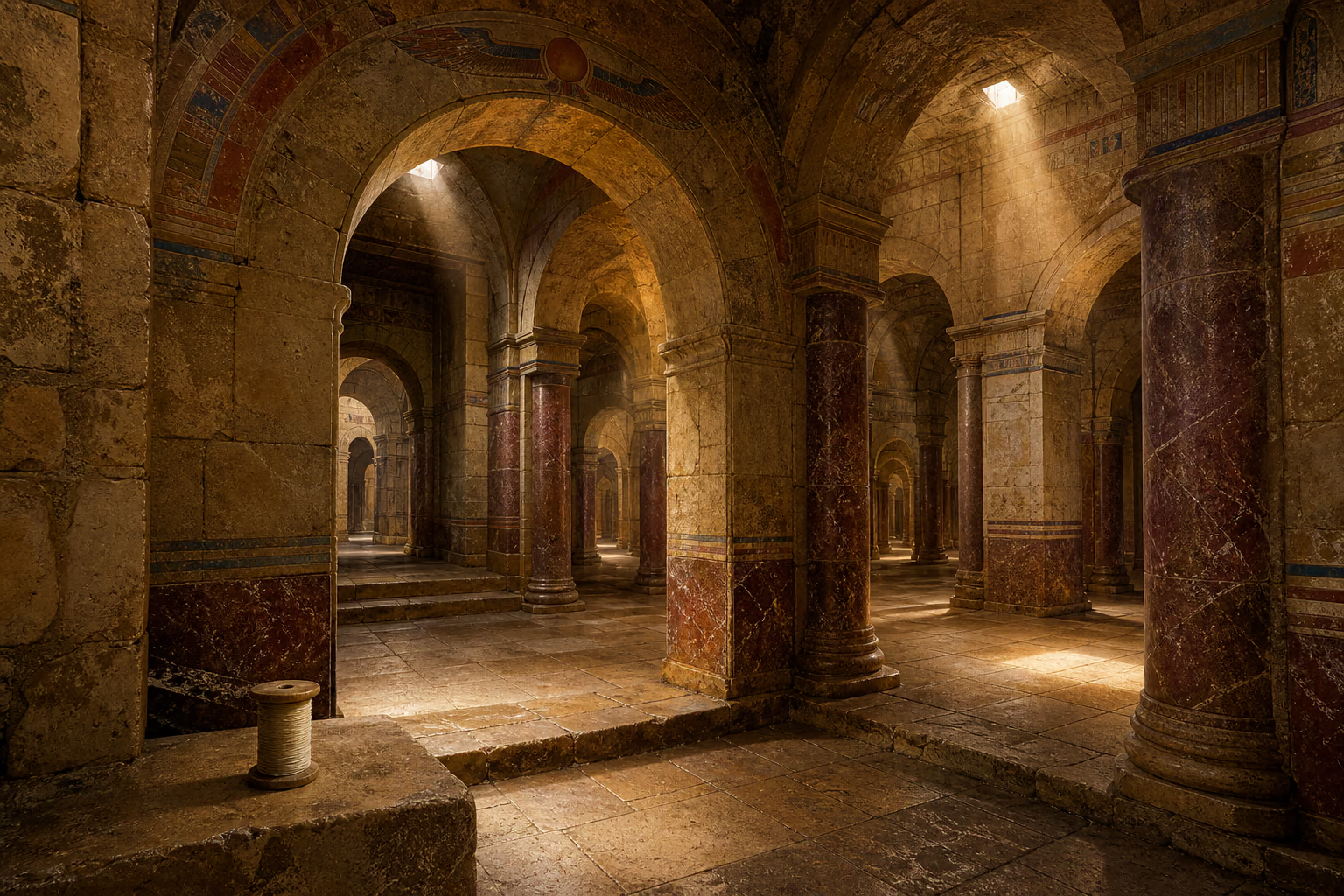
They are all of them covered with arched roofs of polished stone; at the entrance, too, of the Egyptian Labyrinth, a thing that surprises me, the building is constructed of Parian marble, while throughout the other parts of it the columns are of syenites. With such solidity is this huge mass constructed, that the lapse of ages has been totally unable to destroy it, seconded as it has been by the people of Heracleopolites, who have marvellously ravaged a work which they have always held in abhorrence. To detail the position of this work and the various portions of it is quite impossible, it being subdivided into regions and præfectures, which are styled nomes, thirty in number, with a vast palace assigned to each. In addition to these, it should contain temples of all the gods of Egypt, and forty statues of Nemesis in as many sacred shrines; besides numerous pyramids, forty ells in height, and covering six aruræ at the base. Fatigued with wandering to and fro, the visitor is sure to arrive at some inextricable crossing or other of the galleries. And then, too, there are banquetting rooms situate at the summit of steep ascents; porticos from which we descend by flights of ninety steps; columns in the interior, made of porphyrites; figures of gods; statues of kings; and effigies of hideous monsters. Some of the palaces are so peculiarly constructed, that the moment the doors are opened a dreadful sound like that of thunder reverberates within: the greater part, too, of these edifices have to be traversed in total darkness. Then again, without the walls of the Labyrinth, there rises another mass of buildings known as the “Pteron;” beneath which there are passages excavated leading to other subterranean palaces. One person, and only one, has made some slight repairs to the Labyrinth; Chæremon, an eunuch of King Necthebis, who lived five hundred years before the time of Alexander the Great. It is asserted, also, that while the arched roofs of squared stone were being raised, he had them supported by beams of thorn boiled in oil.
As for the Cretan Labyrinth, what I have already stated must suffice for that. The Labyrinth of Lemnos is similar to it, only that it is rendered more imposing by its hundred and fifty columns; the shafts of which, when in the stone-yard, were so nicely balanced, that a child was able to manage the wheel of the lathe in turning them. The architects were, Smilis, Rhœcus, and Theodorus, natives of the island, and there are still in existence some remains of it; whereas of the Cretan Labyrinth and of that in Italy not a vestige is left.
As to this last, which Porsena, King of Etruria, erected as his intended sepulchre, it is only proper that I should make some mention of it, if only to show that the vanity displayed by foreign monarchs, great as it is, has been surpassed. But as the fabulousness of the story connected with it quite exceeds all bounds, I shall employ the words given by M. Varro himself in his account of it:—“Porsena was buried,” says he, “beneath the city of Clusium; in the spot where he had had constructed a square monument, built of squared stone. Each side of this monument was three hundred feet in length and fifty in height, and beneath the base, which was also square, there was an inextricable labyrinth, into which if any one entered without a clew of thread, he could never find his way out. Above this square building there stand five pyramids, one at each corner, and one in the middle, seventy-five feet broad at the base, and one hundred and fifty feet in height. These pyramids are so tapering in their form, that upon the summit of all of them united there rests a brazen globe, and upon that a petasus; from which there hang, suspended by chains, bells, which make a tinkling when agitated by the wind, like what was done at Dodona in former times. Upon this globe there are four other pyramids, each one hundred feet in height; and above them is a single platform, on which there are five more pyramids,” —the height of which Varro has evidently felt ashamed to add; but, according to the Etruscan fables, it was equal to that of the rest of the building. What downright madness this, to attempt to seek glory at an outlay which can never be of utility to any one; to say nothing of exhausting the resources of the kingdom, and after all, that the artist may reap the greater share of the praise!
We read, too, of hanging gardens, and what is even more than this, a hanging city, Thebes in Egypt: it being the practice for the kings to lead forth their armies from beneath, while the inhabitants were totally unconscious of it. This, too, is even less surprising than the fact that a river flows through the middle of the city. If, however, all this had really been the case, there is no doubt that Homer would have mentioned it, he who has celebrated the hundred gates of Thebes.