LIBER XXXVI · CAPUT 23
CISTERNS
Latine · Mayhoff 1906
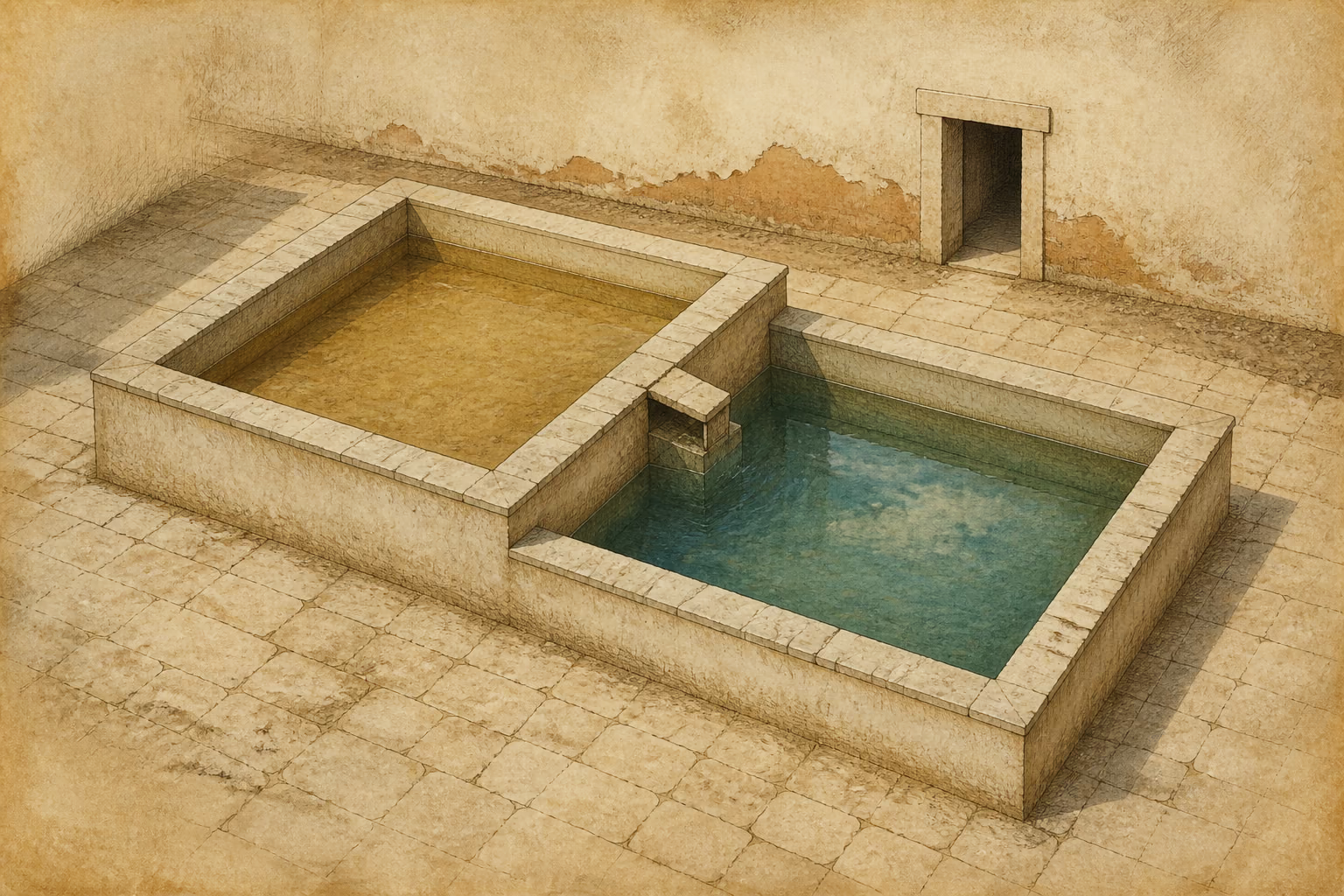
cisternas harenae purae asperae V partibus, calcis quam vehementissimae II construi, fragmentis silicis non excedentibus libras; ita ferratis vectibus calcari solum parietesque similiter. utilius geminas esse, ut in priore vitia considant atque per colum in proximam transeat pura aqua.
Calcem e vario lapide Cato censorius inprobat; ex albo melior. quae ex duro, structurae utilior; quae ex fistuloso, tectoriis; ad utrumque damnatur ex silice. utilior eadem effosso lapide quam ex ripis fluminum collecto, utilior e molari, quia est quaedam pinguior natura eius. mirum aliquid, postquam arserit, accendi aquis.— Harenae tria genera: fossicia, cui quarta pars calcis addi debet, fluviatili aut marinae tertia. si et testae tusae tertia pars addatur, melior materia erit. ab Appennino ad Padum non invenitur fossicia, nec trans maria. Ruinarum urbis ea maxume causa, quod furto calcis sine ferumine suo caementa componuntur. intrita quoque ea quo vetustior, eo melior. in antiquorum aedium legibus invenitur, ne recentiore trima uteretur redemptor; ideo nullae tectoria eorum rimae foedavere. tectorium, nisi quod ter harenato et bis marmorato inductum est, numquam satis splendoris habet. uliginosa et ubi salsugo vitiet testaceo sublini utilius. in Graecia tectoriis etiam harenatum, quo inducturi sunt, prius in mortario ligneis vectibus subigunt. experimentum marmorati est in subigendo, done rutro non cohaereat; contra in albario opere, ut macerata calx ceu glutinum haereat; macerari non nisi ex glaeba oportet. Elide aedis est Minervae, in qua frater Phidiae Panaenus tectorium induxi lacte et Fdhav(D). late e BS. lacte e J. an tale e?t lacte et croco subactum, ut ferunt; ideo, si teratur hodie in eo saliva pollice, odorem croci saporemque reddit.
Columnae eaedem densius positae crassiores videntur. genera earum quattuor: quae sextam partem altitudinis in crassitudine ima habent, Doricae vocantur; quae nonam, Ionicae; quae septimam, Tuscanicae; Corinthiis eadem ratio quae lonicis, set differentia, quoniam capitulis Corinthiarum eadem est altitudo, quae colligitur crassitudine ima, ideoque graciliores videntur; Ionicis enim capituli altitudo tertia pars est crassitudinis. antiqua ratio erat columnarum altitudinis tertia pars latitudinum delubri. in Ephesiae Dianae aede, quae prius fuit, primum columnis spirae subditae et capitula addita, placuitque altitudinis octava pars in crassitudine et ut spirae haberent crassitudinis dimidium septimaeque partes detraherentur summarum crassitudine. praeter haec sunt quae vocantur Atticae columnae quaternis angulis, pari laterum intervallo.
English · Bostock & Riley 1855–57
Cisterns should be made of five parts of pure, gravelly, sand, two of the very strongest quicklime, and fragments of silex not exceeding a pound each in weight; when thus incorporated, the bottom and sides should be well beaten with iron rammers. The best plan, too, is to have the cisterns double; so that all superfluities may settle in the inner cistern, and the water filter through, as pure as possible, into the outer one.
Cato the Censor disapproves of lime prepared from stones of various colours: that made of white stone is the best. Lime prepared from hard stone is the best for building purposes, and that from porous stone for coats of plaster. For both these purposes, lime made from silex is equally rejected. Stone that has been extracted from quarries furnishes a better lime than that collected from the beds of rivers; but the best of all is the lime that is obtained from the molar-stone, that being of a more unctuous nature than the others. It is something truly marvellous, that quick-lime, after the stone has been subjected to fire, should ignite on the application of water!
There are three kinds of sand: fossil sand, to which one-fourth part of lime should be added; river sand; and sea sand; to both of which last, one third of lime should be added. If, too, one third of the mortar is composed of bruised earthenware, it will be all the better. Fossil sand is found in the districts that lie between the Apennines and the Padus, but not in the parts beyond sea.
The great cause of the fall of so many buildings in our City, is, that through a fraudulent abstraction of the lime, the rough work is laid without anything to hold it together. The older, too, the mortar is, the better it is in quality. In the ancient laws for the regulation of building, no contractor was to use mortar less than three months old; hence it is, that no cracks have disfigured the plaster coatings of their walls. These stuccos will never present a sufficiently bright surface, unless there have been three layers of sanded mortar, and two of marbled mortar upon that. In damp localities and places subject to exhalations from the sea, it is the best plan to substitute ground earthenware mortar for sanded mortar. In Greece, it is the practice, first to pound the lime and sand used for plastering, with wooden pestles in a large trough. The test by which it is known that marbled mortar has been properly blended, is its not adhering to the trowel; whereas, if it is only wanted for white-washing, the lime, after being well slaked with water, should stick like glue. For this last purpose, however, the lime should only be slaked in lumps.
At Elis, there is a Temple of Minerva, which was pargetted, they say, by Panænus, the brother of Phidias, with a mortar that was blended with milk and saffron: hence it is, that, even at the present day, when rubbed with spittle on the finger, it yields the smell and flavour of saffron.
The more closely columns are placed together, the thicker they appear to be. There are four different kinds of pillars. Those of which the diameter at the foot is one-sixth part of the height, are called Doric. When the diameter is one-ninth, they are Ionic; and when it is one-seventh, Tuscan. The proportions in the Corinthian are the same as those of the Ionic; but they differ in the circumstance that the Corinthian capitals are of the same height as the diameter at the foot, a thing that gives them a more slender appearance; whereas, in the Ionic column, the height of the capital is only one-third of the diameter at the foot. In ancient times the rule was, that the columns should be one-third of the breadth of the temple in height.
It was in the Temple of Diana, at Ephesus, as originally built, that spirals were first placed beneath, and capitals added: and it was determined that the diameter of the shafts should be one-eighth of their height, and that the spirals should be one-half of the diameter in height, the upper extremity of the shaft being one-seventh less in diameter than the foot. In addition to these columns, there are what are called “Attic” columns, quadrangular, and with equal sides.