LIBER XXXVI · CAPUT 27
MARVELLOUS FACTS CONNECTED WITH FIRE
Latine · Mayhoff 1906
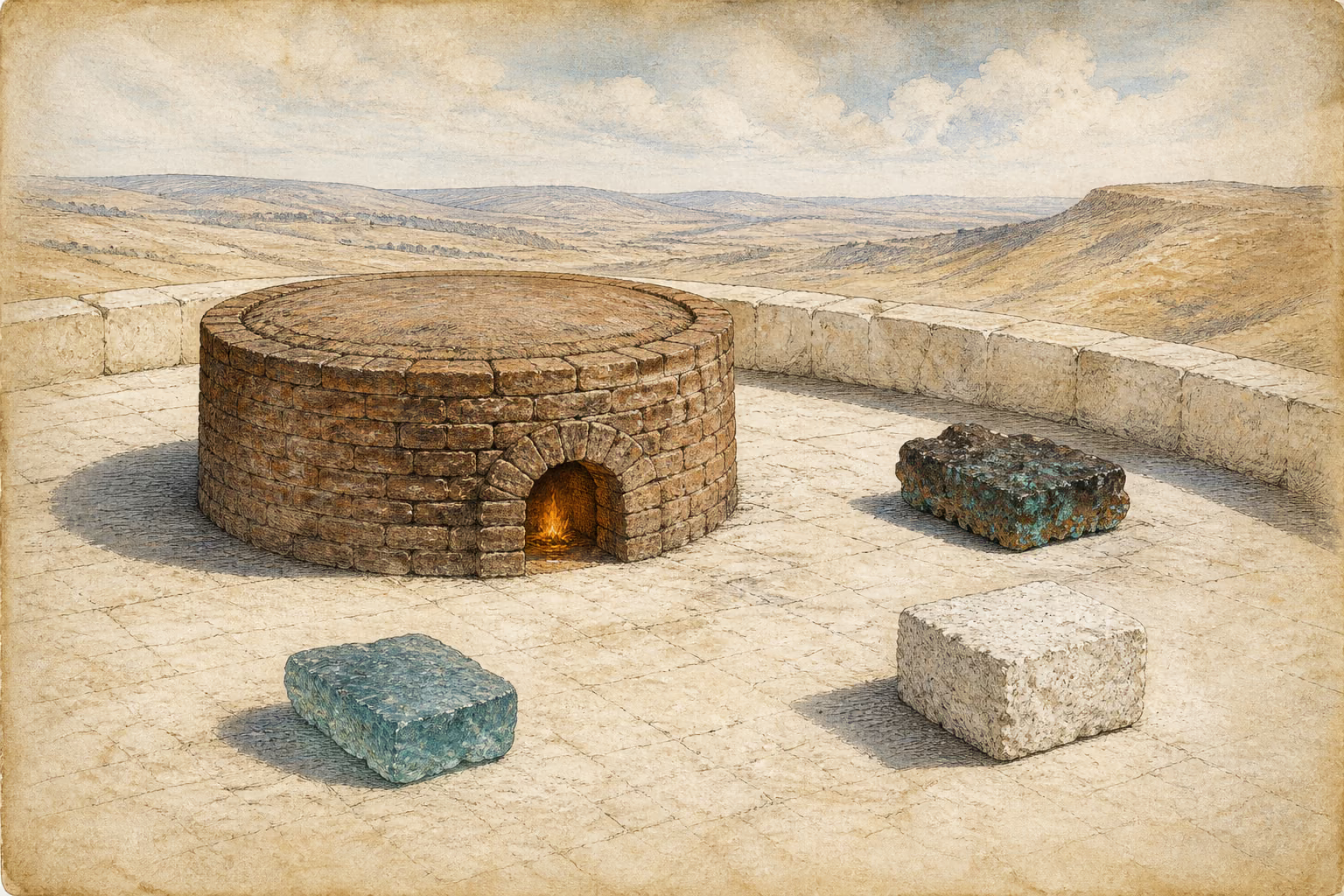
accipit harenas, ex quibus aliubi vitrum, aliubi argentum, aliubi minium, aliubi plumbi genera, aliubi pigmenta, aliubi medicamenta fundit. igni lapides in aes solvuntur, igni ferrum gignitur ac domatur, igni aurum perficitur, igni cremato lapide caementa in tectis ligantur. alia saepius uri prodest, eademque materia aliud gignit primis ignibus, aliud secundis, aliud tertiis, quando ipse carbo vires habere incipit restinctus atque interisse creditus maioris fit virtutis. inmensa, inproba rerum naturae portio et in qua dubium sit, plura absumat an pariat.
Est et ipsis ignibus medica vis. pestilentiae, quae obscuratione solis contrahitur, ignes si fiant, multifariam auxiliari certum est. Empedocles et Hippocrates id demonstravere diversis locis. Ad convolsa interiora viscera aut contusa, M. Varro—ipsis enim verbis eius utar—pyxis sit, inquit, focus. inde enim cinis lixivus potus medetur. licet videre gladiatores, cum deluserunt, hac iuvari potione. quin et carbunculum, genus morbi, quo duos consulares nuper absumptos indicavimus, querneus carbo tritus cum melle sanat. adeo in rebus damnatis quoque ac iam nullis sunt aliqua commoda, ut carbone ecce atque cinere.
Non praeteribo et unum foci exemplum Romanis litteris clarum: Tarquinio Prisco regnante tradunt repente in foco eius comparuisse genitale e cinere masculi sexus eamque, quae insederat ibi, Tanaquilis reginae ancillam Ocresiam captivam consurrexisse gravidam. ita Servium Tullium natum, qui regno successit. inde et in regia cubanti ei puero caput arsisse, creditumque Laris familiaris filium. ob id Compitalia ludos Laribus primum instituisse.
English · Bostock & Riley 1855–57
Having now described all the creations of human ingenuity, reproductions, in fact, of Nature by the agency of art, it cannot but recur to us, with a feeling of admiration, that there is hardly any process which is not perfected through the intervention of fire. Submit to its action some sandy soil, and in one place it will yield glass, in another silver, in another minium, and in others, again, lead and its several varieties, pigments, and numerous medicaments. It is through the agency of fire that stones are melted into copper; by fire that iron is produced, and subdued to our purposes; by fire that gold is purified; by fire, too, that the stone is calcined, which is to hold together the walls of our houses.
Some materials, again, are all the better for being repeatedly submitted to the action of fire; and the same substance will yield one product at the first fusion, another at the second, and another at the third. Charcoal, when it has passed through fire and has been quenched, only begins to assume its active properties; and, when it might be supposed to have been reduced to annihilation, it is then that it has its greatest energies. An element this, of immense, of boundless power, and, as to which, it is a matter of doubt whether it does not create even more than it destroys!
Fire even has certain medicinal virtues of its own. When pestilences prevail, in consequence of the obscuration of the sun, it is a well-known fact, that if fires are lighted, they are productive of beneficial results in numerous ways. Empedocles and Hippocrates have proved this in several passages.
“For convulsions or contusions of the viscera,” says M. Varro—for it is his own words that I use—“let the hearth be your medicine-box; for lie of ashes, taken from thence, mixed with your drink, will effect a cure. Witness the gladiators, for example, who, when disabled at the Games, refresh themselves with this drink.” Carbuncle too, a kind of disease which, as already stated, has recently carried off two persons of consular rank, admits of being successfully treated with oak-charcoal, triturated with honey. So true is it that things which are despised even, and looked upon as so utterly destitute of all virtues, have still their own remedial properties, charcoal and ashes for example.
I must not omit too, one portentous fact connected with the hearth, and famous in Roman history. In the reign of Tarquinius Priscus, it is said, there appeared upon his hearth a resemblance of the male generative organ in the midst of the ashes. The captive Ocrisia, a servant of Queen Tanaquil, who happened to be sitting there, arose from her seat in a state of pregnancy, and became the mother of Servius Tullius, who eventually succeeded to the throne. It is stated, too, that while the child was sleeping in the palace, a flame was seen playing round his head; the consequence of which was, that it was believed that the Lar of the household was his progenitor. It was owing to this circumstance, we are informed, that the Compitalia, games in honour of the Lares, were instituted.