LIBER XXXVI · CAPUT 4
THE FIRST ARTISTS WHO EXCELLED IN THE SCULPTURE OF MARBLE, AND THE VARIOUS PERIODS AT WHICH THEY FLOURISHED. THE MAUSOLEUM IN CARIA. THE MOST CELEBRATED SCULPTORS AND WORKS IN MARBLE, TWO HUNDRED AND TWENTY-FIVE IN NUMBER
Latine · Mayhoff 1906
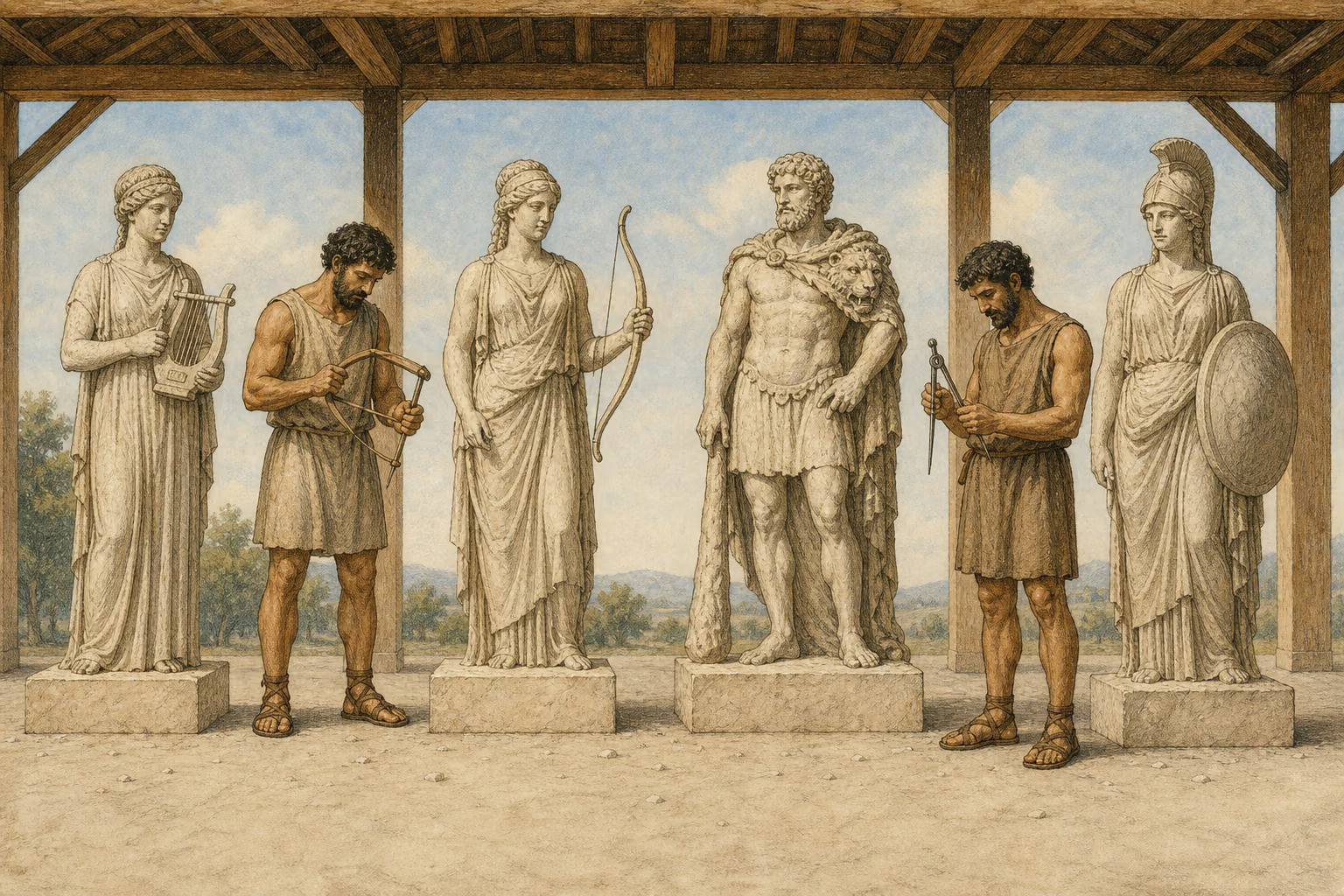
Marmore scalpendo primi omnium inclaruerunt Dipoenus et Scyllis, geniti in Creta insula etiamnum Medis imperantibus priusque, quam Cyrus in Persis regnare inciperet. hoc est Olympiade circiter quinquagensima. hi Sicyonem se contulere, qnae diu fuit officinarum omnium talium patria. deorum simulacra publice locaverant iis Sicyonii, quae priusquam absolverentur, artifices iniuriam questi abiere in Aetolos. protinus Sicyonem fames invasit ac sterilitas maerorque dims. remedium petentibus Apollo Pythius respondit: si Dipoenus et Scyllis deorum simulacra perfecissent. quod magnis mercedibus obsequiisque impetratum est. fuere autem simulacra ea Apollinis, Dianae, Herculis, Minervae, quod de caelo postea tactum est.—
English · Bostock & Riley 1855–57
The first artists who distinguished themselves in the sculpture of marble, were Dipœnus and Scyllis, natives of the Isle of Crete. At this period the Medians were still in power, and Cyrus had not begun to reign in Persia; their date being about the fiftieth Olympiad. They afterwards repaired to Sicyon, a state which for a length of time was the adopted country of all such pursuits as these. The people of Sicyon had made a contract with them for the execution of certain statues of the gods; but, before completing the work, the artists complained of some injustice being done them, and retired to Ætolia. Immediately upon this, the state was afflicted with sterility and famine, and dreadful consternation was the result. Upon enquiry being made as to a remedy for these evils, the Pythian Apollo made answer, that Dipœnus and Scyllis must complete the statues of the gods; an object which was attained at the cost of great concessions and considerable sums of money. The statues were those of Apollo, Diana, Hercules, and Minerva; the last of which was afterwards struck by lightning.