LIBER XXXVII · CAPUT 11
PRECIOUS STONES WHICH DERIVE THEIR NAMES FROM VARIOUS PARTS OF THE HUMAN BODY. HEPATITIS. STEATITIS. ADADUNEPHROS. ADADUOPHTHALMOS. ADADUDACTYLOS. TRIOPHTHALMOS
Latine · Mayhoff 1906
Est etiamnum alia distinctio, quam equidem fecerim subinde variata expositione, siquidem a membris corporis habent nomina: hepatitis a iocinere, steatitis singulorum animalium adipe numerosa, Adadu nephrossive renes, eiusdem oculus, digitus; deus et hic colitur a Syris. triophthalmos in onyche nascitur tres hominis oculos simul exprimens.
Ab animalibus cognominantur: carcinias marini cancri colore, echitis viperae, scorpitis scorpionis aut colore aut effigie, scaritis, scari piscis, triglitis mulli, aegophthalmos caprino oculo, item alia suillo, et a gruis collo geranitis, hieracitis ab accipitris, aëtitisa colore aquilae candicante cauda. myrmecitis innatam formicae repentis effigiem habet, scarabaeorum cantharias. lycophthalmos quattuor colorum est, rutila, sanguinea; media nigrum candido cingit, ut luporum oculi. taospavoni est similis, itemque aspidi quam vocari timictoniam invenio.
Rerum similitudo est in ammochryso velut auro harenis mixto, cenchrite sparsis milii granis, dryite truncis arborum; haec et ligni modo ardet. cissitis in candido perlucet hederae foliis, quae totam tenent narcissitim venis etiamcetera distinctam. cyamias nigra est, sed fracta ex se fabae similitudinem parit. pyren ab olivae nucleo dicta est; huic aliquando inesse piscium spinae videntur; phoenicitis ut balanus.—Chalazias grandinum et candorem et figuram habet, adamantinae duritiae, ut narrent in ignes etiam additae manere suum frigus. pyritis nigra quidem est, sed attritu digitos adurit. polyzonos [in nigro] multis distincta lineis candicat, astrapaea [in candido aut cyaneo] discurrentibus in medio fulminis radiis. in phlogitide intus flamma videtur ardere, quae non exeat, in anthracitide scintillae discurrere. —Enhygros semper rotunditatis absolutae in candore leni est; ad motum fluctuatur intus in ea, ut in ovis, liquor.—Polythrix in viridi capillaturam ostendit, sed defluvia comarum facere dicitur. sunt et a leonis pelle et a pantherae nominatae. —Colos appellavit drosolithum herbaceus, melichrum melleus, cuius plura genera, melichlorum geminus, parte flavus, parte melleus, crocian croci, polian canitiei similitudinem quandam spargens e nigro, spartopolian rarior. rhoditis rosae est, melitis mali coloris, chalcitis aeris, sycitis fici, bostryc hitis in nigro ramosa candidis vel sanguineis frondibus, chernitis velut in petra candidis manibus inter se complexis. —Anancitide in hydromantia dicunt evocari imagines deorum, synochitide teneri umbras inferum evocatas, dendritide alba defossa sub arbore, quae caedatur, securium aciem non hebetari.—Sunt et multo plures magisque monstrificae, quibus barbara dedere nomina confessi lapides esse, non gemmas. nobis satis erit in his coarguisse dira mendacia Magorum.
English · Bostock & Riley 1855–57
There is also another method of classifying stones; according to the resemblance which they bear to various other objects. Thus, for example, the different parts of the body give the following names to stones:—Hepatitis is so called from the liver; and steatitis from its resemblance to the fat of various animals. Adadunephros, adaduophthalmos, and adadudactylos, mean “kidney of Adad,” “eye of Adad,” and “finger of Adad,” a god of the Syrians so called. Triophthalmos is a stone found in conjunction with onyx, which resembles three human eyes at once.
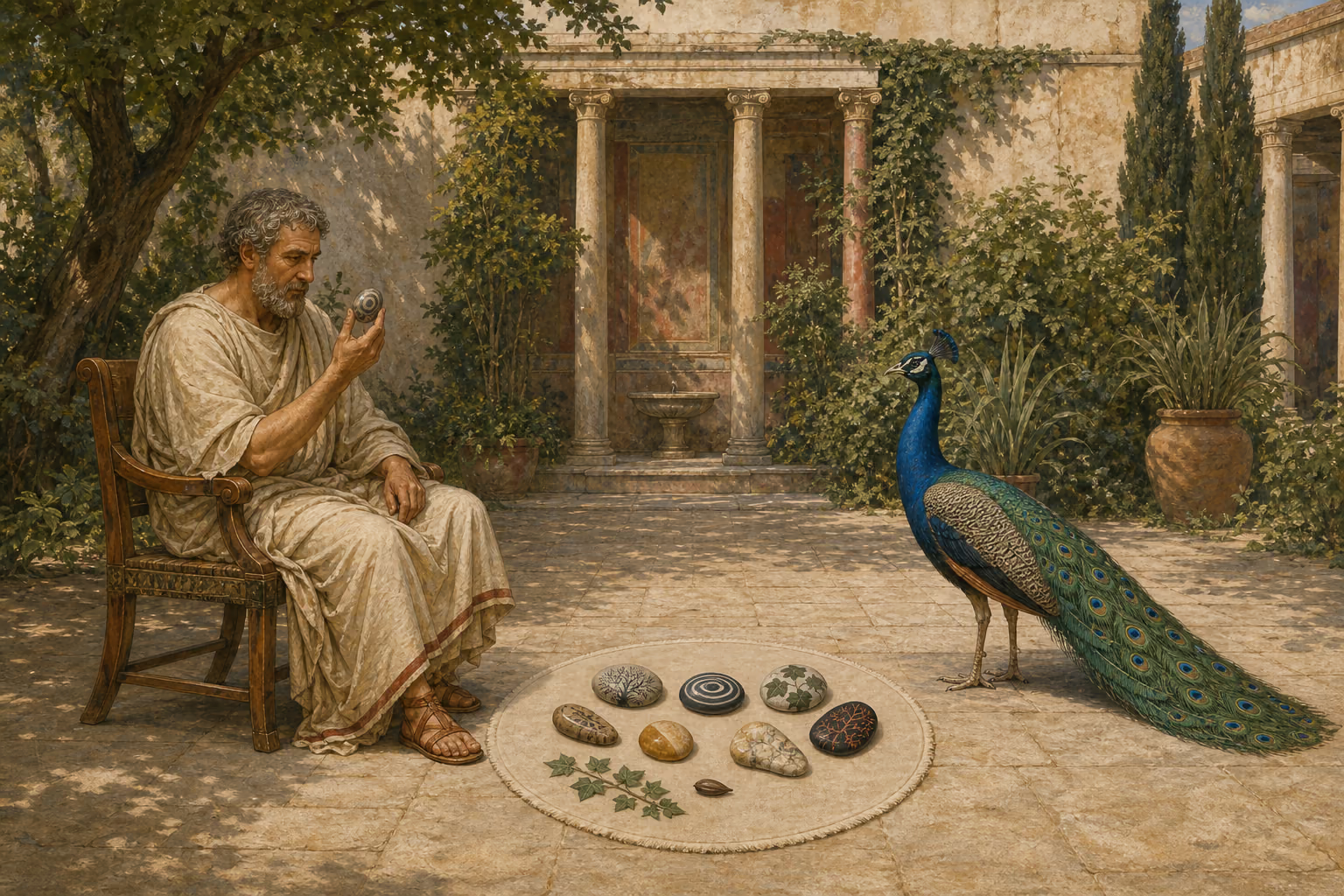
Other stones, again, derive their names from various animals. Carcinias is so called from the colour of the sea-crab; echitis, from the colour of the viper; scorpitis, from either the colour or the shape of the scorpion; scaritis, from the fish called scarus; triglitis, from the sur-mullet; ægophthalmos, from the eye of the goat; hyophthalmos, from the eye of the swine; geranitis, from the neck of the crane; hieracitis, from the neck of the hawk; and aëtitis, from the colour of the white-tailed eagle. Myrmecitis presents the appearance of an ant crawling within, and cantharias, of a scarabæus. Lycophthalmos is a stone of four different colours; on the exterior it is ruddy and blood-red, and within it is black, surrounded with a line of white, closely resembling the eye of the wolf in every respect. Taos is a stone with colours like those of the peacock. Timictonia, I find, is the name of a stone, like the asp in colour.
Hammochrysos resembles sand in appearance, but sand mixed with gold. Cenchritis has all the appearance of grains of millet scattered here and there. Dryitis resembles the trunk of a tree, and burns like wood. Cissitis, upon a white, transparent surface, has leaves of ivy running all over it. Narcissitis is distinguished by veins on the surface, and has a smell like that of the narcissus. Cyamias is a black stone, but when broken, produces a bean to all appearance. Pyren is so called from its resemblance to an olive-stone: in some cases it would appear to contain the back-bone of a fish. Phœnicitis resembles a palm-date in form. Chalazias resembles a hailstone, both in form and colour: it is as hard as adamant, so much so, indeed, that in the fire even it retains its coolness, it is said. Pyritis, though a black stone, burns the fingers when rubbed by them. Polyzonos is a black stone traversed by numerous zones of white.
Astrapæa has rays like flashes of lightning, running across the middle on a ground of white or blue. In phlogitis, there is, to all appearance, a flame burning within, but not reaching the surface of the stone. In anthracitis, there are sometimes sparks, to all appearance, flying to and fro. Enhygros is always perfectly round, smooth, and white; but when it is shaken a liquid is heard to move within, just like the yolk within an egg. Polythrix presents the appearance of hair upon a green surface; but it causes the hair to fall off, it is said. Leontios and pardalios are names given to stones, from their resemblance to the skin of the lion and panther. Drosolithos has received its name from its colour. Melichrus is a honey-coloured stone, of which there are several varieties. Melichloros is a stone of two colours, partly honey-coloured, partly yellow. Crocias is the name given to a stone which reflects a colour like that of saffron; polias, to a stone resembling white hair in colour; and spartopolias, to a stone more thinly sprinkled with white.
Rhoditis is like the rose in colour, chalcitis resembles copper, and sycitis is in colour like a fig. Bostrychitis is covered with branches of a white or blood-red colour, upon a ground of black; and chernitis has, on a stony surface, a figure like that of two hands grasping each other. Anancitis is used in hydromancy, they say, for summoning the gods to make their appearance; and synochitis, for detaining the shades from below when they have appeared. If white dendritis is buried beneath a tree that is being felled, the edge of the axe will never be blunted, it is asserted. There are many other stones also, of a still more outrageously marvellous nature, to which, admitted as it is that they are stones, barbarous names have been given: we have refuted, however, a quite sufficient number of these portentous lies already.