LIBER XXXVII · CAPUT 12
PRECIOUS STONES THAT SUDDENLY MAKE THEIR APPEARANCE. COCHLIDES
Latine · Mayhoff 1906
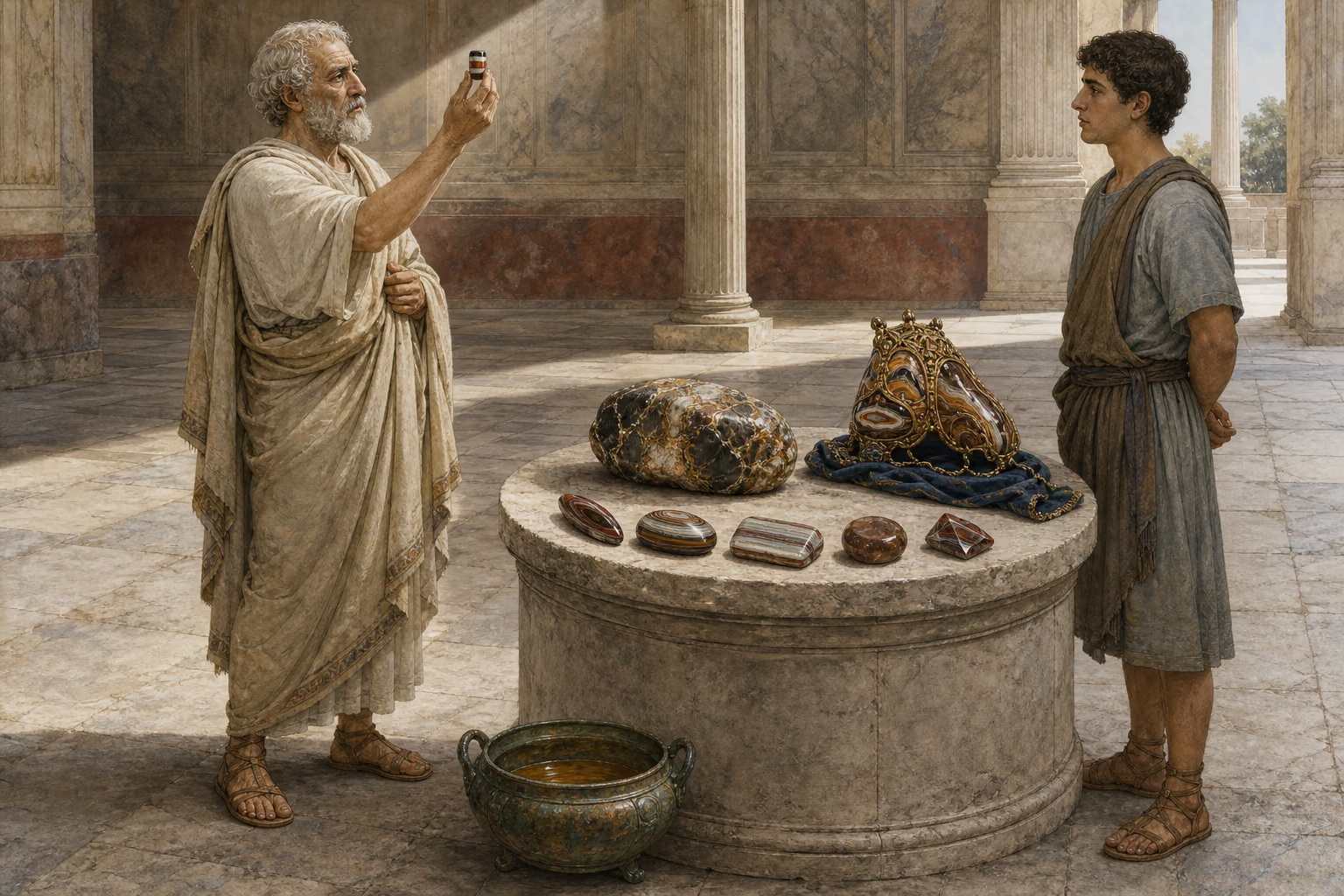
Gemmae nascuntur et repente novae ac sine nominibus, sicut olim in metallis aurariis Lampsaci unam inventam, quae propter pulchritudinem Alexandro regi missa sit, auctor est Theophrastus. cochlides, quae nune volgatissimae, fiunt verius quam nascuntur, in Arabia repertis ingentibus glaebis, quas melle excoqui tradunt septenis diebus noctibusque sine intermissione: ita omni terreno vitiosoque decusso purgatam puramque glaebam artificum ingenio varie distingui venas ductusque macularum quam maxime vendibili ratione spectantium, quondamque tantae magnitudinis factas, ut equis regum in oriente frontalia ac pro phaleris pensilia facerent. et alias omnes gemmae mellis decoctu nitescunt, praecipue Corsici in omni alio usu acrimonia abhorrentis. quae variae sunt, et ad unitatem excidere calliditati ingeniorum contingit, utque eaedem nomen usitatum non habeant, physis appellant velut ipsius naturae admirationem in iis venditantes.
Cum finis nominum non sit—quae persequi non equidem cogito, innumera et Graeca vanitate—, indicatis nobilibus gemmis, immo vero etiam plebeis, rariorum genera digna dictu distinxisse satis erit. illud modo meminisse conveniet, increscentibus varie maculis atque verrucis linearumque interveniente multiplici ductu et colore saepius mutari nomina in eadem plerumque materia.
Nunc communiter ad omnium gemmarum observationem pertinentia dicemus opiniones secuti auctorum.
Cavae aut extuberantes viliores videntur aequalibus. figura oblonga maxime probatur, deinde quae vocatur lenticula, postea epipedos et rotunda, angulosis autem minima gratia.
Veras a falsis discernere magna difficultas, quippe cum inventum sit ex veris generis alterius in aliud falsas traducere, ut sardonyches e ternis glutinentur gemmis ita, ut deprehendi ars non possit, aliunde nigro, aliunde candido, aliunde minio sumptis, omnibus in suo genere probatissimis. quin immo etiam exstant commentarii auctorum—quos non equidem demonstrabo—, quibus modis ex crystallo smaragdum tinguant aliasque tralucentes, sardonychem e sarda, item ceteras ex aliis; neque enim est ulla fraus vitae lucrosior.
English · Bostock & Riley 1855–57
New species of precious stones are repeatedly brought into existence, and fresh ones are found all at once, destitute of names. Thus, for example, there was a stone formerly discovered in the gold-mines of Lampsacus, which, on account of its extraordinary beauty, was sent to King Alexander, as we learn from Theophrastus. Cochlides, too, which are now so common, are rather artificial productions than natural, and in Arabia there have been found vast masses of them; which are boiled, it is said, in honey, for seven days and nights without intermission. By doing this, all earthy and faulty particles are removed; after which, the mass, thus cleansed and purified, is adorned by the ingenuity of artists with variegated veins and spots, and cut into such shapes as may be most to the taste of purchasers. Indeed, these articles, in former times, were made of so large a size, that they were employed in the East as frontals for the horses of kings, and as pendants for their trappings.
All precious stones in general are improved in brilliancy by being boiled in honey, Corsican honey more particularly; but acrid substances are in every respect injurious to them. As to the stones which are variegated, and to which new colours are imparted by the inventive ingenuity of man, as they have no name in common use, they are usually known by that of “physis;” a name which claims for them, as it were, that admiration which we are more ready to bestow upon the works of Nature. But really, these artificial stones have names without end, and I could never think of recounting the infinite series of them, coined as they have been by the frivolous tendencies of the Greeks.
Having already described the more noble gems, and indeed those of inferior quality which are found among the stones that are held in high esteem, I must content myself with knowing that I have pointed out those kinds which are the most deserving of mention. It will be as well, however, for the reader to bear in mind, that, according to the varying number of the spots and inequalities on their surface, according to the numerous intersections of lines and their multiplied tints and shades, the names of precious stones are subject to repeated changes; the material itself, for the most part, remaining just the same.
We will now make some observations in reference to precious stones in general, following therein the opinions that have been expressed by various authors. Stones with a level surface are preferred to those which are concave or protuberant on the face. An oblong shape is the one that is most approved of, and, next to that, the lenticular form, as it is called. After this, the stone with a plane surface and circular is admired, those which are angular being held in the least esteem. There is considerable difficulty in distinguishing genuine stones from false; the more so, as there has been discovered a method of transforming genuine stones of one kind into false stones of another. Sardonyx, for example, is imitated by cementing together three other precious stones, in such a way that no skill can detect the fraud; a black stone being used for the purpose, a white stone, and one of a vermilion colour, each of them, in its own way, a stone of high repute. Nay, even more than this, there are books in existence, the authors of which I forbear to name, which give instructions how to stain crystal in such a way as to imitate smaragdus and other transparent stones, how to make sardonyx of sarda, and other gems in a similar manner. Indeed, there is no kind of fraud practised, by which larger profits are made.