LIBER XXXVII · CAPUT 9
CYANOS; THE SEVERAL VARIETIES OF IT
Latine · Mayhoff 1906
totus vero oriens pro amuleto gestare eas traditur. ea, quae ex iis smaragdo similis est, saepe transversa linea alba media praecingitur et monogrammos vocatur; quae pluribus, polygrammos. libet obiter vanitatem Magicam hic quoque coarguere, quoniam hanc utilem esse contionantibus prodiderunt.—Est et onychi iuncta quae iasponyx vocatur, et nubem complexa et nives imitata et stellata rutilis punctis. est et sali Megarico similis et velut fumo infecta, quae capnias vocatur. magnitudine XVI unciarum vidimus formatam inde effigiem Neronis thoracatam.
Reddetur et per se cyanos, accommodato paulo ante et iaspidi nomine a colore caeruleo. optima Scythica, dein Cypria, postremo Aegyptia. adulteratur maxime tinctura, idque in gloria est regum Aegypti; adscribitur et qui primus tinxit. dividitur autem et haec in mares feminasque. inest ei aliquando et aureus pulvis, non qualis sappiris; in his enim aurum punctis conlucet.— Caeruleae et sappiri, rarumque ut cum purpura. optimae apud Medos, nusquam tamen perlucidae. praeterea inutiles scalpturis intervenientibus crystallinis centris. quae sunt ex iis cyanei coloris, mares existimantur.
Alius ex hoc ordo purpureis dabitur aut quae ab iis descendant. principatum amethysti tenent Indicae, sed in Arabiae quoque parte, quae finitima Syriae Petra vocatur, et in Armenia minore et Aegypto et Galatia reperiuntur, sordidissimae autem vilissimaeque in Thaso et Cypro. causam nominis adferunt quod usque ad vini colorem accedens, priusquam eum degustet, in violam desinat fulgor, alii quia sit quiddam in purpura illa non ex toto igneum, sed in vini colorem deficiens. perlucent autem omnes violaceo decore, scalpturis faciles. Indica absolutum Phoenices purpurae colorem habet. ad hanc tinguentium officinae dirigunt vota. fundit autem aspectu leniter blandum neque in oculos, ut carbunculi, vibrantem. alterum earum genus descendit ad hyacinthos; hunc colorem Indi socon vocant, talemque gemmam socondion. dilutior ex eodem sapenos vocatur, eademque pharanitis in contermino Arabiae, gentis nomine. quartum genus colorem vini habet. quintum ad vicina crystalli descendit albicante purpurae defectu. hoc minime probatur, quando praecellens debeat esse in suspectu velut ex carbuncu refulgens quidam leniter in purpura roseus nitor. tales aliqui malunt paederotas vocare, alii anterotas, multi Veneris genam. Magorum vanitas ebrietati eas resistere promittit et inde appellatas, praeterea, si lunae nomen ac solis inscribatur in iis atque ita suspendantur e collo cum pilis cynocephali et plumis hirundinis, resistere veneficiis, iam vero quoquo modo adesse reges adituris, grandinem quoque avertere ac locustas precatione addita, quam demonstrant. nec non in smaragdis quoque similia promisere, si aquilae scalperentur aut scarabaei, quae quidem scripsisse eos non sine contemptu et inrisu generis humani arbitror.
Multum ab hac distat hyacinthos, ab vicino tamen colore descendens. differentia haec est, quod ille emicans in amethysto fulgor violaceus diluitur hyacintho primoque aspectu gratus evanescit, antequam satiet, adeoque non inplet oculos, ut paene non attingat, marcescens celerius nominis sui flore. — Hyacinthos Aethiopia mittit et chrysolithos aureo fulgore tralucentes. praeferuntur his Indicae et, si variae non sint, Tibarenae. deterrimae autem Arabicae, quoniam turbidae sunt et variae, fulgoris interpellati nubilo macularum, etiam quae limpidae contigere, veluti scobe refertae. optimae sunt quae in collatione aurum albicare quadam argenti facie cogunt. hae funda includuntur perspicuae, ceteris subicitur aurichalcum, tametsi exiere iam de gemmarum usu. — Appellantur aliquae et chryselectroe, in colorem electri declinantes, matutino tamen tantum aspectu. Ponticas deprehendit levitas. quaedam durae sunt ac rufae, quaedam molles, sordidae. Bocchus auctor est et in Hispania repertaset quo in loco crystallum dixit ad libramentum aquae puteis defossis erui, chrysolithon XII pondo a se visam. — Fiunt et leucochrysi interveniente candida vena. sunt et in hoc genere capniae. sunt et vitreis similes, velut croco fulgentes; vitro adulterantur, ut visu discerni non possint; tactus deprendit, tepidior in vitreis. In eodem genere sunt melichrysi veluti per aurum sincero melle tralucente. has India fert, quamquam in duritia fragiles, non ingratas. eadem et xuthon parit, plebeiam sibi gemmam.
Candidarum dux est paederos, quamquam quaeri potest, in quo colore numerari debeat totiens iactati per alienas pulchritudines nominis, adeo ut decoris praerogativa in vocabulo facta sit. sed tamen et suum genus expectatione tanta dignum. coeunt quippe in tralucidam crystallum viridis suo modo aër simulque purpurae et quidam vini aurei nitor semper extremus in visu, sed purpura coronatus. madere videtur et singulis his et pariter omnibus, nec gemmarum esse ulla liquidior potest iucunda suavitate oculis. haec laudatissima est in Indis, apud quos sangenon vocatur, proxima in Aegypto, ubi syenites, tertia in Arabia, verum scabra, tum Pontica, quae mollius radiat, Thasia, et ipsa mollior, et Galatica et Thracia et Cypria. vitia earum languor aut alienis turbari coloribus et quae ceterarum.
Proxima candicantium est asteria. principatum habet proprietate nature, quod inclusam lucem pupilla quadam continet. hanc transfundit cum inclinatione velut intus ambulantem alio atque alio loco reddens. eadem contraria soli regerit candicantes radios in modum stellae, unde nomen invenit. difficiles in India natae ad caelandum. praeferuntur Carmanicae.
Similiter candida est quae vocatur astrion, crystallo propinqua, in India nascens et in Patalenes litoribus. huic intus a centro stella lucet fulgore pleno lunae. quidam causam nominis reddunt quod astris opposita fulgorem rapiat et regerat. optimam in Carmania gigni dicunt nullamque minus obnoxiam vitio; cerauniam etiam vocari quae sit deterior; pessimam vero lanternarum lumini similem. celebrant et astrioten, mirasque laudes eius in Magicis artibus Zoroastren cecinisse produnt.— Astolon Sudines dicit oculis piscium similem esse, radiare fulgore candido ut solem.
Est inter candidas et quae ceraunia vocatur, fulgorem siderum rapiens, ipsa crystallina, splendoris caerulei, in Carmania nascens. Zenothemis fatetur albam esse, sed habere intus stellam coruscantem; fieri et hebetes ceraunias, quas in nitro et aceto maceratas per aliquot dies concipere stellam eam, quae post totidem menses relanguescat. Sotacus et alia duo genera fecit cerauniae, nigrae rubentisque [similes eas esse securibus]. ex his quae nigrae sint ac rotundae, sacras esse; urbes per illas expugnari et classes; baetulos vocari; quae vero longae sint, ceraunias. faciunt et aliam raram admodum, Magorum studiis expetitam, quoniam non aliubi inveniatur quam in loco fulmine icto.
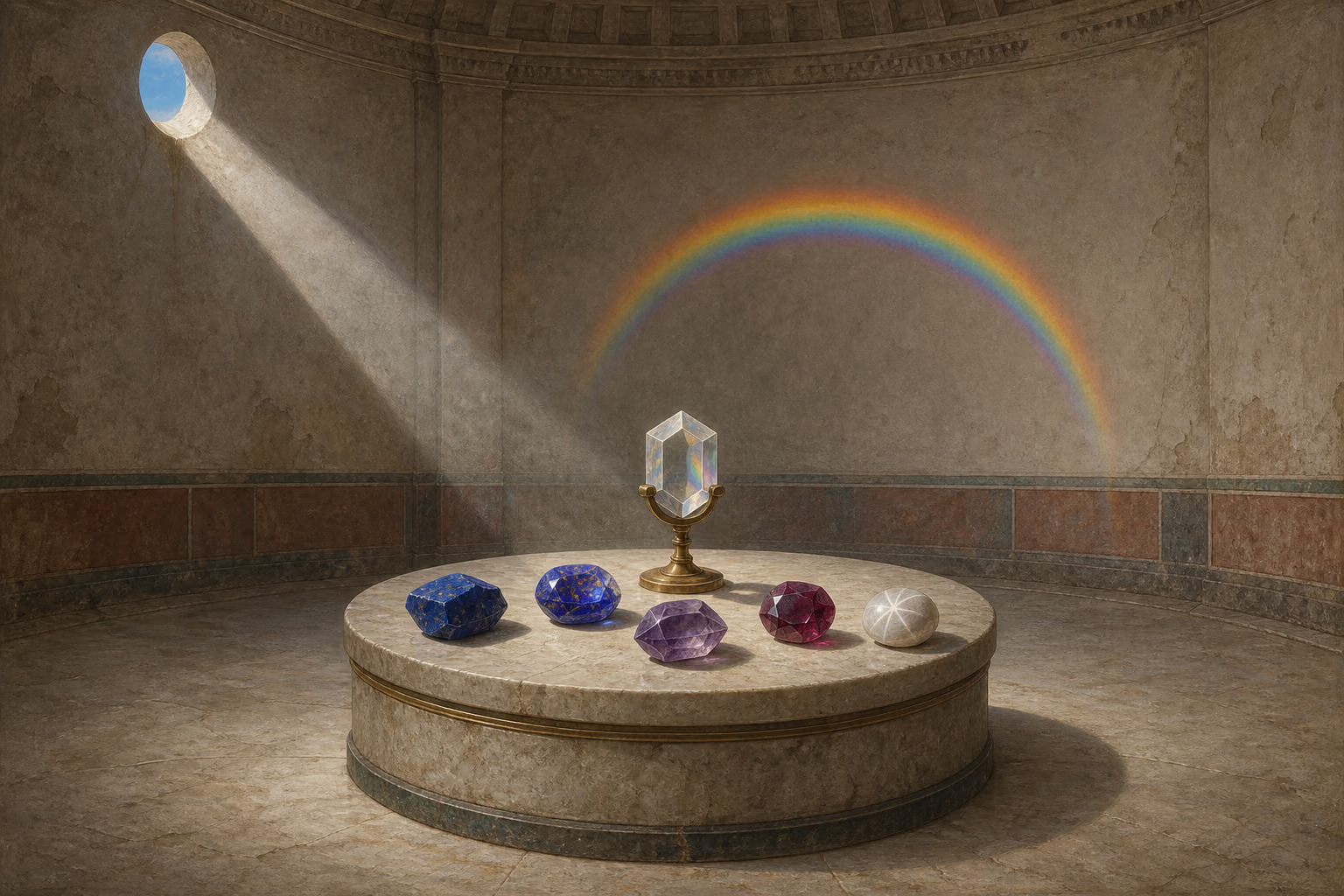
Proximum cerauniae nomen apud eos habet quae vocatur iris. effoditur in quadam insula Rubri maris, quae - distat a Berenice urbe LX p., cetera sui parte crystallus. itaque quidam eam radicem crystalli esse dixerunt. ex argumento vocatur iris, nam sub tecto percussa sole species et colores arcus caelestis in proximos parietes eiaculatur, subinde mutans magnaque varietate admirationem sui augens. sexangulam esse ut crystallum constat, sed aliqui scabris lateribus et angulis inaequalibus dicunt, in sole aperto radios in se candentes discutere, aliquo vero ante se proiecto nitore adiacentia inlustrare. colores autem non nisi ex opaco, ut diximus, reddunt, nec ut ipsae habeant, sed ut repercussu parietum elidant; optima quae maximos arcus facit simillimosque caelestibus. est et alia iritis, cetera similis, sed praedura. hanc Orus crematam tusamque ad ichneumonum morsus remedio esse scripsit, nasci autem in Perside.— Similis aspectu est, sed non eiusdem effectus, quae vocaturleros, alba nigraque macula in traversum distinguentibus crystallum.
Expositis per genera colorum principalibus gemmis reliquas per litterarum ordinem explicabimus.
English · Bostock & Riley 1855–57
Throughout all the East, it is the custom, it is said, to wear iaspis by way of amulet. The variety of this stone which resembles smaragdus in colour is often found with a white line running transversely through the middle; in which case it is known as “monogrammos:” when it is streaked with several lines, it is called “polygrammos.” Here, too, I may take the opportunity of exposing the falsehoods of the magicians, who pretend that this stone is beneficial for persons when speaking in public. There is a stone also that is formed of iaspis and onyx combined, and is known as “iasponyx.” Sometimes this stone has a clouded appearance; sometimes it has spots upon the surface like snow; and sometimes it is stellated with red spots. One kind resembles salt of Megara in appearance, and another is known as capnias, and looks as if it had been smoked. We have seen in our day an iaspis fifteen inches in length, of which a figure of Nero was made, armed with a cuirass.
We must also give a separate account of cyanos, a name which, until very recently, was given to a species of iaspis, on account of its cærulean colour. The best kind is that of Scythia, the next best being the produce of Cyprus, and, last of all, that of Egypt. An artificial kind is much in use, that is prepared by dyeing other substances; and this invention is looked upon as one of the great glories of the kings of Egypt, the name of the king who first discovered it being still preserved in their annals. This stone, too, is divided into male and female, and sometimes it has the appearance of being powdered with a golden dust, in much the same way as sapphiros.
For sapphiros, too, is refulgent with spots like gold. It is also of an azure colour, though sometimes, but rarely, it is purple; the best kind being that which comes from Media. In no case, however, is this stone diaphanous; in addition to which, it is not suited for engraving when intersected with hard particles of a crystalline nature. Those among them that have the colour of cyanos are generally thought to be the male stones.
We will now commence with another class of precious stones, those of a purple colour, or whose tints are derived from purple. To the first rank belongs the amethystos of India; a stone which is also found in the part of Arabia that adjoins Syria and is known as Petra, as also in Lesser Armenia, Egypt, and Galatia; the very worst of all, and the least valued, being those of Thasos and Cyprus. The name which these stones bear, originates, it is said, in the peculiar tint of their brilliancy, which, after closely approaching the colour of wine, passes off into a violet without being fully pronounced; or else, according to some authorities, in the fact that in their purple there is something that falls short of a fiery colour, the tints fading off and inclining to the colour of wine.
All these stones are transparent and of an agreeable violet colour, and are easy to engrave. Those of India have in perfection the very richest shades of purple, and it is to attain this colour that the dyers in purple direct all their endeavours; it presenting a fine mellowed appearance to the eye, and not dazzling the sight, as in the case with the colours of the carbunculus. Another variety approaches more nearly the hyacinth in colour: the people of India call this tint “socon,” and the stone itself “socondion.” A third stone of this class is of a more diluted colour, and is known as “sapenos,” being identical with “pharanitis,” so called from a country on the frontiers of Arabia that produces it. Of a fourth kind, the colour is like that of wine; and in a fifth it borders very closely upon that of crystal, the purple gradually passing off into white. This last kind is but little valued; for a fine amethyst should always have, when viewed sideways and held up to the light, a certain purple refulgence, like that of carbunculus, slightly inclining to a tint of rose.
Some prefer giving these stones the name of “pæderos” or of “anteros,” while to many they are known as “Venus’ eyelid,” a name which would seem to be particularly appropriate to the colour and general appearance of the gem. The falsehoods of the magicians would persuade us that these stones are preventive of inebriety, and that it is from this that they have derived their name. They tell us also, that if we inscribe the names of the sun and moon upon this stone, and then wear it suspended from the neck, with some hair of the cynocephalus and feathers of the swallow, it will act as a preservative against all noxious spells. It is said too, that worn in any manner, this stone will ensure access to the presence of kings; and that it will avert hail and the attacks of locusts, if a certain prayer is also repeated which they mention. They make similar promises, too, in reference to the smaragdus, if graven with the figure of an eagle or of a scarabæus: statements which, in my opinion, they cannot have committed to writing without a feeling of contempt and derision for the rest of mankind.
Very different from this stone is hyacinthos, though partaking of a colour that closely borders upon it. The great difference between them is, that the brilliant violet which is so refulgent in the amethystos, is diluted in the other stone. Though pleasing at first sight, its beauty fades before the eye is satiated; indeed, so far is it from satisfying the sight, that it almost wholly fails to attract the eye, its lustre disappearing more rapidly than the tints of the flower known by the same name.
Æthiopia, which produces hyacinthos, produces chrysolithos also, a transparent stone with a refulgence like that of gold. The stones of India are the most highly esteemed, as also those found among the Tibareni, provided these last are not of a mottled hue. The worst in quality are those of Arabia, the colour of them being turbid and mottled, and their brilliancy interrupted by cloudy spots: even too, when they happen to be limpid, they have all the appearance of being full, as it were, of a peculiar dust. The best stones are those which, when placed by the side of gold, impart to it a sort of whitish hue, and so give it the appearance of silver. When this is the case, they are set in a bezel that is open on either side; but when the stone is of inferior quality, a ground of aurichalcum is placed beneath.
Though it has now altogether gone out of use for jewellery, there is a precious stone known as “chryselectrum,” the colour of which inclines to that of amber; but only when viewed by a morning light. The stones of Pontus are known by their lightness. Some of them are hard and reddish, while others, again, are soft and of a soiled appearance. According to Bocchus, these stones are found in Spain as well; in a spot where, according to him, fossil crystal has been discovered, in sinking to the water-level for wells. He tells us also that he once saw a chrysolithos twelve pounds in weight.
There is also a stone known as “leucochrysos,” with a white vein running across it. To this class, too, belongs capnias; a stone also which resembles glass in appearance; and another which reflects a tint like that of saffron. These stones are imitated in glass, to such a degree of perfection, that it is impossible to distinguish them by the eye. The touch, however, detects the difference, the imitation being not so cold as the real stone.
To this class also belongs melichrysos, a stone which has all the appearance of pure honey, seen through transparent gold. India produces these stones, and, although hard, they are very brittle, but not unpleasing to the sight. The same country, too, produces xuthon, a stone much used by the lower classes there.
At the very head of the white stones is pæderos; though it may still be questionable to which of the colours it in reality belongs. As to the name, it has been so much bandied about among other precious stones of conspicuous beauty, that it has quite assumed the privilege of being a synonymous term for all that is charming to the eye. Still, however, there is one stone in particular which fully merits all the commendation that might be expected for a stone with so prepossessing a name: for in itself it reunites the transparency of crystal, the peculiar green of the sky, the deep tints of purple, and a sort of bright reflex, like that of a golden-coloured wine; a reflex, indeed, that is always the last to meet the eye, but is always crowned with the lustrous hues of purple. The stone, in fact, has all the appearance of having been bathed in each of these tints, individually, and yet in the whole of them at once. There is no precious stone either that has a clearer water than this, or that presents a more pleasing sweetness to the eye.
Pæderos of the finest quality comes from India, where it is known as “sangenon;” the next best being that of Egypt, called “tenites.” That of third-rate quality is found in Arabia, but it is rough upon the surface. Next, we have the stone of Pontus, the radiance of which is softer than in that of Thasos, which, in its turn, is of a more mellowed colour than the stones of Galatia, Thrace, and Cyprus. The defects commonly found in these stones are, a want of brilliancy, a confusion with colours which do not properly belong to them, and the other imperfections which are found in stones in general.
Next among the white stones is “asteria,” a gem which holds its high rank on account of a certain peculiarity in its nature, it having a light enclosed within, in the pupil of an eye as it were. This light, which has all the appearance of moving within the stone, it transmits according to the angle of inclination at which it is held; now in one direction, and now in another. When held facing the sun, it emits white rays like those of a star, and to this, in fact, it owes its name. The stones of India are very difficult to engrave, those of Carmania being preferred.
Of a similar white radiance is the stone that is known as “astrion,” closely resembling crystal in its nature, and found in India and upon the coasts of Pallene. In the centre of it there shines internally a brilliant star, with a refulgence like that of the moon when full. Some will have it that this stone receives its name from the fact that, when held opposite to the stars, it absorbs the light they emit and then returns it. The finest stones, they say, are those of Carmania, there being none more entirely free from all defects. They add, also, that a stone of inferior quality is known as “ceraunia,” and that, in the worst of all, the light is very similar to that given by a lamp.
Astriotes, too, is a stone that is highly esteemed, and Zoroaster, they say, has sung its wondrous praises as an adjunct of the magic art.
Sudines says, that astrobolos resembles the eye of a fish in appearance, and that it has a radiant white refulgence when viewed in the sun.
Among the white stones also, there is one known as “ceraunia,” which absorbs the brilliancy of the stars. It is of a crystalline formation, of a lustrous azure colour, and is a native of Carmania. Zenothemis admits that it is white, but asserts that it has the figure of a blazing star within. Some of them, he says, are dull, in which case it is the custom to steep them for some days in a mixture of nitre and vinegar; at the end of which period the star makes its appearance, but gradually dies away by the end of as many months.
Sotacus mentions also two other varieties of ceraunia, one black and the other red; and he says that they resemble axes in shape. Those which are black and round, he says, are looked upon as sacred, and by their assistance cities and fleets are attacked and taken: the name given to them is “bætyli,” those of an elongated form being known as “cerauniæ.” They make out also that there is another kind, rarely to be met with, and much in request for the practices of magic, it never being found in any place but one that has been struck by lightning.
The next name mentioned by these authors is that of the stone called “iris;” which is found, in a fossil state, in a certain island of the Red Sea, forty miles distant from the city of Berenice. It is partly composed of crystal, and hence it is that some have called it “root of crystal.” It takes its name “iris” from the properties which it possesses; for, when struck by the rays of the sun in a covered spot, it projects upon the nearest walls the form and diversified colours of the rainbow; continually changing its tints, and exciting admiration by the great variety of colours which it presents. That it is hexahedral in form, like crystal, is generally agreed; but some say that it is rough on the sides and of unequal angles; and that, when exposed to a full sun, it disperses the rays that are thrown upon it, while at the same time, by throwing out a certain brightness before it, it illumines all objects that may happen to be adjacent. The stone, however, as already stated, only presents these colours when under cover; not as though they were in the body of the stone itself, but, to all appearance, as if they were the result of the reflected light upon the surface of the wall. The best kind is the one that produces the largest arcs, with the closest resemblance to the rainbow.
“Iritis” is the name of another stone, similar to the last in all other respects, but remarkable for its extreme hardness. Horus says, in his writings, that this stone, calcined and triturated, is a remedy for the bite of the ichneumon, and that it is a native of Persia.
The stone called “leros” is similar in appearance, but does not produce the same effects. It is a crystal, with streaks of white and black running across it.
Having now described the principal precious stones, classified according to their respective colours, I shall proceed to mention the rest of them in their alphabetical order.