LIBER IV · CAPUT 12
THE ISLANDS WHICH LIE BEFORE THE LANDS ALREADY MENTIONED
Latine · Mayhoff 1906
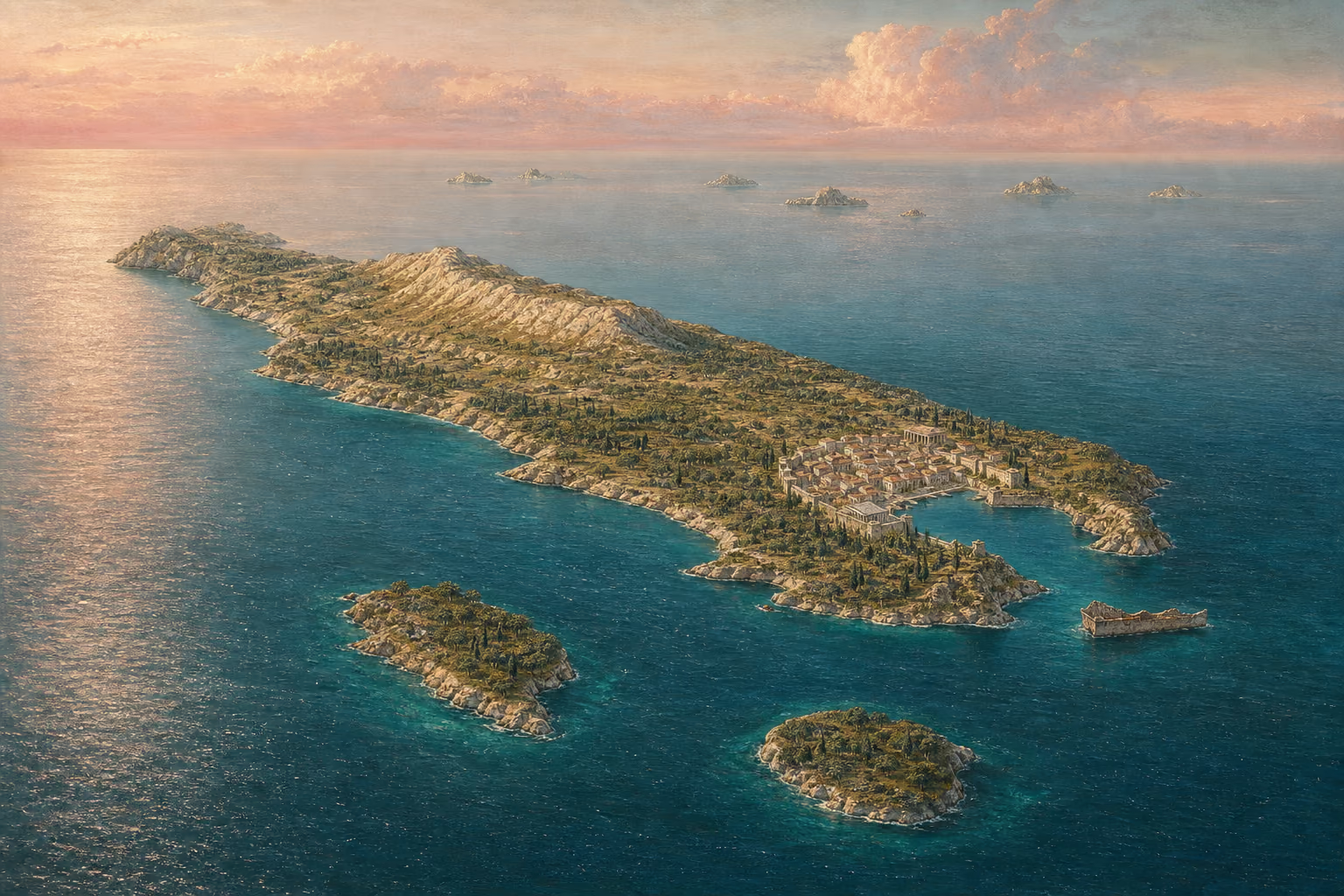
Et maria quidem gentesque in tertio Europae sinu ad hunc modum se habent; insulae autem ex adverse Thesprotiae a Buthroto XII p., eadem ab Acrocerauniis L???, cum urbe eiusdem nominis Corcyra liberae civitatis et oppido Cassiope temploque Cassi lovis, XCVII in longitudinem patens, Homero dicta Scheria et Phaeacia, Callimacho etiam Drepane. circa eam aliquot, sed ad Italiam vergens Othronos, ad Leucadiam Paxos, Subotae duae, V??? discretae a Corcyra. nec procul ab iis ante Corcyram Ericusa, Marathe, Elaphusa, Malthace, Trachie, Pythionia, Ptychia, Tarachie et a Phalacro, Corcyrae promunturio, scopulus in quem mutatam Vlixis navem a simili specie fabula est. ante Leucadiam autem et Aetoliam permultae, quarum Teleboides eaedemque Taphiae ab incolis ante Leucadiam appellantur Taphias, Carnos, Oxia, Prin oessa, ante Aetoliam Echinades Aegialia, Cotonis, Thyatira, Geoaris, Dionysia, Cyrnus, Chalcis, Pinara, Nystrus. ante eas in alto Cephallania, Zacynthus, utraque libera, Ithaca, Dulichium, Same, Crocyle. a Paxo Cephallania, quondam Melaena dicta, X p. abest, circuitu patet XCIII. Same diruta a Romanis adhuc tamen oppida tria habet. inter hanc et Achaiam cum oppido magnifica et fertilitate praecipua Zacynthus, aliquando appellata Hyrie, a Cephallaniae meridiana parte XXV abest. mons Elatus ibi nobilis; ipsa circuitu colligit XXXVI. ab ea Ithaca XV distat, in qua mons Neritus; tota vero circuitu patet XXV. ab ea Araxum, Peloponnesi promunturium, XV. ante hanc in alto Asteris, Prote, ante Zacynthum XXXV in eurum ventum Strophades duae, ab aliis Plotae dictae, ante Cephallaniam Letoia, ante Pylum III Sphagiae, totidem ante Messenen Oenussae. in Asinaeo sinu tres Thyrides, in Laconico Theganusa, Cothon, Cythera cum oppido, antea Porphyris appellata. haec sita est a Maleae promunturio V??? passuum, ancipiti propter angustias ibi navium ambitu. in Argolico Pityusa, Arine, Ephyre. contra Hermionium agrum Tricarenus, Aperopia, Colonis, Aristera, contra Troezenium Calauria, L??? distans Plateis, Belbina, Lasia, Baucidias, contra Epidaurum Cecryphalos, PityonesosVI a continente. ab hac Aegina liberae condicionis XV, cuius XVIIII praenavigatio est; eadem autem a Piraeo Atheniensium portu XX abest, ante Oenone vocitata. Spiraeo promunturio obiacent Eleusa, Adendros, Craugiae duae, Caeciae duae, Selacosa; et a Cenchreis AspisVII et in Megarico sinu MethuridesIIII, Aegila autem XV a Cythera, eademque a Cretae Phalasarna oppido XXV.
Ipsa Creta, altero latere ad austrum, altero ad septentrionem versa, inter ortum occasumque porrigitur centum urbium clara fama. Dosiades eam a Crete nympha, Hesperidis filia, Anaximander a rege Curetum, Philistides Malloteset Crates primum Aëriam dictam, deinde postea Curetim; et Macaron nonnulli a temperie caeli appellatam existimavere. latitudine nusquam L??? excedens et circa mediam sui partem maxime patens longitudine implet CCLXX, circuituDLXXXVIIII, flectensque se in Creticum pelagus ab ea dictum, qua longissima est, ad orientem promunturium Samonium adversum Rhodo, ad occidentem Criu Metopon Cyrenas versus expellit. oppida eius insignia Phalasarna, Elaea, Cisamon, Pergamum, Cy- donea, Minoium Apteron, Pantomatrium, Amphimala, Rhithymna, Panhormum, Cytaeum, Apollonia, Matium, Heraclea, Miletos, Ampelos, Hierapytna, Lebena, Hierapolis, et in mediterraneo Gortyna, Phaestum, Gnosus, Polyrrhenum, Myrina, Lycastos, Rhamnus, Lyctus, Dium, Asium, Pyloros, Rhytion, Elatos, Pherae, Olopyxos, Lasos, Eleuthernae, Therapnae, Marathusa, Tylisos; et aliorum circiter LX oppidorum memoria extat. montes Cadistus, Idaeus, Dictynnaeus, Corycus. ipsa abest promunturio suo, quod vocatur Criu Metopon, ut prodit Agrippa, a Cyrenarum promunturio Phycunte CXXV, item Cadisto.... a Malea Peloponnesi LXXX, a Carpatho insula promunturio SamonioLX in favonium ventum. haec inter ear et Rhodum interiacet; reliquae circa eam ante Peloponnesum duae Corycoe, totidem Mylae, et latere septentrionali dextra Cretam habenti contra Cydoneam Leuce et duae Budroe, contra Matium Dia, contra Itanum promunturium Onysia, Leuce, contra Hierapytnam Chrysea, Gaudos. eodem tractu Ophiussa, Butoa, Ramnus circumvectisque Criu Metopon tres Acusagorus appellatae. ante Samonium promunturium Phocoe, Platiae, Syrnides, Naulochos, Harmedon, Zephyre.
At in Hellade, etiamnum in Aegaeo, Lichades, Scarphia, Corese, Phocasia conpluresque aliae ex adverso Atticae, sine oppidis et ideo ignobiles. sed contra Eleusina clara Salamis. ante eam Psyttalia, a Sunio vero Helene V??? distans. dein Ceos ab ea totidem, quam nostri quidam dixere Ceam, Graeci et Hydrusam, avolsam Euboeae. quingentos longa stadios fuit quondam, mox quattuor fere partibus, quae ad Boeotiam vergebant, eodem mari devoratis oppida habet reliqua Iulida, Carthaeam; intercidere Coresus, Poeeessa. ex hac profectam delicatiorem feminis vestem auctor est Varro.
Euboea, et ipsa avolsa Boeotiae, tam modico interfluente Euripo, ut ponte iungantur, ad meridiem promunturiis duobus, Geraesto ad Atticam vergente et ad Hellespontum Caphereo, insignis, a septentrione Cenaeo, nusquam latitudinem ultraXL extendit, nusquam intra MM contrahit, sed in longitudinem universae Boeotiae ab Attica ad Thessaliam usque praetenta in CL, circuitu vero CCCLXV. abest ab Hellesponto parte Capherei CCXXV, urbibus quondam Pyrrha, Porthmo, Neso, Cerintho, Oreo, Dio, Aedepso, Oechalia, nunc Chalcide, cuius ex adverso in continente Aulis est, Geraesto, Eretria, Carysto, Oritano, Artemisio, fonte Arethusa, flumine Lelanto aquisque calidis quae Ellopiae vocantur nobilis, notior tamen marmore Carystio. antea vocitata est Chalcodontis aut Macris, ut Dionysius et Ephorus tradunt, ut Aristides, Macra, ut Callidemus, Chalcis aere ibi primum reperto, ut Menaechmus, Abantias, ut poetae vulgo, Asopis.
Extra eam in Myrtoo multae, sed maxime inlustres Glauconnesos et Aegilia et a promunturio Geraesto circa Delum in orbem sitae, unde et nomen traxere, Cyclades. prima earum Andrus cum oppido abest a Geraesto X???, a Ceo XXXVIII. ipsam Myrsilus Cauron, deinde Antandron cognominatam tradit, Callimachus Lasiam, alii Nonagriam, Hydrusam, Epagrim; patet circuitu LXXXXIII. ab eadem Andro passus mille et a Delo XV Tenos cum oppido in XV porrecta, quam propter aquarum abundantiam Aristoteles Hydrusam appellatam ait, aliqui Ophiusam. ceterae Myconus cum monte Dimasto a Delo XV, Siphnus, ante Meropia et Acis appellata, circuituXXVIII, Seriphus XV Prepesinthus, Cythnos ipsaque longe clarissima et Cycladum media ac templo Apollinis et mercatu celebrata Delos, quae diu fluctuata, ut proditur, sola motum terrae non sensit ad M. Varronis aetatem; Mucianus prodidit bis concussam. hanc Aristoteles ita appellatam tradit, quoniam repente apparuerit enata, Aglaosthenes Cynthiam, alii Ortygiam, Asteriam, Lagiam, Chlamydiam, Cynethum, Pyrpylen igne ibi primum reperto. cingitur V??? passuum, adsurgit Cynthio monte. proxima ei Rhene, quam Anticlides Celadusam vocat, item Artemiten, Celadinen. Syros, quam circuitu patere XX prodiderunt veteres, Mucianus CLX, Olearos, Paros cum oppido, ab Delo XXXVIII, marmore nobilis, quam primo Platean, postea Minoida vocarunt. ab ea VII. D Naxus, a Delo XVIII, cum oppido, quam Strongylen, deinde Dian, mox Dionysiada a vinearum fertilitate, alii Siciliam minorem aut Callipolim appellarunt. patet circuitu LXXV p. dimidioque maior est quam Parus.
Et hactenus quidem Cycladas servant, ceteras quae secuntur Sporadas. sunt autem Helene, Phacusa, Nicasia, Schinusa, Pholegandros et a Naxo XXXVIII p. Icaros, quae nomen mari dedit, tantundem ipsa in longitudinem patens, cum oppidis duobus tertio amisso, antea vocitata Doliche et Macris et Ichthyusa. sita est ab exortu solstitiali Deli L??? eademque a Samo XXXV, inter Euboeam et Andrum X??? passuum freto, ab ea GeraestumCXII D passuum. nec deinde servari potest ordo; acervatim ergo ponentur reliquae. Scyros, los a NaxoXVIII, Homeri sepulchro veneranda, longitudineXXII, antea Phoenice appellata, Odia, Oletandros. Gyara cum oppido, circuitu XV p., abest ab Andro LXII, ab ea Syrnos LXXX, Cynethus, Telos unguento nobilis, a Callimacho Agathusa appellata, Don usa, Patmus circuitu XXX, Corassiae, Lebinthus, Gyrus, Cinara, Sicinus quae antea Oenoe, Heraclia quae Onus, Casos quae Astrabe, Cimolos quae Echinusa, Melos cum oppido, quam Aristides Mimblida appellat, Aristoteles Zephyriam, Callimachus Mimallida, Heraclides Siphin et Acytan; haec insularum rotundissima est. Buporthmos, Machia, Hypere, quondam Patage, ut alii, Platage, nunc Amorgos, Polyaegas, Sapyle, Thera, cum primum emersit, Calliste dicta. ex ea avolsa postea Therasia, atque inter duas enata mox Automate, eadem Hiera, et in nostro aevo Thia iuxta easdem enata. distat Ios a Thera XXV p. secuntur Lea, Ascania, Anaphe, Hippuris. Astypalaea, liberae civitatis, circuitusLXXXVIII, abest a Cadisto Cretae CXXV, ab ea Platea LX, unde CaminiaXXXVIII, Azibintha, Lamse, Atragia, Pharmacusa, Thetaedia, Chalcia, Calymna, in qua oppidum, Coos, Eulimna, a qua Carpathum, quae nomen Carpathio mari dedit, XXV. inde Rhodum Africo vento L???, a Carpatho CasumVII, a Caso Samonium, Cretae promunturium, XXX. in Euripo autem Euboico primo fere introitu Petaliae IIII insulae et in exitu Atalante. Cyclades et Sporades ab oriente litoribus Icariis Asiae, ab occidente Myrtois Atticae, a septentrione Aegaeo mari, a meridie Cretico et Carpathio inclusae per DCC in longitudinem et perCC in latitudinem iacent.
Pagasicus sinus ante se habet Euthiam, Cicynethum, Scyrum supra dictam, sed Cycladum et Sporadum extimam, Gerontiam, Scandiram, Thermaeus Iresiam, Solymniam, Eudemiam, Neam, quae Minervae sacra est, Athos ante se IIII, Peparethum cum oppido, quondam Euoenon dictam, novem milia, SciathumXV, Imbrum cum oppido LXXXVIII. eadem abest a Mastusia CherronesiXXII p., ipsa circuiturLXII. D; perfunditur amne Ilisso. ab ea Lemnos XXII, quae ab Atho LXXXVII; circuitu patet CXV D p., oppida habet Hephaestiam et Myrinam, in cuius forum solstitio Athos eiaculatur umbram. ab ea Thasos libera VI p., olim Aëria vel Aethria dicta. inde Abdera continentis XXII, Athos LXII.D, tantundem insula Samothrace libera ante Hebrum, ab Imbro XXXII, a Lemno XXII.D p., a Thraciae ora XXXVIII; circuiturXXXV, attollitur monte Saoce X??? p. altitudinis, vel inportuosissima omnium. Callimachus eam antiquo nomine Dardaniam vocat. inter Cherronesum et Samothracen, utrimque fere XV, Halonesos, ultra Gethone, Lamponia, Alopeconnesus haud procula Coelo, Cherronesi portu, et quaedam ignobiles. desertis quoque reddantur in hoc sinu quarum modo inveniri potuere nomina: Avesticos, Sarnos, Cissyros, Charbrusa, Calathusa, Scyllia, Dialeon, Dictaea, Melanthia, Dracanon, Arconesos, Diethusa, Ascapos, Capheris, Mesate, Aeantion, Pateronnesos, Pateria, Calathe, Neriphus, Pelendos.
Quartus e magnis Europae sinus ab Hellesponto incipiens Maeotis ostio finitur. sed totius Ponti forma breviter conplectenda est, ut facilius partes noscantur. vastum mare, praeiacens Asiae et ab Europa porrecto Cherronesi litore expulsum, angusto meatu inrumpit in terras, VII stadiorum, ut dictum est, intervallo Europam auferens Asiae. primas angustias Hellespontum vocant; hac Xerxes Persarum rex constrato in navibus ponte duxit exercitum. porrigitur deinde tenuis Euripus LXXXVI spatio ad Priapum urbem Asiae, qua Magnus Alexander transcendit. inde exspatiatur aequor rursusque in artum coit. laxitas Propontis appellatur, angustiae Thracius Bosporus, latitudine quingentorum passuum, qua Darius pater Xerxis copias ponte transvexit. tota ab Hellesponto longitudo CCXXXIX. dein vastum mare Pontus Euxinus, qui quondam Axenus, longe refugientes occupat terras magnoque litorum flexu retro curvatus in cornua ab iis utrimque porrigitur, ut sit plane arcus Scythici forma. medio flexu iungitur ostio Maeotii lacus. Cimmerius Bosporus id os vocatur, II quingentorum passuum latitudine. at inter duos Bosporos Thracium et Cimmerium derecto cursu, ut auctor est Polybius, D??? intersunt. circuilus vero totius Ponti viciens semel L, ut auctor est Varro et fere veteres. Nepos Cornelius CCCL adicit, Artemidorus vicies novies decem novem milia facit, Agrippa |XXVI|XL, Mucianus |XXIIII| XXV. simili modo de Europae latere mensuram alii |XIIII|.LXXVIIII determinavere, alii |XI|. M. Varro ad hunc modum metitur: ab ostio Ponti Apolloniam CLXXXVII.D p., Callatim tantundem, ad ostium Histri CXXV, ad BorysthenemCCL, Cherronesum Heracleotarum oppidum CCCLXXV p., adPanticapaeum, quod aliqui Bosporum vocant, extremum in Europae ora, CCXII.D, quae summa efficit |XIIII|. XXXVII.D. Agrippa a Byzantio ad flumen Histrum DLX, inde Panticapaeum DCXXXVIII. lacus ipse Maeotis, Tanain amnem ex Ripaeis montibus defluentem accipiens, novissimum inter Europam Asiamque finem, |XIIII|. VI circuitu patere traditur, ab aliis |XI|. XXV. ab ostio eius ad Tanais ostium derecto cursu CCLXXV esse constat. accolae sinus eius in mentione Thraciae dicti sunt Histropolin usque. inde ostia Histri.
Ortus hic in Germania iugis montis Abnouae ex adverso Raurici Galliae oppidi, multis ultra Alpes milibus ac per innumeras lapsus gentes Danuvi nomine, inmenso aquarum auctu et unde primum Illyricum adluit Hister appellatus, LX amnibus receptis, medio ferme eorum nu- mero navigabili, in Pontum vastis sex fluminibus evolvitur. primum ostium Peuces, mox ipsa Peuce insula, in qua proximus alveus appellatusXIX p. magna palude sorbetur. ex eodem alveo et super Histropolim lacus gignitur LXIII passuum ambitu; Halmyrin vocant. secundum ostium Naracustoma appellatur, tertium Calon Stoma iuxta insulam Sarmaticam, quartum Pseudostomon et insula Conopon Diabasis, postea Borion Stoma et Psilon Stoma. singula autem ora sunt tanta, ut prodatur in XL passuum longitudinis vinci mare dulcemque intellegi haustum.
Ab eo in plenum quidem omnes Scytharum sunt gentes, varie tamen litori adposita tenuere, alias Getae, Daci Romanis dicti, alias Sarmatae, Graecis Sauromatae, eorumque Hamaxobii aut Aorsi, alias Scythae degeneres et a servis orti aut Trogodytae, mox Alani et Rhoxolani; superiora autem inter Danuvium et Hercynium saltum usque ad Pannonica hiberna Carnunti Germanorumque ibi confinium, campos et plana Iazyges Sarmatae, montes vero et saltus pulsi ab iis Daci ad Pathissum amnem, a Maro, sive Duria est a Suebis regnoque Vanniano 81 dirimens eos, aversa Basternae tenent aliique inde Germani. Agrippa totum eum tractum ab Histro ad oceanum bis ad decies centenum milium passuum in longitudinem, quattuor milibus minusCCCC in latitudinem, ad flumen Vistlam a desertis Sarmatiae prodidit. Scytharum nomen usquequaque transiit in Sarmatas atque Germanos. nec aliis prisca illa duravit appellatio quam qui extremi gentium harum, ignoti prope ceteris mortalibus, degunt.
Verum ab Histro oppida Cremniscoe, Aepolium, montes Macrocremni, clarus amnis Tyra, oppido nomen inponens ubi antea Ophiusa dicebatur. in eodem insulam spatiosam incolunt Tyragetae; abest a Pseudostomo Histri ostio CXXX. mox Axiacae cognomines flumini, ultra quos Crolyzi, flumen Rhode, sinus Saggarius, portus Ordesos et a TyraCXX flumen Borysthenes lacusque et gens eodem nomine et oppidum ab mari recedens XV passuum, Olbiopolis et Miletopolis antiquis nominibus. rursus litore portus Achaeorum, insula Achillis, tumulo eius viri clara, et ab ea CXXV passuum paeninsula ad formam gladii in transversum porrecta, exercitatione eiusdem cognominata Dromos Achilleos, cuius longitudinem LXXX tradidit A grippa. totum eum tractum tenent Sardi Scythae et Siraci. inde silvestris regio Hylaeum mare, quo adluitur, cognominavit; Enoecadioe vocantur incolae. ultra Panticapes amnis, qui Nomadas et Georgos disterminat, mox Acesinus. quidam Panticapen confluere intra Olbiam cum Borysthene tradunt, diligentiores Hypanim, tanto errore eorum, qui illum in Asiae parte prodidere.
Mare subit magno recessu, donec V??? passuum intervallo absit a Maeotide, vasta ambiens spatia multasque gentes. sinus Carcinites appellatur. flumen Pacyris; oppida Navarum, Carcine. a tergo lacus Buces, fossa emissus in mare. ipse Buces a Coreto, Maeoti lacus sinu, petroso discluditur dorso. recipit amnes Bucem, Gerrhum. Hypanim, ex diverso venientes tractu. nam Gerrhus Basilidas et Nomadas separat, Hypanis per Nomadas et Hylaeos fluit, manu facto alveo in Bucen, naturali in Coretum. regio Scythiae Sindica nominatur.
Sed a Carcinite Taurica incipit, quondam mari circumfusa et ipsa qua nunc campi iacent; dein vastis attollitur iugis. triginta sunt eorum populi, ex iis mediterranei XXIII; VI oppida Orgocini, Characeni, Assyrani, Stactari, Acisalitae, Caliordi. iugum ipsum Scythotauri tenent; cluduntur ab oceidente Cherroneso Nea, ab ortu Scythis Satarcis. in ora a Carcine oppida Taphrae in ipsis angustiis paeninsulae, mox Heraclea Cherronesus, libertate a Romanis donatum; Megarice vocabatur antea, praecipui nitoris, in toto eo tractu custoditis Graeciae moribus, V??? passuum ambiente muro. inde Parthenium promunturium, Taurorum civitas Placia, Symbolum portus, promunturium Criu Metopon adversum Carambico Asiae promunturio, per medium Euxinum procurrensCLXX intervallo, quae maxime ratio Scythici arcus formam efficit. ab eo Taurorum portus multi et lacus. oppidum Theodosia a Criu Metopo CXXV p., a Cherroneso vero CLXV. ultra fuere oppida Cytae, Zephyrium, Acrae, Nymphaeum, Dia. restat longe validissimum in ipso Bospori introitu Panticapaeum Milesiorum, a Theodosia LXXXVII. D p., a Cimmerio vero oppido trans fretum sito MM. D, ut diximus, passuum. haec ibi latitudo Asiam ab Europa separat, eaque ipsa pedibus plerumque pervia glaciato freto. Bospori Cimmerii longitudoXII. D passuum. oppida habet Hermisium, Myrmecium et intus insulam Alopecen. per Maeotim autem ab extremo Isthmo, qui locus Taphrae vocatur, ad os Bospori CCLX longitudo colligit.
A Taphris per continentem introrsus tenet Auchetae, apud quos Hypanis oritur, Neuroe, apud quos Borysthenes, Geloni, Thyssagetae, Budini, Basilidae et caeruleo capillo Agathyrsi. super eos Nomades, deinde Anthropophagi, a Buce vero super Maeotim Sauromatae et Essedones. at per oram ad Tanain usque Maeotae, a quibus lacus nomen accepit, ultimique a tergo eorum Arimaspi. mox Ripaei montes et adsiduo nivis casu pinnarum similitudine Pterophoros appellata regio, pars mundi damnata a rerum natura et densa mersa caligine neque in alio quam rigoris opere gelidisque Aquilonis conceptaculis.
Pone eos montes ultraque Aquilonem gens felix, si credimus, quos Hyperboreos appellavere, annoso degit aevo, fabulosis celebrata miraculis. ibi creduntur esse cardines mundi extremique siderum ambitus semenstri luce [et una die] solis adversi, non, ut imperiti dixere, ab aequinoctio verno in autumnum: semel in anno solstitio oriuntur iis soles brumaque semel occidunt. regio aprica, felici temperie, omni adflatu noxio carens. domus iis nemora lucique, et deorum cultus viritim gregatimque, discordia ignota et aegritudo omnis. mors non nisi satietate vitae epulatis delibutoque senio luxu e quadam rupe in mare salientibus; hoc genus sepulturae beatissimum. quidam eos in prima parte Asiae litorum posuere, non in Europa, quia sunt ibi similitudine et situs Attacorum nomine. alii medios fecere eos inter utrumque solem, antipodum occasus exorientemque nostrum, quod fieri nullo modo potest tam vasto mari interveniente. qui alibi quam in semenstri luce constituere eos, serere matutinis, meridie metere, occidente fetus arborum decerpere, noctibus in specus condi tradiderunt. nec licet dubitare de gente ea: tot auctores produnt frugum primitias solitos Delum mittere Apollini, quem praecipue colunt. virgines ferebant eas, hospitiis gentium per annos aliquot venerabiles, donec violata fide in proximis accolarum finibus deponere sacra ea instituere iique ad conterminos deferre atque ita Delum usque. mox et hoc ipsum exolevit. Sarmatiae, Scythiae, Tauricae omnisque a Borysthene amne tractus longitude DCCCCLXXX, latitudo DCCXVI a M. Agrippa tradita est. ego incertam in hac terrarum parte mensuram arbitror.
Verum instituto ordine reliqua huius sinus dicantur, et maria quidem eius nuncupavimus.
English · Bostock & Riley 1855–57
Lying opposite to Thesprotia, at a distance of twelve miles from Buthrotus, and of fifty from Acroceraunia, is the island of Corcyra, with a city of the same name, the citizens of which are free; also a town called Cassiope, and a temple dedicated to Jupiter Cassius. This island is ninety-seven miles in length, and in Homer has the names of Scheria and Phæacia; while Callimachus calls it Drepane. There are some other islands around it, such as Thoronos, lying in the direction of Italy, and the two islands of Paxos in that of Leucadia, both of them five miles distant from Corcyra. Not far from these, and in front of Corcyra, are Ericusa, Marathe, Elaphusa, Malthace, Trachie, Pythionia, Ptychia, Tarachie, and, off Phalacrum, a promontory of Corcyra, the rock into which (according to the story, which arises no doubt from the similarity of appearance) the ship of Ulysses was changed.
Before Leucimna we find the islands of Sybota, and between Leucadia and Achaia a great number of islands, among which are those called Teleboïdes, as also Taphiæ; by the natives, those which lie before Leucadia are called by the names of Taphias, Oxiæ, and Prinoessa; while those that are in front of Ætolia are the Echinades, consisting of Ægialia, Cotonis, Thyatira, Geoaris, Dionysia, Cyrnus, Chalcis, Pinara, and Mystus.
In front of these, and lying out at sea, are Cephallenia and Zacynthus, both of them free, Ithaca, Dulichium, Same, and Crocyle. Cephallenia, formerly known as Melæna, lies at a distance of eleven miles from Paxos, and is ninety-three miles in circumference: its city of Same has been levelled to the ground by the Romans; but it still possesses three others. Between this island and Achaia lies the island of Zacynthus, remarkable for its city of the same name, and for its singular fertility. It formerly had the name of Hyrie, and lies to the south of Cephallenia, at a distance of twenty-five miles; in it there is the famous mountain of Elatus. This island is thirty-six miles in circumference. At a distance of fifteen miles from Zacynthus is Ithaca, in which is Mount Neritus; its circumference in all is twenty-five miles. Twelve miles distant from this island is Araxus, a promontory of the Peloponnesus. Before Ithaca, lying out in the main sea, are Asteris and Prote; and before Zacynthus, at a distance of thirty-five miles in the direction of the south-east wind, are the two Strophades, by some known as the Plotæ. Before Cephallenia lies Letoia, before Pylos the three Sphagiæ, and before Messene the Œnussæ, as many in number.
In the Asinæan Gulf there are the three Thyrides, and in that of Laconia Theganusa, Cothon, and Cythera, with the town of that name, the former name of which island was Porphyris. It is situate five miles from the promontory of Malea, thus forming a strait very dangerous to navigation. In the Gulf of Argolis are Pityusa, Irine, and Ephyre; opposite the territory of Hermione, Tiparenus, Aperopia, Colonis, and Aristera; and, opposite that of Trœzen, Calauria, at a distance of half a mile, Plateis, Belbina, Lasia, and Baucidias. Opposite Epidaurus is Cecryphalos, and Pityonesos, six miles distant from the mainland; and, at a distance of fifteen miles from this last, Ægina, a free island, the length of which, as you sail past it, is eighteen miles. This island is twenty miles distant from Piræus, the port of Athens: it used formerly to be called Œnone. Opposite the promontory of Spiræum, lie Eleusa, Adendros, the two islands called Craugiæ, the two Cæciæ, Selachusa, Cenchreis, and Aspis; as also, in the Gulf of Megara, the four Methurides. Ægila lies at a distance of fifteen miles from Cythera, and of twenty-five from Phalasarna, a city of Crete.
Crete itself lies from east to west, the one side facing the south, the other the north, and is known to fame by the renown of its hundred cities. Dosiades says, that it took its name from the nymph Crete, the daughter of Hesperides; Anaximander, from a king of the Curetes, Philistides of Mallus * * * * *; while Crates says that it was at first called Aëria, and after that Curetis; and some have been of opinion that it had the name of Macaron from the serenity of its climate. In breadth it nowhere exceeds fifty miles, being widest about the middle. In length, however, it is full 270 miles, and 589 in circumference, forming a bend towards the Cretan Sea, which takes its name from it. At its eastern extremity is the Promontory of Sammonium, facing Rhodes, while towards the west it throws out that of Criumetopon, in the direction of Cyrene.
The more remarkable cities of Crete are, Phalasarna, Etæa, Cisamon, Pergamum, Cydonia, Minoium, Apteron, Pantomatrium, Amphimalla, Rhithymna, Panormus, Cytæum, Apollonia, Matium, Heraclea, Miletos, Ampelos, Hierapytna, Lebena, and Hierapolis; and, in the interior, Gortyna, Phæstum, Cnossus, Polyrrenium, Myrina, Lycastus, Rhamnus, Lyctus, Dium, Asus, Pyloros, Rhytion, Elatos, Pharæ, Holopyxos, Lasos, Eleuthernæ, Therapnæ, Marathusa, and Tylisos; besides some sixty others, of which the memory only exists. The mountains are those of Cadistus, Ida, Dictynnæus, and Corycus. This island is distant, at its promontory of Criumetopon, according to Agrippa, from Phycus, the promontory of Cyrene, 125 miles; and at Cadistus, from Malea in the Peloponnesus, eighty. From the island of Carpathos, at its promontory of Sammonium it lies in a westerly direction, at a distance of sixty miles; this last-named island is situate between it and Rhodes.
The other islands in its vicinity, and lying in front of the Peloponnesus, are the two isles known as Corycæ, and the two called Mylæ. On the north side, having Crete on the right, and opposite to Cydonia, is Leuce, and the two islands known as Budroæ. Opposite to Matium lies Dia; opposite to the promontory of Itanum, Onisia and Leuce; and over against Hierapytna, Chrysa and Gaudos. In the same neighbourhood, also, are Ophiussa, Butoa, and Aradus; and, after doubling Criumetopon, we come to the three islands known as Musagorus. Before the promontory of Sammonium lie the islands of Phocœ, the Platiæ, the Sirnides, Naulochos, Armedon, and Zephyre.
Belonging to Hellas, but still in the Ægean Sea, we have the Lichades, consisting of Scarphia, Coresa, Phocaria, and many others which face Attica, but have no towns upon them, and are consequently of little note. Opposite Eleusis, however, is the far-famed Salamis; before it, Psyttalia; and, at a distance of five miles from Sunium, the island of Helene. At the same distance from this last is Ceos, which some of our countrymen have called Cea, and the Greeks Hydrussa, an island which has been torn away from Eubœa. It was formerly 500 stadia in length; but more recently four-fifths of it, in the direction of Bœotia, have been swallowed up by the sea. The only towns it now has left are Iulis and Carthæa; Coresus and Pœëessa have perished. Varro informs us, that from this place there used to come a cloth of very fine texture, used for women’s dresses.
Eubœa itself has also been rent away from Bœotia; the channel of the Euripus, which flows between them, being so narrow as to admit of the opposite shores being united by a bridge. At the south, this island is remarkable for its two promontories, that of Geræstus, which looks towards Attica, and that of Caphareus, which faces the Hellespont; on the north it has that of Cenæum. In no part does this island extend to a greater breadth than forty miles, while it never contracts to less than two. In length it runs along the whole coast of Bœotia, extending from Attica as far as Thessaly, a distance of 150 miles. In circumference it measures 365, and is distant from the Hellespont, on the side of Caphareus, 225 miles. The cities for which it was formerly famous were, Pyrrha, Porthmos, Nesos, Cerinthos, Oreum, Dium, Ædepsos, Ocha, and Œchalia; at present it is ennobled by those of Chalcis (opposite which, on the mainland, is Aulis), Geræstus, Eretria, Carystus, Oritanum, and Artemisium. Here are also the Fountain of Arethusa, the river Lelantus, and the warm springs known as Ellopiæ; it is still better known, however, for the marble of Carystus. This island used formerly to be called Chalcodontis and Macris, as we learn from Dionysius and Ephorus; according to Aristides, Macra; also, as Callidemus says, Chalcis, because copper was first discovered here. Menæchmus says that it was called Abantias, and the poets generally give it the name of Asopis.
Beyond Eubœa, and out in the Myrtoan Sea, are numerous other islands; but those more especially famous are, Glauconnesos and the Ægila. Off the promontory, too, of Geræstus are the Cyclades, lying in a circle around Delos, from which circumstance they derive their name. The first of them is the one called Andros with a city of the same name, distant from Geræstus ten miles, and from Ceos thirty-nine. Myrsilus tells us that this island was at first called Cauros, and after that Antandros; Callimachus calls it Lasia, and others again Nonagria, Hydrussa, and Epagris. It is ninety-three miles in circumference. At a distance of one mile from Andros and of fifteen from Delos, is Tenos, with a city of the same name; this island is fifteen miles in length. Aristotle says that it was formerly called Hydrussa, from the abundance of water found here, while some writers call it Ophiussa. The other islands are, Myconos, with the mountain of Dimastus, distant from Delos fifteen miles; Siphnus, formerly called Meropia and Acis, twenty-eight miles in circumference; Seriphus, twelve miles in circuit; Prepesinthus; Cythnos; and then, by far the most famous among the Cyclades, and lying in the very middle of them, Delos itself, so famous for its temple of Apollo, and its extensive commerce. This island long floated on the waves, and, as tradition says, was the only one that had never experienced an earthquake, down to the time of M. Varro; Mucianus however has informed us, that it has been twice so visited. Aristotle states that this island received its name from the fact of its having so suddenly made its appearance on emerging from the sea; Aglaosthenes, however, gives it the name of Cynthia, and others of Ortygia, Asteria, Lagia, Chlamydia, Cynthus, and, from the circumstance of fire having been first discovered here, Pyrpile. Its circumference is five miles only; Mount Cynthus here raises his head.
Next to this island is Rhene, which Anticlides calls by the name of Celadussa, and Callidemus, Artemite; Scyros, which the old writers have stated to be twenty miles in circumference, but Mucianus 160; Oliaros; and Paros, with a city of the same name, distant from Delos thirty-eight miles, and famous for its marble; it was first called Platea, and after that, Minois. At a distance of seven miles from this last island is Naxos, with a town of the same name; it is eighteen miles distant from Delos. This island was formerly called Strongyle, then Dia, and then Dionysias, in consequence of the fruitfulness of its vineyards; others again have called it the Lesser Sicily, or Callipolis. It is seventy-five miles in circumference—half as large again as Paros.
The islands thus far are considered as belonging to the Cyclades; the rest that follow are the Sporades. These are, Helene, Phacussa, Nicasia, Schinussa, Pholegandros, and, at a distance of thirty-eight miles from Naxos, Icaros, which has given its name to the surrounding sea, and is the same number of miles in length, with two cities, and a third now no longer in existence: this island used formerly to be called Doliche, Macris, and Ichthyoëssa. It is situate fifty miles to the north-east of Delos, and thirty-five from the island of Samos. Between Eubœa and Andros, there is an arm of the sea ten miles in width, and from Icaros to Geræstus is a distance of 112 1 ⁄ 2 miles.
After we pass these, no regular order can be well observed; the rest must therefore be mentioned indiscriminately. There is the island of Scyros, and that of Ios, eighteen miles distant from Naxos, and deserving of all veneration for the tomb there of Homer; it is twenty-five miles in length, and was formerly known by the name of Phœnice; also Odia, Oletandros, and Gyara, with a city of the same name, the island being twelve miles in circumference, and distant from Andros sixty-two. At a distance of eighty miles from Gyara is Syrnos, then Cynæthus, Telos, noted for its unguents, and by Callimachus called Agathussa, Donusa, Patmos, thirty miles in circumference, the Corassiæ, Lebinthus, Leros, Cinara; Sicinus, formerly called Œnoë; Hieracia, also called Onus; Casos, likewise called Astrabe; Cimolus, or Echinussa; and Melos, with a city of that name, which island Aristides calls Memblis, Aristotle Zephyria, Callimachus Mimallis, Heraclides Siphis and Acytos. This last is the most circular in form of all these islands. After this comes Machia, then Hypere, formerly Patage, or, as others have it, Platage, but now called Amorgos, Polyægos, Phyle, and Thera, known as Calliste when it first sprang from the waves. From this, at a later period, the island of Therasia was torn away, and between the two afterwards arose Automate, also called Hiera, and Thia, which in our own times came into existence in the vicinity of these islands. Ios is distant from Thera twenty-five miles.
Next to these follow Lea, Ascania, Anaphe, Hippuris, and Astypalæa, a free state. This island is eighty-eight miles in circumference, and 125 miles distant from Cadistus, in Crete. From Astypalæa, Platea is distant sixty miles, and Caminia thirty-eight from this last. We then come to the islands of Azibintha, Lanise, Tragæa, Pharmacussa, Techedia, Chalcia, Calymna, in which is the town of Coös, Calymna, at a distance of twenty-five miles from which is Carpathum, which has given its name to the Carpathian Sea. The distance thence to Rhodes, in the direction of the south-west wind, is fifty miles. From Carpathum to Casus is seven miles, and from Casus to Sammonium, the promontory of Crete, thirty. In the Euripus of Eubœa, almost at the very mouth of it, are the four islands called Petaliæ; and, at its outlet, Atalante. The Cyclades and the Sporades are bounded on the east by the Asiatic shores of the Icarian Sea, on the west by the Attic shores of the Myrtoan Sea, on the north by the Ægean, and on the south by the Cretan and Carpathian seas, extending 700 miles in length, and 200 in breadth.
The Gulf of Pagasa has in front of it Euthia, Cicynethus, Scyros, previously mentioned, and the very furthermost of the Cyclades and Sporades, Gerontia and Scandila; the Gulf of Thermæ, Iræsia, Solimnia, Eudemia, and Nea, which last is sacred to Minerva. Athos has before it four islands; Peparethus, formerly called Evœnus, with a city of that name, at a distance from Athos of nine miles; Sciathus, at a distance of fifteen, and Imbros, with a city of the same name, at a distance of eighty-eight miles. This last island is distant from Mastusia, in the Chersonesus, twenty-five miles; it is sixty-two miles in circumference, and is washed by the river Ilisus. At a distance of twenty-two miles from it is Lemnos, being distant from Mount Athos eighty-seven; it is 112 miles in circumference, and has the cities of Hephæstia and Myrina; into the market-place of which last city Athos throws its shadow at the summer solstice. The island of Thasos, constituting a free state, is six miles distant from Lemnos; it formerly had the name of Aëria, or Æthria. Abdera, on the mainland, is distant from Thasos twenty-two miles, Athos sixty-two. The island of Samothrace, a free state, facing the river Hebrus, is the same distance from Thasos, being also thirty-two miles from Imbros, twenty-two from Lemnos, and thirty-eight from the coast of Thrace; it is thirty-two miles in circumference, and in it rises Mount Saoce, ten miles in height. This island is the most inaccessible of them all. Callimachus mentions it by its ancient name of Dardania.
Between the Chersonesus and Samothrace, at a distance of about fifteen miles from them both, is the island of Halonnesos, and beyond it Gethone, Lamponia, and Alopeconnesus, not far from Cœlos, a port of the Chersonesus, besides some others of no importance. The following names may be also mentioned, as those of uninhabited islands in this gulf, of which we have been enabled to discover the names:—Desticos, Sarnos, Cyssiros, Charbrusa, Calathusa, Scylla, Draconon, Arconnesus, Diethusa, Scapos, Capheris, Mesate, Æantion, Pateronnesos, Pateria, Calate, Neriphus, and Polendos.
The fourth great Gulf of Europe begins at the Hellespont and ends at the entrance of the Mæotis. But in order that the several portions of the Euxine and its coasts may be the better known, we must briefly embrace the form of it in one general view. This vast sea, lying in front of Asia, is shut out from Europe by the projection of the shores of the Chersonesus, and effects an entrance into those countries by a narrow channel only, of the width, as already mentioned, of seven stadia, thus separating Europe from Asia. The entrance of these Straits is called the Hellespont; over it Xerxes, the king of the Persians, constructed a bridge of boats, across which he led his army. A narrow channel extends thence a distance of eighty-six miles, as far as Priapus, a city of Asia, at which Alexander the Great passed over. At this point the sea becomes wider, and after some distance again takes the form of a narrow strait. The wider part is known as the Propontis, the Straits as the Thracian Bosporus, being only half-a-mile in width, at the place where Darius, the father of Xerxes, led his troops across by a bridge. The extremity of this is distant from the Hellespont 239 miles.
We then come to the vast sea called the Euxine, which invades the land as it retreats afar, and the name of which was formerly Axenus. As the shores bend inwards, this sea with a vast sweep stretches far away, curving on both sides after the manner of a pair of horns, so much so that in shape it bears a distinct resemblance to a Scythian bow. In the middle of the curve it is joined by the mouth of Lake Mæotis, which is called the Cimmerian Bosporus, and is two miles and a half in width. Between the two Bospori, the Thracian and the Cimmerian, there is a distance in a straight line, of 500 miles, as Polybius informs us. We learn from Varro and most of the ancient writers, that the circumference of the Euxine is altogether 2150 miles; but to this number Cornelius Nepos adds 350 more; while Artemidorus makes it 2919 miles, Agrippa 2360, and Mucianus 2425. In a similar manner some writers have fixed the length of the European shores of this sea at 1478 miles, others again at 1172. M. Varro gives the measurement as follows:—from the mouth of the Euxine to Apollonia 187 miles, and to Callatis the same distance; thence to the mouth of the Ister 125 miles; to the Borysthenes 250; to Chersonesus, a town of the Heracleotæ, 325; to Panticapæum, by some called Bosporus, at the very extremity of the shores of Europe, 212 miles: the whole of which added together, makes 1337 miles. Agrippa makes the distance from Byzantium to the river Ister 560 miles, and from thence to Panticapæum, 635.
Lake Mæotis, which receives the river Tanais as it flows from the Riphæan Mountains, and forms the extreme boundary between Europe and Asia, is said to be 1406 miles in circumference; which however some writers state at only 1125. From the entrance of this lake to the mouth of the Tanais in a straight line is, it is generally agreed, a distance of 375 miles.
The inhabitants of the coasts of this fourth great Gulf of Europe, as far as Istropolis, have been already mentioned in our account of Thrace. Passing beyond that spot we come to the mouths of the Ister. This river rises in Germany in the heights of Mount Abnoba, opposite to Rauricum, a town of Gaul, and flows for a course of many miles beyond the Alps and through nations innumerable, under the name of the Danube. Adding immensely to the volume of its waters, at the spot where it first enters Illyricum, it assumes the name of Ister, and, after receiving sixty rivers, nearly one half of which are navigable, rolls into the Euxine by six vast channels. The first of these is the mouth of Peuce, close to which is the island of Peuce itself, from which the neighbouring channel takes its name; this mouth is swallowed up in a great swamp nineteen miles in length. From the same channel too, above Istropolis, a lake takes its rise, sixty-three miles in circuit; its name is Halmyris. The second mouth is called Naracu-Stoma; the third, which is near the island of Sarmatica, is called Calon-Stoma; the fourth is known as Pseudo-Stomon, with its island called Conopon-Diabasis; after which come the Boreon-Stoma and the Psilon-Stoma. These mouths are each of them so considerable, that for a distance of forty miles, it is said, the saltness of the sea is quite overpowered, and the water found to be fresh.
On setting out from this spot, all the nations met with are Scythian in general, though various races have occupied the adjacent shores; at one spot the Getæ, by the Romans called Daci; at another the Sarmatæ, by the Greeks called Sauromatæ, and the Hamaxobii or Aorsi, a branch of them; then again the base-born Scythians and descendants of slaves, or else the Troglodytæ; and then, after them, the Alani and the Rhoxalani. The higher parts again, between the Danube and the Hercynian Forest, as far as the winter quarters of Pannonia at Carnuntum, and the borders of the Germans, are occupied by the Sarmatian Iazyges, who inhabit the level country and the plains, while the Daci, whom they have driven as far as the river Pathissus, inhabit the mountain and forest ranges. On leaving the river Marus, whether it is that or the Duria, that separates them from the Suevi and the kingdom of Vannius, the Basternæ, and, after them, other tribes of the Germans occupy the opposite sides. Agrippa considers the whole of this region, from the Ister to the ocean, to be 2100 miles in length, and 4400 miles in breadth to the river Vistula in the deserts of Sarmatia. The name “Scythian” has extended, in every direction, even to the Sarmatæ and the Germans; but this ancient appellation is now only given to those who dwell beyond those nations, and live unknown to nearly all the rest of the world.
Leaving the Ister, we come to the towns of Cremniscos, Æpolium, the mountains of Macrocremnus, and the famous river Tyra, which gives name to a town on the spot where Ophiusa is said formerly to have stood. The Tyragetæ inhabit a large island situate in this river, which is distant from Pseudostomos, a mouth of the Ister, so called, 130 miles. We then come to the Axiacæ, who take their name from the river Axiaces, and beyond them, the Crobyzi, the river Rhodes, the Sagarian Gulf, and the port of Ordesos. At a distance of 120 miles from the Tyra is the river Borysthenes, with a lake and a people of similar name, as also a town in the interior, at a distance of fifteen miles from the sea, the ancient names of which were Olbiopolis and Miletopolis. Again, on the shore is the port of the Achæi, and the island of Achilles, famous for the tomb there of that hero, and, at a distance of 125 miles from it, a peninsula which stretches forth in the shape of a sword, in an oblique direction, and is called, from having been his place of exercise, Dromos Achilleos: the length of this, according to Agrippa, is eighty miles. The Taurian Scythians and the Siraci occupy all this tract of country.
At this spot begins a well-wooded district, which has given to the sea that washes its banks the name of the Hylæan Sea; its inhabitants are called Enœchadlæ. Beyond them is the river Panticapes, which separates the Nomades and the Georgi, and after it the Acesinus. Some authors say that the Panticapes flows into the Borysthenes below Olbia. Others, who are more correct, say that it is the Hypanis: so great is the mistake made by those who have placed it in Asia.
The sea runs in here and forms a large gulf, until there is only an intervening space of five miles between it and the Lake Mæotis, its margin forming the sea-line of extensive tracts of land, and numerous nations; it is known as the Gulf of Carcinites. Here we find the river Pacyris, the towns of Navarum and Carcine, and behind it Lake Buges, which discharges itself by a channel into the sea. This Buges is separated by a ridge of rocks from Coretus, a gulf in the Lake Mæotis; it receives the rivers Buges, Gerrus, and Hypacaris, which approach it from regions that lie in various directions. For the Gerrus separates the Basilidæ from the Nomades, the Hypacaris flows through the Nomades and the Hylæi, by an artificial channel into Lake Buges, and by its natural one into the Gulf of Coretus: this region bears the name of Scythia Sindice.
At the river Carcinites, Scythia Taurica begins, which was once covered by the sea, where we now see level plains extended on every side: beyond this the land rises into mountains of great elevation. The peoples here are thirty in number, of which twenty-three dwell in the interior, six of the cities being inhabited by the Orgocyni, the Characeni, the Lagyrani, the Tractari, the Arsilachitæ, and the Caliordi. The Scythotauri possess the range of mountains: on the west they are bounded by the Chersonesus, and on the east by the Scythian Satarchæ. On the shore, after we leave Carcinites, we find the following towns; Taphræ, situate on the very isthmus of the peninsula, and then Heraclea Chersonesus, to which its freedom has been granted by the Romans. This place was formerly called Megarice, being the most polished city throughout all these regions, in consequence of its strict preservation of Grecian manners and customs. A wall, five miles in length, surrounds it. Next to this comes the Promontory of Parthenium, the city of the Tauri, Placia, the port of the Symboli, and the Promontory of Criumetopon, opposite to Carambis, a promontory of Asia, which runs out in the middle of the Euxine, leaving an intervening space between them of 170 miles, which circumstance it is in especial that gives to this sea the form of a Scythian bow. After leaving this headland we come to a great number of harbours and lakes of the Tauri. The town of Theodosia is distant from Criumetopon 125 miles, and from Chersonesus 165. Beyond it there were, in former times, the towns of Cytæ, Zephyrium, Acræ, Nymphæum, and Dia. Panticapæum, a city of the Milesians, by far the strongest of them all, is still in existence; it lies at the entrance of the Bosporus, and is distant from Theodosia eighty-seven miles and a half, and from the town of Cimmerium, which lies on the other side of the Strait, as we have previously stated, two miles and a half. Such is the width here of the channel which separates Asia from Europe, and which too, from being generally quite frozen over, allows of a passage on foot. The width of the Cimmerian Bosporus is twelve miles and a half: it contains the towns of Hermisium, Myrmecium, and, in the interior of it, the island of Alopece. From the spot called Taphræ, at the extremity of the isthmus, to the mouth of the Bosporus, along the line of the Lake Mæotis, is a distance of 260 miles.
Leaving Taphræ, and going along the mainland, we find in the interior the Auchetæ, in whose country the Hypanis has its rise, as also the Neurœ, in whose district the Borysthenes has its source, the Geloni, the Thyssagetæ, the Budini, the Basilidæ, and the Agathyrsi with their azure-coloured hair. Above them are the Nomades, and then a nation of Anthropophagi or cannibals. On leaving Lake Buges, above the Lake Mæotis we come to the Sauromatæ and the Essedones. Along the coast, as far as the river Tanais, are the Mæotæ, from whom the lake derives its name, and the last of all, in the rear of them, the Arimaspi. We then come to the Riphæan mountains, and the region known by the name of Pterophoros, because of the perpetual fall of snow there, the flakes of which resemble feathers; a part of the world which has been condemned by the decree of nature to lie immersed in thick darkness; suited for nothing but the generation of cold, and to be the asylum of the chilling blasts of the northern winds.
Behind these mountains, and beyond the region of the northern winds, there dwells, if we choose to believe it, a happy race, known as the Hyperborei, a race that lives to an extreme old age, and which has been the subject of many marvellous stories. At this spot are supposed to be the hinges upon which the world revolves, and the extreme limits of the revolutions of the stars. Here we find light for six months together, given by the sun in one continuous day, who does not, however, as some ignorant persons have asserted, conceal himself from the vernal equinox to autumn. On the contrary, to these people there is but one rising of the sun for the year, and that at the summer solstice, and but one setting, at the winter solstice. This region, warmed by the rays of the sun, is of a most delightful temperature, and exempt from every noxious blast. The abodes of the natives are the woods and groves; the gods receive their worship singly and in groups, while all discord and every kind of sickness are things utterly unknown. Death comes upon them only when satiated with life; after a career of feasting, in an old age sated with every luxury, they leap from a certain rock there into the sea; and this they deem the most desirable mode of ending existence. Some writers have placed these people, not in Europe, but at the very verge of the shores of Asia, because we find there a people called the Attacori, who greatly resemble them and occupy a very similar locality. Other writers again have placed them midway between the two suns, at the spot where it sets to the Antipodes and rises to us; a thing however that cannot possibly be, in consequence of the vast tract of sea which there intervenes. Those writers who place them nowhere but under a day which lasts for six months, state that in the morning they sow, at mid-day they reap, at sunset they gather in the fruits of the trees, and during the night conceal themselves in caves. Nor are we at liberty to entertain any doubts as to the existence of this race; so many authors are there who assert that they were in the habit of sending their first-fruits to Delos to present them to Apollo, whom in especial they worship. Virgins used to carry them, who for many years were held in high veneration, and received the rites of hospitality from the nations that lay on the route; until at last, in consequence of repeated violations of good faith, the Hyperboreans came to the determination to deposit these offerings upon the frontiers of the people who adjoined them, and they in their turn were to convey them on to their neighbours, and so from one to the other, till they should have arrived at Delos. However, this custom, even, in time fell into disuse.
The length of Sarmatia, Scythia, and Taurica, and of the whole of the region which extends from the river Borysthenes, is, according to Agrippa, 980 miles, and its breadth 717. I am of opinion, however, that in this part of the earth all estimates of measurement are exceedingly doubtful.
But now, in conformity with the plan which I originally proposed, the remaining portions of this gulf must be described. As for its seas, we have already made mention of them.