LIBER IV · CAPUT 3
LOCRIS AND PHOCIS
Latine · Mayhoff 1906
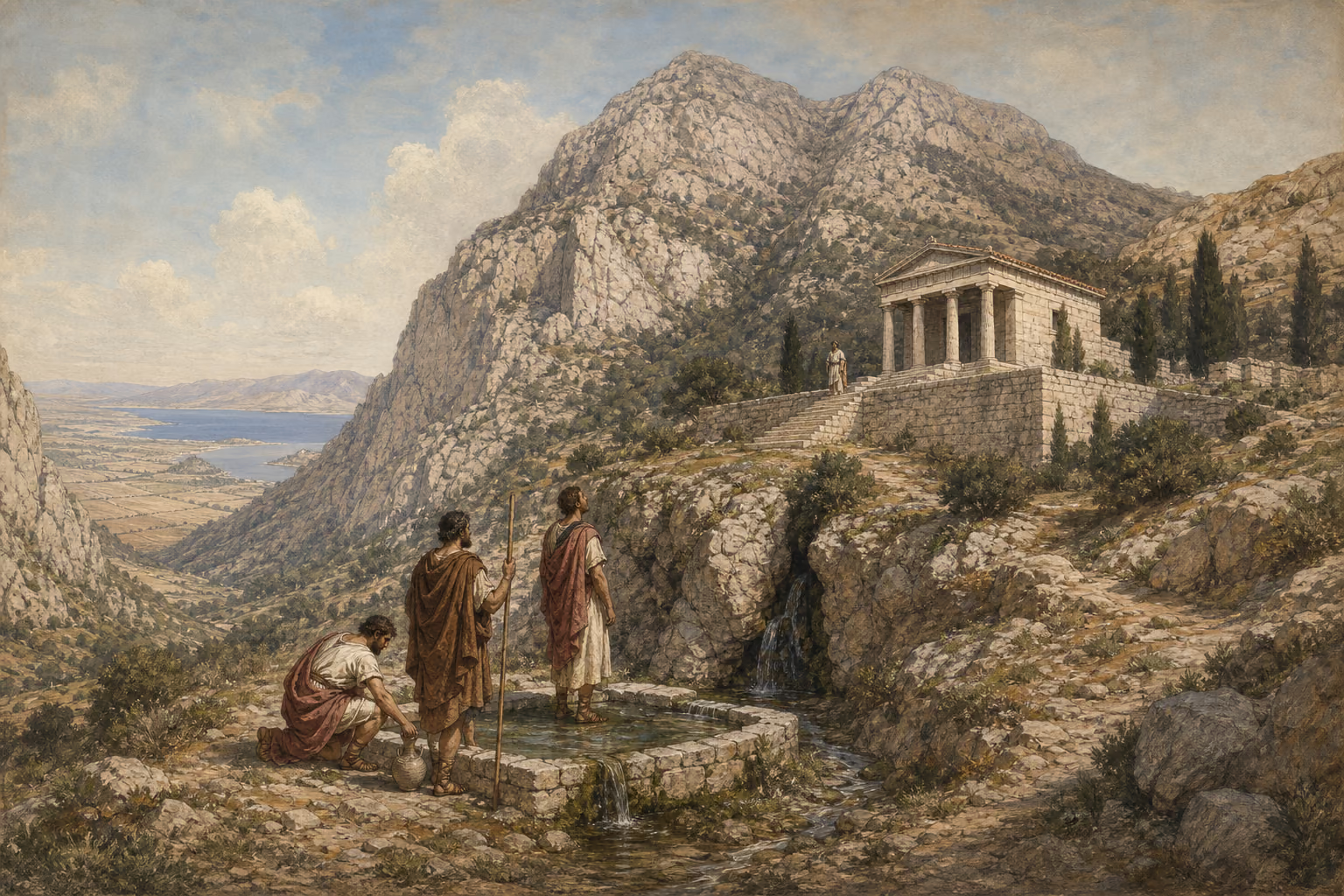
Proximi Aetolis Locri cognominantur Ozolae, immunes. oppidum Oeanthe, portus Apollinis Phaesti, sinus Crisaeus. intus oppida Argyna, Eupalia, Phaestum, Calamisus. ultra Cirrhaei Phocidis campi, oppidum Cirrha, portus Chalaeon, a quo VII p. introrsus liberum oppidum Delphi sub monte Parnaso, clarissimi in terris oraculi Apollinis. fons Castalius, amnis Cephisus praefluens Delphos, ortus in Lilaea urbe. quondam praeterea oppidum crisa et cum Bulensibus Anticyra, Naulochum, Pyrrha, Amphisa immunis, Tithrone, Tithorea, Ambrysus, Mirana, quae regio Daulis appellatur. deinde in intimo sinu angulus Boeotiae adluitur cum oppidis Siphis, Thebis quae Corsiae cognominatae sunt iuxta Heliconem montem. tertium ab hoc mari Boeotiae oppidum Pagae, unde Peloponnesi prosilit cervix.
English · Bostock & Riley 1855–57
Next to Ætolia are the Locri, surnamed Ozolæ; a people exempt from tribute. Here is the town of Œanthe, the port of Apollo Phæstius, and the Gulf of Crissa. In the interior are the towns of Argyna, Eupalia, Phæstum, and Calamisus. Beyond are the Cirrhæan plains of Phocis, the town of Cirrha, and the port of Chalæon, seven miles from which, in the interior, is situate the free town of Delphi, at the foot of Mount Parnassus, and having the most celebrated oracle of Apollo throughout the whole world. There is the Fountain too of Castalia, and the river Cephisus which flows past Delphi, rising in the former city of Lilæa. Besides these, there is the town of Crissa and that of Anticyra, with the Bulenses; as also Naulochum, Pyrrha, Amphissa, exempt from all tribute, Tithrone, Tritea, Ambrysus, and Drymæa, which district has also the name of Daulis. The extremity of the gulf washes one corner of Bœotia, with its towns of Siphæ and Thebes, surnamed the Corsian, in the vicinity of Helicon. The third town of Bœotia on this sea is that of Pagæ, from which point the Isthmus of the Peloponnesus projects in the form of a neck.