LIBER IV · CAPUT 4
THE PELOPONNESUS
Latine · Mayhoff 1906
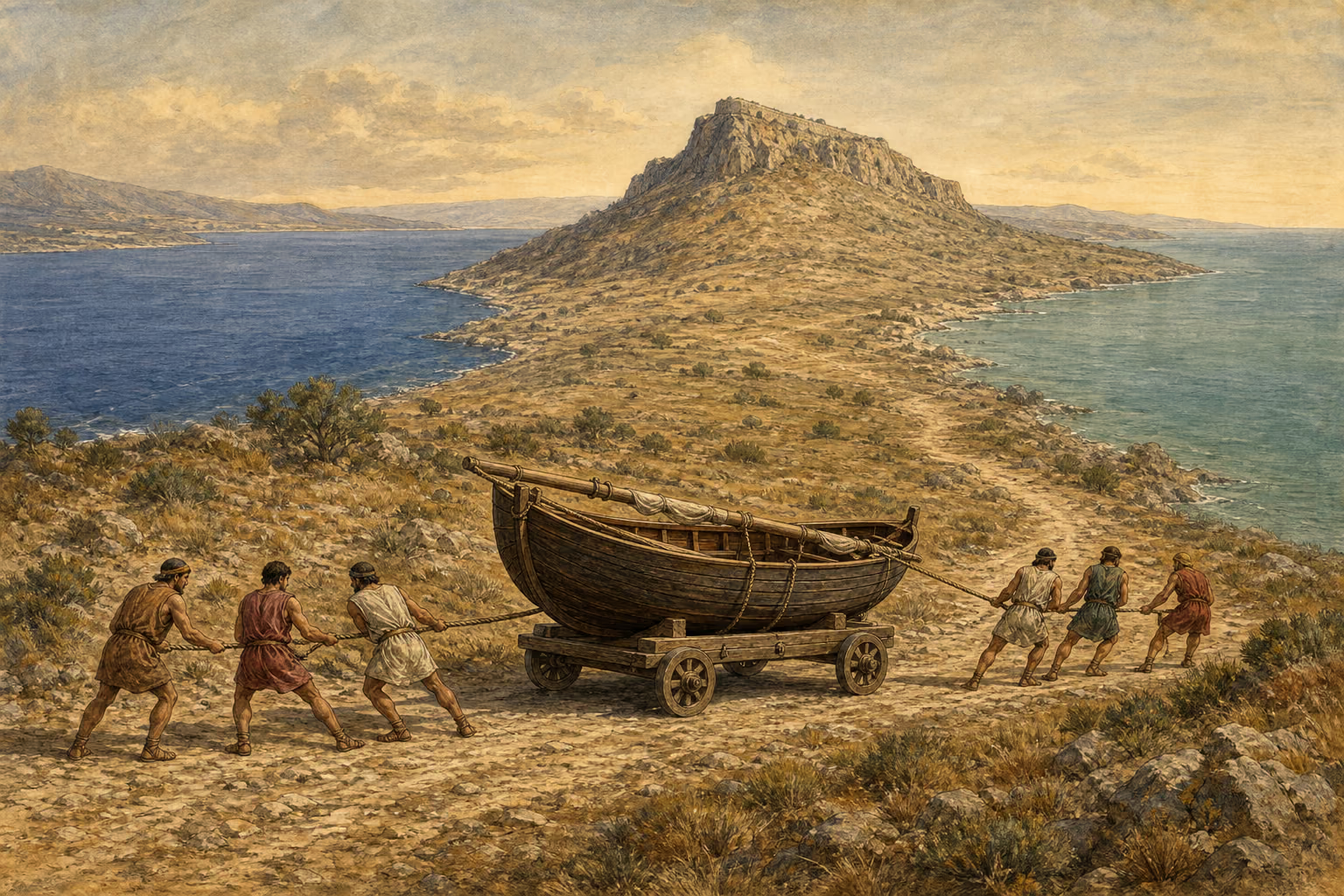
Peloponnesus, Apia antea appellata et Pelasgia, paeninsula haut ulli terrae nobilitate postferenda, inter duo maria Aegaeum et Ionium, platani folio similis propter angulosos recessus, circuitu DLXIII p. colligit auctore Isidoro; eadem per sinus paene tantundem adicit. angustiae, unde procedit, Isthmos appellatur. in eo loco inrumpentia e diverso quae dicta sunt maria a septentrione et exortu eius omnem ibi latitudinem vorant, done contrario incursu tantorum aequorum V milium passuum intervallo exesis utrimque lateribus angusta cervice Peloponnesum contineat Hellas. Corinthiacus hinc, illinc Saronicus appellatur sinus; Lecheae hinc, Cenchreae illinc angustiarum termini, longo et ancipiti navium ambitu quas magnitude plaustris transvehi prohibet. quam ob causam perfodere navigabili alveo angustias eas temptavere Demetrius rex, dictator Caesar, Gaius princeps, Domitius Nero, nefasto, ut omnium exitu patuit, incepto. in medio hoc intervallo, quod Isthmon appellavimus, adplicata colli habitatur colonia Corinthus, antea Ephyra dicta, sexagenis ab utroque litore stadiis, e summa sua arce, quae vocatur Acrocorinthos, in qua fons Pirene, diversa duo maria prospectans. LXXXVIII p. ad Corinthiacum sinum traiectus est Patras a Leucade. Patrae, colonia in longissimo promunturio Peloponnesi condita ex adverso Aetoliae et fluminis Eueni minus M p., ut dictum est, intervallo in ipsis faucibus, sinum CorinthiacumLXXXV in longitudinem usque ad Isthmon trans- mittunt.
English · Bostock & Riley 1855–57
The Peloponnesus, which was formerly called Apia and Pelasgia, is a peninsula, inferior in fame to no land upon the face of the earth. Situate between the two seas, the Ægean and the Ionian, it is in shape like the leaf of a plane-tree, in consequence of the angular indentations made in its shores. According to Isidorus, it is 563 miles in circumference; and nearly as much again, allowing for the sea-line on the margin of its gulfs. The narrow pass at which it commences is known by the name of the Isthmus. At this spot the two seas, which we have previously mentioned, running from the north and the east, invade the land from opposite sides, and swallow up its entire breadth, the result being that through these inroads in opposite directions of such vast bodies of water, the sides of the land are eaten away to such an extent, that Hellas only holds on to the Peloponnesus by the narrow neck, five miles in width, which intervenes. The Gulfs thus formed, the one on this side, the other on that, are known as the Corinthian and the Saronic Gulfs. The ports of Lecheæ, on the one side, and of Cenchreæ on the other, form the frontiers of this narrow passage, which thus compels to a tedious and perilous circumnavigation such vessels as from their magnitude cannot be carried across by land on vehicles. For this reason it is that both King Demetrius, Cæsar the Dictator, the prince Caius, and Domitius Nero, have at different times made the attempt to cut through this neck by forming a navigable canal; a profane design, as may be clearly seen by the result in every one of these instances.
Upon the middle of this intervening neck which we have called the Isthmus, stands the colony of Corinth, formerly known by the name of Ephyre, situate upon the brow of a hill, at a distance of sixty stadia from the shore of either sea. From the heights of its citadel, which is called Acrocorinthos, or the “Heights of Corinth,” and in which is the Fountain of Pirene, it looks down upon the two seas which lie in the opposite directions. From Leucas to Patræ upon the Corinthian gulf is a distance of eighty-eight miles. The colony of Patræ is founded upon the most extensive promontory of the Peloponnesus, facing Ætolia and the river Evenus, the Corinthian Gulf being, as we have previously stated, less than a mile in width at the entrance there, though extending in length as far as the isthmus, a distance of eighty-five miles.