LIBER IV · CAPUT 5
ACHAIA
Latine · Mayhoff 1906
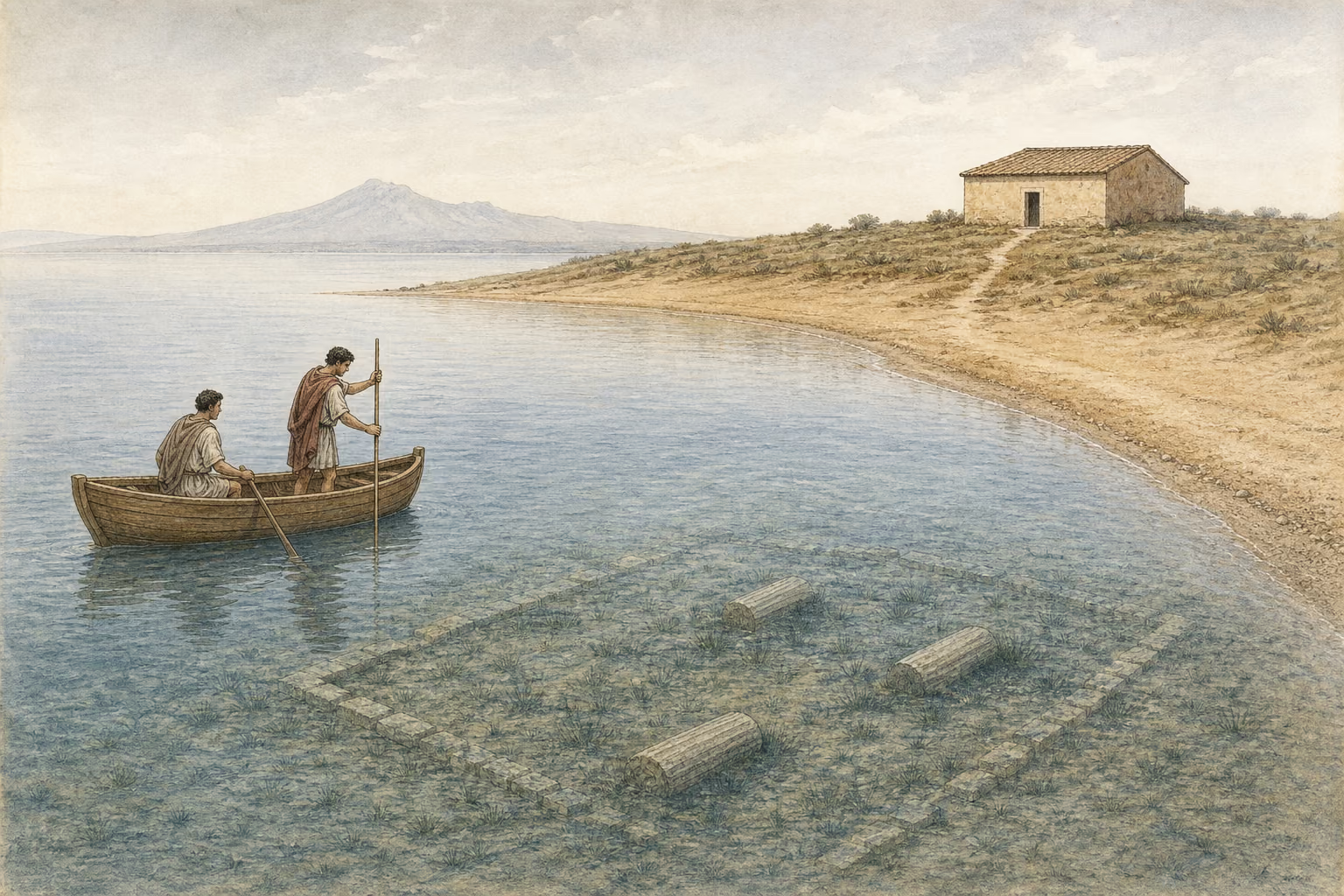
Achaiae nomen provinciae ab Isthmo incipit. antea Aegialos vocabatur propter urbes in litore per ordinem dispositas. primae ibi quas diximus Lecheae, Corinthiorum portus, mox Olyros, Pellenaeorum castellum, oppida Helice, Bura, in quae refugere haustis prioribus, Sicyon, Aegira, Aegium, Erineos. intus Cleonae, Hysiae. Panhormus portus demonstratumque iam Rhium, a quo promunturio V??? absunt Patrae, quas supra memoravimus. locus Pherae. in Achaia novem montium Scioessa notissimus, fons Cymothoe. ultra Patras oppidum Olenum, colonia Dyme, loca Buprasium, Hyrmine, promunturium Araxus, Cyllenius sinus, promunturium Chelonates, unde Cyllenen XV p., castellum Phlius, quae regio ab Homero Araethyrea dicta est, postea Asopis. inde Eliorum ager, qui antea Epioe vocabantur. ipsa Elis in mediterraneo et a PyloXIII intus delubrum Olympii Iovis, ludorum claritate fastos Graeciae complexum, Pisaeorum quondam oppidum, praefluente Alpheo amne. at in ora promunturium Ichthys, amnis Alpheus—navigaturVI p.—, oppida Aulon, Leprium, promunturium Platanodes. omnia haec ad occasum versa, ad meridiem autem Cyparissius sinus cum urbe CyparissoLXXV circuitu, oppida Pylos, Mothone, locus Helos, promunturium Acritas, sinus Asinaeus ab oppido Asine, Coronaeus a Corone. finiuntur Taenaro promunturio. ibi regio Messenia duodeviginti montium, amnis Pamisus, intus autem ipsa Messene, Ithome, Oechalia, Arene, Pteleon, Thryon, Dorion, Zancle, variis quaeque clara temporibus. huius sinus circuitus LXXX, traiectus vero XXX.
Dehinc a Taenaro ager Laconicus liberae gentis et sinus circuitu CVI, traiectu XXXVIII. oppida Taenarum, Amyclae, Pherae, Leuctra et intus Sparta, Therapne atque ubi fuere Cardamyle, Pitane, Anthia, locus Thyreae, Gerania. mons Taygetus, amnis Eurotas. sinus Aegilodes, oppidum Psamathus. sinus Gytheates ab oppido, ex quo Cretamin insulam certissimus cursus. omnes autem Maleo promunturio includuntur.
Qui sequitur sinus ad Scyllaeum Argolicus appellatur, traiectu L???, idem ambitu CLXII. oppida Boea, Epidaurus Limera cognomine, Zarax, Cyphans portus. amnes Inachus, Erasinus, inter quos Argos Hippium cognominatum supra locum Lernen a mari MM, novemque additis milibus Mycenae et ubi fuisse Tiryntha tradunt et locus Mantinea. montes Artemisius, Apesantus, Asterion, Parparus aliique XI numero. fontes Niobe, Amymone, Psamathe. a Scyllaeo ad IsthmonLXXX p. oppida Hermione, Troezen, Coryphasium appellatumque alias Inachium, alias Dipsium Argos, portus Schoenitas. sinus Saronicus, olim querno nemore redimitus, unde nomen, ita Graecia antiqua appellante quercum; in eo Epidaurum oppidum, Aesculapi delubro celebre, Spiraeum promunturium, portus Anthedus et Bucephalus et quas supra dixeramus Cenchreae, Isthmi pars altera cum delubro Neptuni quinquennalibus incluto ludis. tot sinus Peloponnesi oram lancinant, tot maria adlatrant, siquidem a septentrione Ionium inrumpit, ab occidente Siculo pulsatur, a meridie Cretico urguetur, ab oriente brumali Aegaeo, ab oriente solstitiali Myrtoo, quod a Megarico incipiens sinu totam Atticen adluit.
English · Bostock & Riley 1855–57
The province called Achaia begins at the Isthmus; from the circumstance of its cities being ranged in regular succession on its coast, it formerly had the name of Ægialos. The first place there is Lecheæ, already mentioned, a port of the Corinthians; next to which is Olyros, a fortress of the people of Pellene; then the former towns of Helice and Bura, and the places in which their inhabitants took refuge after their towns had been swallowed up by the sea, Sicyon namely, Ægira, Ægium, and Erineos. In the interior are Cleonæ and Hysiæ; then come the port of Panormus, and Rhium already mentioned; from which promontory, Patræ, of which we have previously spoken, is distant five miles; and then the place where Pheræ stood. Of the nine mountains of Achaia, Scioessa is the most famous; there is also the Fountain of Cymothoë. Beyond Patræ we find the town of Olenum, the colony of Dyme, the places where Buprasium and Hyrmine once stood, the Promontory of Araxus, the Bay of Cyllene, and the Promontory of Chelonates, at five miles’ distance from Cyllene. There is also the fortress of Phlius; the district around which was called by Homer Aræthyrea, and, after his time, Asopis.
The territory of the Eleans then begins, who were formerly called Epei, with the city of Elis in the interior, and, at a distance of twelve miles from Phlius, being also in the interior, the temple of Olympian Jupiter, which by the universal celebrity of its games, gives to Greece its mode of reckoning. Here too once stood the town of Pisa, the river Alpheus flowing past it. On the coast there is the Promontory of Ichthys. The river Alpheus is navigable six miles, nearly as far as the towns of Aulon and Leprion. We next come to the Promontory of Platanodes. All these localities lie to the west.
Further south is the Gulf of Cyparissus, with the city of Cyparissa on its shores, the line of which is seventy-two miles in length. Then, the towns of Pylos and Methone, the place where Helos stood, the Promontory of Acritas, the Asinæan Gulf, which takes its name from the town of Asine, and the Coronean, so called from Corone; which gulfs terminate at the Promontory of Tænarum. These are all in the country of Messenia, which has eighteen mountains, and the river Pamisus also. In the interior are Messene, Ithome, Œchalia, Arene, Pteleon, Thryon, Dorion, and Zancle, all of them known to fame at different periods. The margin of this gulf measures eighty miles, the distance across being thirty.
At Tænarum begins the territory of Laconia, inhabited by a free nation, and situate on a gulf 106 miles in circuit, and 38 across. The towns are, Tænarum, Amyclæ, Pheræ, and Leuctra; and, in the interior, Sparta, Theramne, and the spots where Cardamyle, Pitane, and Anthea formerly stood; the former site of Thyrea, and Gerania. Here is also Mount Taygetus, the river Eurotas, the Gulf of Ægilodes, the town of Psamathus, the Gulf of Gytheum, so called from the town of that name, from which place the passage is the safest across to the island of Crete. All these places are bounded by the Promontory of Malea.
The next gulf, which extends as far as Scyllæum, is called the Argolic Gulf, being fifty miles across, and 162 in circuit. The towns upon it are, Bœa, Epidaurus, surnamed Limera, Zarax, and the port of Cyphanta. The rivers are the Inachus and the Erasinus, between which lies Argos, surnamed Hippium, situate beyond the place called Lerna, and at a distance of two miles from the sea. Nine miles farther is Mycenæ, and the place where, it is said, Tiryns stood; the site, too, of Mantinea. The mountains are, Artemius, Apesantus, Asterion, Parparus, and some others, eleven in number. The fountains are those of Niobe, Amymone, and Psamathe.
From Scyllæum to the Isthmus of Corinth is a distance of 177 miles. We find here the towns of Hermione, Trœzen, Coryphasium, and Argos, sometimes called “Inachian,” sometimes “Dipsian” Argos. Then comes the port of Schœnites, and the Saronic Gulf, which was formerly encircled with a grove of oaks, from which it derives its present name, oaks in ancient Greece having been so called. Upon this gulf is the town of Epidaurus, famous for its temple of Æsculapius, the Promontory of Spiræum, the port of Anthedus, Bucephalus, and then Cenchreæ, previously mentioned, on this side of the Isthmus, with its temple of Neptune, famous for the games celebrated there every five years. So many are the gulfs which penetrate the shores of the Peloponnesus, so many the seas which howl around it. Invaded by the Ionian on the north, it is beaten by the Sicilian on the west, buffeted by the Cretan on the south, by the Ægean on the S.E., and by the Myrtoan on the N.E.; which last sea begins at the Gulf of Megara, and washes all the coast of Attica.