LIBER IV · CAPUT 6
ARCADIA
Latine · Mayhoff 1906
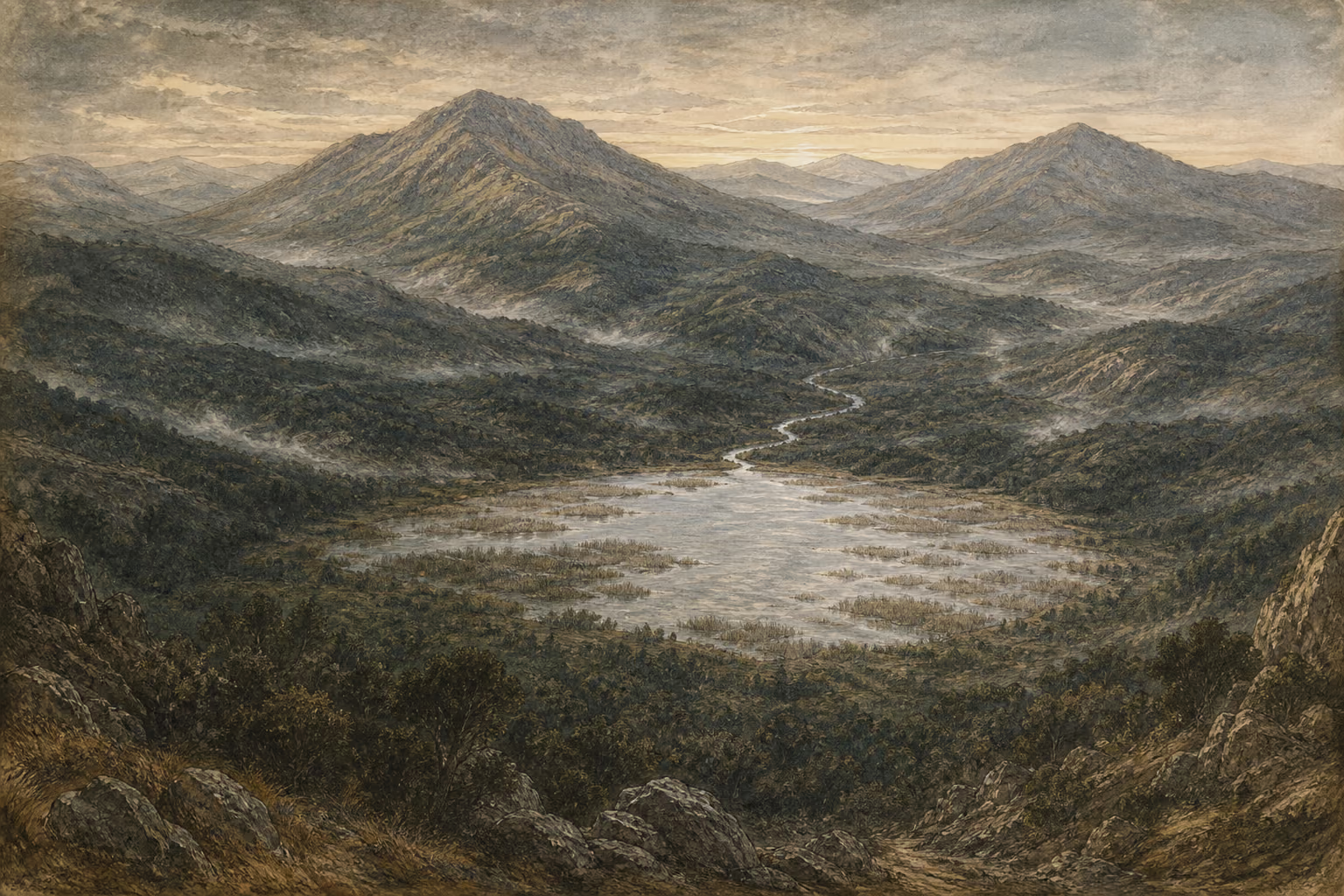
Mediterranea eius Arcadia maxime tenet undique a maria remota, initio Drymodes, mox Pelasgis appellata. oppida eius Psophis, Mantinea, Stymphalum, Tegea, Antigonea, Orchomenum, Pheneum, Pallantium, unde Palatium Romae, Megalepolis, Gortyna, Bucolium, Carnion, Parrhasie, Thelpusa, Melaenae, Heraea, Pylae, Pallene, Agrae, Epium, Cynaethae, Lepreon Arcadiae, Parthenium, Alea, Methydrium, Enispe, Macistum, Lampia, Clitorium, Cleonae. inter quae duo oppida regio Nemea est, et Bembinadia vocitata. montes in Arcadia Phololë cum oppido, item Cyllene, Lycaeus, in quo Lycaei Iovis delubrum, Maenalus, Artemisius, Parthenius, Lampeus, Nonacris praeterque ignobiles VIII. amnes Ladon e paludibus Phenei, Erymanthus e monte eiusdem nominis in Alpheum defluens. reliquae civitates in Achaia dicendae Alipheraei, Abeatae, Pyrgenses, Paroreatae, Pharygenitae, Tortuni, Typanei, Thriusi, Tritienses. universae Achaiae libertatem Domitius Nero dedit. Peloponnesus in latitudinem a promunturio Maleae ad oppidum Aegium Corinthiaci sinus CXC patet, at in transversum ab Elide Epidaurum CXXV, ab Olympia Argos per Arcadiam LXVIII; ab eodem loco ad Pylumiam dicta mensura est. universa autem, velut pensante aequorum incursus natura, in montes sex atque LXX attollitur.
English · Bostock & Riley 1855–57
Its interior is occupied for the greater part by Arcadia, which, remote from the sea on every side, was originally called Drymodes, and at a later period Pelasgis. The cities of Arcadia are, Psophis, Mantinea, Stymphalus, Tegea, Antigonea, Orchomenus, Pheneum, Palantium (from which the Palatium at Rome derives its name), Megalopolis, Gortyna, Bucolium, Carnion, Parrhasia, Thelpusa, Melænæ, Heræa, Pylæ, Pallene, Agræ, Epium, Cynæthæ, Lepreon of Arcadia, Parthenium, Alea, Methydrium, Enispe, Macistum, Lampia, Clitorium, and Cleonæ; between which two last towns is the district of Nemea, commonly known as Bembinadia.
The mountains of Arcadia are, Pholoë, with a town of the same name, Cyllene, Lycæus, upon which is the temple of Lycæan Jupiter; Mænalus, Artemisius, Parthenius, Lampeus, and Nonacris, besides eight others of no note. The rivers are the Ladon, which rises in the marshes of Pheneus, and the Erymanthus, which springs from a mountain of the same name, and flows into the Alpheus.
The other cities of Achaia worthy of mention are those of the Aliphiræi, the Abeatæ, the Pyrgenses, the Paroreatæ, the Paragenitæ, the Tortuni, the Typanei, the Thriasii, and the Tritienses. Domitius Nero [the emperor] granted liberty to the whole of Achaia. The Peloponnesus, from the Promontory of Malea to the town of Ægium on the Corinthian Gulf, is 190 miles in length, and 125 miles across from Elis to Epidaurus; the distance being, from Olympia to Argos, through Arcadia, sixty-eight miles. The distance from Olympia to Phlius has been already mentioned. Throughout the whole of this region, as though nature had been desirous to compensate for the inroads of the sea, seventy-six mountains raise their lofty heads.