LIBER IV · CAPUT 7
ATTICA
Latine · Mayhoff 1906
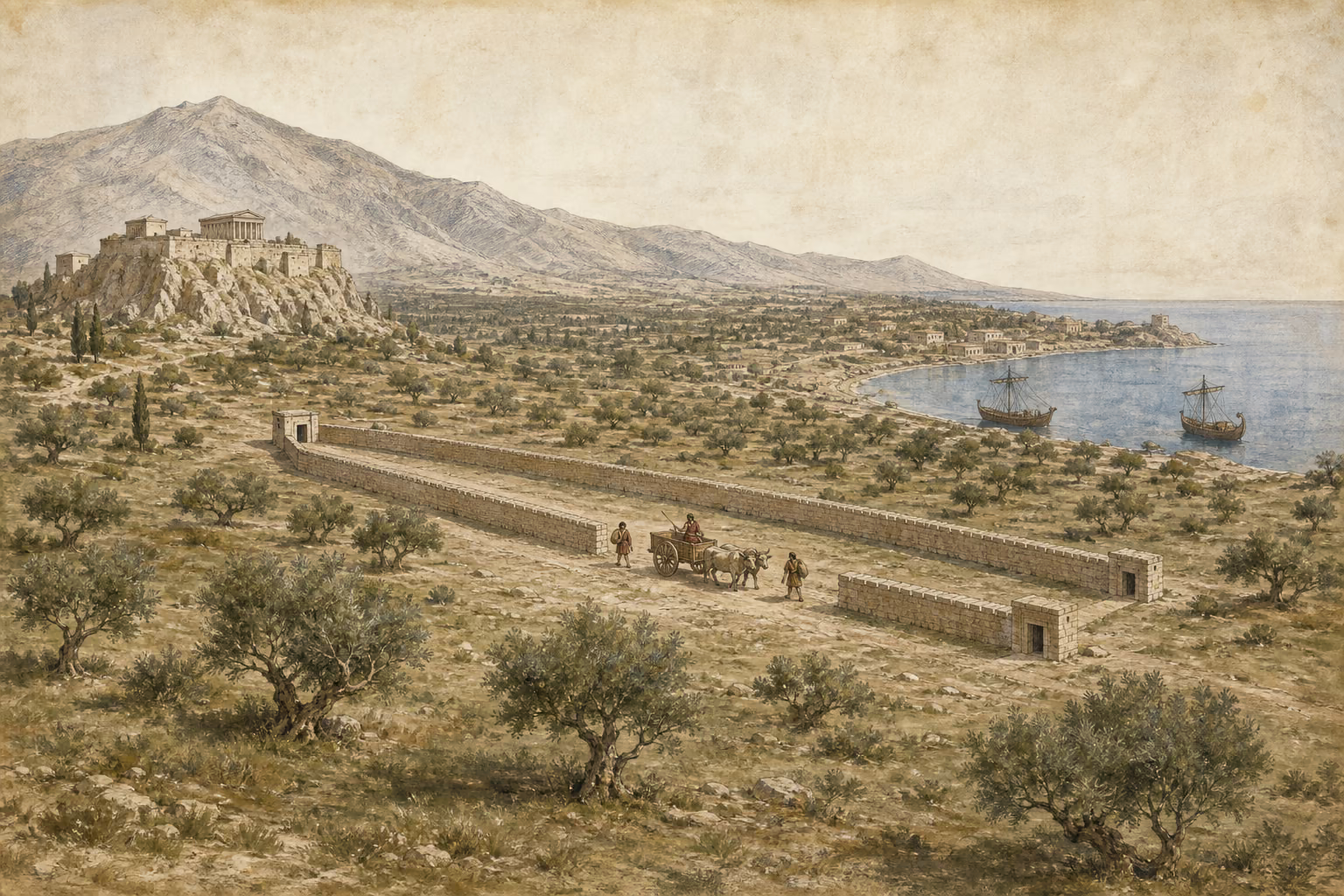
Ab Isthmi angustiis Hellas incipit, nostris Graecia appellata. in ea prima Attice, antiquitus Acte vocata. attingit Isthmum parte sui quae appellatur Megaris ab colonia Megara, e regione Pagarum. duo haec oppida excurrente Peloponneso sita sunt, utraque ex parte velut in umeris Helladis, Pagaei et amplius Aegosthenenses contributi Megarensibus. in ora autem portus Schoenos, oppida Sidous, Cremmyon, Scironia saxa VI longitudine, Gerania, Megara, Eleusin. fuere et Oenoe et Probalinthos. nunc sunt ab Istbmo LV Piraeus et Phalera portus, V??? muro recedentibus Athenis iuncti. libera haec civitas nec indiga ullius praeconii amplius: tanta claritas superfluit. in Attica fontes Cephisia, Larine, Callirroe Enneacrunos, montes Brilessus, Aegialeus, Icarius, Hymettus, Lycabettus, locus Ilisos. a PiraeoXLV Sunium promunturium, Thoricos promunturium, Potamos, Steria, Brauron, quondam oppida, Rhamnus pagus, locus Marathon, campus Thriasius, oppidum Melita et Oropus in confinio Boeotiae.
Cuius Anthedon, Onchestos, Thespiae liberum oppidum, Lebadea nec cedentes Athenis claritate quae cognominantur Boeotiae Thebae, duorum numinum Liberi atque Herculis, ut volunt, patria. et Musis natalem in nemore Heliconis adsignant. datur et his Thebis saltus Cithaeron, amnis Ismenus. praeterea fontes in Boeotia Oedipodia, Psamathe, Dirce, Epicrane, Arethusa, Hippocrene, Aganippe, Gargaphie. montes extra praedictos Mycalesus, Hadylius, Acontius. reliqua oppida inter Megaricam et Thebas Eleutherae, Haliartus, Plataeae, Pherae, Aspledon, Hyle, Thisbe, Erythrae, Glissa, Copae, iuxta Cephisum amnem Lamiae et Anichiae, Medeon, Phlygone, Acraephia, Coronea, Chaeronea. in ora autem infra Thebas Ocalee, Eteonos, Scolos, Schoenos, Peteon, Hyrie, Mycalesos, Ireseum et Eleon, Ollarum, Tanagra, liber populus, et in ipsis faucibus Euripi, quem facit obiecta insula Euboea, Aulis capaci nobilis portu. Boeotos Hyantas antiquitus dixere. Locri deinde Epicnemidii cognominantur, olim Leleges appellati, per quos amnis Cephisus defertur in mare. oppida Opus, unde et sinus Opuntius, Cynus. Phocidis in litore unum Daphnus, introrsus autem Larisa, Elatea et in ripa Cephisi, ut diximus, Lilaea Delphosque versae Cnemis et Hyampolis. rursus Locrorum ora, in qua Larumna, Thronium, iuxta quod Boagrius amnis defertur in mare. oppida Narycum, Alope, Scarphia. postea Maliacus sinus ab incolis dictus, in quo oppida Halcyone, Aegonia, Phalara. Doris deinde, in qua Sparthos, Erineon, Boion, Pindus, Cytinum. Doridis a tergo mons Oeta est.
Sequitur mutatis saepe nominibus Haemonia eadem Pelasgis et Pelasgicon Argos, Hellas, eadem Thessalia et Dryopis, semper a regibus cognominata. ibi genitus rex nomine Graecus, a quo Graecia; ibi Hellen, a quo Hellenes. hos eosdem Homerus tribus nominibus appellavit Myrmidonas et Hellenas et Achaeos. ex his Phthiotae nominantur Dorida accolentes. eorum oppida Echinus, in faucibus Sperchii fluminis Thermopylarum angustiae, quo argumento IIII inde Heraclea Trechin dicta est. mons ibi Callidromus; oppida celebrata Hellas, Halos, Lamia, Phthia, Arne.
English · Bostock & Riley 1855–57
At the narrow neck of the Isthmus, Hellas begins, by our people known as Græcia. The first state that presents itself is Attica, anciently called Acte. It touches the Isthmus in that part of it which is called Megaris, from the colony of Megara, lying on the opposite side to Pagæ.
These two towns are situate at the spot where the Peloponnesus projects to the greatest distance; being placed, one on each side, upon the very shoulders of Hellas as it were. The Pagæans, as well as the people of Ægosthena, belong to the jurisdiction of Megara. On the coast there is the port of Schœnos, the towns of Sidus and Cremmyon, the Scironian Rocks, six miles in length, Geranea, Megara, and Eleusis. Œnoë and Probalinthos also formerly existed here; the ports of Piræus and Phalerum are distant from the Isthmus fifty-five miles, being united to Athens, which lies in the interior, by a wall five miles in length. Athens is a free city, and needs not a word more from us in its commendation; of fame it enjoys even more than enough. In Attica there are the Fountains of Cephisia, Larine, Callirrhoë Enneacrunos, and the mountains of Brilessus, Ægialeus, Icarius, Hymettus, Lycabettus, and the place where Ilissus stood. At the distance of forty-five miles from the Piræus is the Promontory of Sunium. There is also the Promontory of Thoricos; Potamos, Steria, and Brauron, once towns, the borough of Rhamnus, the place where Marathon stood, the Thriasian plain, the town of Melite, and Oropus upon the confines of Bœotia.
In this country are Anthedon, Onchestus, the free town of Thespiæ, Lebadea, and then Thebes, surnamed Bœotian, which does not yield the palm to Athens even in celebrity; the native land, according to the common notion, of the two Divinities Liber and Hercules. The birth-place of the Muses too is pointed out in the grove of Helicon. To this same Thebes also belong the forest of Cithæron, and the river Ismenus. Besides these, there are in Bœotia the Fountains of Œdipodia, Psamathe, Dirce, Epicrane, Arethusa, Hippocrene, Aganippe, and Gargaphie; and, besides the mountains already mentioned, Mycalesos, Hadylius, and Acontius. The remaining towns between Megara and Thebes are Eleutheræ, Haliartus, Platææ, Pheræ, Aspledon, Hyle, Thisbe, Erythræ, Glissas, and Copæ; near the river Cephisus, Larymna and Anchoa; as also Medeon, Phlygone, Acræphia, Coronea, and Chæronea. Again, on the coast and below Thebes, are Ocalea, Heleon, Scolos, Schœnos, Peteon, Hyriæ, Mycalesos, Iresion, Pteleon, Olyros, and Tanagra, the people of which are free; and, situate upon the very mouth of the Euripus, a strait formed by the opposite island of Eubœa, Aulis, so famous for its capacious harbour. The Bœotians formerly had the name of Hyantes.
After them come the Locrians, surnamed Epicnemidii, formerly called Leleges, through whose country the river Cephisus passes, in its course to the sea. Their towns are Opus; from which the Opuntian Gulf takes its name, and Cynos. Daphnus is the only town of Phocis situate on the coast. In the interior of Locris is Elatea, and on the banks of the Cephisus, as we have previously stated, Lilæa, and, facing Delphi, Cnemisæ and Hyampolisæ. Again, upon the coast of the Locrians, are Larymna, and Thronium, near which last the river Boagrius enters the sea. Also, the towns of Narycion, Alope, and Scarphia; and then the gulf which receives the name of the Maliac from the people who dwell there, and upon which are the towns of Halcyone, Econia, and Phalara.
Doris comes next, in which are Sperchios, Erineon, Boion, Pindus, and Cytinum. Behind Doris lies Mount Œta.
Hæmonia follows, a country which has often changed its name, having been successively called Pelasgic Argos, Hellas, Thessaly, and Dryopis, always taking its surname from its kings. In this country was born the king whose name was Græcus; and from whom Græcia was so called; and here too was born Hellen, from whom the Hellenes derive their name. The same people Homer has called by three different names, Myrmidones, Hellenes, and Achæi.
That portion of these people which inhabit the country adjacent to Doris are called Phthiotæ. Their towns are Echinus, at the mouth of the river Sperchius, and, at four miles from the narrow pass of Thermopylæ, Heraclea, which from it takes its surname of Trachin. Here too is Mount Callidromus, and the celebrated towns of Hellas, Halos, Lamia, Phthia, and Arne.