LIBER V · CAPUT 10
THE CITIES OF EGYPT
Latine · Mayhoff 1906
Sed iure laudetur in litore Aegyptii maris Alexandria, a Magno Alexandro condita in Africae parte ab ostio Canopico XII p. iuxta Mareotim lacum, qui locus antea Rhacotes nominabatur. metatus est eam Dinochares architectus pluribus modis memorabili ingenio, XV p. laxitate insessa ad effigiem Macedonicae chlamydis orbe gyrato laciniosam, dextra laevaque anguloso procursu, iam tum tamen quinta situs parte regiae dicata. Mareotis lacus a meridiana urbis parte euripo e Canopico ostio mittit ex mediterraneo commercia, insulas quoque plures amplexus, XXX traiectu, CCL ambitu, ut tradit Claudius Caesar. alii schoenos in longitudinem patere XL faciunt schoenumque stadia XXX: ita fieri longitudinis CL p., tantundem et latitudinis. sunt in honore et intra decursus Nili multa oppida, praecipue quae nomina ostiis dedere, non omnibus — XII enim reperiuntur superque quattuor, quae ipsi falsa ora appellant —, sed celeberrimis VII, proximo Alexandriae Canopico, dein Bolbitino, Sebennytico, Phatmitico, Mendesico, Tanitico ultimoque Pelusiaco. praeterea Butos, Pharbaethos, Leontopolis, Athribis, Isidis oppidum, Busiris, Cynopolis, Aphrodites, Sais, Naucratis, unde ostium quidam Naucratiticum nominant quod alii Heracleoticum, Canopico, cui proximum est, praeferentes.
English · Bostock & Riley 1855–57
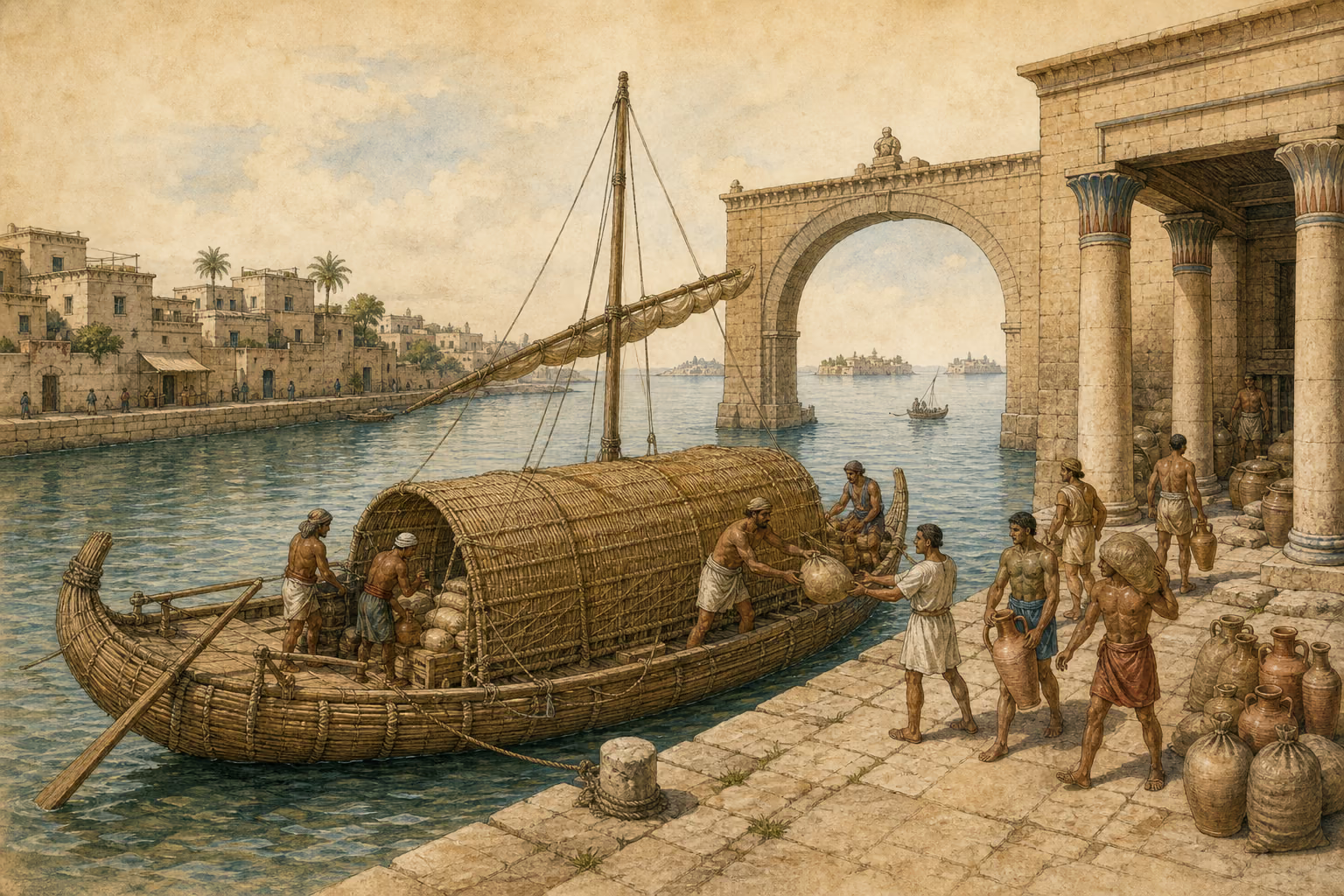
With the greatest justice, however, we may lavish our praises upon Alexandria, built by Alexander the Great on the shores of the Egyptian Sea, upon the soil of Africa, at twelve miles’ distance from the Canopic Mouth and near Lake Mareotis; the spot having previously borne the name of Rhacotes. The plan of this city was designed by the architect Dinochares, who is memorable for the genius which he displayed in many ways. Building the city upon a wide space of ground fifteen miles in circumference, he formed it in the circular shape of a Macedonian chlamys, uneven at the edge, giving it an angular projection on the right and left; while at the same time he devoted one-fifth part of the site to the royal palace.
Lake Mareotis, which lies on the south side of the city, is connected by a canal which joins it to the Canopic mouth, and serves for the purposes of communication with the interior. It has also a great number of islands, and is thirty miles across, and 150 in circumference, according to Claudius Cæsar. Other writers say that it is forty schœni in length, making the schœnum to be thirty stadia; hence, according to them, it is 150 miles in length and the same in breadth.
There are also, in the latter part of the course of the Nile, many towns of considerable celebrity, and more especially those which have given their names to the mouths of the river—I do not mean, all the mouths, for there are no less than twelve of them, as well as four others, which the people call the False Mouths. I allude to the seven more famous ones, the Canopic Mouth, next to Alexandria, those of Bolbitine, Sebennys, Phatnis, Mendes, Tanis, and, last of all, Pelusium. Besides the above there are the towns of Butos, Pharbæthos, Leontopolis, Athribis, the town of Isis, Busiris, Cynopolis, Aphrodites, Sais, and Naucratis, from which last some writers call that the Naucratitic Mouth, which is by others called the Heracleotic, and mention it instead of the Canopic Mouth, which is the next to it.