LIBER V · CAPUT 12
SYRIA
Latine · Mayhoff 1906
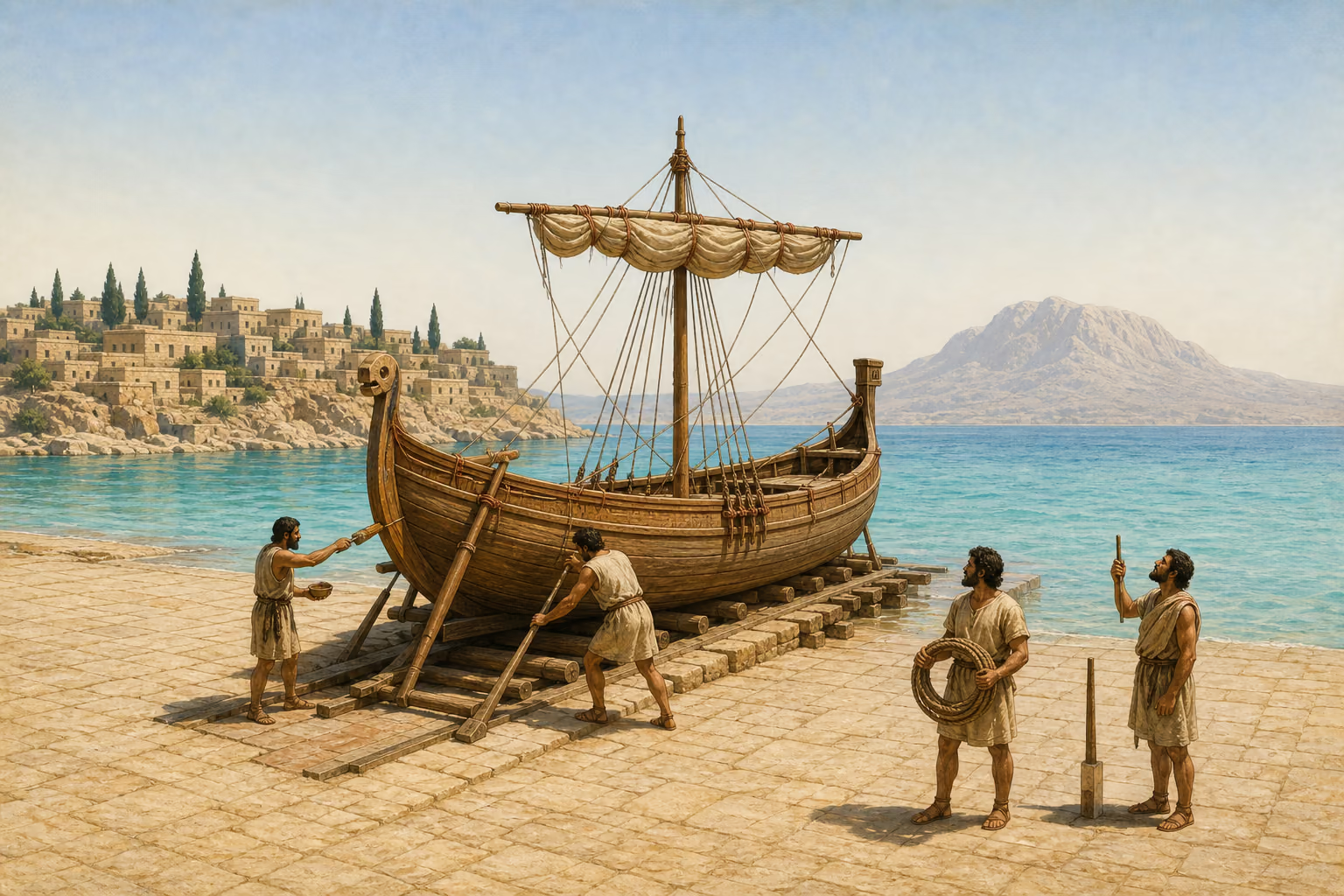
luxta Syria litus occupat, quondam terrarum maxuma et plurimis distincta nominibus. namque Palaestine vocabatur qua contingit Arabas, et Iudaea et Coele, dein Phoenice et qua recedit intus Damascena, ac magis etiamnum meridiana Babylonia, eadem Mesopotamia inter Euphraten et Tigrin quaque transit Taurum Sophene, citra vero eam Commagene et ultra Armeniam Adiabene, Assyria ante dicta, et ubi Ciliciam attingit Antiochia. longitude eius inter Ciliciam et Arabiam CCCCLXX p. est, latitudo a Seleucia Pieria ad oppidum in Euphrate ZeugmaCLXXV. qui subtilius dividunt, circumfundi Syria Phoenicen volunt et esse oram maritimam Syriae, cuius pars sit Idumaea et Iudaea, dein Phoenicen, dein Syriam. id quod praeiacet mare totum Phoenicium appellatur. ipsa gens Phoenicum in magna gloria litterarum inventionis et siderum navaliumque ac bellicarum artium.
English · Bostock & Riley 1855–57
Next to these countries Syria occupies the coast, once the greatest of lands, and distinguished by many names; for the part which joins up to Arabia was formerly called Palæstina, Judæa, Cœle, and Phœnice. The country in the interior was called Damascena, and that further on and more to the south, Babylonia. The part that lies between the Euphrates and the Tigris was called Mesopotamia, that beyond Taurus Sophene, and that on this side of the same chain Comagene. Beyond Armenia was the country of Adiabene, anciently called Assyria, and at the part where it joins up to Cilicia, it was called Antiochia. Its length, between Cilicia and Arabia, is 470 miles, and its breadth, from Seleucia Pieria to Zeugma, a town on the Euphrates, 175. Those who make a still more minute division of this country will have it that Phœnice is surrounded by Syria, and that first comes the maritime coast of Syria, part of which is Idumæa and Judæa, after that Phœnice, and then Syria. The whole of the tract of sea that lies in front of these shores is called the Phœnician Sea. The Phœnician people enjoy the glory of having been the inventors of letters, and the first discoverers of the sciences of astronomy, navigation, and the art of war.
On leaving Pelusium we come to the Camp of Chabrias, Mount Casius, the temple of Jupiter Casius, and the tomb of Pompeius Magnus. Ostracine, at a distance of sixty-five miles from Pelusium, is the frontier town of Arabia.