LIBER V · CAPUT 13
IDUMÆA, PALÆSTINA, AND SAMARIA
Latine · Mayhoff 1906
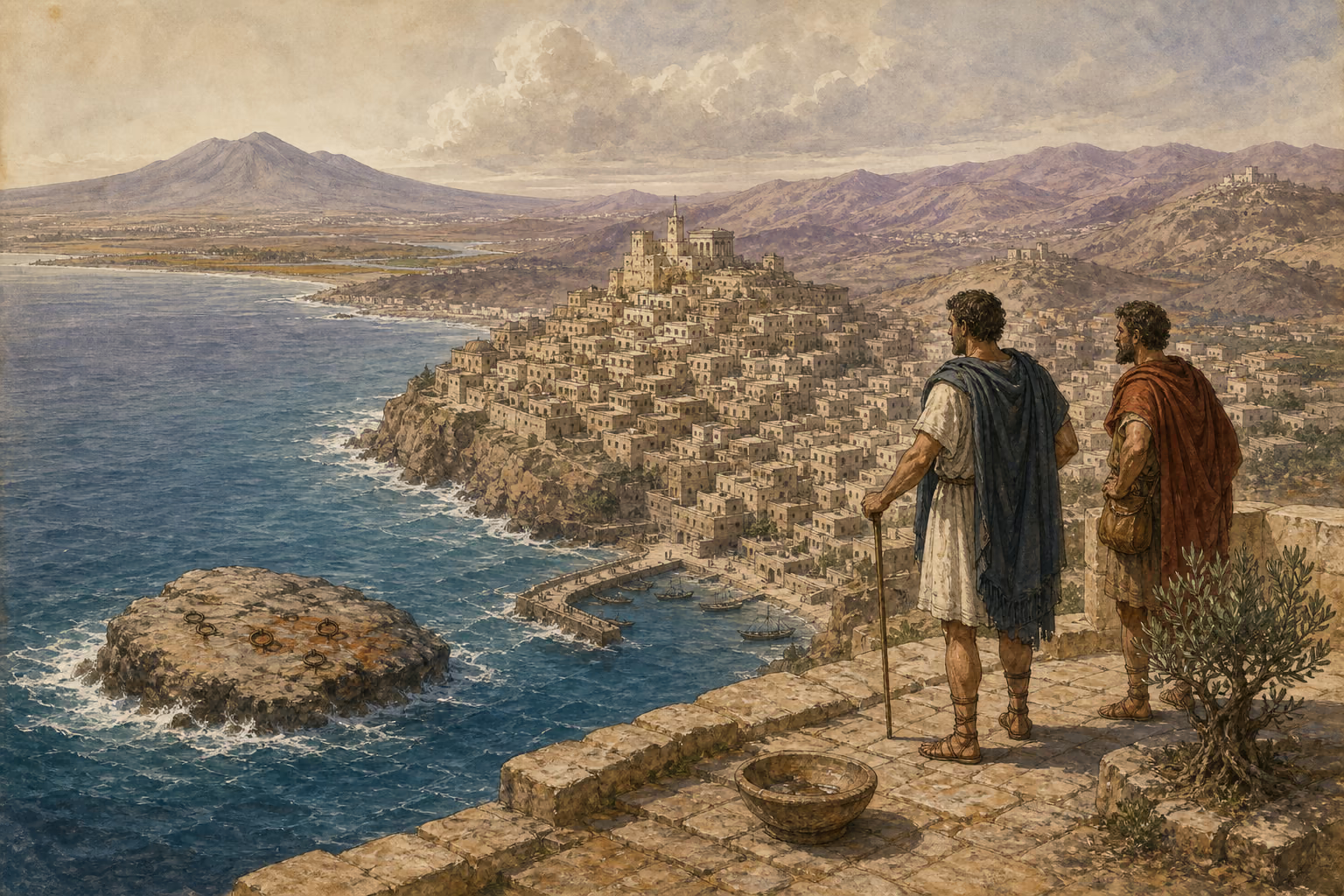
A Pelusio Chabriae castra, Casius mons, delubrum lovis Casii, tumulus Magni Pompei. Ostracine Arabia finitur, a Pelusio LXV p. 13. mox Idumaea incipit et Palaestina ab emersu Sirbonis lacus, quem quidam CL circuitu tradidere. Herodotus Casio monti adplicuit, nunc est palus modica. oppida Rhinocolura et intus Rhaphea, Gaza et intus Anthedon, mons Argaris. regio per oram Samaria; oppidum Ascalo liberum, Azotos, Iam- neae duae, altera intus. lope Phoenicum, antiquior terrarum inundatione, ut ferunt, insidet collem, praeiacente saxo, in quo vinculorum Andromedae vestigia ostendit. colitur illic fabulosa Ceto. inde Apollonia, Stratonis Turris, eadem Caesarea ab Herode rege condita, nunc colonia Prima Flavia a Vespasiano Imperatore deducta, finis Palaestines, CLXXXVIIII p. a confinio Arabiae. dein Phoenice; intus autem Samariae oppida Neapolis, quod antea Mamortha dicebatur, Sebaste in monte, et altiore Gamala.
English · Bostock & Riley 1855–57
After this, at the point where the Sirbonian Lake becomes visible, Idumæa and Palæstina begin. This lake, which some writers have made to be 150 miles in circumference, Herodotus has placed at the foot of Mount Casius; it is now an inconsiderable fen. The towns are Rhinocolura, and, in the interior, Rhaphea, Gaza, and, still more inland, Anthedon: there is also Mount Argaris. Proceeding along the coast we come to the region of Samaria; Ascalo, a free town, Azotus, the two Jamniæ, one of them in the interior; and Joppe, a city of the Phœnicians, which existed, it is said, before the deluge of the earth. It is situate on the slope of a hill, and in front of it lies a rock, upon which they point out the vestiges of the chains by which Andromeda was bound. Here the fabulous goddess Ceto is worshipped. Next to this place comes Apollonia, and then the Tower of Strato, otherwise Cæsarea, built by King Herod, but now the Colony of Prima Flavia, established by the Emperor Vespasianus: this place is the frontier town of Palæstina, at a distance of 188 miles from the confines of Arabia; after which comes Phœnice. In the interior of Samaria are the towns of Neapolis, formerly called Mamortha, Sebaste, situate on a mountain, and, on a still more lofty one, Gamala.