LIBER V · CAPUT 14
JUDÆA
Latine · Mayhoff 1906
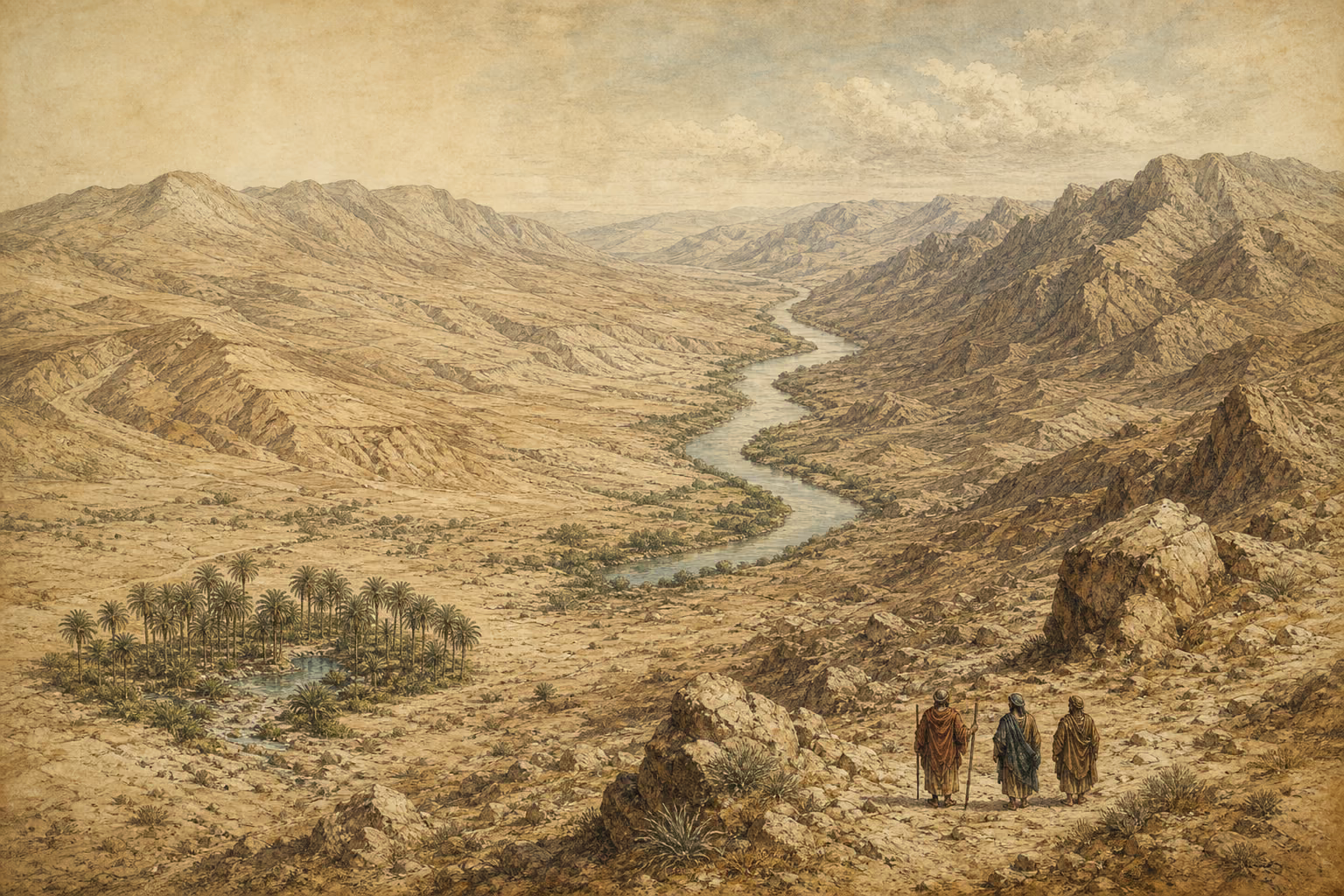
Supra Idumaeam et Samariam Iudaea longe lateque funditur. pars eius Syriae iuncta Galilaea vocatur, Arabiae vero et Aegypto proxima Peraea, asperis dispersa montibus et a ceteris Iudaeis lordane amne discreta. reliqua Iudaea dividitur in toparchias decem quo dicemus ordine: Hiericuntem palmetis consitam, fontibus riguam, Emmaum, Lyddam, Iopicam, Acrabatenam, Gophaniticam, Thamniticam, Betholeptephenen, Orinen, in qua fuere Hierosolyma, longe clarissima urbium orientis, non Iudaeae modo, Herodium cum oppido inlustri eiusdem nominis.
English · Bostock & Riley 1855–57
Beyond Idumæa and Samaria, Judæa extends far and wide. That part of it which joins up to Syria is called Galilæa, while that which is nearest to Arabia and Egypt bears the name of Peræa. This last is thickly covered with rugged mountains, and is separated from the rest of Judæa by the river Jordanes. The remaining part of Judæa is divided into ten Toparchies, which we will mention in the following order:—That of Hiericus, covered with groves of palm-trees, and watered by numerous springs, and those of Emmaüs, Lydda, Joppe, Acrabatena, Gophna, Thamna, Bethleptephene, Orina, in which formerly stood Hierosolyma, by far the most famous city, not of Judæa only, but of the East, and Herodium, with a celebrated town of the same name.