LIBER V · CAPUT 18
DECAPOLIS
Latine · Mayhoff 1906
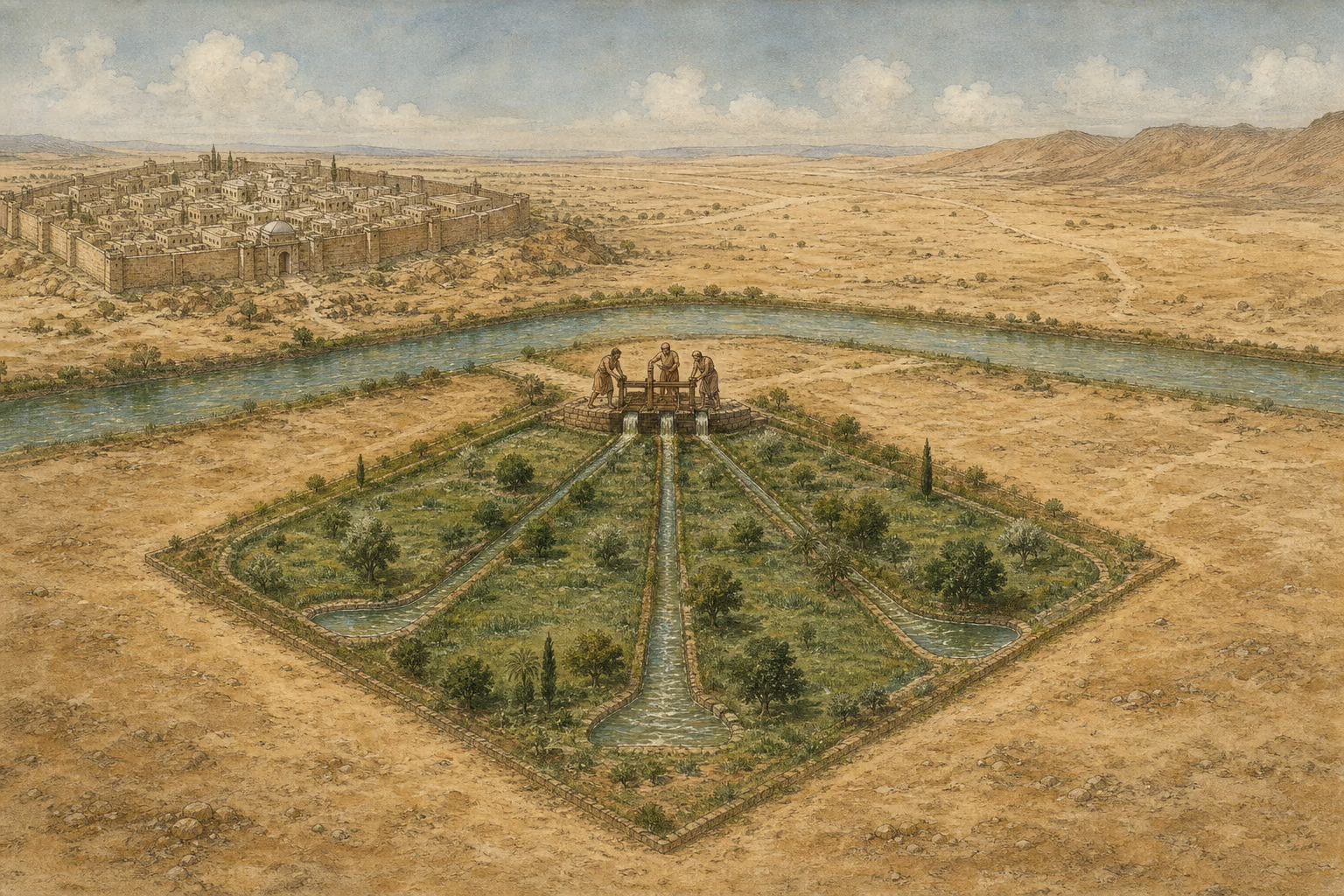
Iungitur ei latere Syriae Decapolitana regio, a numero oppidorum, in quo non omnes eadem observant, primum tamen Damascum epoto riguis amne Chrysorroa fertilem, Philadelphiam, Rhaphanam, omnia in Arabiam recedentia, Scythopolim, antea Nysam, a Libero Patre sepulta nutrice ibi Scythis deductis, Gadara, Hieromice praefluente, et iam dictum Hippon, Dion, Pellam aquis divitem, Garasam, Canatham. intercursant cinguntque has urbes tetrarchiae regnorum instar singulae, et regna contribuuntur - Trachonitis, Paneas, in qua Caesarea cum supra dicto fonte, Abila, Arca, Ampeloessa, Gabe.
English · Bostock & Riley 1855–57
On the side of Syria, joining up to Judæa, is the region of Decapolis, so called from the number of its cities; as to which all writers are not agreed. Most of them, however, agree in speaking of Damascus as one, a place fertilized by the river Chrysorroös, which is drawn off into its meadows and eagerly imbibed; Philadelphia, and Rhaphana, all which cities fall back towards Arabia; Scythopolis (formerly called Nysa by Father Liber, from his nurse having been buried there), its present name being derived from a Scythian colony which was established there; Gadara, before which the river Hieromix flows; Hippo, which has been previously mentioned; Dion, Pella, rich with its waters; Galasa, and Canatha. The Tetrarchies lie between and around these cities, equal, each of them, to a kingdom, and occupying the same rank as so many kingdoms. Their names are, Trachonitis, Panias, in which is Cæsarea, with the spring previously mentioned, Abila, Arca, Ampeloëssa, and Gabe.