LIBER V · CAPUT 2
THE TWO MAURITANIAS
Latine · Mayhoff 1906
Tingitanae provinciae longitude CLXX est. gentes in ea: quondam praecipua Maurorum — unde nomen — quos plerique Maurusios dixerunt, attenuata bellis ad paucas recidit familias. proxima illi Masaesylorum fuerat; simili modo extincta est. Gaetulae nunc tenent gentes, Baniurae multoque validissimi Autololes et horum pars quondam Nesimi, qui avolsi iis propriam fecere gentem versi ad Aethiopas. ipsa provincia ab oriente montuosa fert elephantos, in Abila quoque monte et quos Septem Fratres a simili altitudine appellant. freto imminent iuncti Abilae. ab iis ora interni maris, flumen Tamuda navigabile, quondam et oppidum, flumen Laud, et ipsum navigiorum capax. Rhysaddir oppidum et portus, Malvane fluvius navigabilis. Siga oppidum ex adverso Malacae in Hispania siti, Syphacis regia, alterius iam Mauretaniae. namque diu regum nomina obtinuere, ut Bogutiana appellaretur extuma, itemque Bocchi quae nunc Caesariensis. ab ea portus Magnus, a spatio appellatus, civium Romanorum oppido. amnis Mulucha, Bocchi Masaesylorumque finis. Quiza Cenitana peregrinorum oppidum, Arsennaria Latinorum, III a mari; Cartenna, colonia Augusti legione secunda, item colonia eiusdem deducta cohorte praetoria Gunugu. promunturium Apollinis oppidumque ibi celeberrimum Caesarea, ante vocitatum Iol, Iubae regia a Divo Claudio coloniae iure donata; eiusdem iussu deductis veteranis Oppidum Novum et Latio dato Tipasa, itemque a Vespasiano Imperatore eodem munere donatum Icosium; colonia Augusti Rusguniae, Rusucurium civitate honoratum a Claudio, Rusazus colonia Augusti, Saldae colonia eiusdem, item Igilgili; oppidum Tucca, inpositum mari et flumini Ampsagae. intus colonia Augusta, quae item Succhabar, item Tubusuptu, civitates Timici, Tigavae. flumina Sardabal, Aves, Nabar. gens Macurebi, flumen Vsar, gens Nababes. flumen Ampsaga abest a Caesarea CCCXXII. utriusque Mauretaniae longitudo X???. XXXVIII, latitudo CCCCLXVII.
English · Bostock & Riley 1855–57
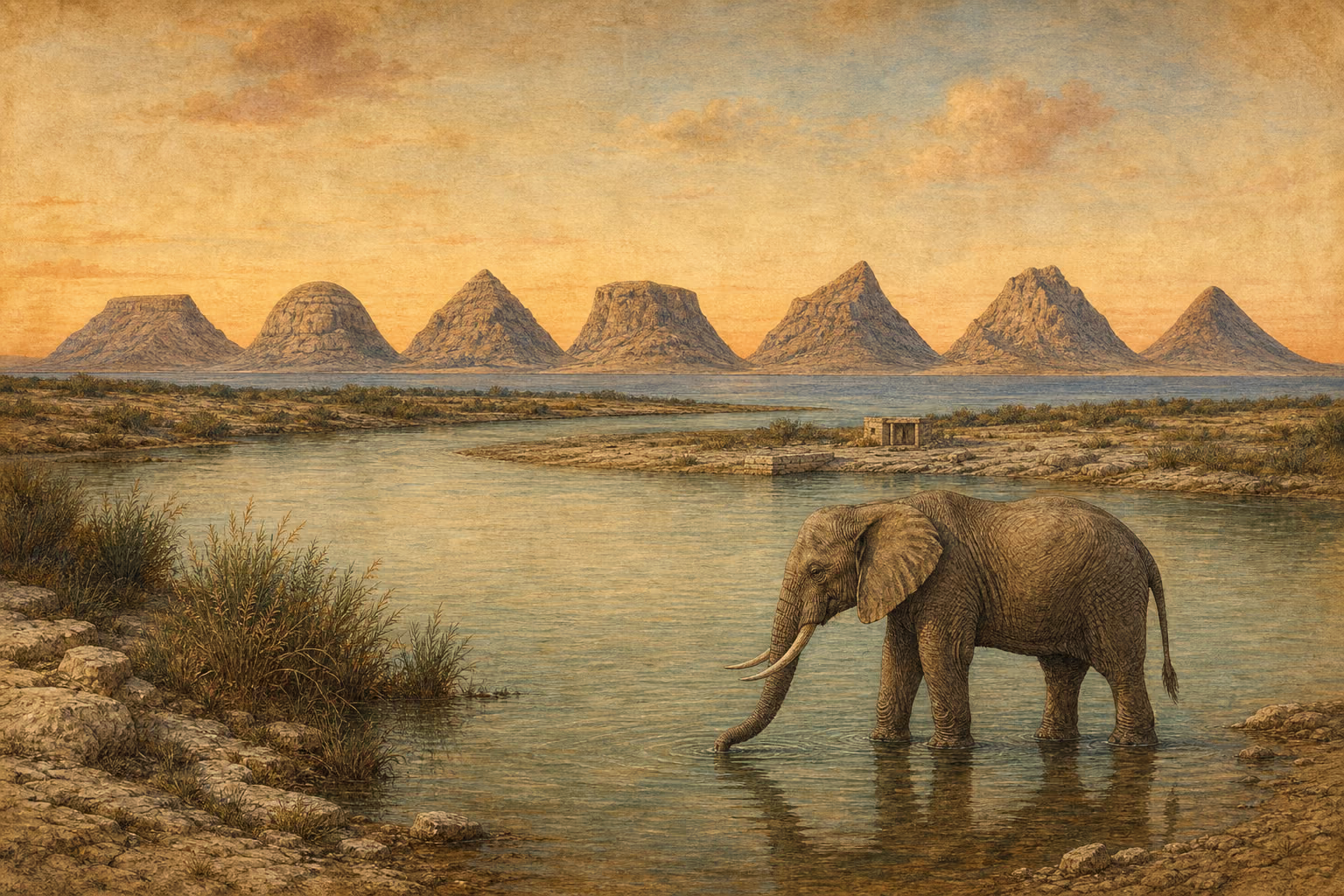
The province of Tingitana is 170 miles in length. Of the nations in this province the principal one was formerly that of the Mauri, who have given to it the name of Mauritania, and have been by many writers called the Maurusii. This nation has been greatly weakened by the disasters of war, and is now dwindled down to a few families only. Next to the Mauri was formerly the nation of the Massæsyli; they in a similar manner have become extinct. Their country is now occupied by the Gætulian nations, the Baniuræ, the Autololes, by far the most powerful people among them all, and the Vesuni, who formerly were a part of the Autololes, but have now separated from them, and, turning their steps towards the Æthiopians, have formed a distinct nation of their own. This province, in the mountainous district which lies on its eastern side, produces elephants, as also on the heights of Mount Abyla and among those elevations which, from the similarity of their height, are called the Seven Brothers. Joining the range of Abyla these mountains overlook the Straits of Gades. At the extremity of this chain begin the shores of the inland sea, and we come to the Tamuda, a navigable stream, with the site of a former town of the same name, and then the river Laud, which is also navigable for vessels, the town and port of Rhysaddir, and Malvane, a navigable stream.
The city of Siga, formerly the residence of King Syphax, lies opposite to that of Malaca in Spain: it now belongs to the second Mauritania. But these countries, I should remark, for a long time retained the names of their respective kings, the further Mauritania being called the “land of Bogud,” while that which is now called Cæsariensis was called the “country of Bocchus.” After passing Siga we come to the haven called “Portus Magnus ” from its great extent, with a town whose people enjoy the rights of Roman citizens, and then the river Mulucha, which served as the limit between the territory of Bocchus and that of the Massæsyli. Next to this is Quiza Xenitana, a town founded by strangers, and Arsenaria, a place with the ancient Latin rights, three miles distant from the sea. We then come to Cartenna, a colony founded under Augustus by the second legion, and Gunugum, another colony founded by the same emperor, a prætorian cohort being established there; the Promontory of Apollo, and a most celebrated city, now called Cæsarea, but formerly known by the name of Iol; this place was the residence of King Juba, and received the rights of a colony from the now deified Emperor Claudius. Oppidum Novum is the next place; a colony of veterans was established here by command of the same emperor. Next to it is Tipasa, which has received Latin rights, as also Icasium, which has been presented by the Emperor Vespasianus with similar rights; Rusconiæ, a colony founded by Augustus; Rusucurium, honoured by Claudius with the rights of Roman citizens; Ruzacus, a colony founded by Augustus; Salde, another colony founded by the same emperor; Igilgili, another; and the town of Tucca, situate on the sea-shore and upon the river Ampsaga. In the interior are the colony of Augusta, also called Succabar, Tubusuptus, the cities of Timici and Tigavæ, the rivers Sardabal, Aves, and Nabar, the nation of the Macurebi, the river Usar, and the nation of the Nababes. The river Ampsaga is distant from Cæsarea 322 miles. The length of the two Mauritanias is 1038, and their breadth 467 miles.