LIBER VI · CAPUT 1
THE EUXINE AND THE MARYANDINI
Latine · Mayhoff 1906
Pontus Euxinus, antea ab inhospitali feritate Axinus appellatus, peculiari invidia naturae sine ulla fine indulgentis aviditati maris et ipse inter Europam Asiamque funditur. non fuerat satis oceano ambisse terras et partem earum aucta inanitate abstulisse, non inrupisse fractis montibus Calpeque Africae avolsa tanto maiora absorbuisse quam reliquerit spatia, non per Hellespontum Propontida infudisse iterum terris devoratis: a Bosporo quoque in aliam vastitatem panditur nulla satietate, donec exspatianti lacus Maeotii rapinam suam iungant. invitis hoc accidisse terris indicio sunt tot angustiae atque tam parva naturae repugnantis intervalla, ad Hellespontum DCCCLXXV p., ad Bosporos duos vel bubus meabili transitu — unde nomen ambobus —, etiam quaedam in dissociatione germanitas concors: alitum quippe cantus canumque latratus invicem audiuntur, vocis etiam humanae commercia, inter duos orbes manente conloquio, nisi cum id ipsum auferunt venti. mensuram Ponti a Bosporo ad Maeotium lacum quidam fecere |XIII|.XXXVIII.D, Eratosthenes C??? minorem. Agrippa a Calchadone ad Phasim X, inde Bosporum Cimmerium CCCLX. nos intervalla generatim ponimus conperta in aevo nostro, quando etiam in ipso ore Cimmerio pugnatum est.
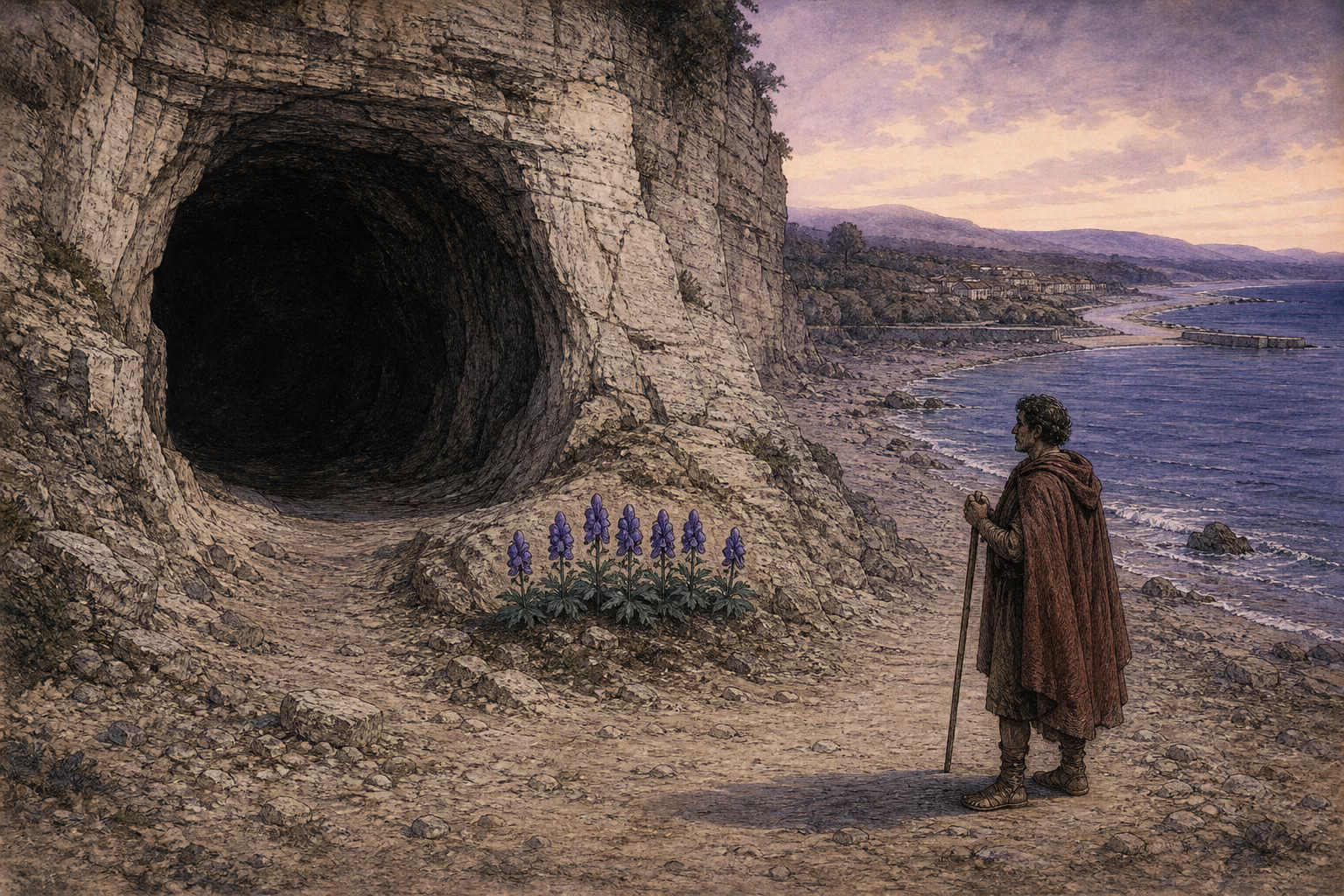
Ergo a faucibus Bospori est amnis Rebas, quem aliqui Rhesum dixerunt. dein Syris, portus Calpas, Sangaris fluvius ex inclutis. oritur in Phrygia, accipit vastos amnes, inter quos Tembrogium et Gallum, idem Sagiarius plerisque dictus, Coralius, a quo incipiunt Mariandyni, sinus oppidumque Heraclea, Lyco flumini adpositum— abest a Ponti ore CC —, portus Acone, veneno aconito dirus, specus Acherusia, flumina Paedopides, Callichorum, Sonautes, oppidum Tium, ab Heraclea XXXVIII p., fluvius Billis.
English · Bostock & Riley 1855–57
THE Euxine Sea, which in former times had the name of Axenus, from the savage and inhospitable character of the nations living on its borders, by a peculiar whim of nature, which is continually giving way before the greedy inroads of the sea, lies between Europe and Asia. It was not enough for the ocean to have surrounded the earth, and then deprived us of a considerable portion of it, thus rendering still greater its uninhabitable proportion; it was not enough for it to have forced a passage through the mountains, to have torn away Calpe from Africa, and to have swallowed up a much larger space than it left untouched; it was not enough for it to have poured its tide into the Propontis through the Hellespont, after swallowing up still more of the dry land—for beyond the Bosporus, as well, it opens with its insatiate appetite upon another space of immense extent, until the Mæotian lakes unite their ravening waters with it as it ranges far and wide.
That all this has taken place in spite, as it were, of the earth, is manifested by the existence of so many straits and such numbers of narrow passages formed against the will of nature—that of the Hellespont, being only eight hundred and seventy-five paces in width, while at the two Bospori the passage across may be effected by oxen swimming, a fact from which they have both derived their name. And then besides, although they are thus severed, there are certain points on which these coasts stand in the relation of brotherhood towards each other—the singing of birds and the barking of dogs on the one side can be heard on the other, and an intercourse can be maintained between these two worlds by the medium even of the human voice, if the winds should not happen to carry away the sound thereof.
The length of the borders of the Euxine from the Bosporus to the Lake Mæotis has been reckoned by some writers at fourteen hundred and thirty-eight miles; Eratosthenes, however, says that it is one hundred less. According to Agrippa, the distance from Chalcedon to the Phasis is one thousand miles, and from that river to the Cimmerian Bosporus three hundred and sixty. We will here give in a general form the distances as they have been ascertained in our own times; for our arms have even penetrated to the very mouth of the Cimmerian Straits.
After passing the mouth of the Bosporus we come to the river Rhebas, by some writers called the Rhesus. We next come to Psillis, the port of Calpas, and the Sagaris, a famous river, which rises in Phrygia and receives the waters of other rivers of vast magnitude, among which are the Tembrogius and the Gallus, the last of which is by many called the Sangarius. After leaving the Sagaris the Gulf of the Mariandyni begins, and we come to the town of Heraclea, on the river Lycus; this place is distant from the mouth of the Euxine two hundred miles. The sea-port of Acone comes next, which has a fearful notoriety for its aconite or wolf’s-bane, a deadly poison, and then the cavern of Acherusia, the rivers Pædopides, Callichorus, and Sonautes, the town of Tium, distant from Heraclea thirty-eight miles, and the river Billis.