LIBER V · CAPUT 32
THE HELLESPONT AND MYSIA
Latine · Mayhoff 1906
Impetum deinde sumit Hellepontus, et mare incumbit, verticibus limitem fodiens, donec Asiam abrumpat Europae. promunturium id appellavimus Trapezam. ab eo X??? p. Abydum oppidum, ubi angustiae VII stadiorum. deinde Percote oppidum et Lampsacum, antea Pityussa dictum, Parium colonia quam Homerus Adrastiam appellavit, oppidum Priapos, amnis Aesepus, Zelia, Propontis — ita appellatur ubi se dilatat mare —, flumen Granicum, Artace portus ubi oppidum fuit. ultra insulam continenti iunxit Alexander, in qua oppidum Milesiorum Cyzicum, ante vocitatum Arctonnesus et Dolionis et Didymis, cuius a vertice mons Didymus. mox oppida Placia, Ariace, Scylace, quorum a tergo mons Olympus, Mysius dictus, civitas Olympena, amnes Horisius et Rhyndacus, ante Lycus vocatus; oritur in stagno Artynia iuxta Miletopolim, recipit Maceston et plerosque alios, Asiam Bithyniamque disterminans. ea appellata est Cronia, dein Thessalis, dein Malianda et Strymonis. hos Homerus Halizonas dixit, quando praecingitur gens mari. urbs fuit inmensa Atussa nomine, nunc sunt XII civitates, inter quas Gordiu Come, quae Iuliopolis vocatur. in ora Dascylos, dein flumen Gelbes et intus Helgas oppidum, quae Germanicopolis, alio nomine Booscoete, sicut Apamea, quae nunc Myrlea Colophoniorum, flumen Echeleos, anticus Troadis finis et Mysiae initium. postea sinus in quo flumen Ascanium, oppidum Bryalion, amnes Hylas et Cios cum oppido eiusdem nominis, quod fuit emporium non procul accolentis Phrygiae, a Milesiis quidem conditum, in loco tamen qui AscaniaPhrygiae vocabatur. quapropter non aliubi aptius de ea dicatur.
Phrygia, Troadi superiecta populisque a promunturio Lecto ad flumen Echeleum praedictis, septentrionali sui parte Galatiae contermina, meridiana Lycaoniae, Pisidiae, Mygdoniae, ab oriente Cappadociam attingit. oppida ibi celeberrima praeter iam dicta Ancyra, Andria, Celaenae, Colossae, Carina, Cotiaïn, Ceraine, Conium, Midaïum. sunt auctores transisse ex Europa Moesos et Brygos et Thynos, a quibus appellentur Mysi, Phryges, Bithyni.
Simul dicendum videtur et de Galatia, quae superposita agros maiore ex parte Phrygiae tenet caputque quondam eius Gordium. qui partem eam insedere Gallorum Tolostobogi et Voturi et Ambitouti vocantur; qui Maeoniae et Paphlagoniae regionem, Trogmi. praetenditur Cappadocia a septentrione et solis ortu, cuius uberrimam partem occupavere Tectosages. ac toto tractu gentes quidem hae, populi vero ac tetrarchiae omnes numero CXCV. oppida Tectosagum Ancyra, Trogmorum Tavium, Tolostobogiorum Pisinuus. praeter hos celebres Attalenses, Arassenses, Comenses, Dictienses, Hierorenses, Lystreni, Neapolitani, Oeandenses, Seleucenses, Sebasteni, Timoniacenses, Thebaseni. attingit Galatia et Pamphyliae Cabaliam et Milyas qui circa Barim sunt et Cyllanicum et Oroandicum Pisidiae tractum, item Lycaoniae partem Obizenen. flumina sunt in ea praeter iam dicta Saggarium et Gallus, a quo nomen traxere Matris deum sacerdotes.
Nunc reliqua in ora. a Cio intus in Bithynia Prusa, ab Hannibale sub Olympo condita — inde NicaeamXXV p. interveniente Ascanio lacu —, dein Nicaea in ultimo Ascanio sinu, quae prius Olbia et Prusias, item altera sub Hypio monte. fuere Pythopolis, Parthenopolis, Coryphanta. sunt in ora amnes Aesius, Bryazon, Plataneus, Areus, Aesyros, Geudos, qui et Chrysorroas, promunturium in quo Megarice oppidum fuit. inde Craspedites sinus vocabatur, quoniam id oppidum velut in lacinia erat. fuit et Astacum, unde et ex eo Astacenus idem sinus; fuit et Libyssa oppidum, ubi nunc Hannibalis tantum tumulus. est in intimo sinu Nicomedia Bithyniae praeclara. Leucatas promunturiun, quo includitur Astacenus sinus, a Nicomedia XXXVII.D p., rursusque coeuntibus terris angustiae pertinentes usque ad Bosporum Thracium. in his Calchadon libera, a Nicomedia LXII.D p., Procerastis ante dicta, dein Colpusa, postea Caecorum oppidum, quod locum eligere nescissent, VII stadiis distante Byzantio, tanto feliciore omnibus modis sede. ceterum intus in Bithynia colonia Apamena, Agrippenses, Iuliopolitae, Bithynion. flumina Syrium, Laphias, Pharnacias, Alces, Serinis, Lilaeus, Scopas, Hieros, qui Bithyniam et Galatiam disterminat. ultra Calchadona Chrysopolis fuit, dein Nicopolis, a qua nomen etiamnum sinus retinet, in quo portus Amyci. dein Naulochum promunturium, Estiae, templum Neptuni. Bosporus, D p. intervallo Asiam Europae iterum auferens, abest a CalchadoneXII.D p., inde fauces primae VIII.DCCL p., ubi Spiropolis oppidum fuit. tenent oram omnem Thyni, interiora Bithyni. is finis Asiae est populorumque CCLXXXII, qui ad eum locum a fine Lyciae numerantur. spatium Hellesponti et Propontidis ad Bosporum ThraciumCCXXXVIIII p. diximus. a Calchadone Sigeum Isidorus CCCXXII.D p. tradit.
Insulae in Propontide ante Cyzicum Elaphonnesus, unde Cyzicenum marmor, eadem Neuris et Proconnesus dicta. secuntur Ophiusa, Acanthus, Phoebe, Scopelos, Porphyrione, Halone cum oppido, Delphacie, Polydora, Artacaeon cum oppido. est et contra Nicomediam Demonnesos, item ultra Heracleam adversa Bithyniae Thynias, quam barbari Bithyniam vocant. est et Antiochia et contra fauces Rhyndaci Besbicos, XVIII p. circuitu. est et Elaea et duae Rhodusae, Erebinthote, Megale, Chalcitis, Pityodes.
English · Bostock & Riley 1855–57
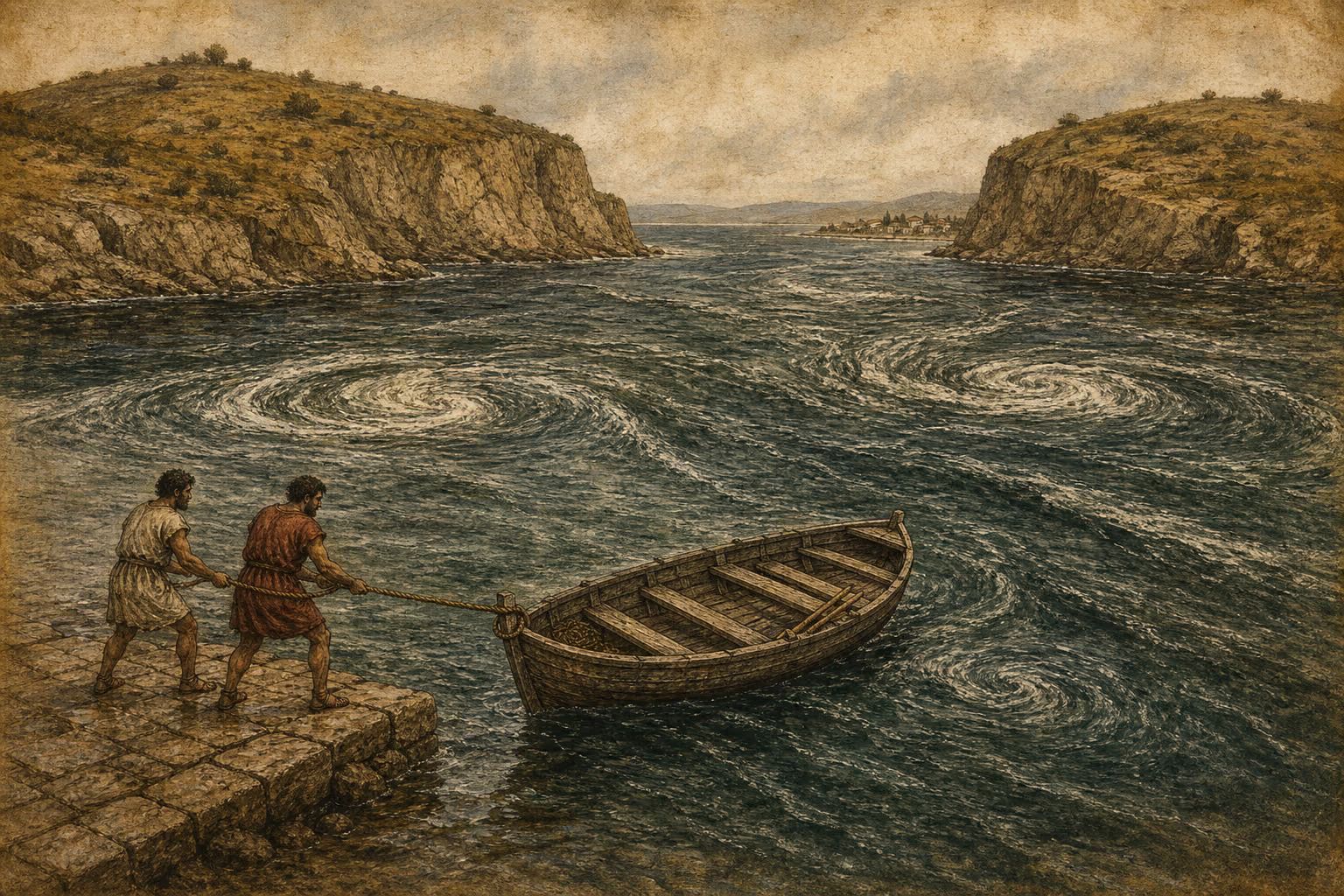
The tide of the Hellespont now begins to run with greater violence, and the sea beats against the shore, undermining with its eddies the barriers that stand in its way, until it has succeeded in separating Asia from Europe. At this spot is the promontory which we have already mentioned as Trapeza; ten miles distant from which is the city of Abydos, where the straits are only seven stadia wide; then the town of Percote; Lampsacus, at first called Pityusa; the colony of Parium, which Homer calls by the name of Adrastia; the town of Priapos; the river Æsepus; Zelia; and then the Propontis, that being the name given to the tract of sea where it enlarges. We then come to the river Granicus, and the harbour of Artace, where a town formerly stood. Beyond this is an island which Alexander joined to the continent, and upon which is Cyzicus, a city of the Milesians, which was formerly called Arctonnesos, Dolionis, and Dindymis; above it are the heights of Mount Dindymus. We then come to the towns of Placia, Ariace, and Scylace; in the rear of which places is Mount Olympus, known as the “Mysian Olympus,” and the city of Olympena. There are also the rivers Horisius and Rhyndacus, formerly called the Lycus; this last river rises in Lake Artynias, near Miletopolis, and receives the Macestos, and many other streams, dividing in its course Asia from Bithynia.
This country was at first called by the name of Cronia, after that, Thessalis, and then Malianda and Strymonis. The people of it are by Homer called Halizones, from the fact that it was a nation begirt by the sea. There was formerly a vast city here, Attussa by name; at present there are twelve cities in existence; among which is Gordiucome, otherwise Juliopolis; and, on the coast, Dascylos. We then come to the river Gelbes; and, in the interior, the town of Helgas, or Germanicopolis, which has also the other name of Booscœte; Apamea, now more generally known as Myrlea of the Colophonians: the river Etheleus also, the ancient boundary of Troas, and the commencement of Mysia. Next to this comes the gulf into which the river Ascanius flows, the town of Bryllion, and the rivers Hylas and Cios, with a town of the same name as the last-mentioned river; it was founded by the Milesians at a place which was called Ascania of Phrygia, as an entrepôt for the trade of the Phrygians who dwelt in the vicinity. We may therefore look upon this as a not ineligible opportunity for making further mention of Phrygia.
Phrygia lies above Troas, and the peoples already mentioned as extending from the Promontory of Lectum to the river Etheleus. On its northern side it borders upon Galatia, on the south it joins Lycaonia, Pisidia, and Mygdonia, and, on the east, it touches upon Cappadocia. The more celebrated towns there, besides those already mentioned, are Ancyra, Andria, Celænæ, Colossæ, Carina, Cotyaion, Ceraine, Conium, and Midaium. There are authors who say that the Mœsi, the Brygi, and the Thyni crossed over from Europe, and that from them are descended the peoples called the Mysi, Phryges, and Bithyni.
On this occasion also it seems that we ought to speak of Galatia, which lies above Phrygia, and includes the greater part of the territory taken from that province, as also its former capital, Gordium. The Gauls who have settled in these parts, are called the Tolistobogi, the Voturi, and the Ambitouti; those who dwell in Mæonia and Paphlagonia are called the Trocmi. Cappadocia stretches along to the north-east of Galatia, its most fertile parts being possessed by the Tectosages and the Teutobodiaci. These are the nations by which those parts are occupied; and they are divided into peoples and tetrarchies, 195 in number. Its towns are, among the Tectosages, Ancyra; among the Trocmi, Tavium; and, among the Tolistobogi, Pessinus. Besides the above, the best known among the peoples of this region are the Actalenses, the Arasenses, the Comenses, the Didienses, the Hierorenses, the Lystreni, the Neapolitani, the Œandenses, the Seleucenses, the Sebasteni, the Timoniacenses, and the Thebaseni. Galatia also touches upon Carbalia in Pamphylia, and the Milyæ, about Baris; also upon Cyllanticum and Oroandicum, a district of Pisidia, and Obizene, a part of Lycaonia. Besides those already mentioned, its rivers are the Sangarius and the Gallus, from which last the priests of the Mother of the gods have taken their name.
And now as to the remaining places on this coast. On the road from Cios into the interior is Prusa, in Bithynia, founded by Hannibal at the foot of Olympus, at a distance of twenty-five miles from Nicæa, Lake Ascanius lying between them. We then come to Nicæa, formerly called Olbia, and situate at the bottom of the Ascanian Gulf; as also a second place called Prusa, at the foot of Mount Hypius. Pythopolis, Parthenopolis, and Coryphanta are no longer in existence. Along the coast we find the rivers Æsius, Bryazon, Plataneus, Areus, Æsyros, Geodos, also called Chrysorroas, and the promontory upon which once stood the town of Megarice. The gulf that here runs inland received the name of Craspedites from the circumstance of that town lying, as it were, upon its skirt. Astacum, also, formerly stood here, from which the same gulf has received the name of the ‘Astacenian’: the town of Libyssa formerly stood at the spot where we now see nothing but the tomb of Hannibal. At the bottom of the gulf lies Nicomedia, a famous city of Bithynia; then comes the Promontory of Leucatas, by which the Astacenian Gulf is bounded, and thirty-seven miles distant from Nicomedia; and then, the land again approaching the other side, the straits which extend as far as the Thracian Bosporus. Upon these are situate Chalcedon, a free town, sixty-two miles from Nicomedia, formerly called Procerastis, then Colpusa, and after that the “City of the Blind,” from the circumstance that its founders did not know where to build their city, Byzantium being only seven stadia distant, a site which is preferable in every respect.
In the interior of Bithynia are the colony of Apamea, the Agrippenses, the Juliopolitæ, and Bithynion; the rivers Syrium, Laphias, Pharnacias, Alces, Serinis, Lilæus, Scopius, and Hieras, which separates Bithynia from Galatia. Beyond Chalcedon formerly stood Chrysopolis, and then Nicopolis, of which the gulf, upon which stands the Port of Amycus, still retains the name; then the Promontory of Naulochum, and Estiæ, a temple of Neptune. We then come to the Bosporus, which again separates Asia from Europe, the distance across being half a mile; it is distant twelve miles and a half from Chalcedon. The first entrance of this strait is eight miles and three-quarters wide, at the place where the town of Spiropolis formerly stood. The Thyni occupy the whole of the coast, the Bithyni the interior. This is the termination of Asia, and of the 282 peoples, that are to be found between the Gulf of Lycia and this spot. We have already mentioned the length of the Hellespont and Propontis to the Thracian Bosporus as being 239 miles; from Chalcedon to Sigeum, Isidorus makes the distance 322 1 ⁄ 2.
The islands of the Propontis are, before Cyzicus, Elaphonnesus, from whence comes the Cyzican marble; it is also known by the names of Neuris and Proconnesus. Next come Ophiussa, Acanthus, Phœbe, Scopelos, Porphyrione, Halone, with a city of that name, Delphacia, Polydora, and Artaceon, with its city. There is also, opposite to Nicomedia, Demonnesos; and, beyond Heraclea, and opposite to Bithynia, the island of Thynias, by the barbarians called Bithynia; the island of Antiochia: and, at the mouth of the Rhyndacus, Besbicos, eighteen miles in circumference; the islands also of Elæa, the two called Rhodussæ, and those of Erebinthus, Megale, Chalcitis, and Pityodes.